Philippines, Coron #2
Returning to Caron, Philippines. Several miles off shore, while passing the Island of Borneo, we observed a surreal sight. Stationary skeletal structures on the horizon, some of them with flames shooting from a long up tilted pipe, like a dragon breathing fire. These were oil derricks 30 or more miles from the coast of Brunei burning off natural gas, a volatile by-product of oil drilling. They come into view, are left behind, and new ones appear, as we progress. At least 30 derricks paralleled our course. Normally there is nothing to see except an occasional container ship. So this is exciting. I read that there are at least 200 of them in this vicinity. Also, some have been decommissioned and made into marine habitats, (dismantled and sunk), by the Brunei government who deploys and maintains these derricks. They are a major exporter of oil and share the Island of Borneo with Malaysia and the Philippines. This experience of observing oil drilling activities during an oil crisis feels a bit surreal.
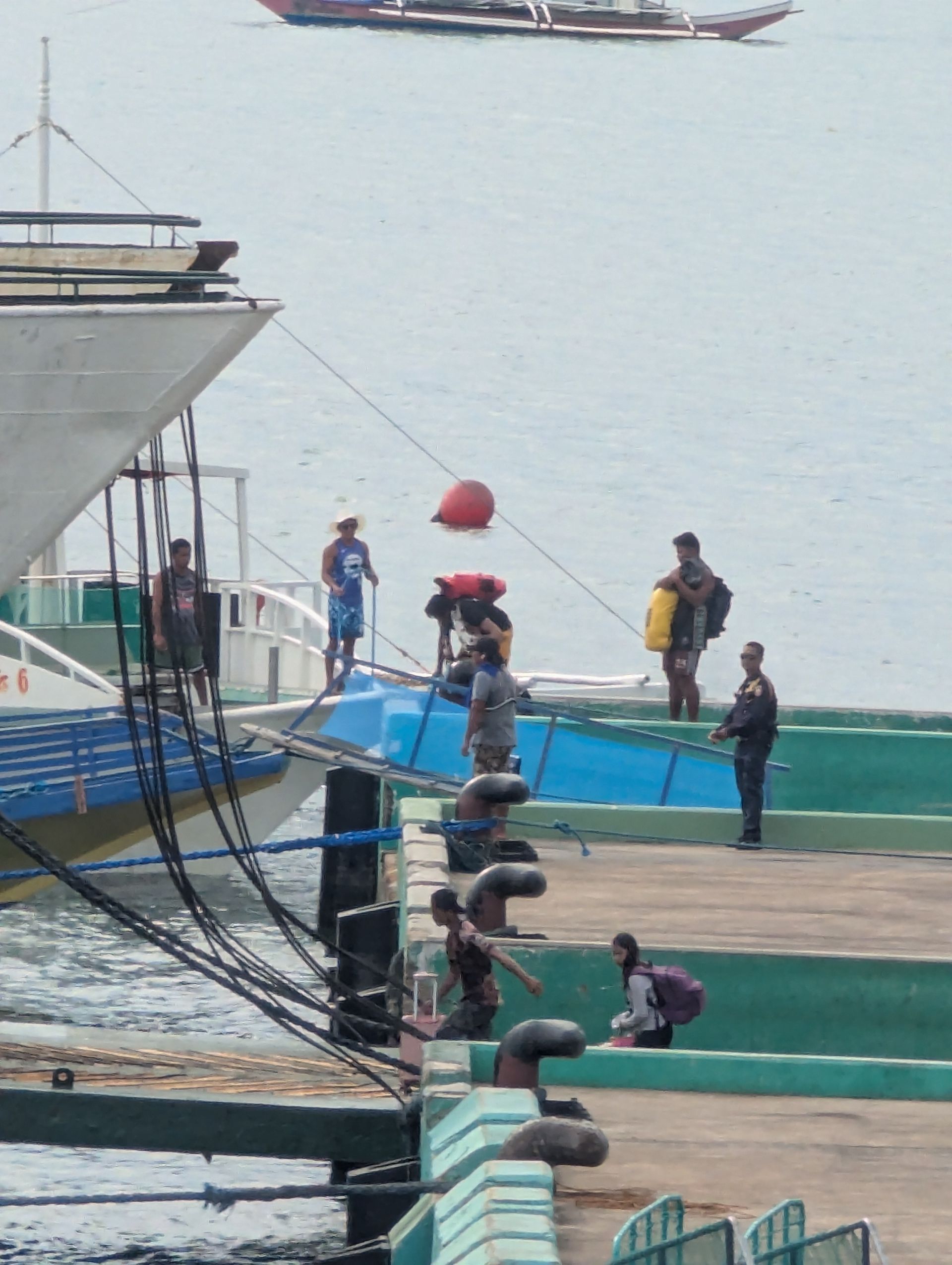
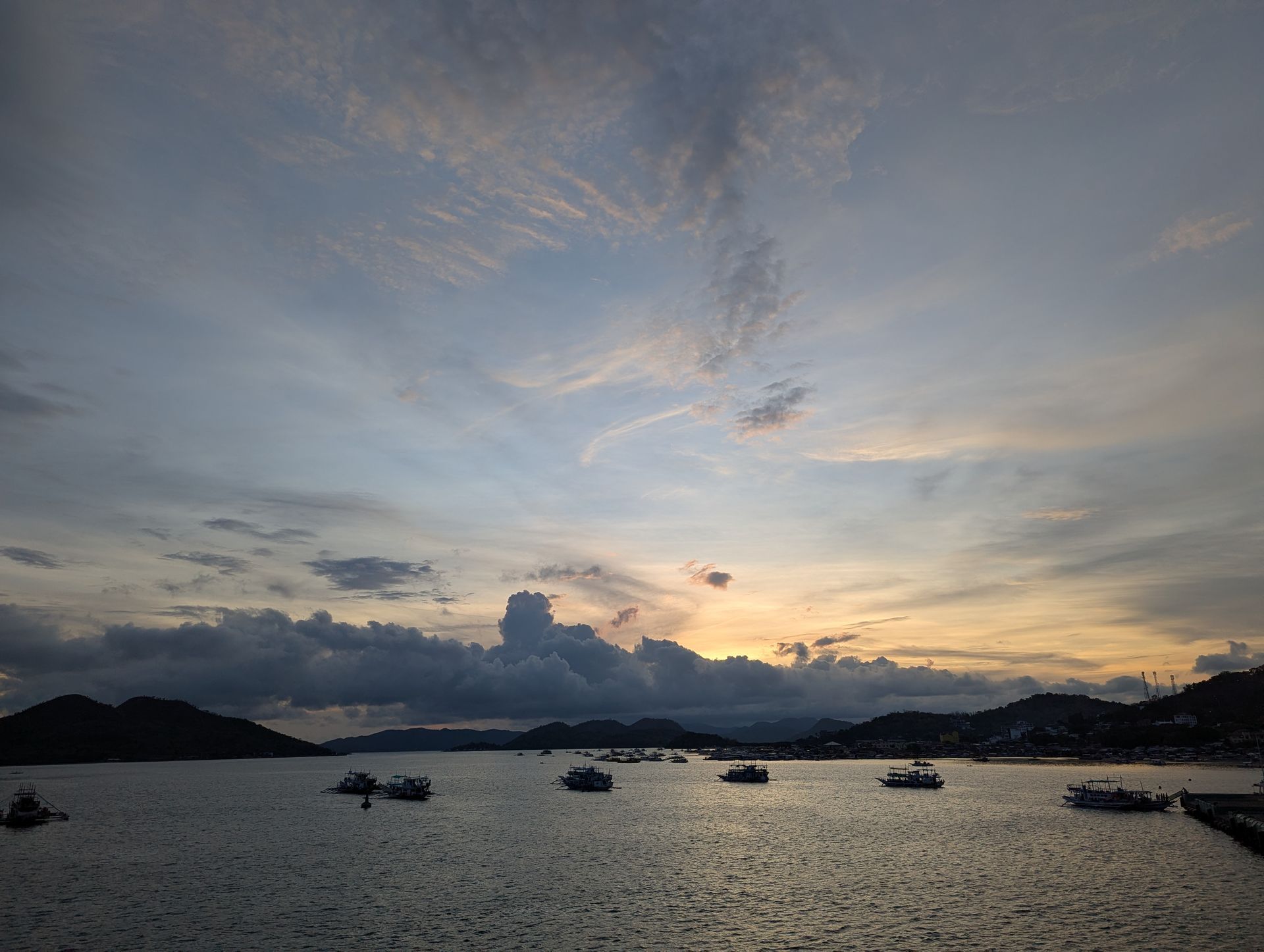
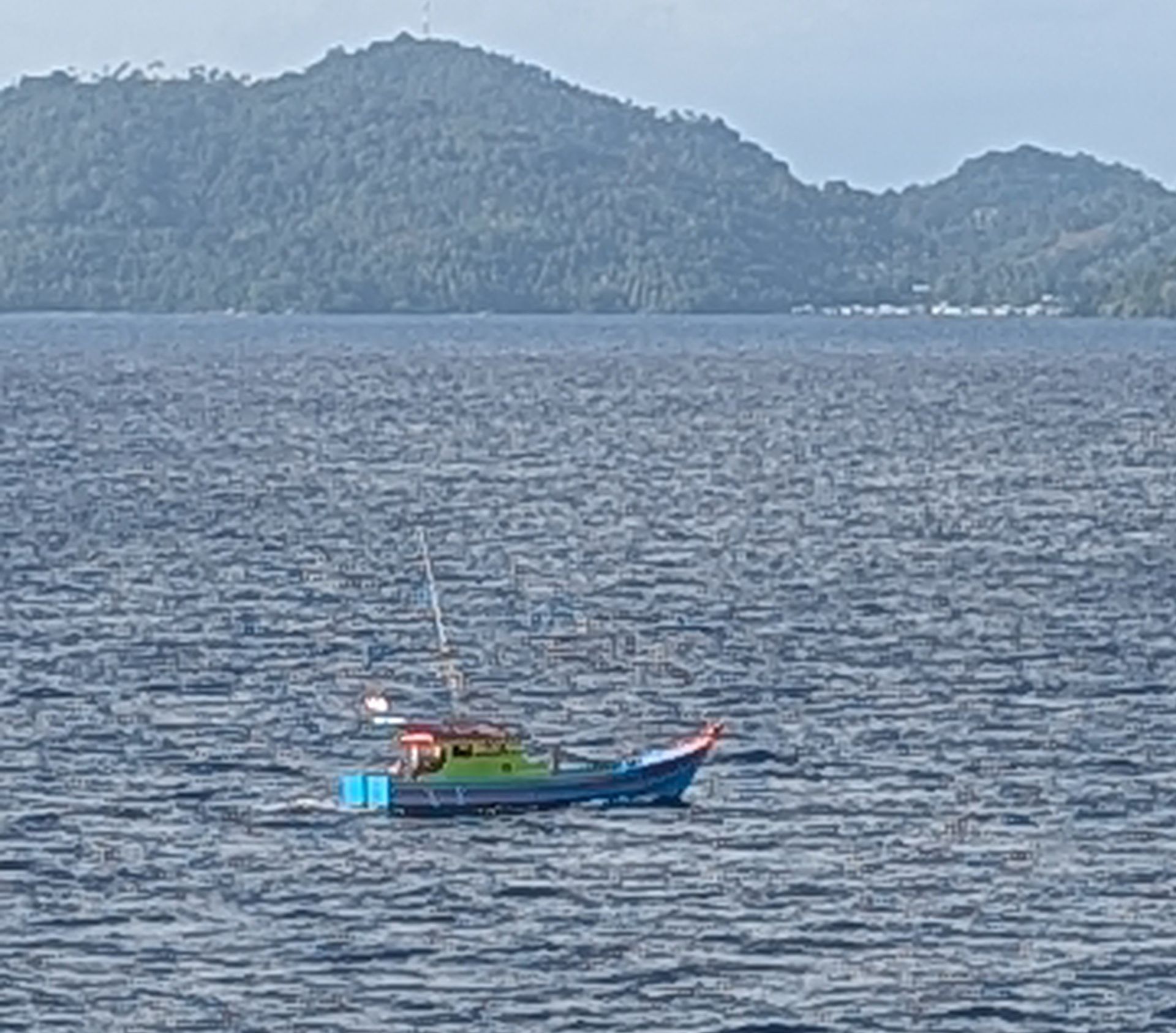
We are docked at Coron. An interesting practice here that I haven't seen anywhere else we have traveled so far is the way the local people bring their boats to dock. The outriggers don't allow the usual port or starboard tie on. Their solution is to secure the bow and put out a stern anchor, then a plank is placed from the high prow to the dock below, as a walkway. It is a narrow and precarious board in some cases and in others, (tour boats), a more elaborate structure with side rails has been constructed. Tourists are easily damaged and this must be avoided. Many passengers end up in the ship clinic after adventures and tours off ship, with minor and major injuries.
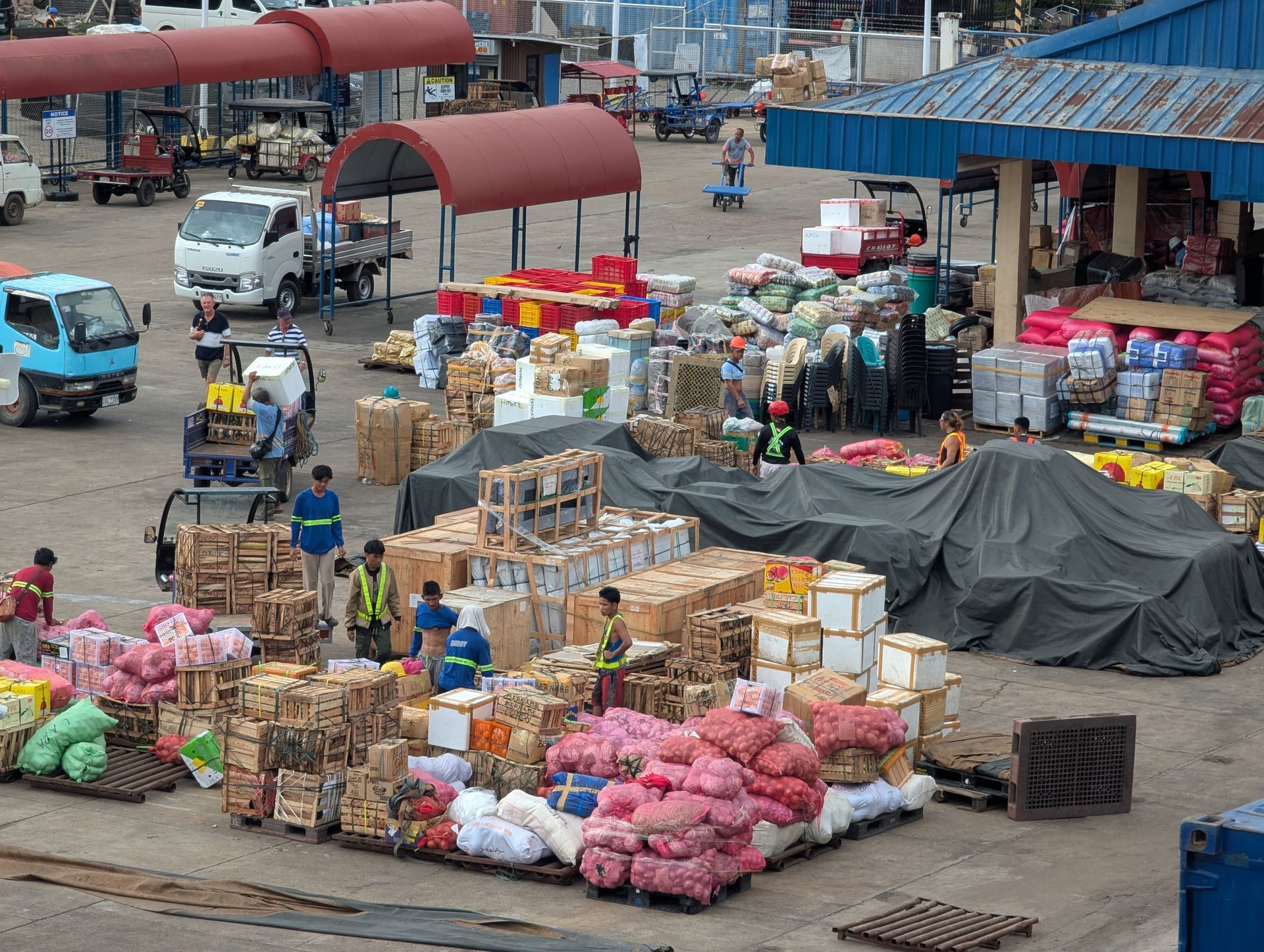
Caron has a small port. It is easy to watch the goings on. Cargo comes in the hold of large ferries and on container ships, from Manila twice a week, and is unloaded with ramps. Everything you can imagine. Bags of potatoes, onions, plastic chairs, solar panels, beer, bags of flour, bags of rice, colorful plastic buckets and clothes hangers, huge bundles of snack bags of every kind, bottled drinks, fruits, vegetables, boxes and crates of who knows what, refrigerators, scooters, etc. The cargo is lifted to the waiting trucks, by hand, (hundreds of 50 pound bags of rice and flour and crates of beer). The heaviest loads come from the hold by forklift. This is an island and almost everything the village needs comes to its port by ship.
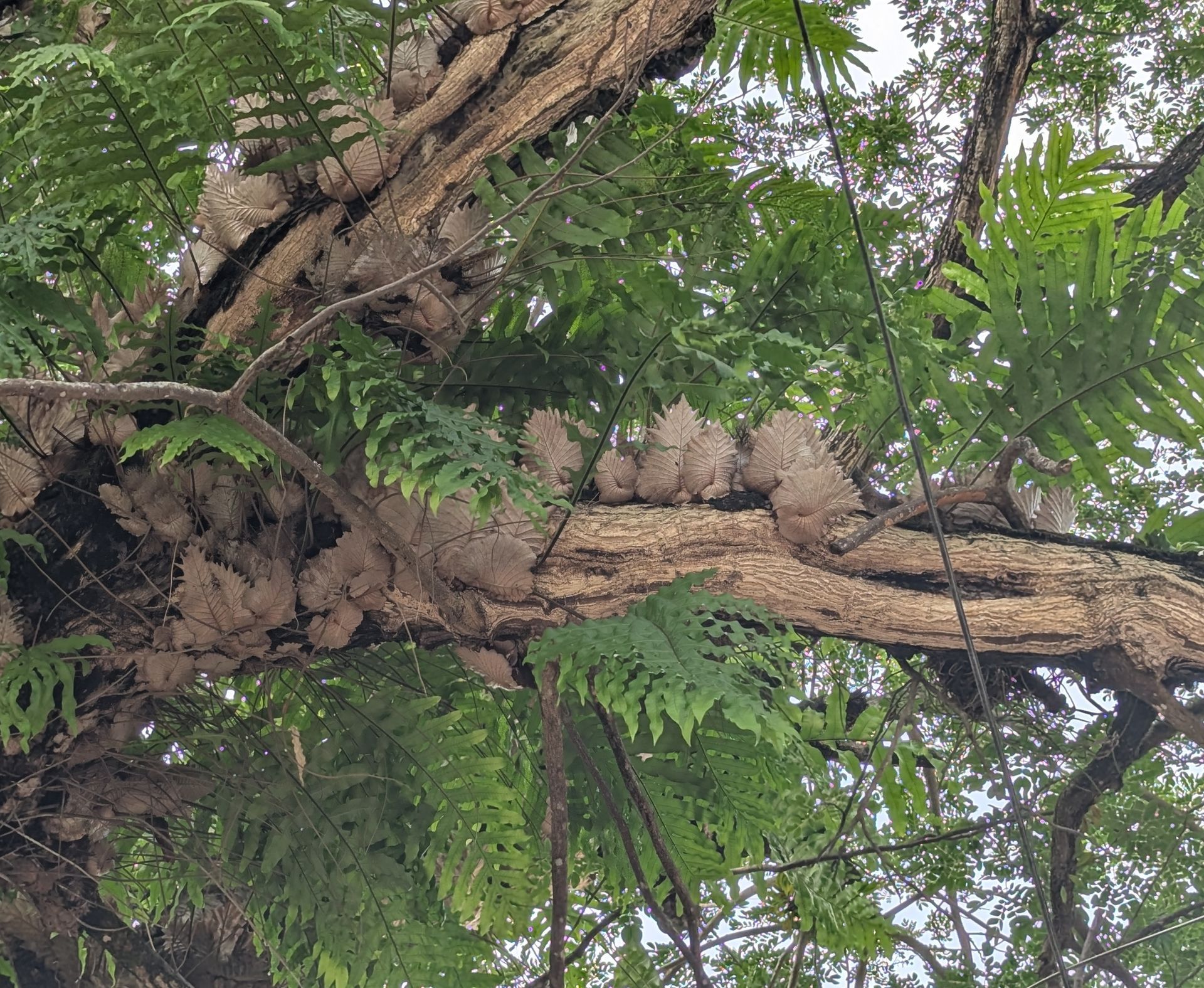
We take a walk. This time we turn left on the main road. This leads us to the main shopping area of the village. Gradually things are busier and noisier. The roads and sidewalks are crumbling and difficult underfoot. Fumes from the scooters and tricycle taxis become more intense, little shops and cafes are shoulder to shoulder and there are few residences. Mature trees drape over the road, their thick branches bristle with long upright ferns.
Eventually we come to a warehouse store that provides most everything that locals may need or want, (except groceries), 800 feet deep, 50 feet wide and two stories with an elevator and it is air-conditioned! This may be the destination of most of the things arriving at the port. The owners of the business fear thievery and have stationed guards. We wander around the store. The first items on offer are bottles of alcohol, then shelves of beer. These give way to many rows of snack bags of every kind and soda drinks. The rest of the store opens into lanes of household goods, stationary, school supplies, kitchen goods, tools, fans, etc.
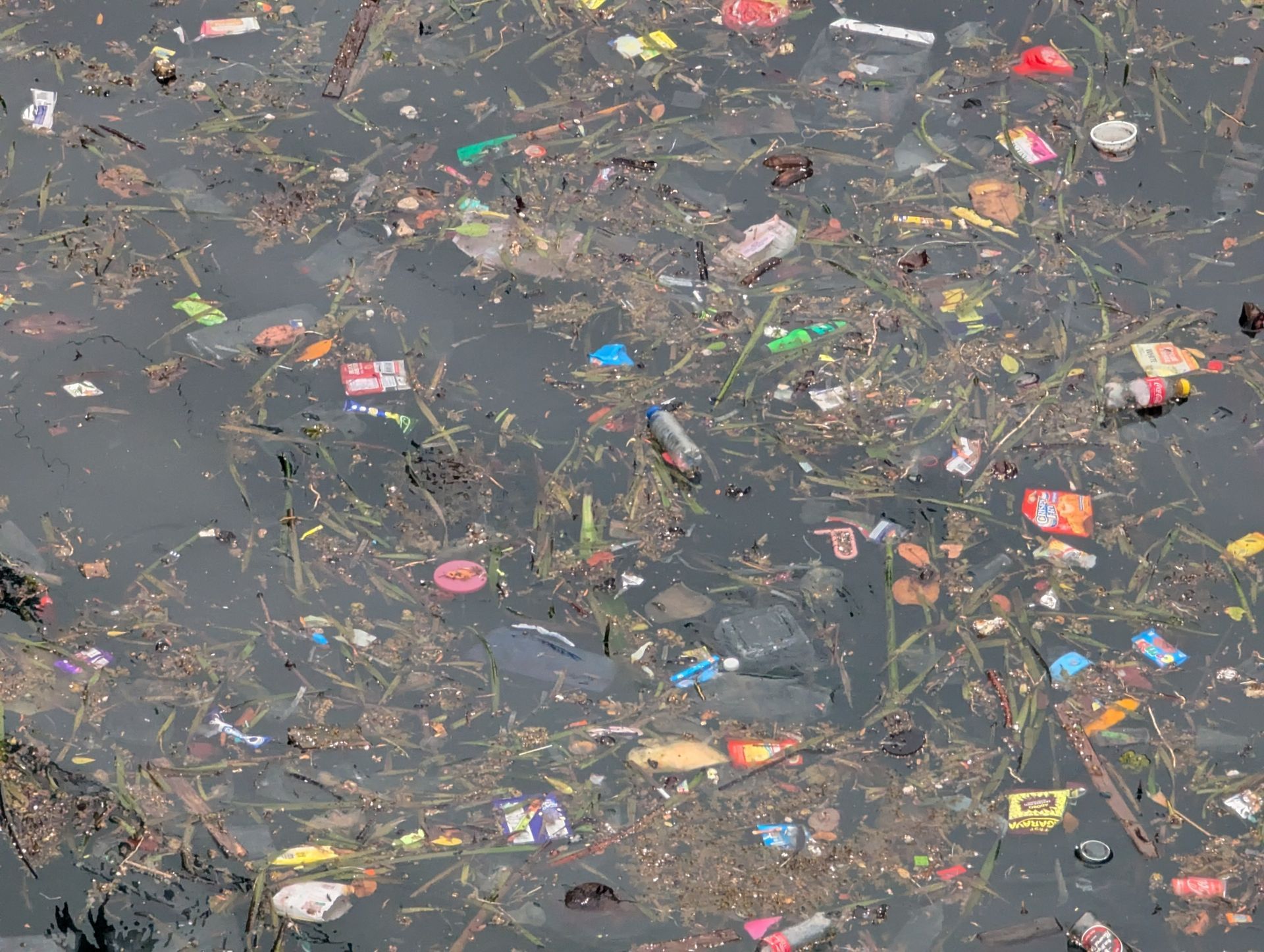
On our walk back, we see the litter of discarded snackbags, plastic water and soda bottles among other things floating on the harbor waters. The sounds of roosters crowing to each other, a joyful and mournful sound, joins those of motor scooters and taxi tricycles.
There are valuable hardwoods in the mountains locally and many hilltops have been illegally stripped of them, the shallow red soil exposed like a bald sunburned head with a fringe of green over the ears. The trees are protected by law and fines imposed but the poaching risks do not stop the practice. These activities can be money makers beyond the sale of the valuable woods. Once an area is cleared it is no longer protected and can be converted to money crops and real estate development. When it rains the exposed reddish soil floods across the white beaches below, staining them red.
The island next to Coron, Culion, was a leper colony. Established in 1906 by the American colonial government, it was once the largest and longest running leprosarium in the world. Created to segregate the infected people and eradicate the disease, it housed at its peak approximately 50,000 patients who were brought here forcibly separated from their families and communities. Healthy residents were relocated. The dead were buried in separate cemeteries and their graves marked with a number. It wasn't until the 1980s that leprosy cases were abolished on the island and the WHO declared the island leprosy free in 2006. A cure had been found in the 1940s but the sulfone drug had to be taken for years and the leprosy bacteria began to build resistance. In the 1980s Multi Drug Therapy was introduced. It uses three antibiotics and cures in 6 to 12 months. The WHO has provided MDT free of charge to patients worldwide since 1995. Today Culion it is an unsegregated thriving community and the leprosarium is the main hospital for the surrounding islands.
All together our stay in Coron has been 8 days. Long enough to feel the life of the village, the kindness of the local people and some regret on leaving. They didn't mind our visit and the roosters bid us goodbye with an enthusiastic chorus.