Bali, part two
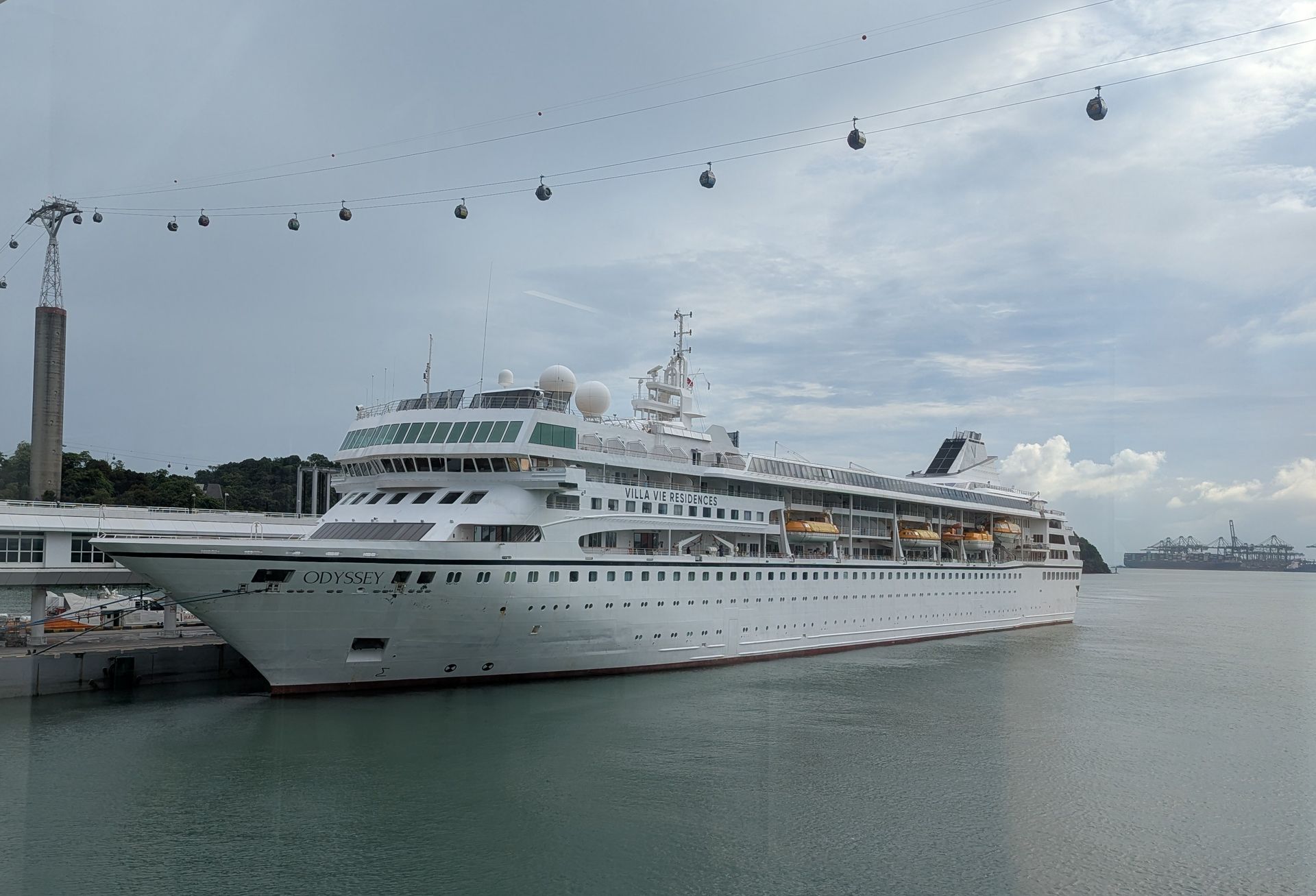
We dock at the port of Bali. It is too hot and far to walk anywhere, so we hired a taxi driver for the day and invited our friend Wido to come with us. He is Indonesian, his home is in Jakarta and this is his first visit to Bali. Indonesia is a country of 17,508 islands. There is a governor on each one who communicates with the central government. Few Indonesians have visited every island.
What strikes me immediately as our driver, Budi, finds his way through the dense traffic, is the careful weeding of the center island between opposing lanes. This is exceptional because of the extreme heat. No one could be doing this during the day. People must come out at night, when it is cooler, and meticulously pull the weeds. It becomes clear as the day passes and more and more of Bali is revealed, that attention to detail and extreme patience is a characteristic of the Balinese.
The traffic is a dense mix of motorcycles, cars and trucks.
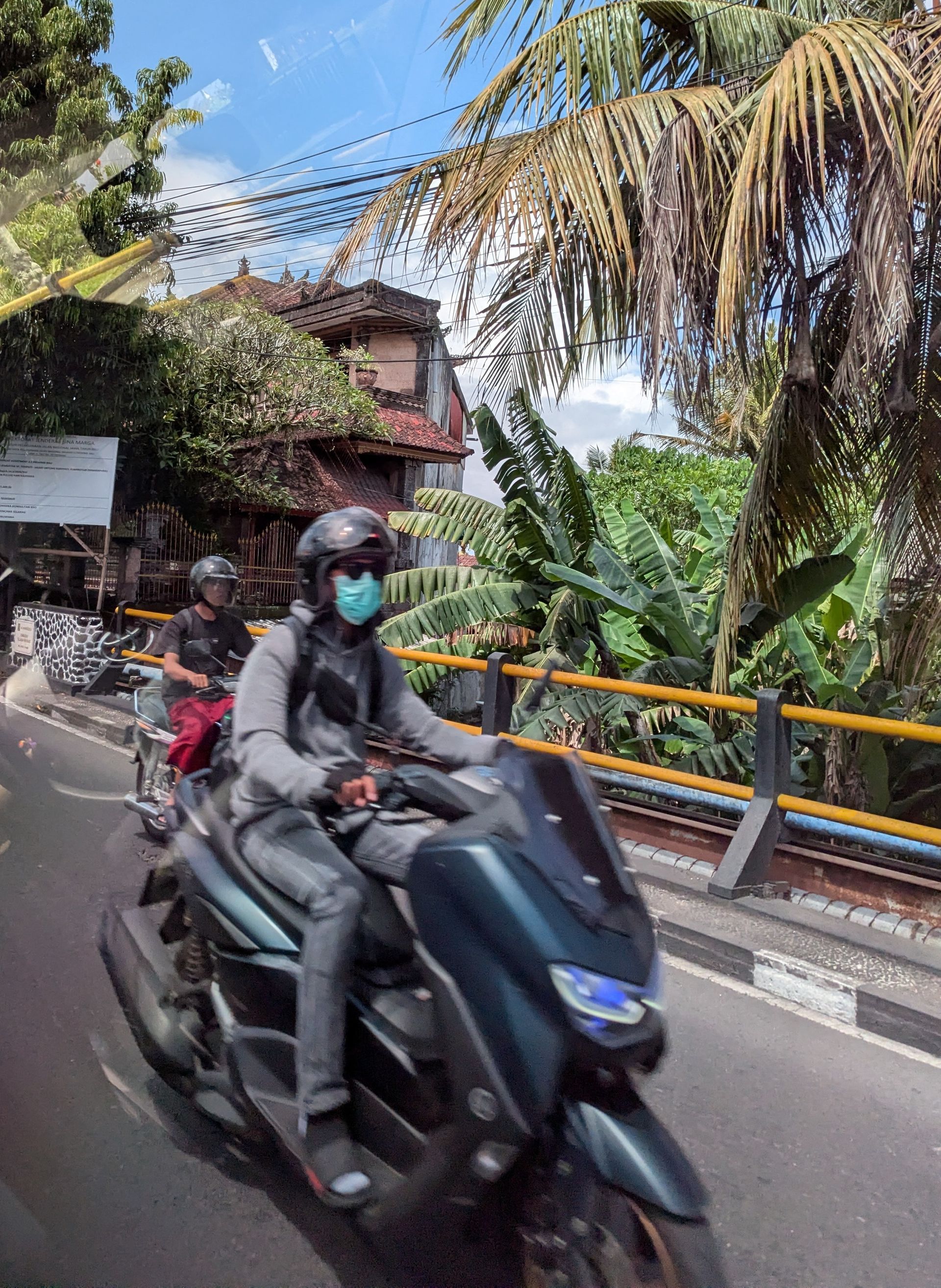
Motorcycles make their own lanes between vehicles and clear by inches. The air is choked with fumes. I see no electric vehicles. Rationing of gasoline has been recently imposed because of the war in Iran and the closing of the Strait of Hormuz. Only a quarter of a tank a day. Budi says he has noticed a reduction in traffic. It must have been really intense before. Because of the time and distances involved with our trip, this is probably Budi’s only tour today. He asked for 70 USD and we gave him 85 USD. The exchange rate is 1 dollar to 17,000 rupiah. He is experiencing a significant reduction in income because of the war.
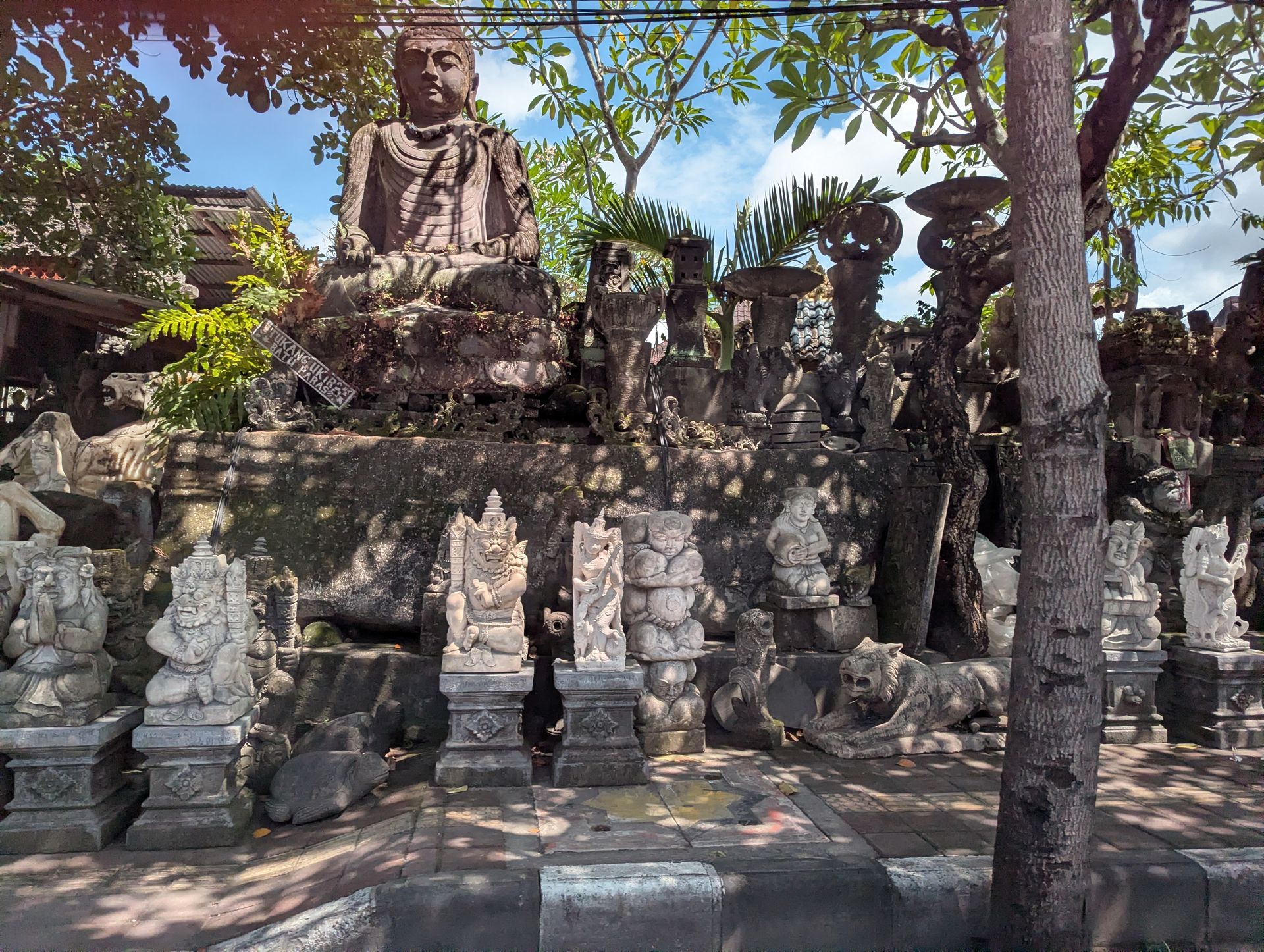
Driving on, we pass “Place with Millions of Statues”, block after block of open air displays of every variety and size of animals and Hindu gods, cast in concrete.
We passed a brand new hospital, built by the government with financial help from Mhammadiyah, a Muslim organization founded in 1912 whose motto is, “Helping People.” They concentrate on improving education and providing social services, managing orphanages, building hospitals and disaster relief, rather than direct political interaction. Their more modern interpretation of Islam supports religious tolerance. There is a centuries old tradition of coexistence between Bali Hinduism and Islam. Bali kings married Muslim princesses. Bali is 80% Hindu while the rest of Indonesia is mostly Muslim, with a few Christians that were converted during the Dutch occupation that began in the 1600’s. The Dutch East India Company was most interested in trade, not religious propagation. They practiced segregation and excluded local people from Dutch churches.
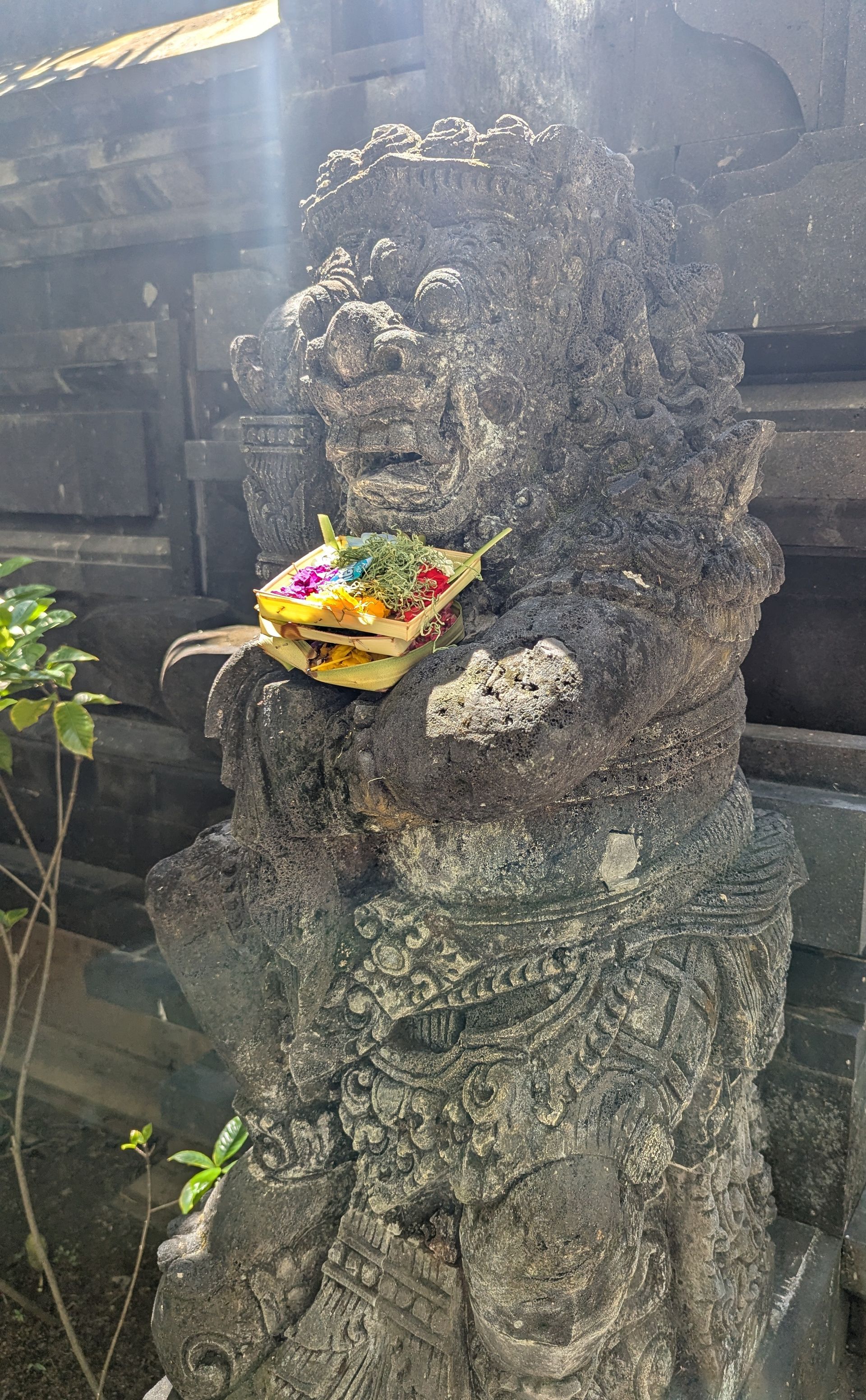
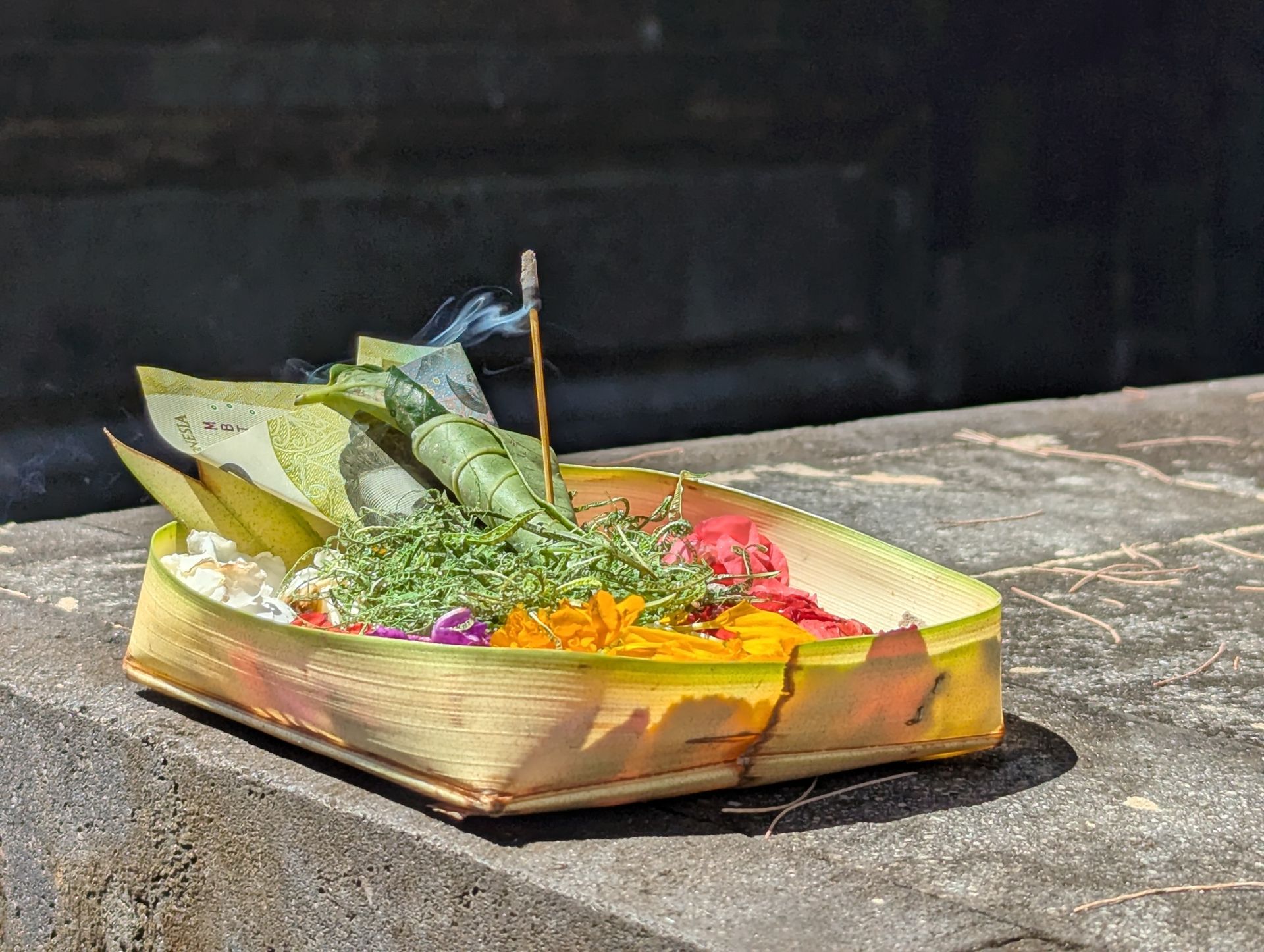
Hinduism in Bali is a unique blend of animism, ancestral spirits and harmony with nature, blended with the traditional Indian Hindu Gods and teachings. Every Hindu family has a home temple and they pray three times a day, morning, mid-day and evening. Small rectangular offering trays (tamas) woven from coconut, palm or banana leaves are filled with flowers, rice, incense and other significant objects. Color and placement play important parts. For example white flowers placed in the east indicate purity and spiritual strength, yellow flowers placed in the west indicate prosperity and wisdom. The incense carries the prayers to heaven. It is important not to disturb or step over them. This interrupts the sacred connection.
Muslims pray 5 times a day morning, noon, afternoon, after sunset and before midnight. That defines a “Good Muslim.” Wido, who is Muslim and an Iman (he leads the congregation in prayer), explained to us that the Muslim who prays 5 times a day says, “I’m just trying.” The Muslim who doesn't pray says, “ I am not a good Muslim. But I am a Muslim.” He also explained the significance of a 40 foot statue of a baby that we passed. The Big Baby statue represents the Balinese Hindu belief that babies are gods in their first weeks of life and that the spirit of a dead relative will return to the family in a baby. The Big Baby statue is a place where people can pray for the return of a specific relative. Unfortunately the main road was placed too close to the shrine and drivers sometimes see spirits lingering and crying there, get distracted and cause dangerous accidents. Bali City has 9 Hindu temples and there are 4 for each of the rural towns. In order for their unique form of Hinduism to be an official religion of Indonesia, in 1952 the government required documentation that defined it as a “One God” religion. They proclaimed Acintya (the inconceivable) as the supreme God, defined as the All Knowing One or Divine Oneness.
Wido has become talkative as we drive out of the city into the rural towns. He summarizes past and modern Indonesian history for us.
“The Dutch colonised Indonesia. Everywhere there were kings. Some royal families remain, no power. VOC, Very Old Company, from Holland. All over they owned the spices and herbs, and exported them to Europe and China. They bring their army here to enforce. Every place tried to fight but could not win. WW2, Japan comes and expands, defeats the Dutch, 1942-45. Then Japan bombed. The British tried, then the Dutch tried to come back. That's when Indonesia fought back to get independence. 17, August, 1945, 10:00, we were free. My country is unique! Only one president. People are obedient, they get along. No military in the towns. Diverse and united. Each has the obligation to fight for dignity, country, family.”
We stopped at a gallery the size of a warehouse that contained 100’s of paintings, of very high quality and in some the detail is absolutely astonishing. They were very large and very small and shown side by side on massive wall after wall. An overwhelming and mesmerizing experience. Landscapes, people, religious animistic work, even a few abstracts.
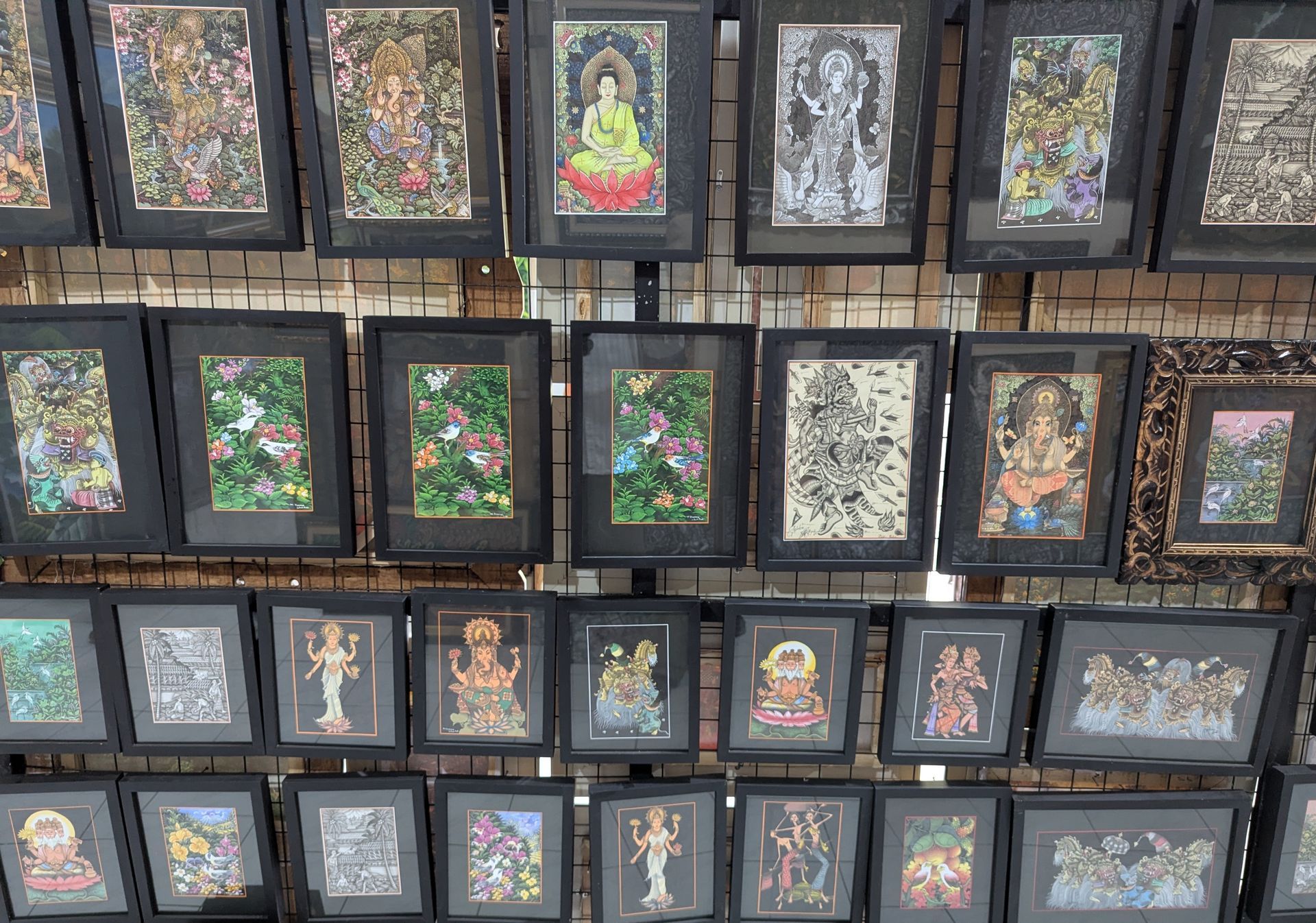
I explained to the proprietor who followed me expectantly, that I am a painter and can only admire and not buy. He remained diligent until we left. We thanked him over and over, and we bowed to each other with hands in prayer. The fighting cock in a basket cage crowed at us as we climbed into the taxi.
We drove on and finally came to one of the subak rice paddies. Delicate rice seedlings planted by women with exact spacing in the silvery, shallow water. In the fields people are harvesting rice by hand with short machetes.
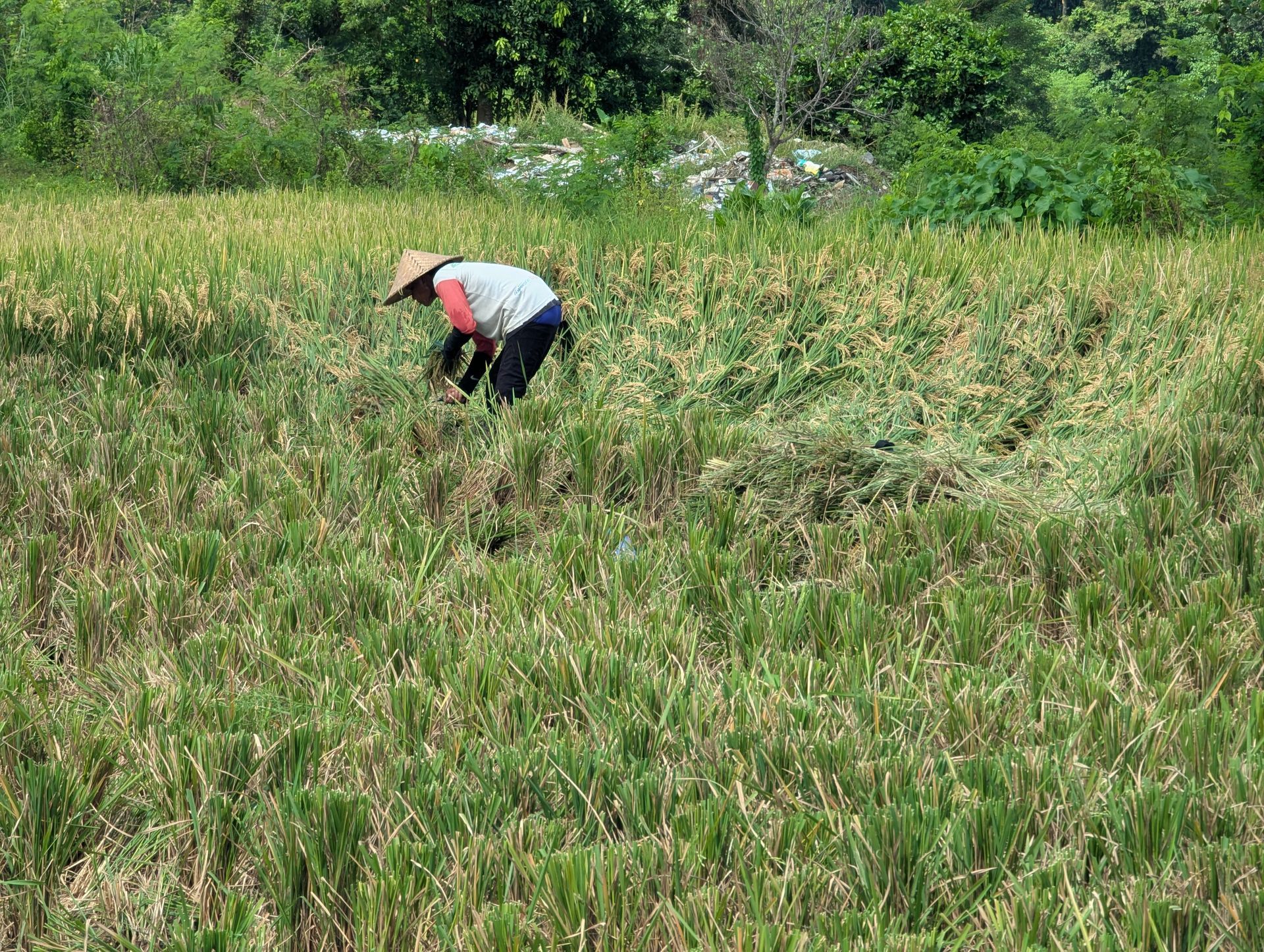
We didn't linger, our driver had another destination in mind for us, one that he is used to taking tourists to, a waterfall and a coffee shop. On the way back to the city he stopped at a batik fabric store, another warehouse sized establishment with ladies demonstrating the craft and weaving long reams of fabric outside on looms. Finally we were taken to the wood carvers and their beautiful hand carved statuary, animals and furniture.
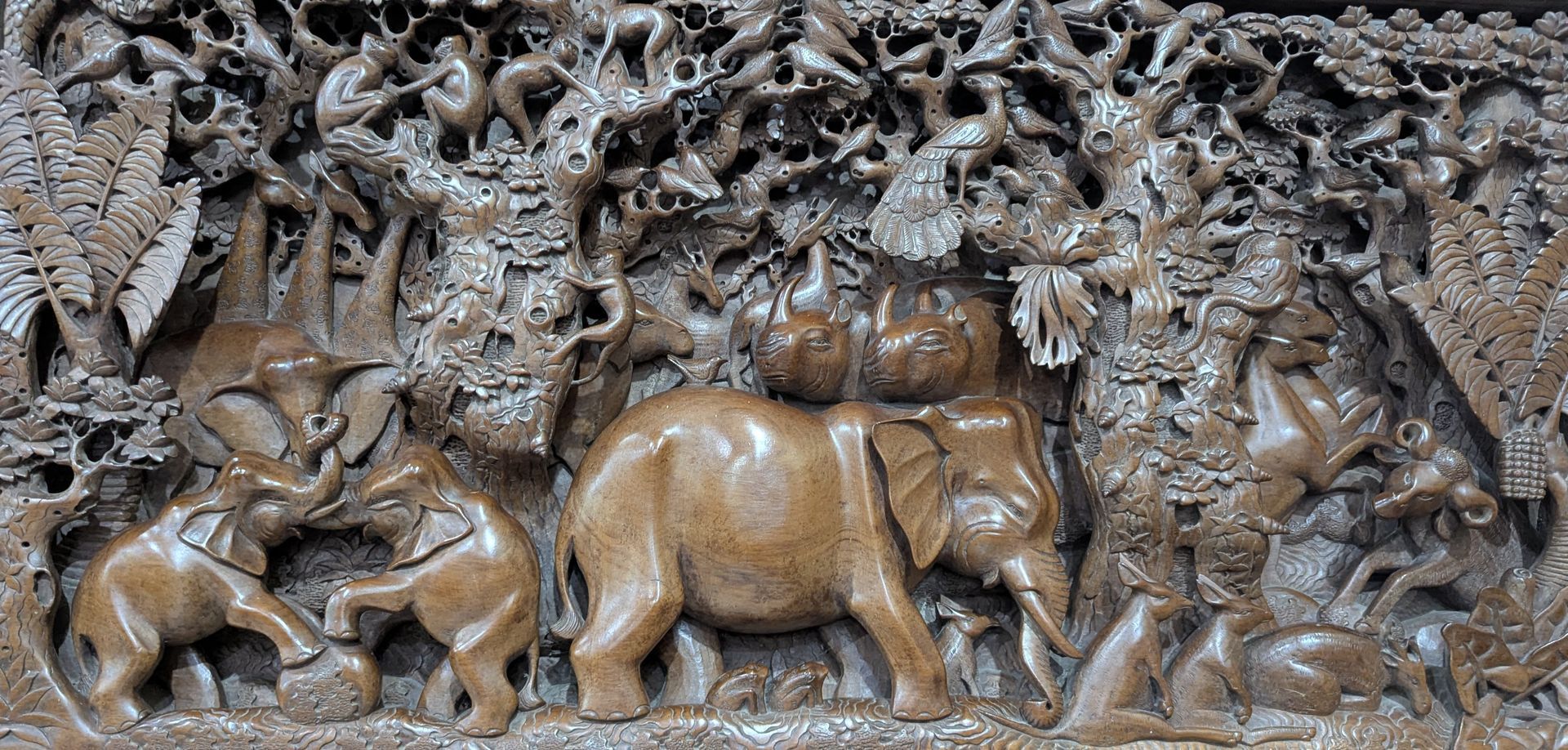
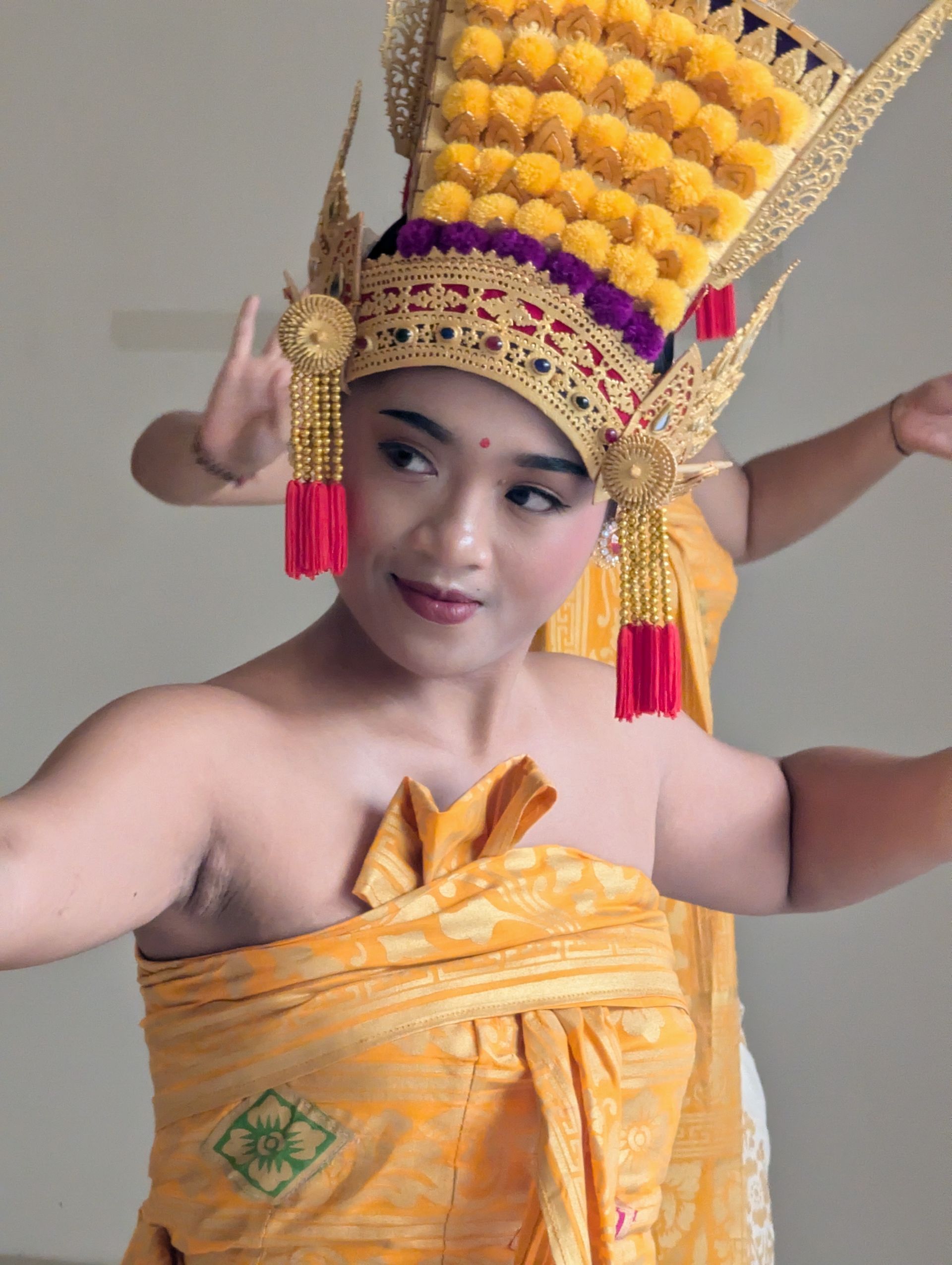
The cumulative experience of exposure to the talents of the Balinese people is inexpressible. They excel in every art including music and dance.
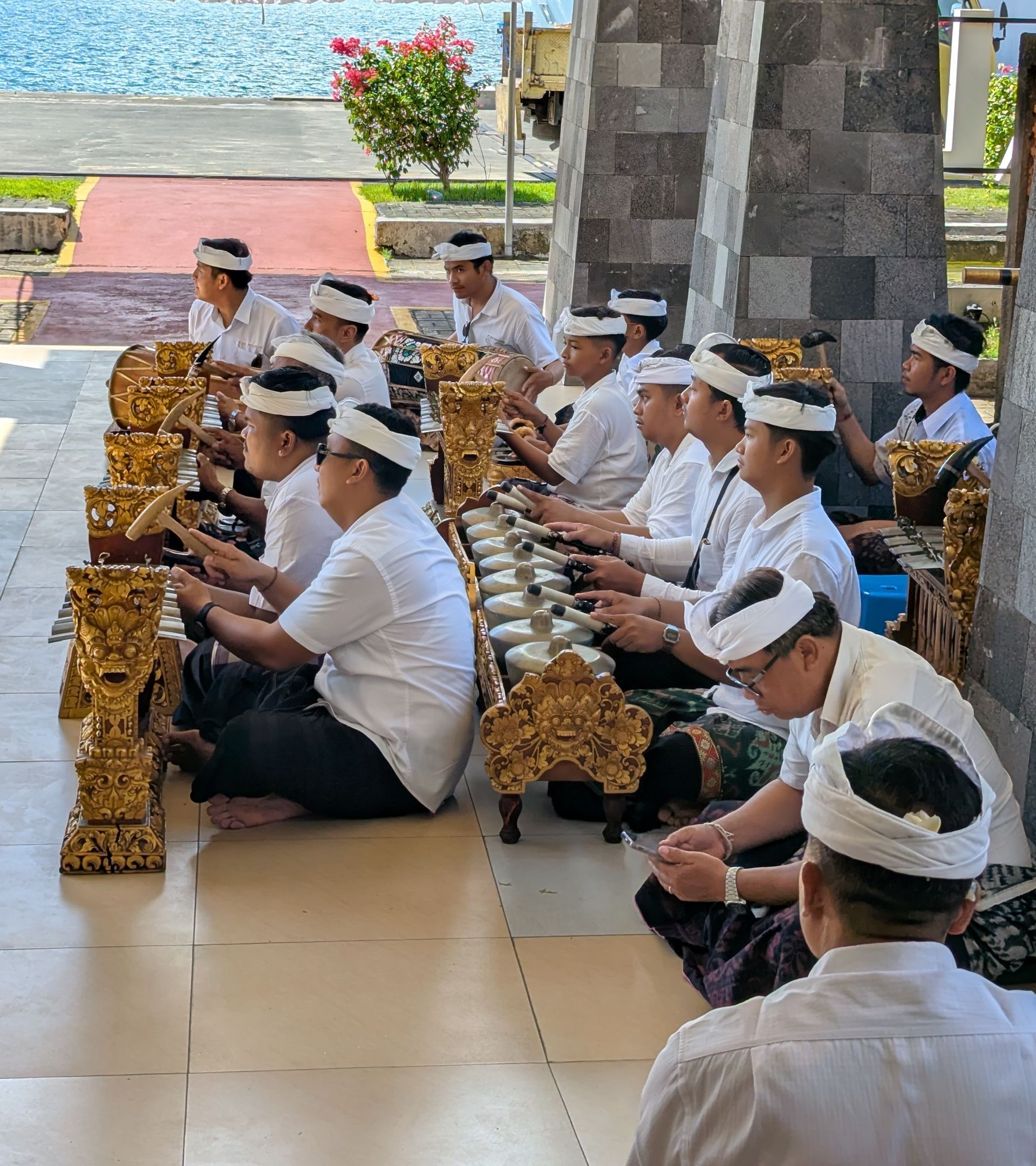
I return to our ship, exhausted and humbled.