Philippines, Coron #1
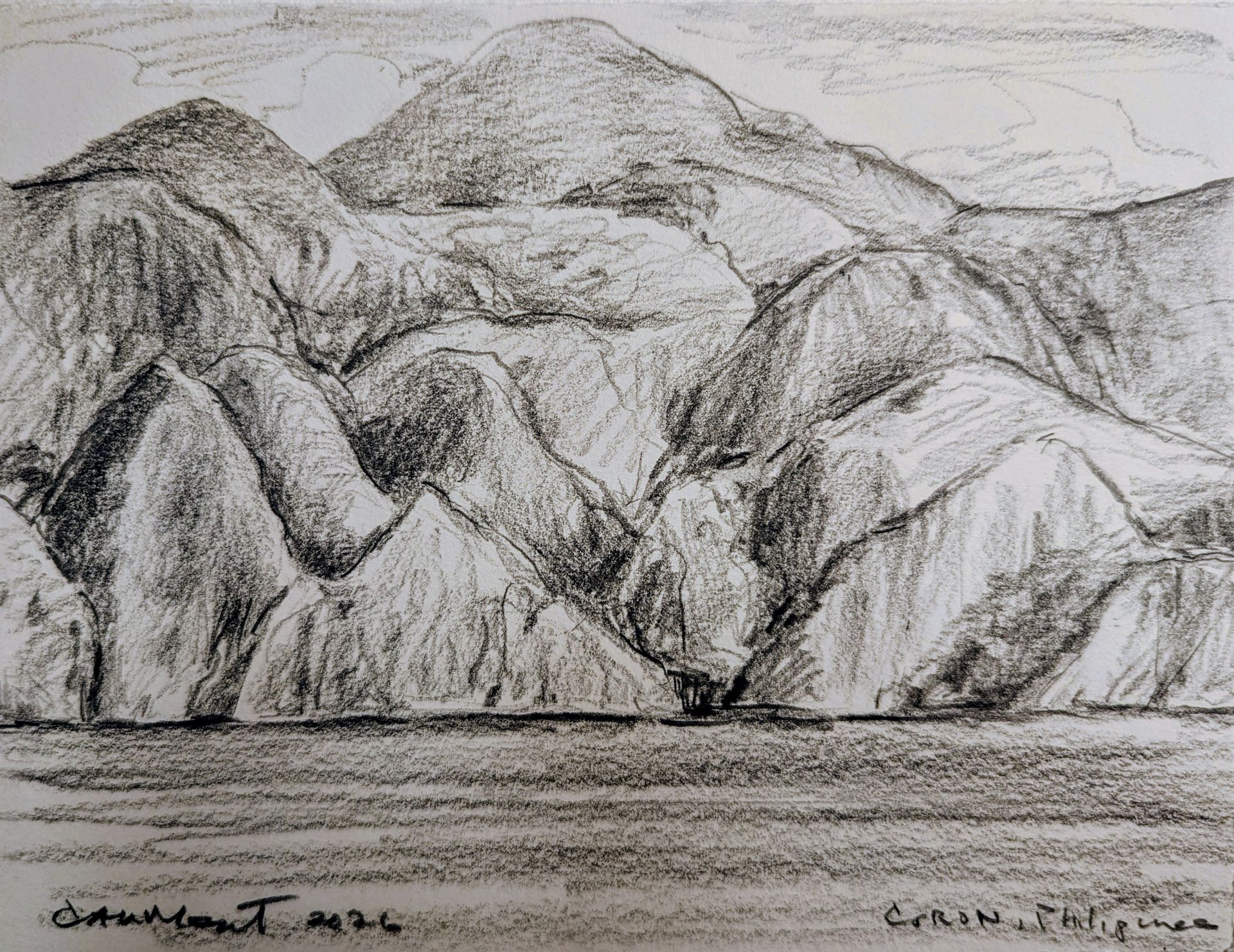
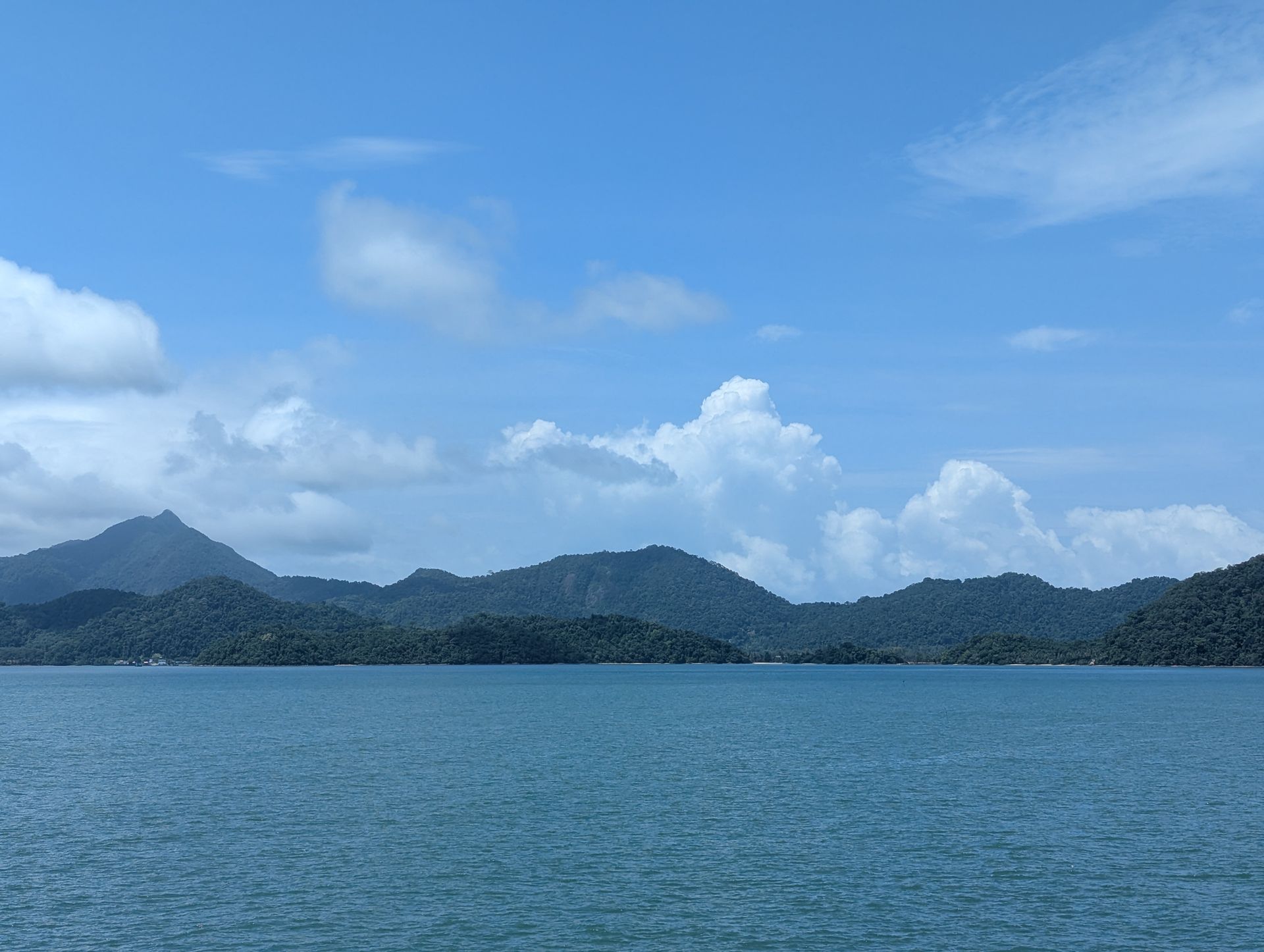
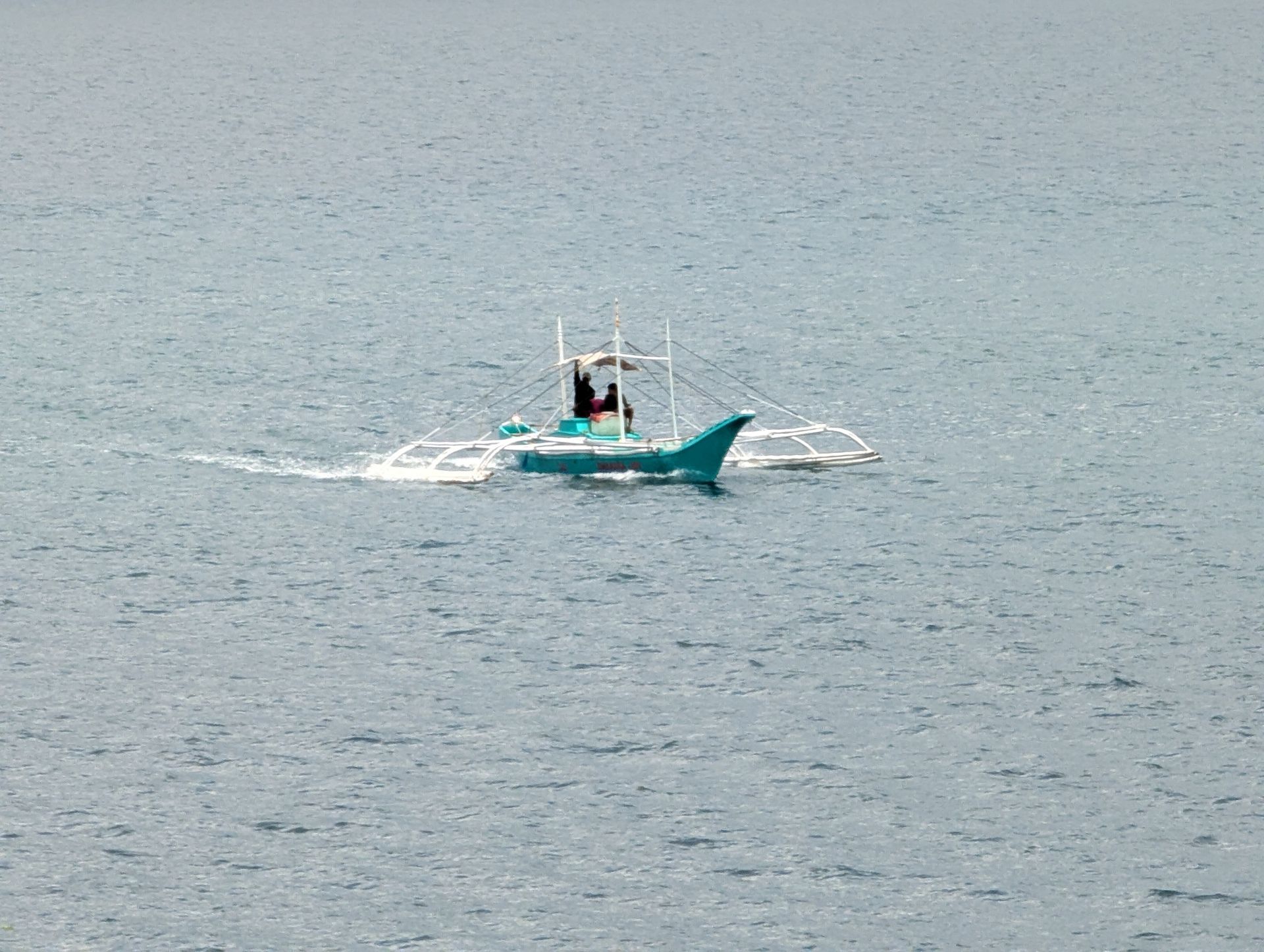
The approach to Coron, Philippines. Mountains all around, some narrow cream colored strips of beach. Single person open boats drift here and there, some are paddled. The larger colorful outrigger boats glide by like water spiders, leaving no wake. Clouds have bunched and swelled above the land taking up a lot of the sky blue sky. This is the rainy season. Our ship is drifting slowly. We are not expected at port for a while. The opening of the harbor is in sight and a green entrance marker is visible.
This area has beautiful coral reefs and an abundant variety of sea life. I wish them well and don't plan to visit them. But many passengers will. They are avid snorkelers and divers. This area is part of a triangle of the most diverse sea life in the World. But unfortunately the local waters have been overfished of marketable fish, exotic fish and the varieties of them have not been affected, so far. Local people are having difficulty finding fish for their own use. Outside businesses with aggressive equipment have poached and significantly depleted the abundance that was here. As we progress I can see cabanas for tourists lined up on the narrow beaches. The turquoise waters of the coral reef shallows are at their doorstep. Tour boats can also be hired to take people to remote islands to snorkel and dive. Many Japanese planes were sunk here at the end of WW2 and have been colonized by corals, creating an inviting environment for marine life and a diving attraction for tourists.
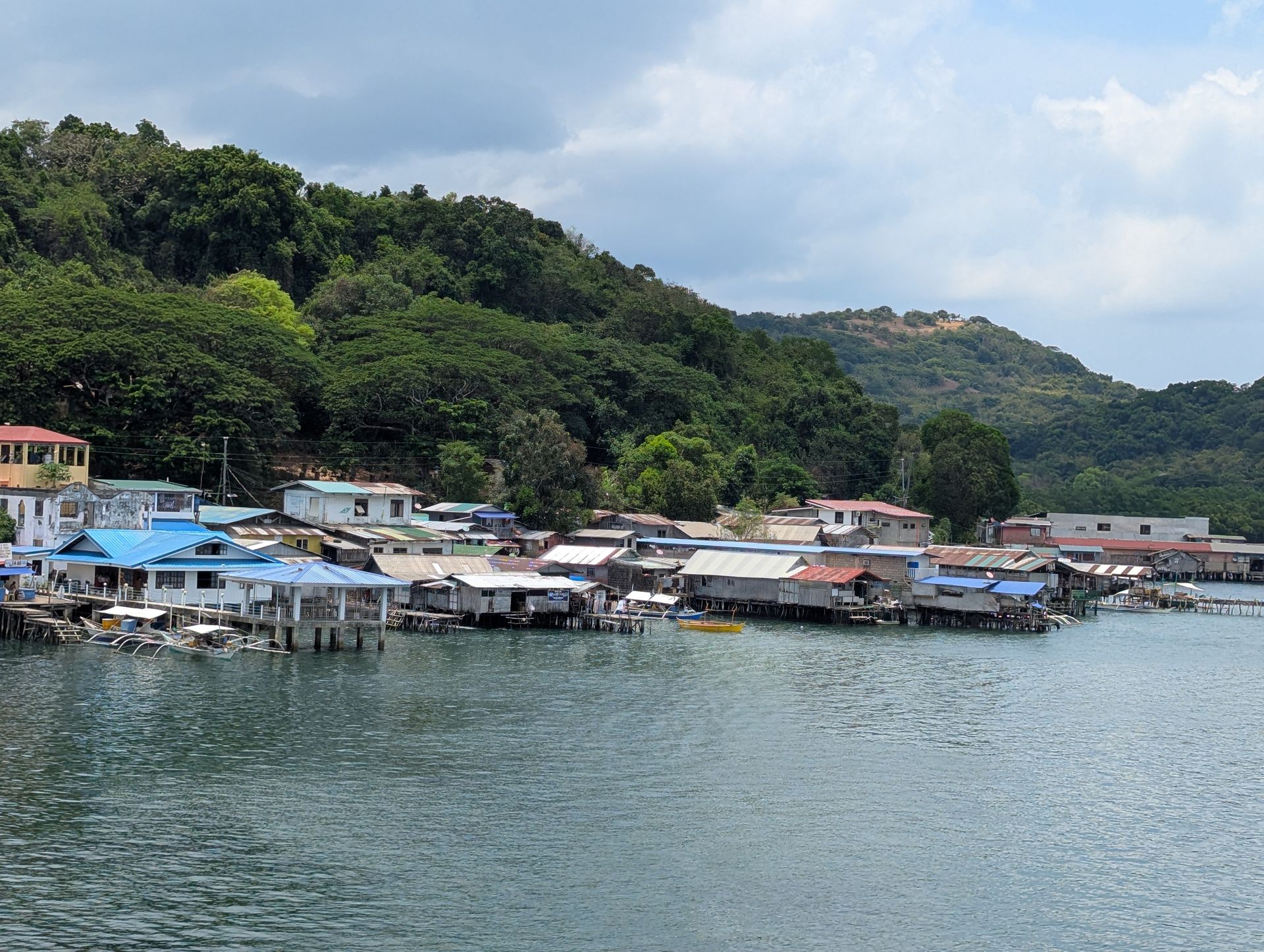
We have docked. The outrigger boats are out and about in the harbor, bright colors are favored; light green, blue and yellow and orange. Conical shaped mountains dominate the local island silhouettes. Their grey limestone supports the varied greens of trees and vegetation. The nation/state of the Philippines is made up of more than 7,600 islands. Houses raised up on wooden poles are crowded on the waters edge, bright greens, light blues and dark blues, some pink and yellow. They hang on to the shore like the colorful hem of a green skirt. The main part of town is less than a half hour walk, on the one road. We will be here for four days.
The war continues and there is no end in sight. The US Congress was not asked for their permission to go to war with Iran, and no one can say when this will end. When it does, how long will the recovery be? It won't be as quick as some passengers are hoping and this ship is directly affected. As are all the countries we are visiting. Not only is the fuel more expensive and less available for the ship, there is the possibility of the US dollar losing value in relation to other currencies.
We went for a walk. We encountered a group of tricycle taxi drivers who were offering a ride and Jeff distracted them by asking why they were hanging around being bored and young and trying to make money off tourists. And, by the way, what is money and aren't you happy, how much do you need? They laugh.
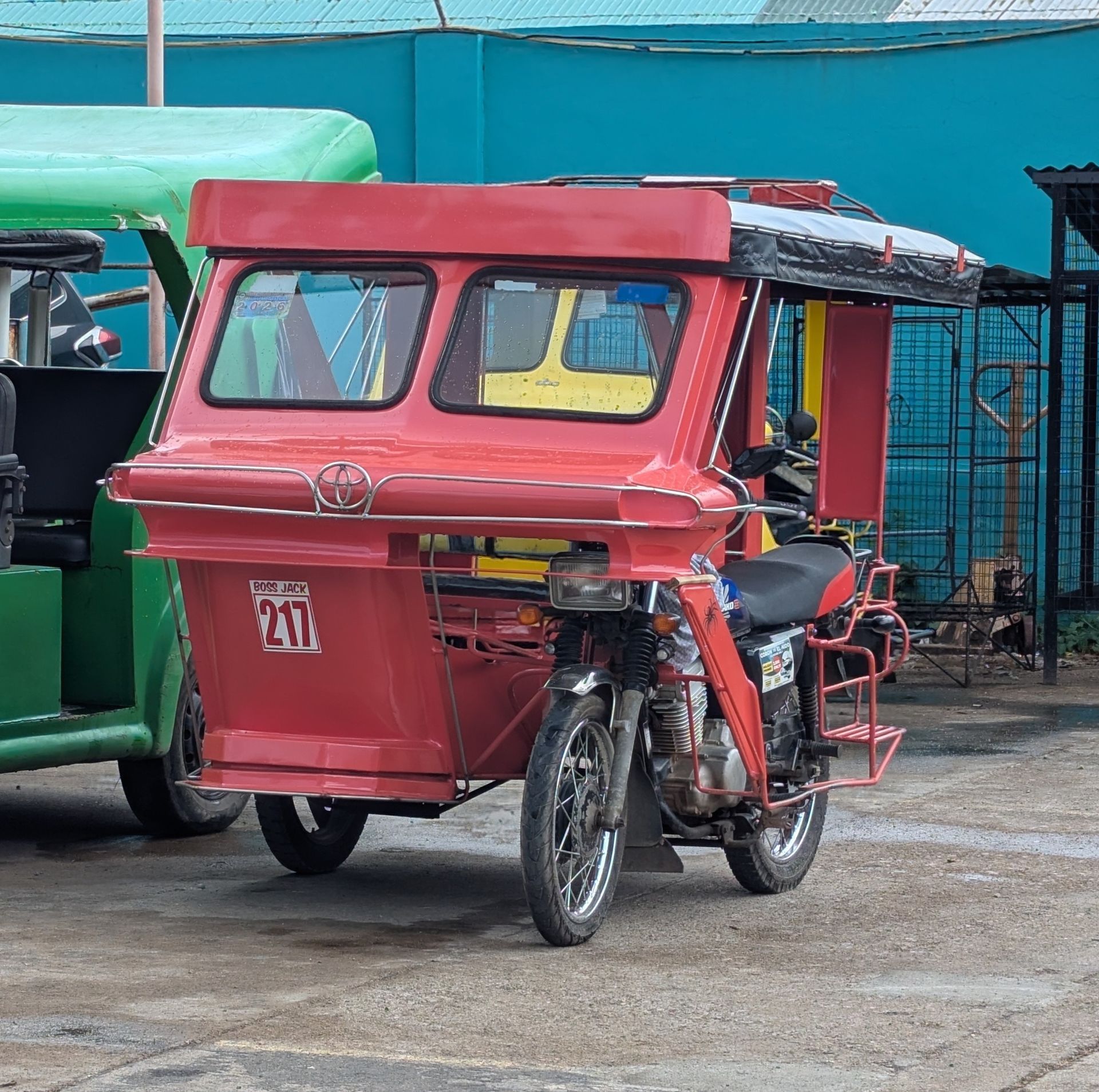
Colon is in the midst of trying to become a tourist destination. It has natural beauty, lagoons, snorkeling, hot springs, etc., like many islands in South Asia. These beautiful things are being monetized and some of the townspeople are getting caught up in the idea of “easy tourist money”. But most still just go about their lives and watch with curiosity and indifference. We try not to be intrusive as we walk along, passing homes and small shops on the one road. It is a privilege to be allowed to observe life lived simply on a tropical island with history going back thousands of years.
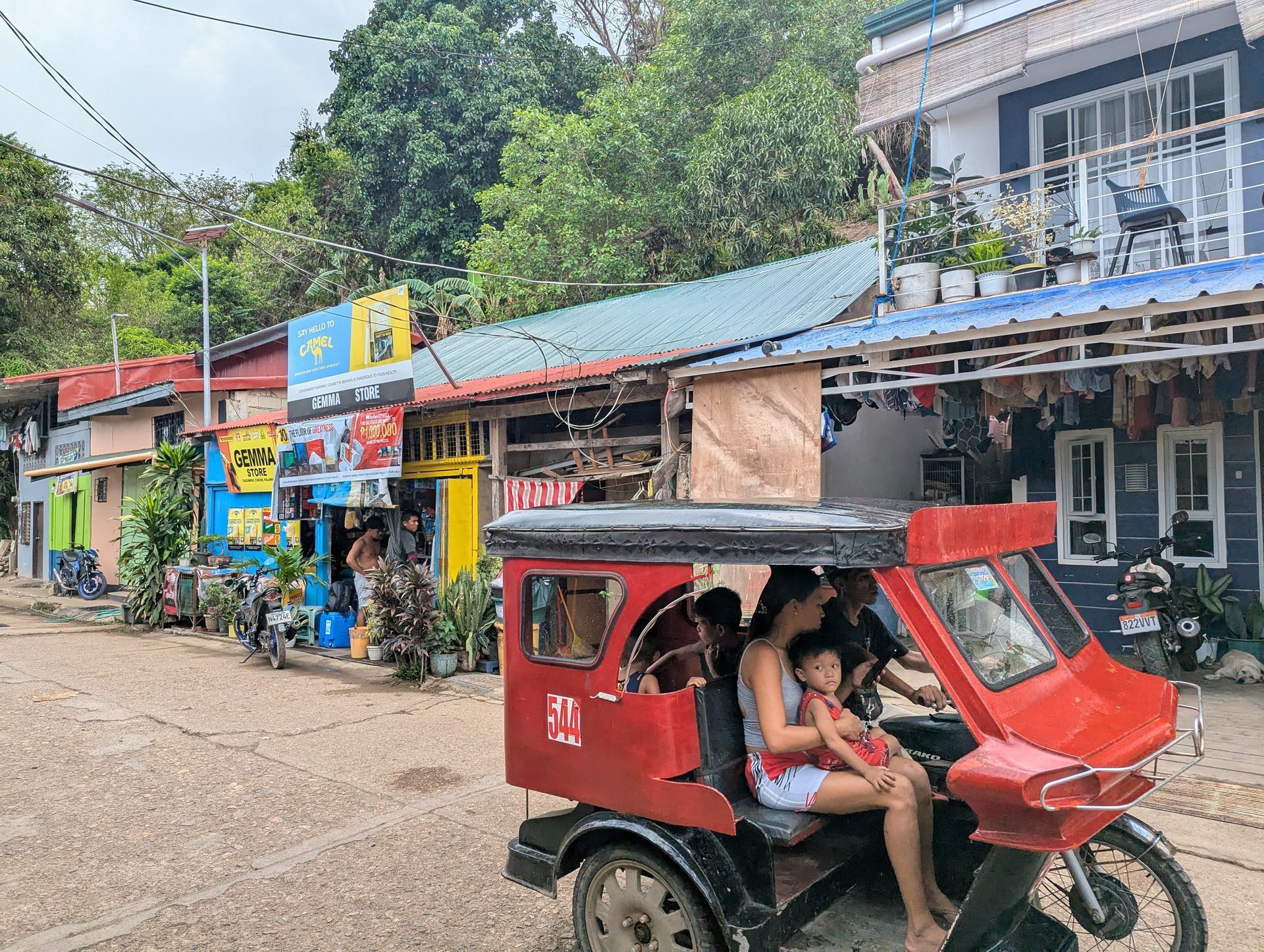
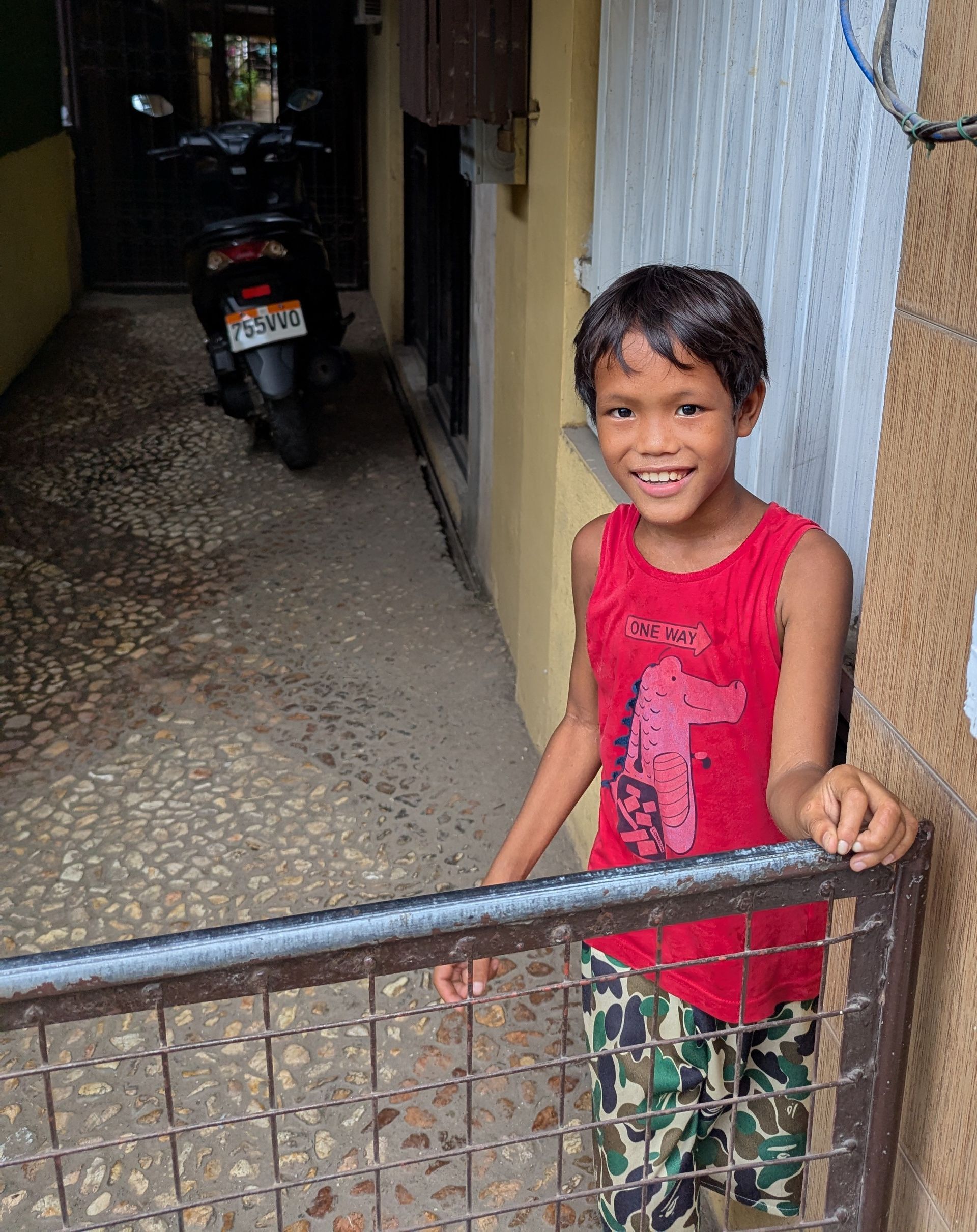
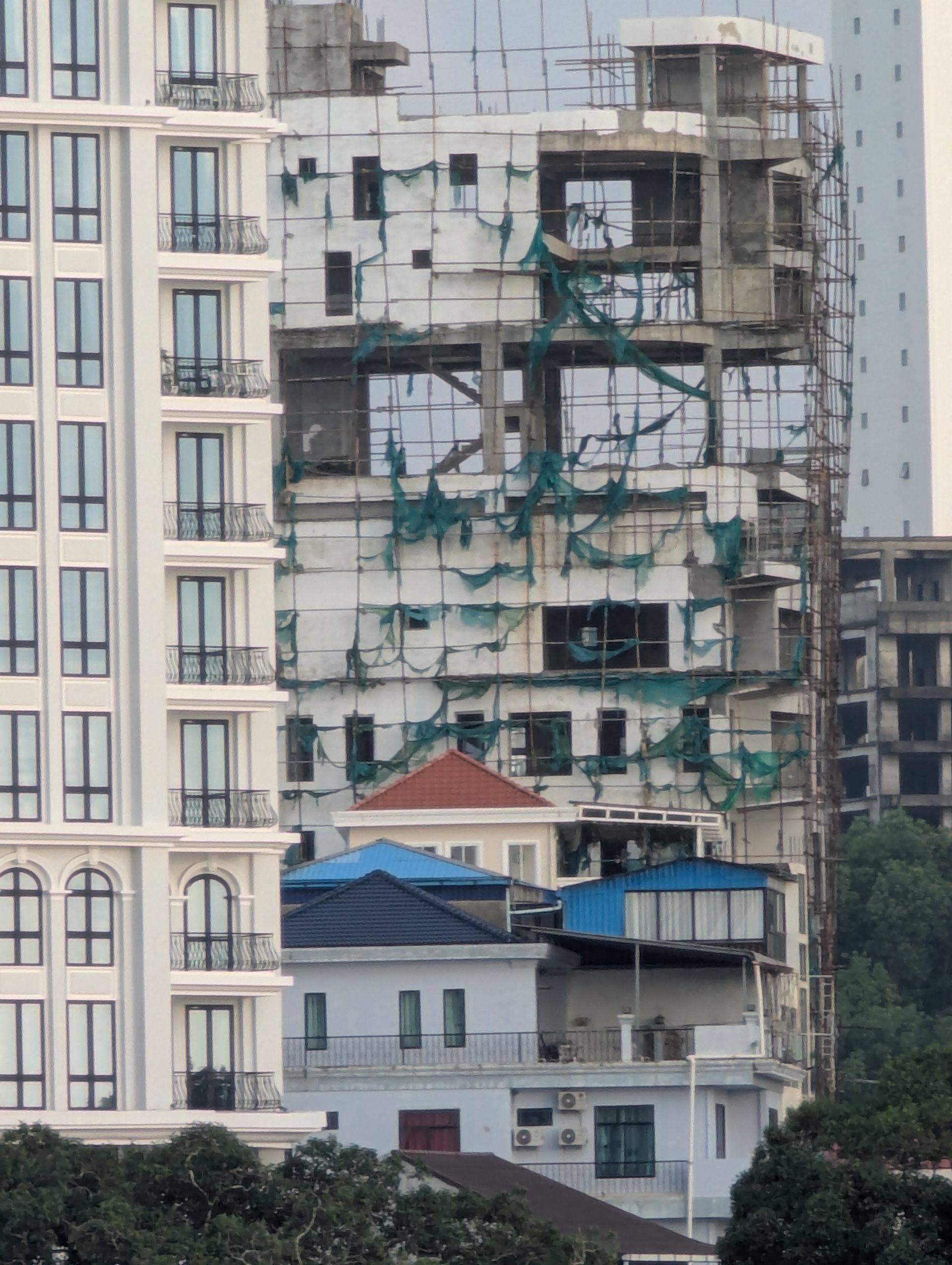
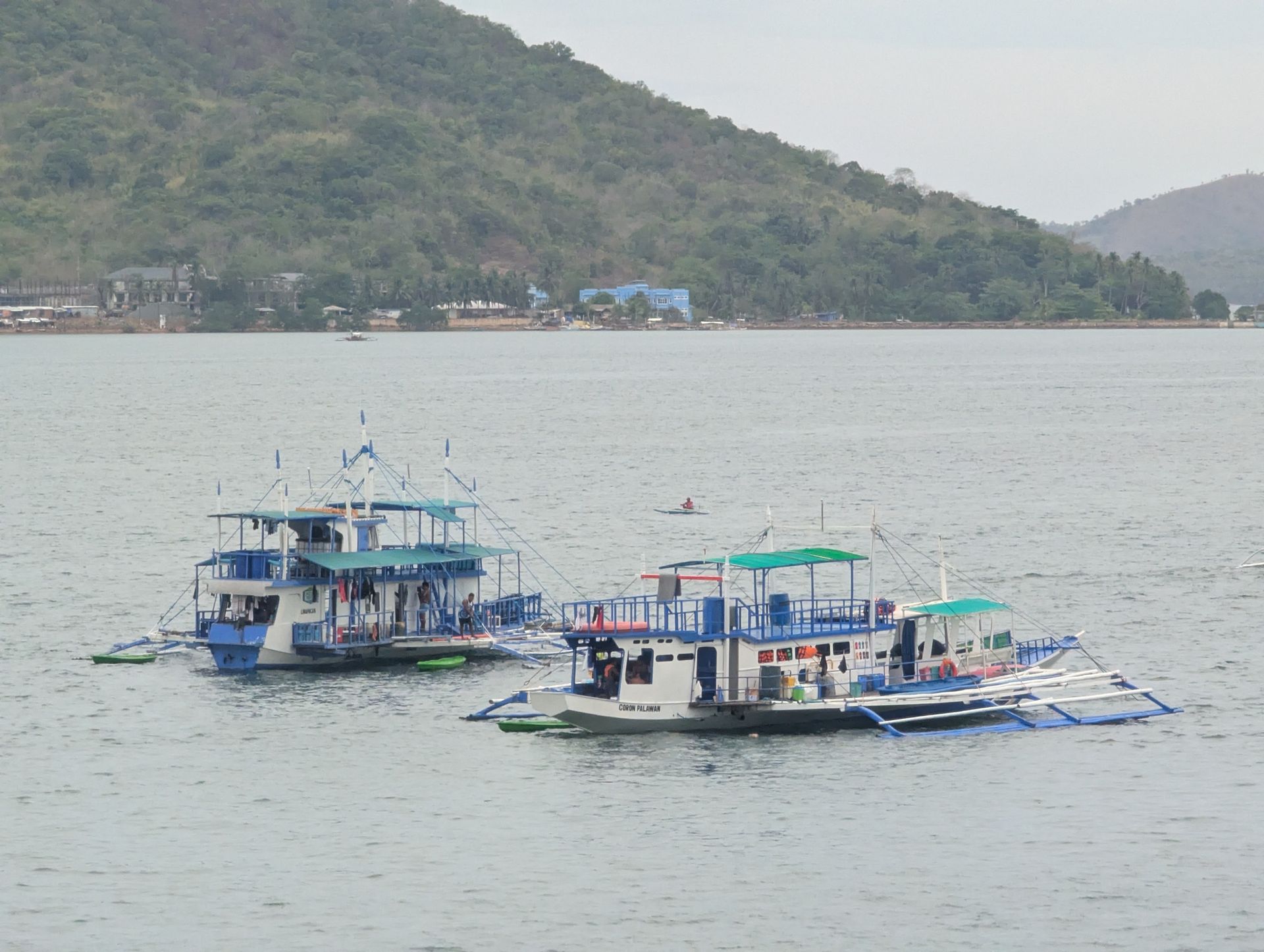
Some of what was is still discernible. The outrigger boats are mostly fiberglass now, not the traditional wooden dugout, “bangka”, and the sails are gone in favor of ‘putt-putt’ two stroke gas engines, but the design is the same; long narrow shape, one or two outriggers and a high tapering prow. The stilt houses on the waterfront are held up with natural poles cut from the mangroves that grow out from the shore. Metal roofs have replaced thatch but the houses still crowd shoulder to shoulder along the coastline. Here and there are concrete buildings indicating imported ambitions. People smile, children mug and grin at us. We happen upon a child being given a hose shower by her mother in an alley. We visit a small motel and ask to see a room. It is simple, clean and bright, has a balcony that looks out on the harbor and has more square feet than our cabin, only $30 a night. A person could live here long term for less than $1,000 a month, (there is a small expat population). Tiny locally run shops for groceries, necessities and pharmacies are next door and just across the street alternating with the deteriorating makeshift homes.
As with all islands, most everything has to be shipped in, except fish. Fishing is a traditional survival activity here and protected by law for the locals who do personal use fishing year round. Some families live aboard their colorful fishing boats. Washing is hung from the rigging and a comfortable enclosed chamber, midship, has been constructed. Other fishing boats have been repurposed to take tourists to the “must see places.” There is a saying onboard, “FOMO, fear of missing out.” Which lifestyle are they finding preferable, I wonder? Watching their island being sounded and distressed for the fleeting pleasures of tourists. Or the fishing life, its history and community? Is the money worth it and who is benefiting?
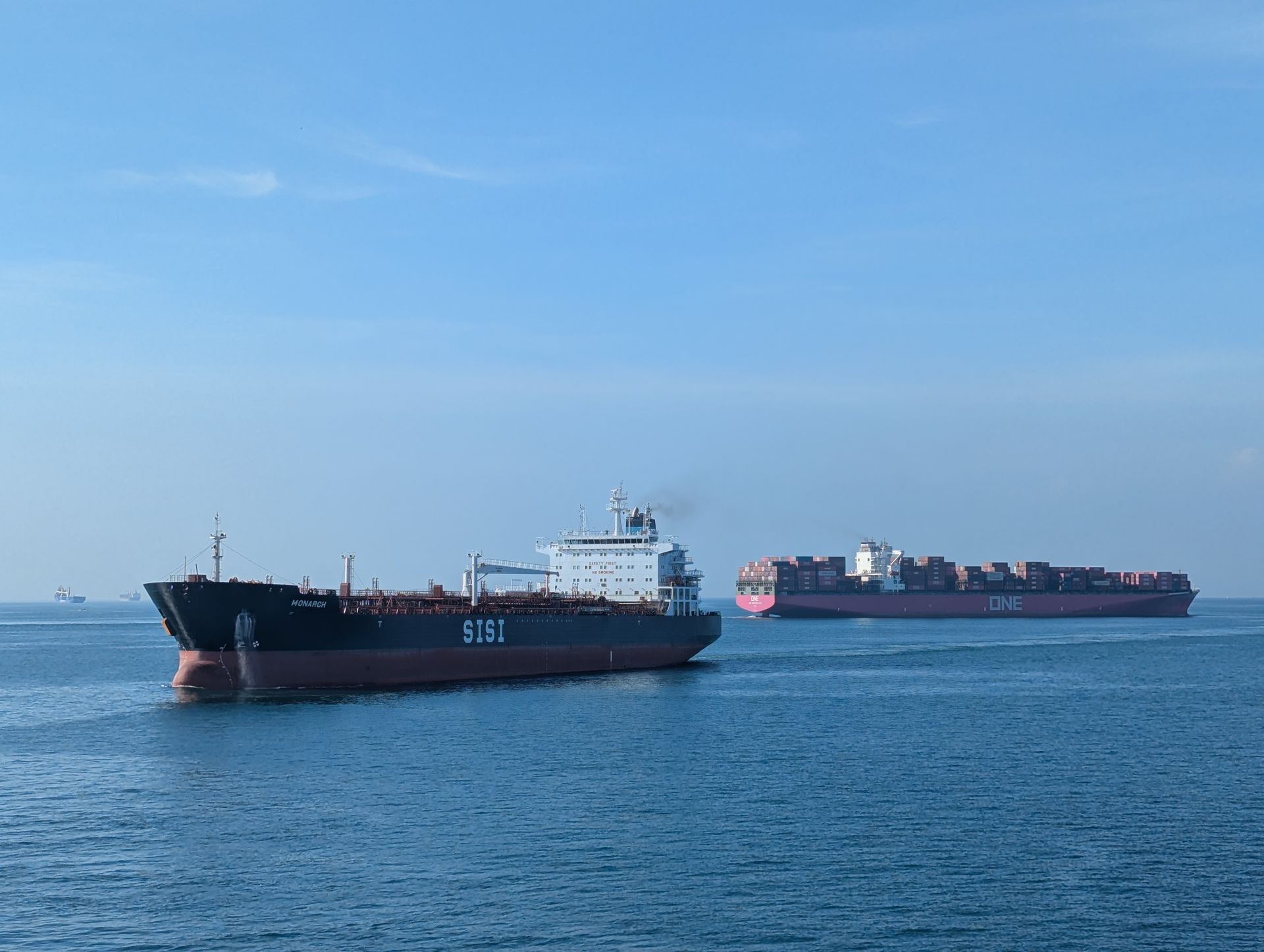
Our captain has just informed us that several of the ports we were considering are not available and the weather prohibits anchoring near another destination. The waves will be too high for safe use of the tenders. So tomorrow we are going out to sea and the deep water to discharge and make potable water from sea water. Then we are going to return to Coron for four more days.
Discharges consist of grey water, from showers and laundry, black water from sewage (like a whale pooping in the ocean), food leftovers from the restaurants (food for the fishes) and the potable water is made onboard through reverse osmosis from water at least 30 miles from land where it is deep and clean. The ship is very careful about recycling paper, plastics and other objects and liquids at facilities on shore. We learned all this from the environmental engineer onboard.