Indonesia, Waingapo
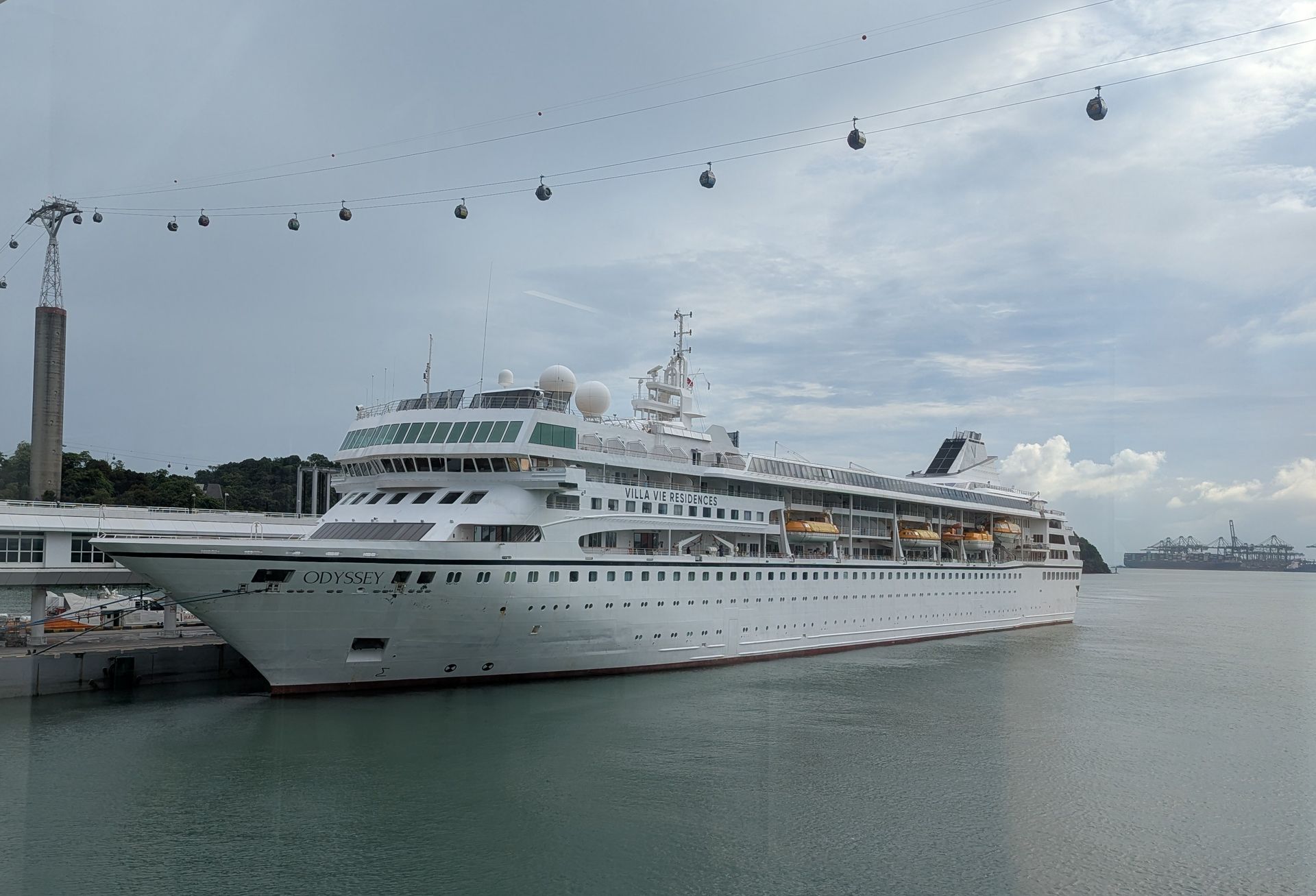
Our arrival on the island of Waingapo is welcomed with a red carpet. The carpet leads expectantly to where several men wait, holding 11” by 14” laminated photo narratives of tours they can take you on and tell you about with three word comments in English. Past them chairs, also covered in red, have been set up under an awning for our “dignitaries.” Beside these are a few tables with souvenirs. Several young boys wait on either side of the red carpet to perform for the passengers as they disembark. Many local people are also waiting in the growing heat for the Exodus of the passengers. Ours may be the first cruise ship that has stopped at their island. One passenger finally emerges and avoids the carpet and the boys. They are shocked. Eventually a group does come out together and allow themselves to be greeted and entertained. They have selfies taken with the boys. Then return to walking and looking into the screens of their phones, bowed over them like they are praying
After exiting the port area there is a long walk through parked cars, trucks and taxi drivers out to the crumbling asphalt of the main road. It is lined with vendors, a gauntlet of drinks and snacks. A ferry is unloading, people and motorcycles are streaming out. These are the customers the vendors are waiting for. A large number of motorcycles are parked on either side of the road waiting for their owners. We make our way between the crowds of people and vehicles to the hot uphill slope of the road that goes somewhere, which is hidden from sight by bunches of dark green trees. Shortly we are defeated by the heat and start back. Access to other parts of the island that are considered appropriate for tourists require a taxi, negotiations for price and where it will go. Generally we try to avoid this and are most interested in what we can observe and who we can meet by walking. We talk to a motorcyclist on our way back who says he has access to local Royalty. Jeff describes the Parallel Currency concept to him and gives him our website card. I am also able to pick up some interesting scraps of paper from the garbage that lines the road. I use their patterns and color to create abstract images on postcards I make to send to friends and family. In the end this has turned out to be a very satisfactory walk.
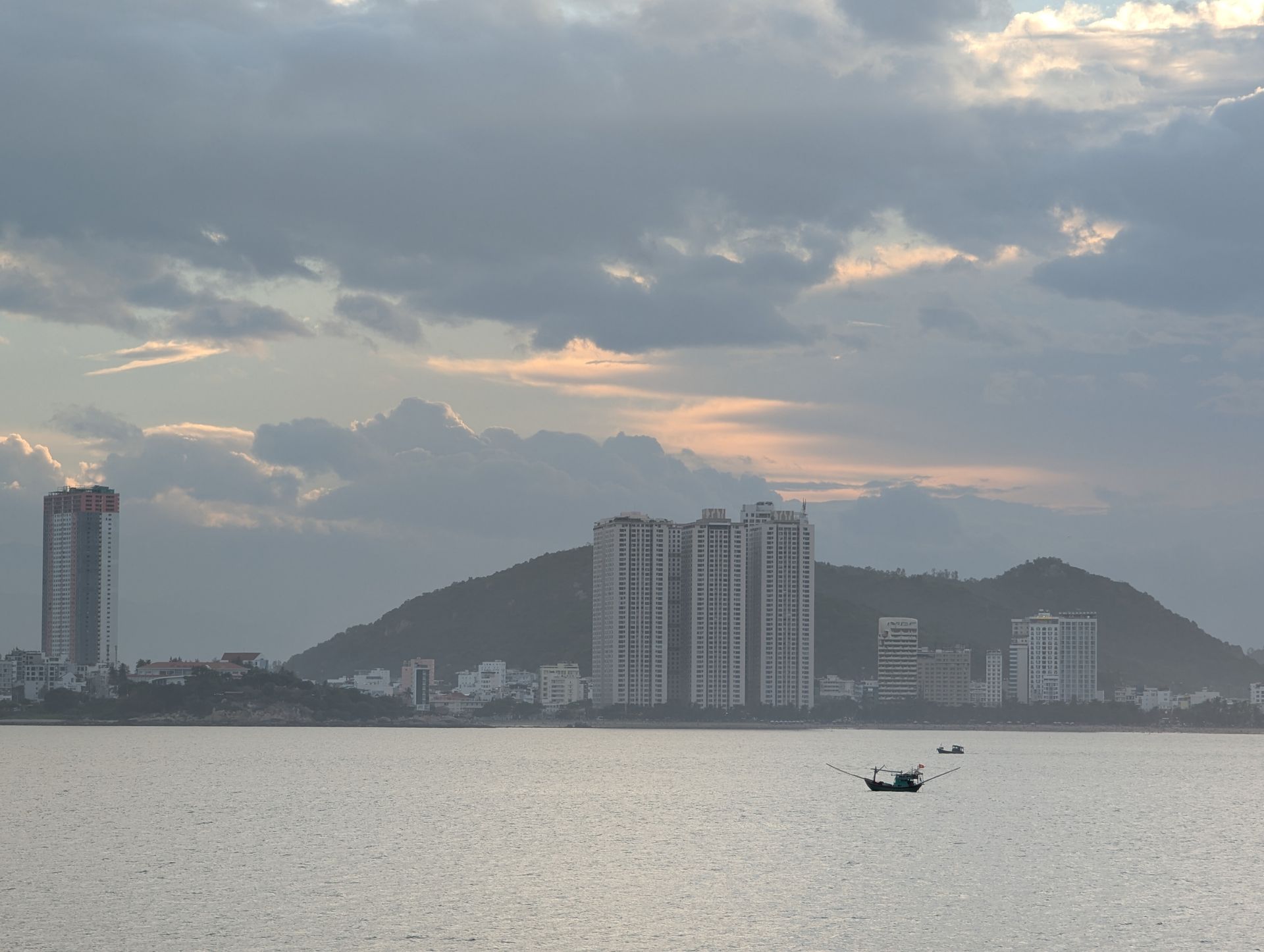
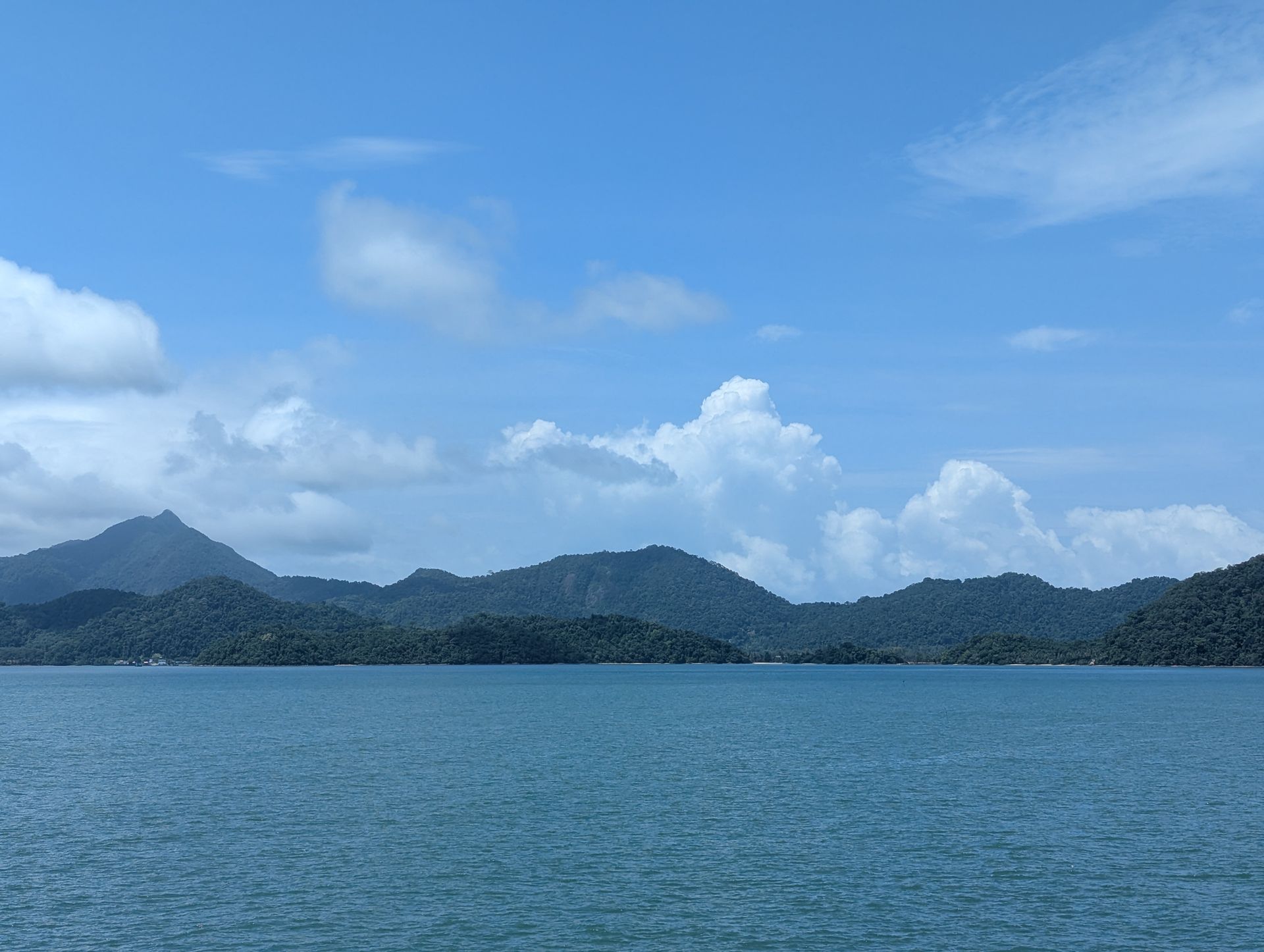
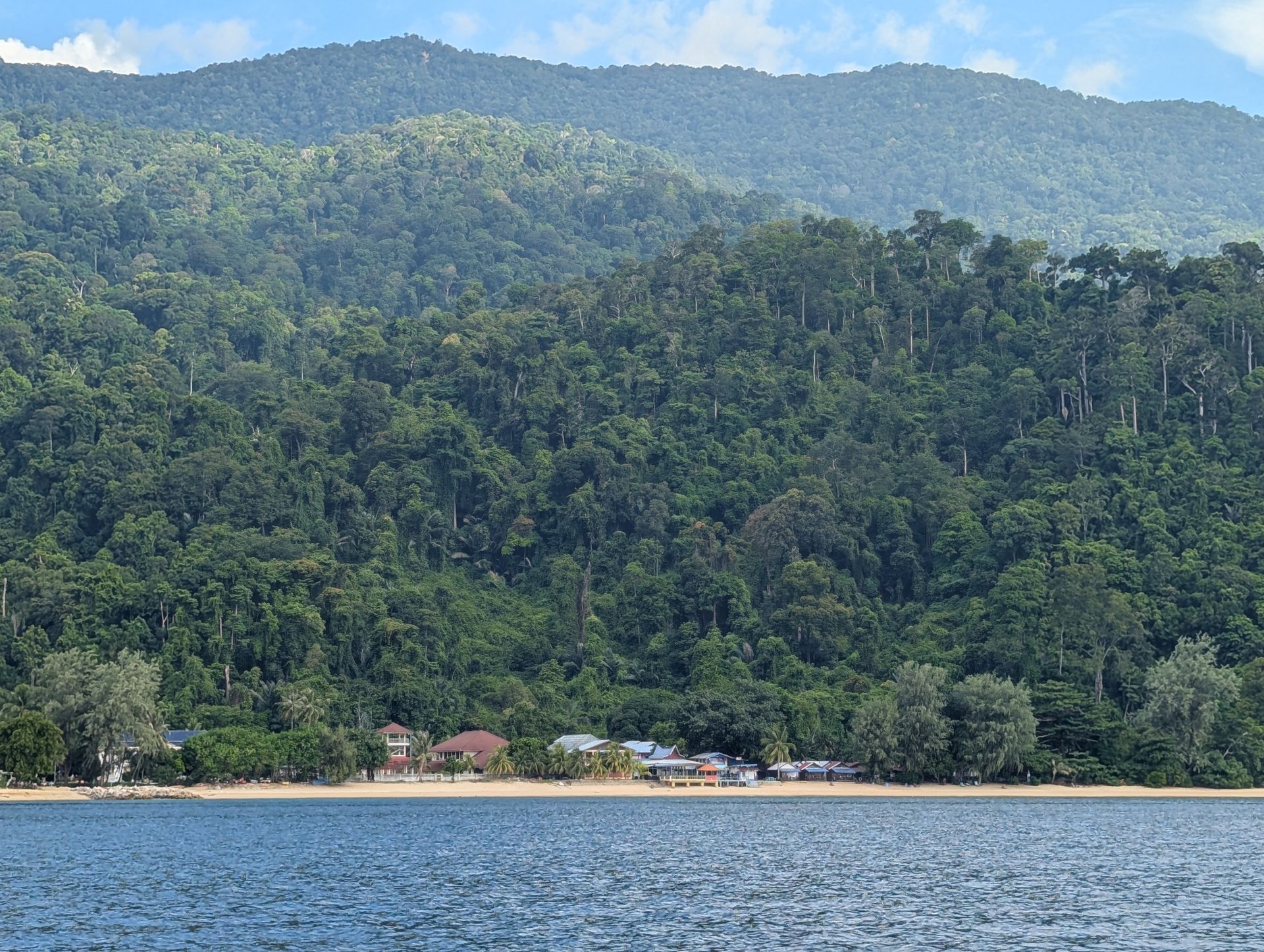
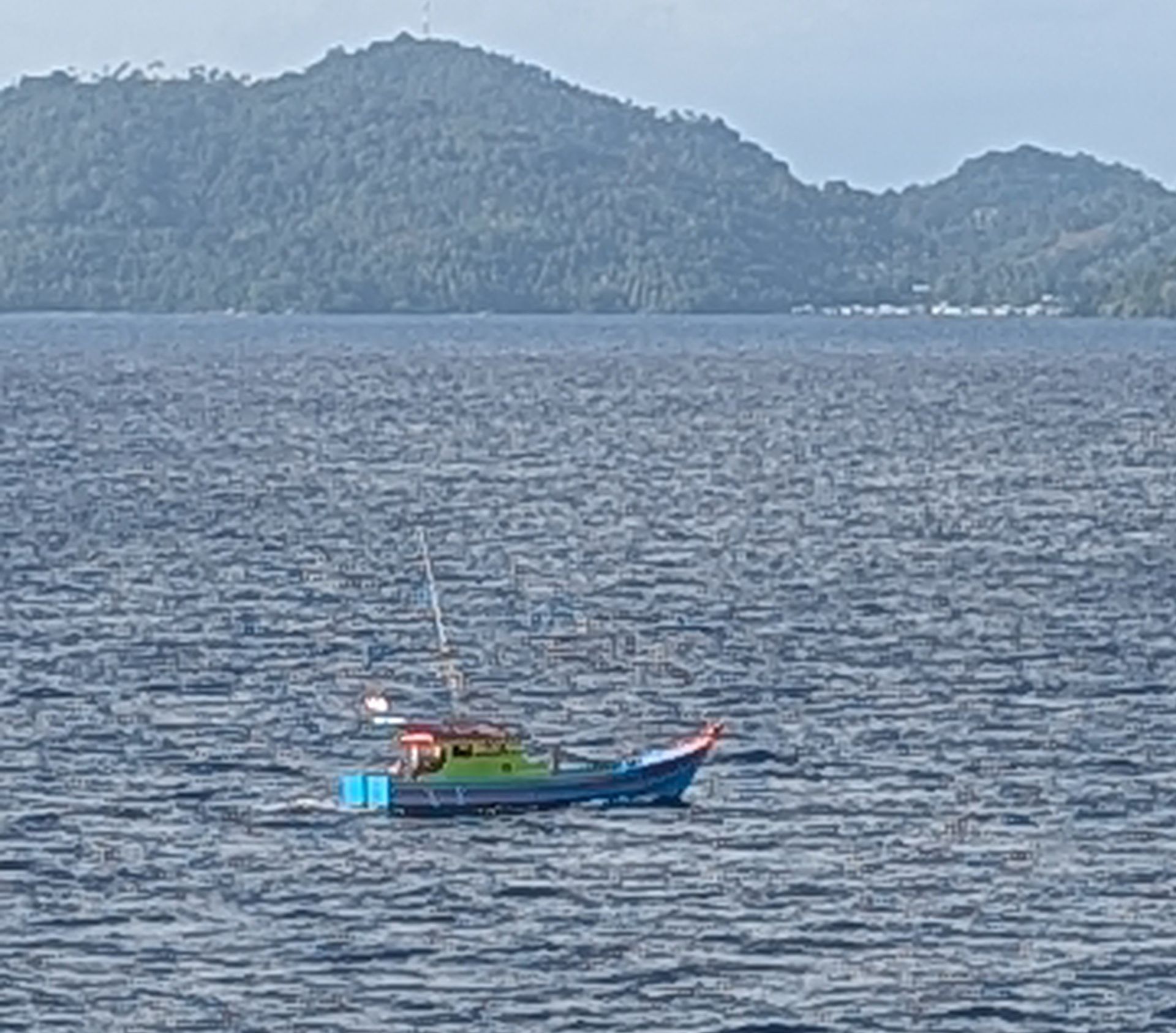
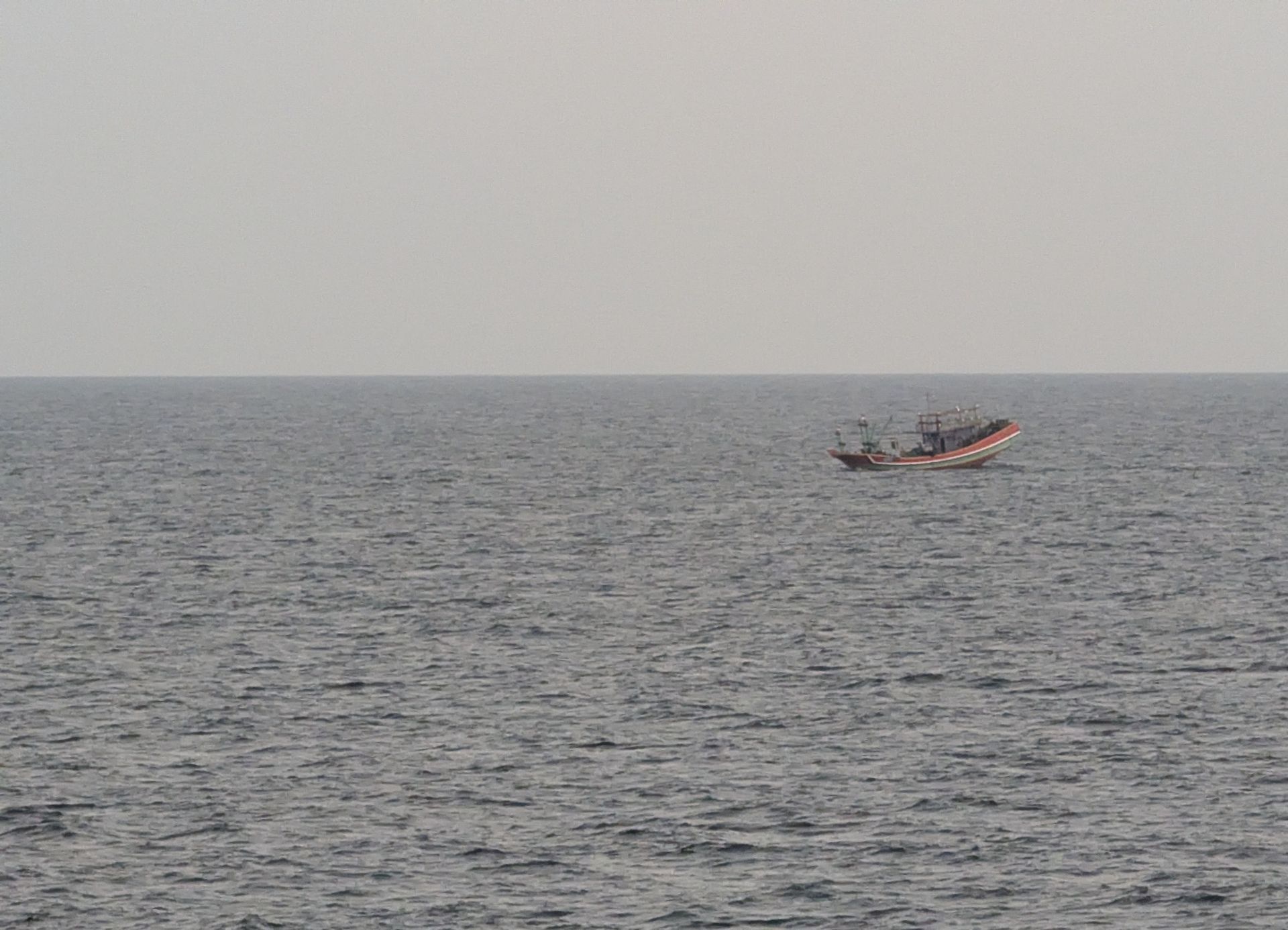
There are very few palm trees here, which is remarkable. A different ecosystem than Bali. The mountains are low, flat topped and shelved. They define the spine of the island. Bunches of dark green trees patchwork the slopes getting denser as they approach the water. The water is blue/green and clear, fishing boats are high prowed and the smaller boats have outriggers made of bent PVC tubing.
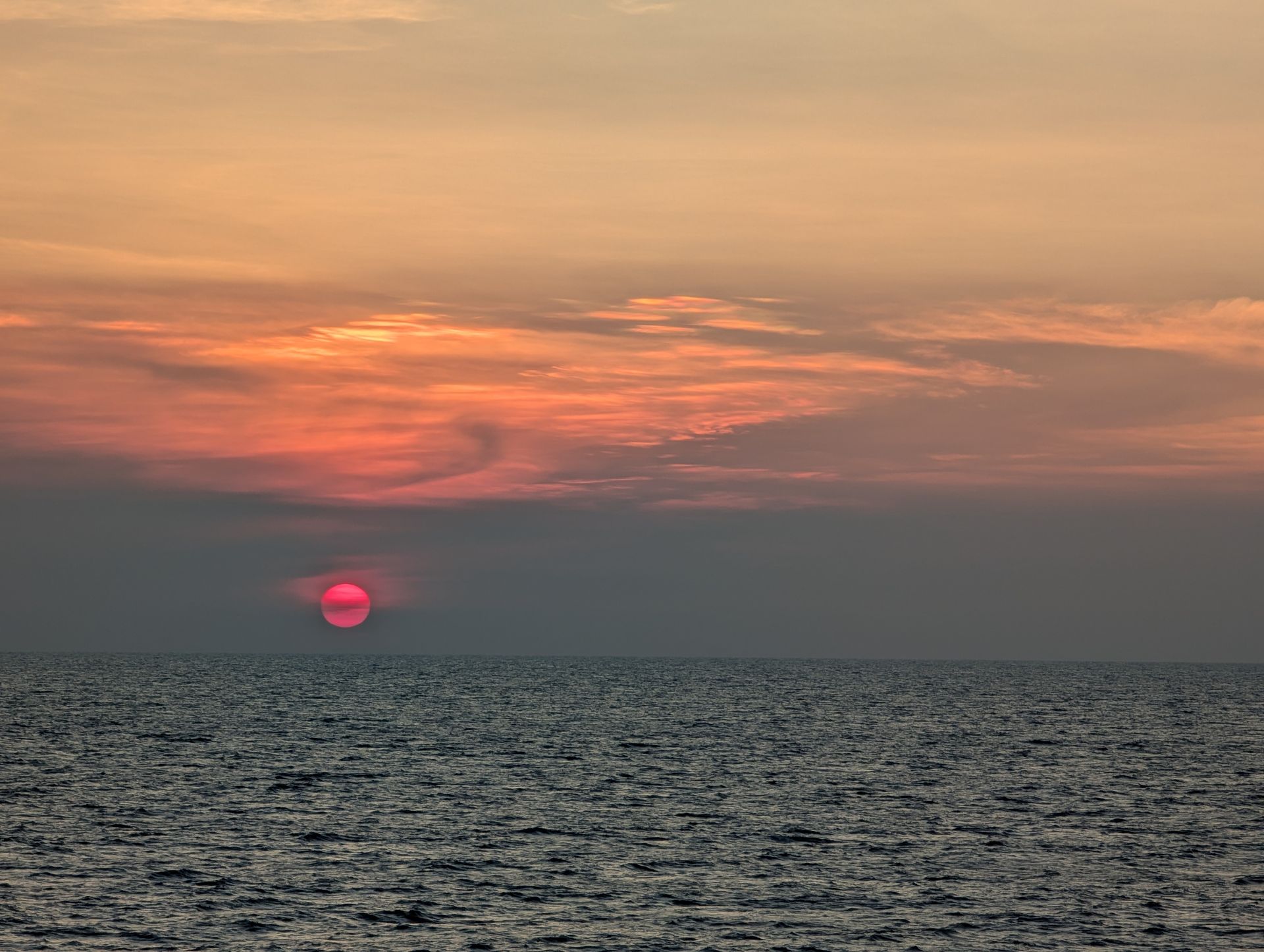
It is now early evening and the sun is low. I am walking around the outside deck of our ship taking in the 360 degree view and the sounds. On the starboard side a band is playing on shore and a singer starts up a contemporary tune. As I round the bow a chant drifts through the dusk, the Muslim evening prayer. This dominates the port side then at the stern blends with the music on shore, which dominates on the starboard side. Round and round as I walk they alternately blend and retreat, blend and retreat.
I notice as I look out over the port side that the tide has gone out and long flats of seaweed, rocks and soil are exposed. People have walked out onto these surfaces to harvest edible sea life, gathering them into plastic buckets and bags. I feel like I am watching history.
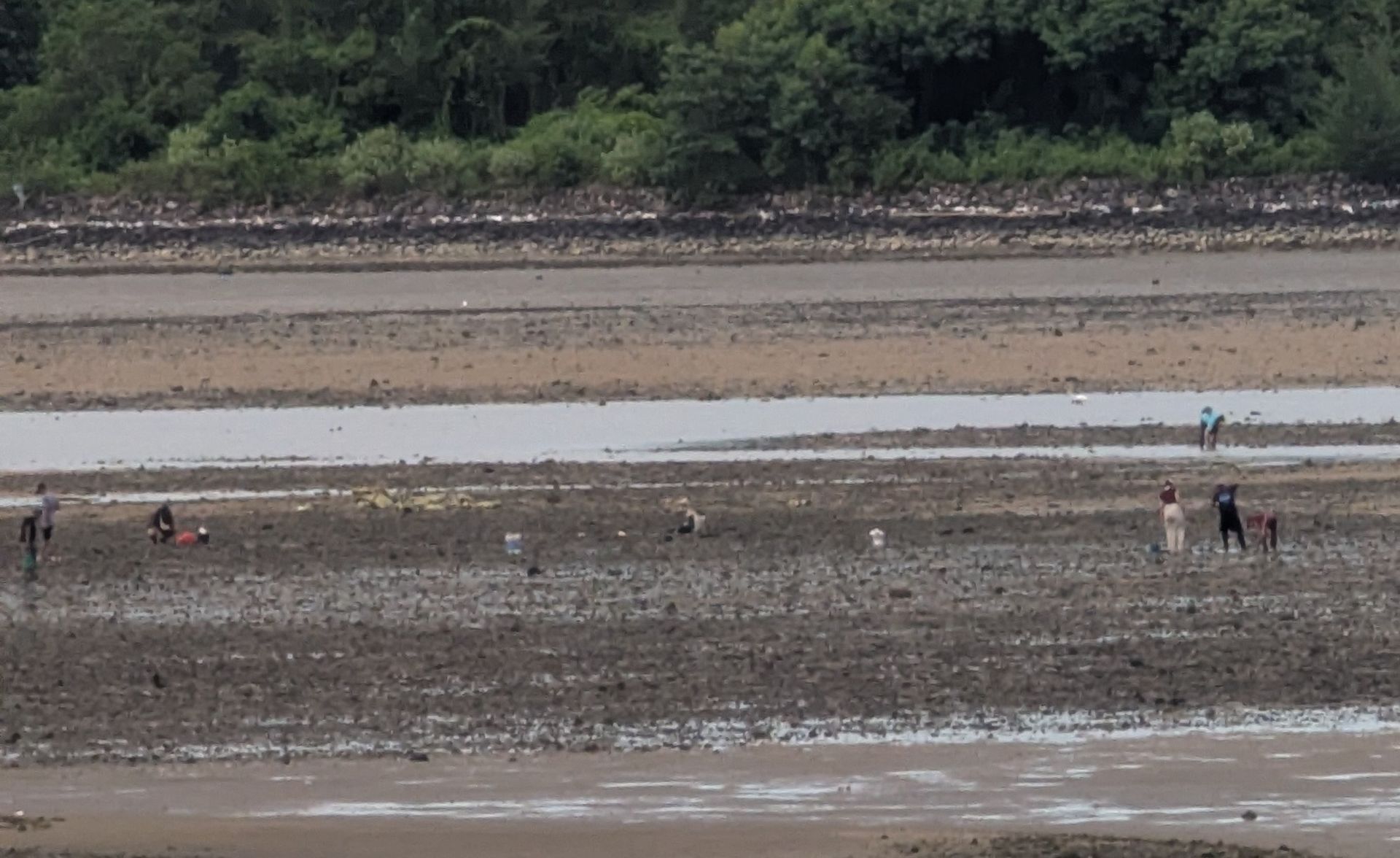
The cluster of fifty or more simple metal covered shacks on the far shore from which the gatherers have emerged is probably the original location of a long ago village with homes made by hand of local materials. I am curious about what they are finding. I discovered that these communities have relied on gathering marine resources since Neolithic times, 3,500 to 4,500 years ago. But this is only how far modern science can reliably date. Logically, these activities must have been a practical survival activity for more than a million years.
The harvest includes edible invertebrates that cling to the stone crevasses or hide in the tidal pools; sea urchins, snails, limpets, octopus, rock crabs, sea cucumber, small fish and clams. Edible seaweed is also gathered. A seasonal delicacy, which signals the occasion for a sacred ritual that protects the upcoming harvest, is the Nyale; a sea worm. As with most ancient rituals this one comes with a story. A princess was desired by many men. She didn't want to choose, she wanted to share herself. So she turned herself onto the Nyale so everyone could enjoy her. The local animistic belief system centers on harmony between humans, nature and ancestral spirits.
Before the arrival of the Portuguese and the Dutch, trade was primarily for survival and mutual benefit. Coastal people focused on fishing and salt production which they traded for rice, corn, fruits and vegetables that inland villagers grew in their fertile volcanic soil. This economic interdependence has continued since the 14th century. Prestige goods were introduced by the European colonizers. This gradually created economic and ecological imbalance. They imported silks from India and developed a massive industry in exporting sandalwood to China and Europe. This had a lasting effect on the island landscape and social structure. Large parts of the island were deforested and became the grasslands of today. This favored horse breeding over forest based gathering. Another profound shift was the centralization of power. Trade was conducted through local leaders (the Royalty). They claimed ownership of the sandalwood trees, creating a sharp social divide between the ruling class and the gatherers. Arab trade networks introduced new horse breeds that eventually replaced walking as the primary form of travel. This allowed inland villagers to transport larger quantities of goods to the coast faster. The Dutch took formal control of the sandalwood trees and imposed strict regulations on harvesting. Locals could be jailed for cutting it. Fear led many to stop tending the trees. This distanced them from their traditional relationship with the forest. It was named the “Trouble Tree.” Another long lasting impact of Colonialism.