Sydney Australia to New Zealand

March 12, 2026
Two kayaks on a calm lake, with mountains and cloudy sky in the background.

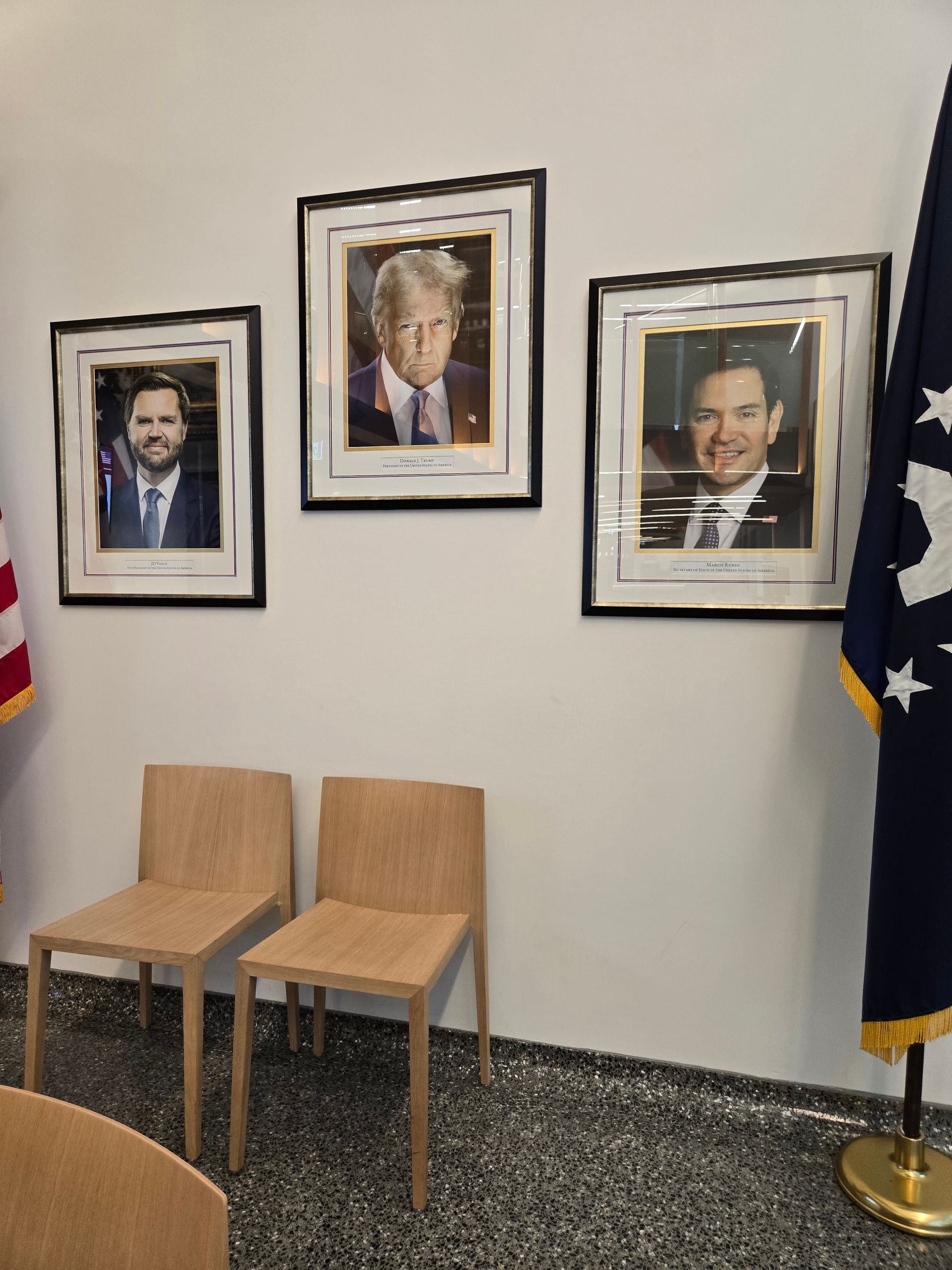
The most important thing we have to do, now that we have re boarded our ship in downtown Sydney, is to increase the number of pages in our passports. Most countries will stamp a whole page and sometimes two. Our passports, though new, only had twenty eight pages. This will not be enough to get us around the world! So we made an appointment with the US Embassy, along with 50 other passengers, to address this issue by purchasing larger passport books which have 52 pages. The Embassy was new and modern, the employees good natured and efficient, considering that we descended on them all at once. We conducted our business in an orderly manner under the watchful eyes of the US President, Vice President and Secretary of State, whose framed photographs dominated the far wall.
Two people paddle a wooden boat on a body of water.

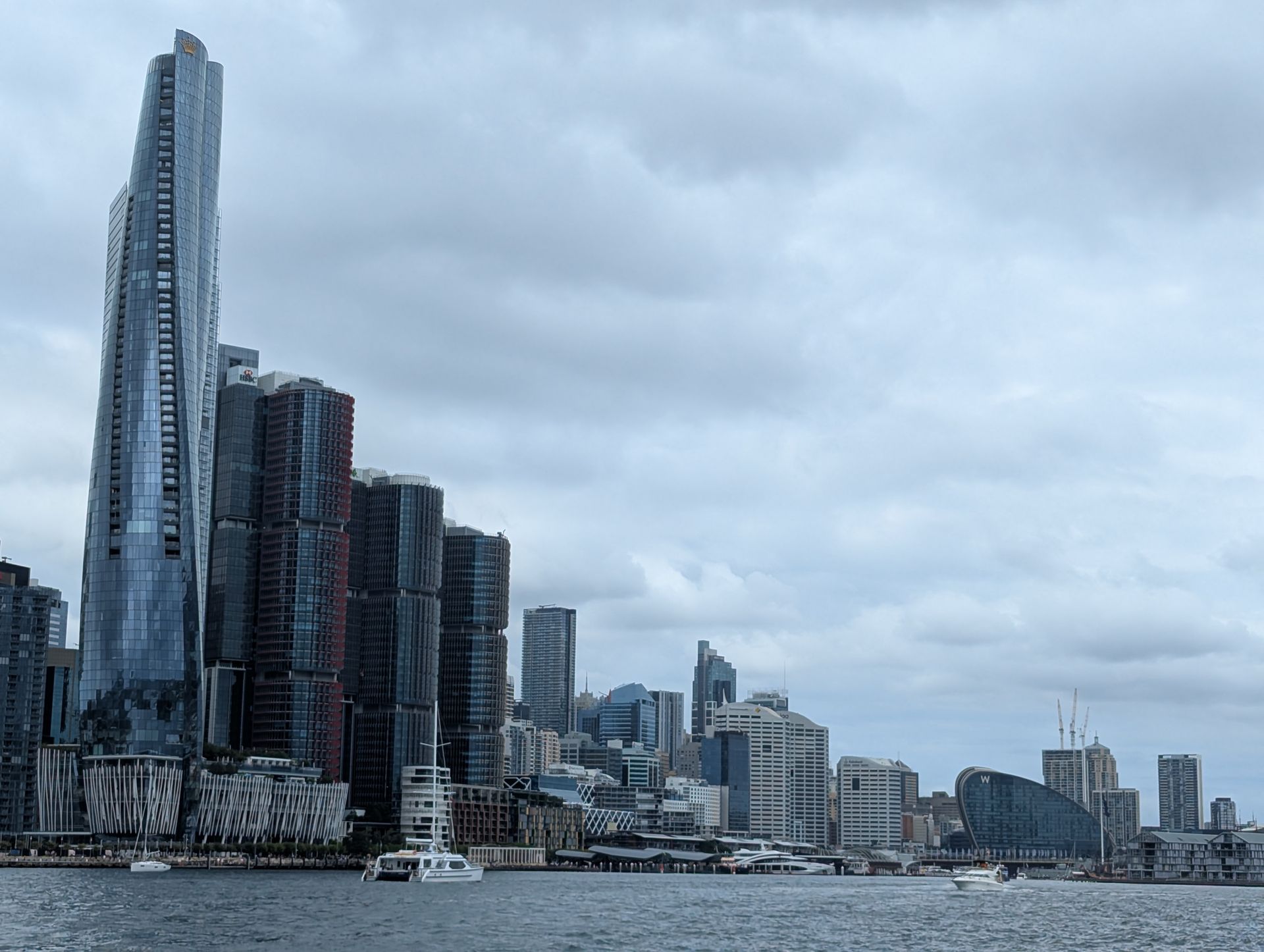
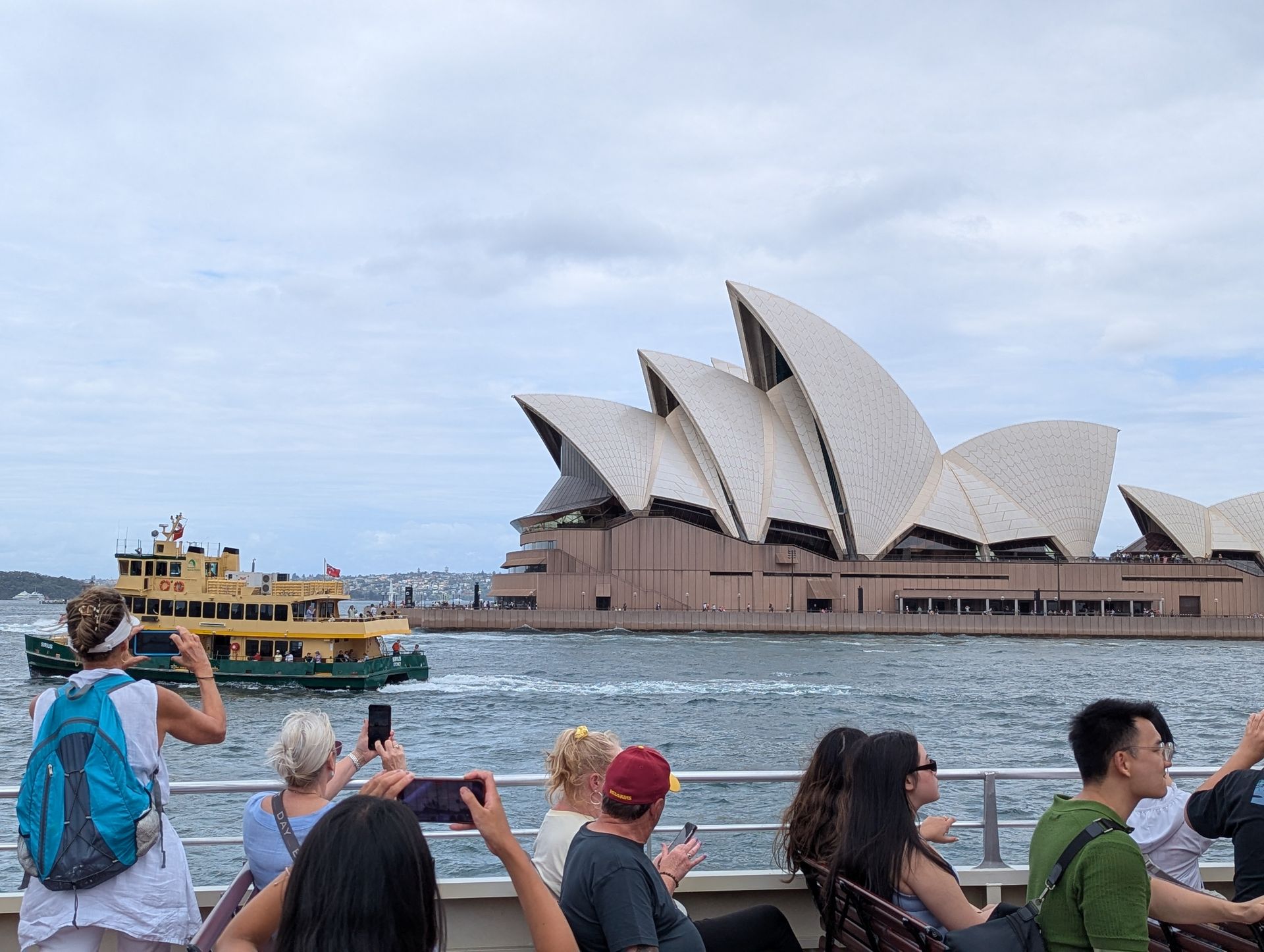
Sydney is a Big City. All Big Cities are alike. It is the smaller more rural cities that have unique character. Big city people are there to make money and they put up with, or don't notice, the tall buildings that block the sky, the noise of vehicles, the smell of exhaust, the overabundance of expensive shops and restaurants, the aggressive pace, meals on the go and the scarcity of privacy. Even the presence of excellent performance venues and museums do not compensate. To go to the Sydney Opera House is expensive and unaffordable for most residents. Museums have entrance fees. These places are visited mostly by the tourists, who have free time and extra cash.
Children playing near a boat, next to a wooden building. One child jumps, others sit or stand.

Free time is in short supply in a Big City. Of course there are exceptions but nowadays Big Cities are not like those of the past where you didn't need a trust fund to live there and the foment and the stimulation of hopeful migrants stimulated invention and the arts. Today, there is an emotional haze over everything, that won't allow clarity. The scent of desperation is in the air and a feeling of dulling sameness. People are distracted by shinny stuff and thoughts and some are on display, to no purpose. A visitor yearns for something to be surprised by, something real going on that isn't for sale. 


 I find that I am observing the behavior of the city birds, as a relief.
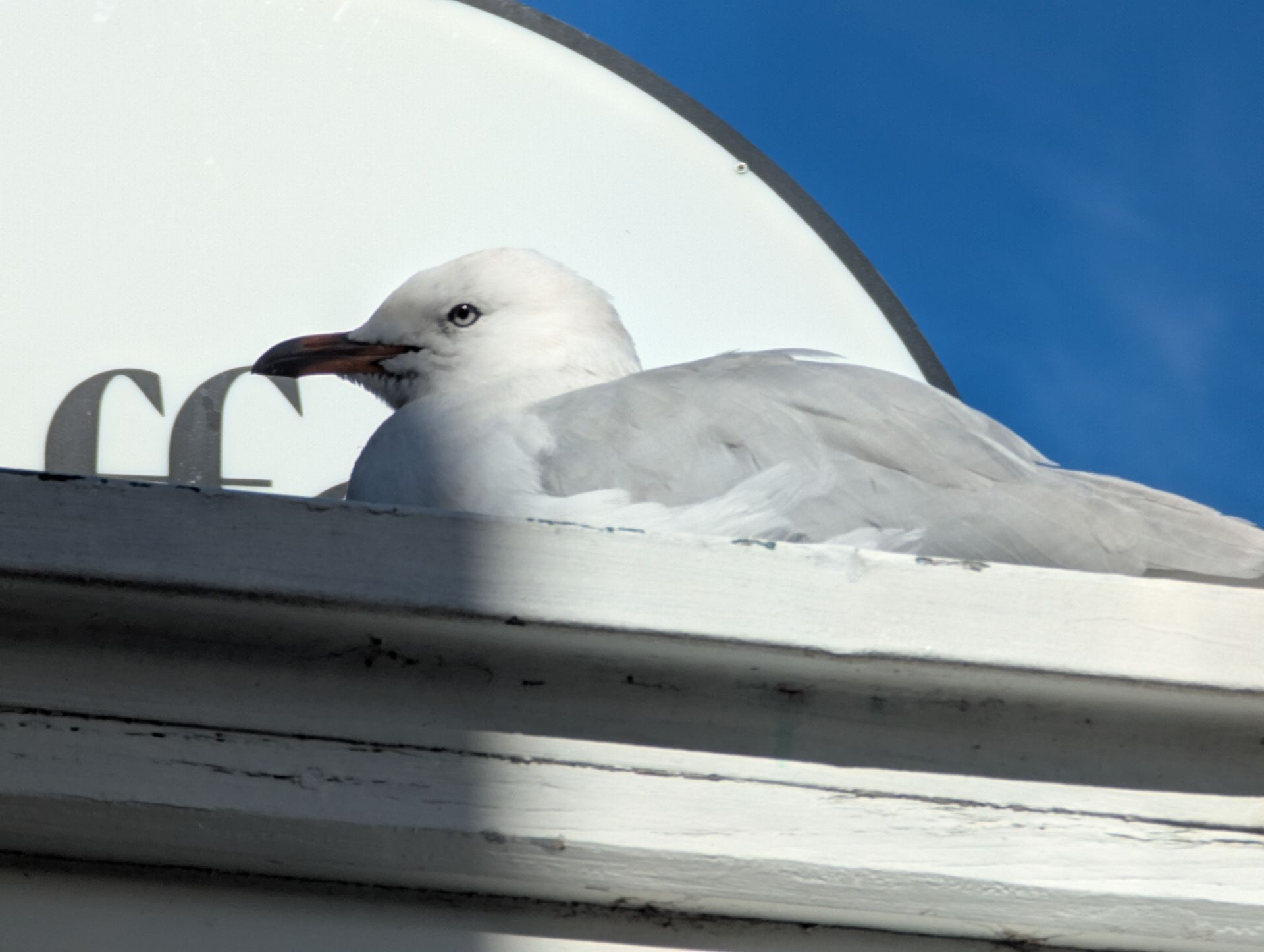
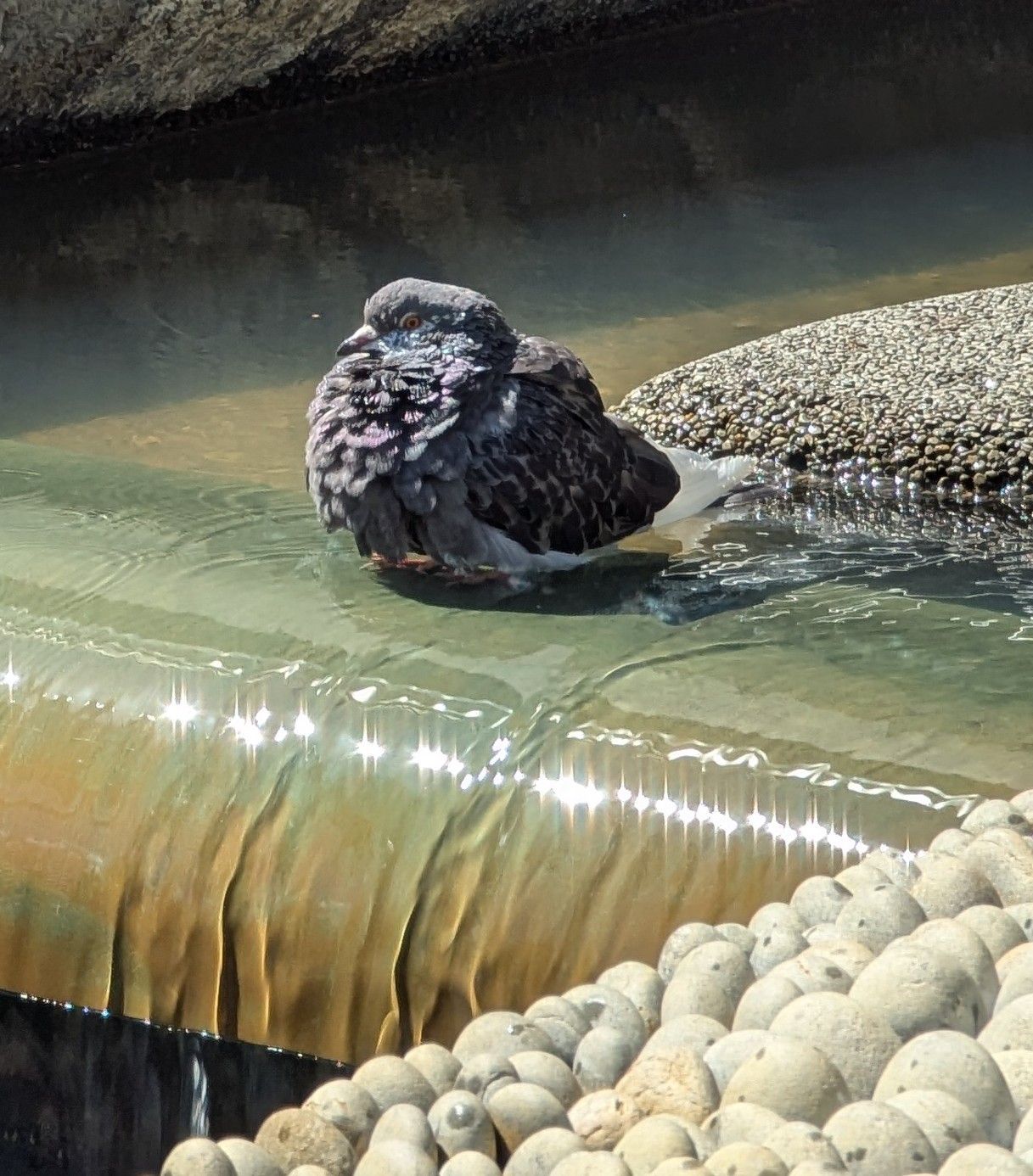
These are mostly sea gulls, sparrows and pidgins. They have adapted to the city knowing that there is always a human, somewhere, eating. Bits of food are dropped from an outdoor meal, or when a knuckle of bread is thrown to them, the sharp-eyed gulls call, then gracefully stoop their perfect curve of flight to scoop them up. The accuracy and beauty of these movements are repeated over and over as more and more birds call out and arrive, their wings overlapping, they argue and peck a crust to bits. Sparrows, modest explorers of the ground; dart and peck, brave and tireless, while peeping encouragement to each other. At the end of the day they gather in a shrub to gossip about the day, then fall asleep. Pidgins are philosophers. They have seen it all, know better than to expect permanence, they coo soothingly, move unhurriedly, fly like they invented it and it's no big deal and they don't have to show off. They do not depend on your generosity, but accept it, forming soft gatherings, sharing unhurriedly, their iridescent feathers sparking in the sun.
World events don't pass unnoticed, even though we are traveling and changing destinations regularly. The news is with us. A few days ago, in the night, Israel and the United States began bombing Iran. This resulted in the death of their religious leader and hundreds of children and adults. The bombing and Iran's response continue as I write. Though we are more than 9,000 miles from Iran the impact of these tragedies wash over us, pressing our common fragility into higher relief. More death and the stresses of oil and food shortages loom. 

  Our ship leaves tonight for New Zealand, five days at sea. The crossing is not rough and passengers relax into the many ship activities for the duration. Our first port will be Tauranga. But the captain is warning us that there will be rough weather ahead as we progress. 


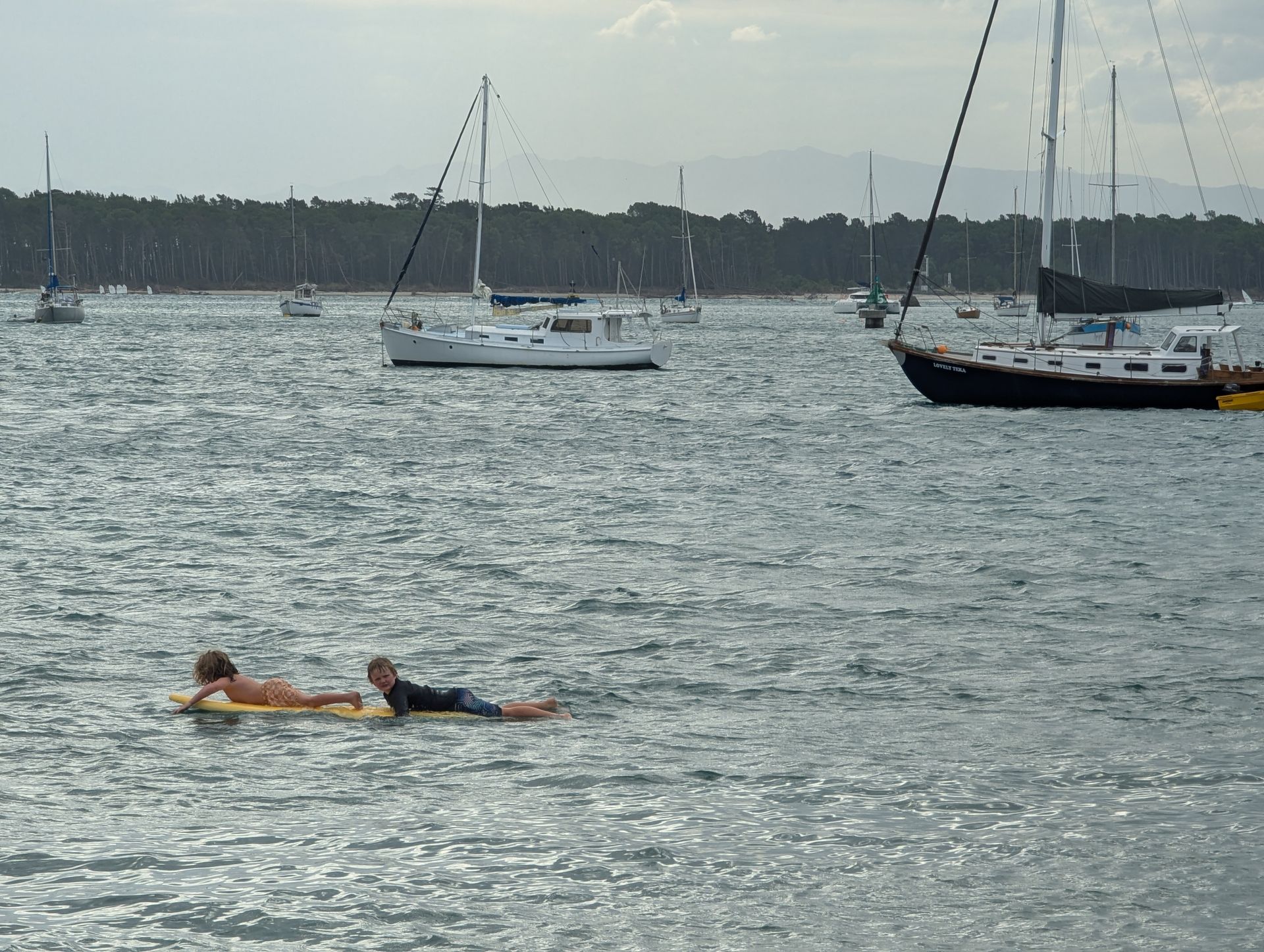
We arrived at the port of Tauranga. This is a small, easy-access city. We can walk off the boat, out of the shipping port and into the city in about 15 minutes. The business area is one long main street of several blocks. Most of the shops and restaurants are catering to tourists offering souvenirs and high prices. But if you walk far enough in one direction you find a salvation army thrift shop, a grocery store and pharmacy. There is also an excellent park with mature trees and a small pond with a waterfall and a group of ducks. But most of the local life is going on at the waterfront. A beach gives families with children access to the waves and beyond are moored sailboats pitching forward and back, impatient to fly out into the harbor.
We leave the next morning. Our progress along the eastern coast of New Zealand meets a fierce wind storm. The waves reach 14 feet causing a rhythmic up, down, elastic ride. The wind grumbles constantly.  Waves come in series and the largest dramatically sucks the boat down into its trough. You feel the ship gather like a horse preparing to take a jump then the bow slowly rises and breaks through the top of the wave. Spray flies over the bow and to both sides. This is repeated over and over. Inside the ship many passengers are sea sick and stay in their cabins. When you walk from place to place you are pressed into a weaving pattern, like a drunk Charlie Chaplin. All around are small rainstorms, columns of grey joining the sea and sky. When we break out of them the sun glares down on the water making it shine and creep like molten steel. Wherever you try to settle you are pulled this way then that. We expect this weather to continue through the night. Sleeping is a challenge. A wave can pound the hull when the timing of the bow doesn't slice through it. This shocks the ship and sounds it like a gong. Immediately you are awake. Finally we get relief in the morning when we enter the magnificent harbor to Wellington.
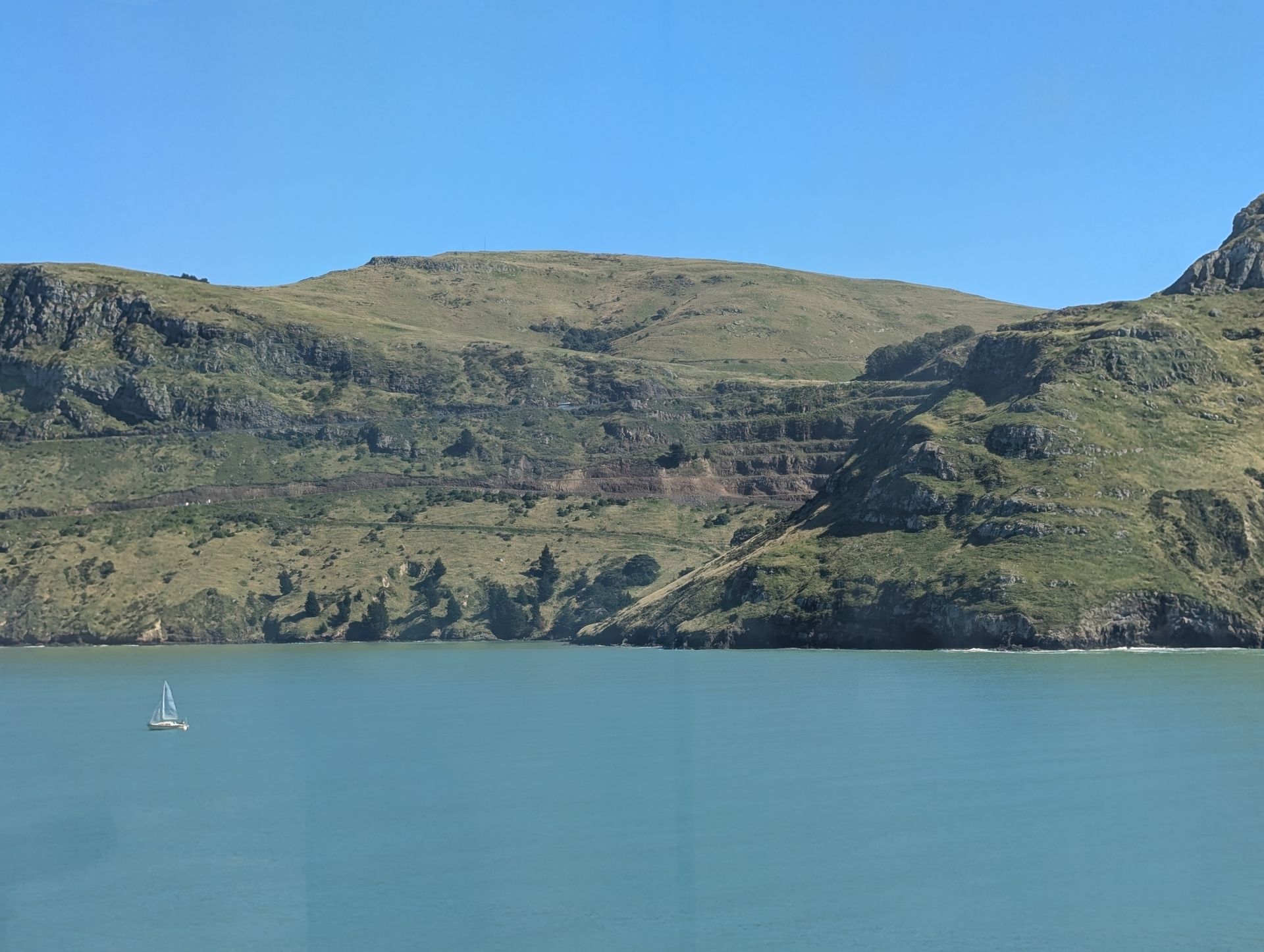
It is almost a perfect circle cut into the rock with a narrow entrance from the ocean.


We come alongside the dock, the lines are thrown and secured. There is a shuttle provided to take us downtown. We step off the shuttle into the vertical world of another Big City. This is a shock after 5 days on the water with nothing in sight. The buildings of Wellington are a mix of historic and modern. An interesting study for an architect. Again, the avenues of expensive restaurants and high end clothing stores, reaching in every direction. Here and there are sculptures, some contemporary and others, horses and riders of the past, on tall pinnacles.
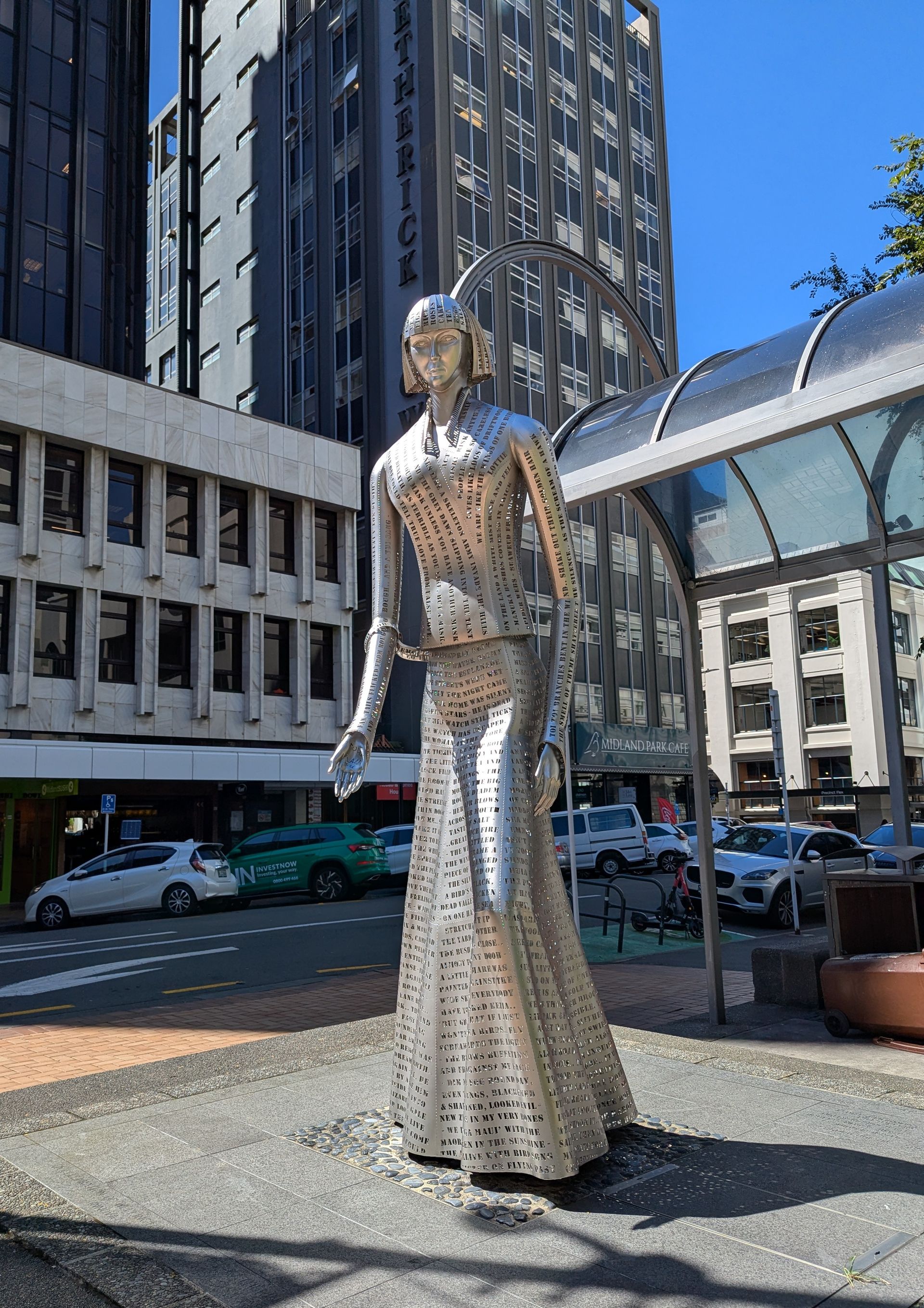
People are walking purposefully all around us as we slowly progress, like a stream around an obstacle.


Unfortunately we are only allowed to stay at the dock for one day. We have to leave in the morning because New Zealand decided upon inspection that our hull carries too many barnacles and other forms of life they don't want contaminating their waters. Tomorrow, offshore about 20 miles, a work boat will come alongside with scuba divers who will scrape the hull for the next 3 days.


After the scraping there is still bad news, the hulls are not clean enough. We are only allowed to stay 24 hours in the remaining ports and several had to be cancelled because of the cleaning delay. This is a disappointment to passengers who have made plans for tours and have paid for them up front.


We make our way, in calmer seas, to our next port, Littleton. Its harbor waters are a soft celadon color. Probably the result of limestone in the cliffs that parted to form it. As the name suggests it is a small city/town. The kind of place to raise children. The primary school looks charming. It is also catering to the cruise ship tourist trade with souvenirs and cafes, but there are genuine signs of life, a library, a book store (the best one I have ever seen) and a local art and performance scene. It would have been nice to spend another day. But we have to leave in the morning.


Our final port is Port Chalmers. The harbor is long, beautiful and edged with the supine, undulating flesh of the grey greenish hills.
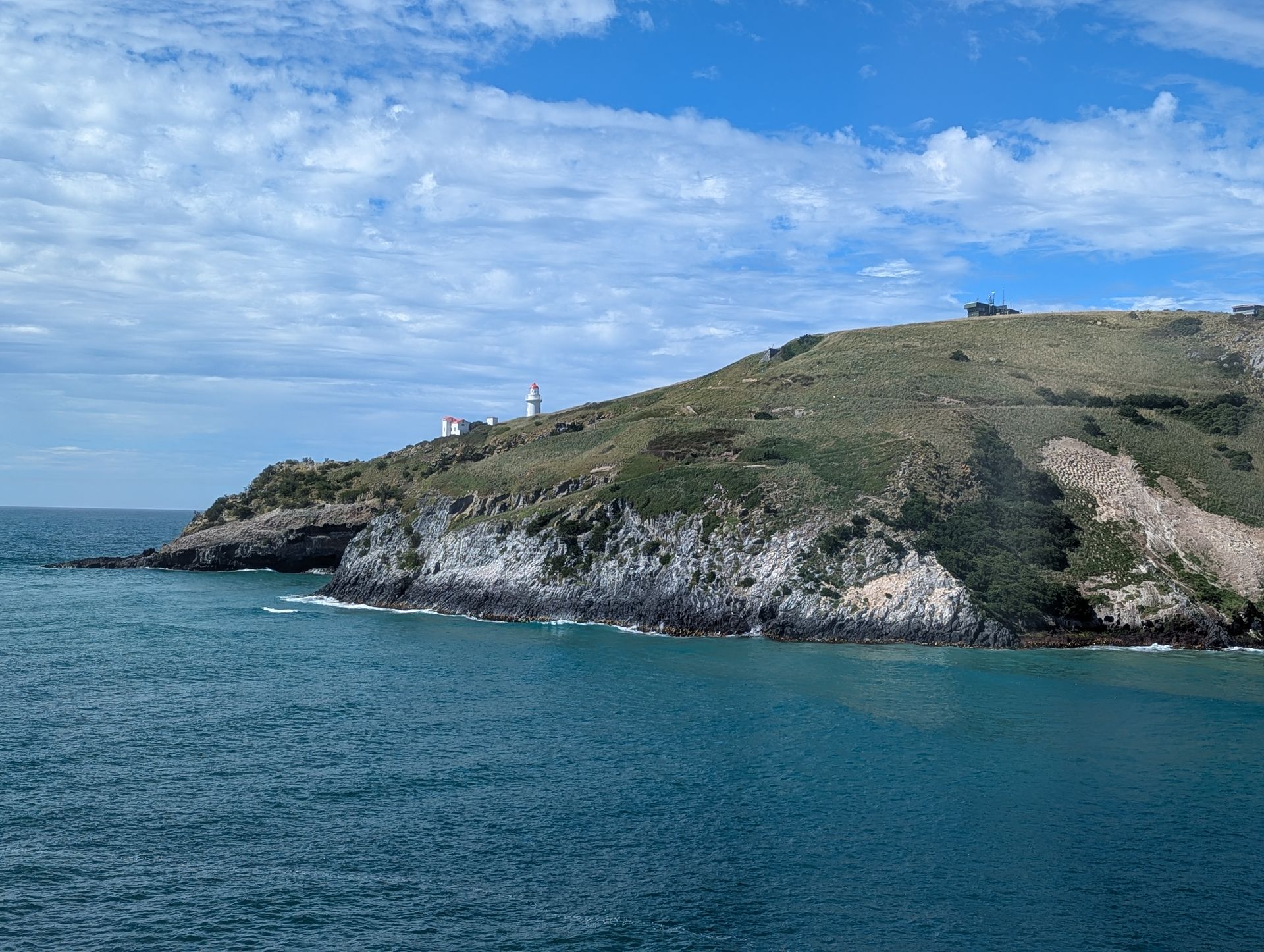
Here and there, a herd of sheep are grazing. At the narrow entrance was an albatross rehabilitation center. The huge birds float proudly in the sky. The tug, Taiaroa, has come alongside to escort us to the dock. Nudging and insisting like a mare with its foal. We walk into town and find that Port Chalmers is charming, like its name suggests. I would live here. An emerging art scene, which indicates it is still affordable, a book store, easy walking to the grocery and pharmacy, good coffee, beautiful views everywhere and kind, friendly people. More than enough.


In the morning we leave for Australia, five days at sea.
April 17, 2026
Sea days pass differently than land days. At sea the ocean and the ship's passengers are the changing features. Land life has extra distractions, vehicles, shops, museums, temples, churches, gardens, bird song, dogs barking, taxi drivers, venders, airplanes, the full extent of human activity. During sea days I prefer to observe the ocean. I am aware of the passengers; like being part of an extended family or small village where you know most of the people a little and a few well. But the opportunity to be on the water for long periods is special. Sometimes, when the ocean is calm, a criss-crossing pattern may be seen on the surface, a delicate weave of vibration. I wonder if marine life is creating it, communicating. Other times the water heaves and agitates like an angry crowd is running here and there under a silk sheet. We sail six days from Adelaide to Fremantle, for the most part we encounter easy swells on this trip. The ocean lets us pass with tranquil, breathing heaves up and down. When we arrive there is an art festival in progress downtown. Crowds of people have traveled by train from the suburbs. We walk in. Some streets are blocked, making way for displays of crafts, performers, food venders and pedestrians. People are all around, eating, talking, buying stuff and watching the performers. Clowns, singers and acrobats compete for attention and overhead huge soap bubbles float, generated by the children nearby. It is a perfect day and everyone is out to have a good time.
April 7, 2026
Our stop in Melbourne was only for a day. There are plans to return after we visit Tasmania, which is just south of Melbourne. When you look at a map you can see where the island broke from Australia, a ragged triangle torn from the continent. England brought their convicts here to establish a penal colony in 1803, (convict transport ended in 1851, 50 years later) the colony eventually became Hobart, the capital city. Convicts were brought by sail. All the way from England around the southernmost tip of Africa, Cape Agulhas. A cape historically known to clipper ship sailors as a significant hazard, notorious for mammoth rogue waves of up to 30 meters (100 feet). What could these unlucky people have done to be banished on such a dangerous trip and so far away to an “uncivilized” island? Turns out prostitution and unwed pregnancy was enough to get sent there if you were a woman. And being an orphan, if you were a child.
March 25, 2026
The yellow pilot boat is approaching. A pilot will be brought onboard to guide our ship through the harbor. As we progress, a stretch of islands pass us on the left then, the coastline, on both sides. Sailboats, white triangles against the dark blue water, shine in the distance. Cliffs drop sheer from the pastureland to the tan beaches. Dark green groves fill the crevasses. We cruise along under the dome of the sky. Soon we will be docked at Port Melbourne, Hobson's Bay, Australia. Living life onboard, traveling around the world, I feel like a spirit watching the living as they go about their activities. I am a temporary exhalation, undetected then gone. But their doings remain in my mind. Humans are so very busy, especially the young adults. It takes significant aging to bring on stillness and reflection. My obscurity can make me sentimental. I feel a general affection for anyone who passes. I saw a baby watching sea gulls eat the French fries that someone had tossed to them. I imagined her forming her own impressions of everything around and not yet named. I wished her well and hoped that the war would end soon.
February 23, 2026
After all our planning for Jeff's next operation and waiting out the days till we arrived in Cairns, Australia, we finally flew to the Sydney airport. It was evening when we got there and both of us were exhausted. We both thought why call an Uber, there are a bunch of taxis hanging around, just take one of them to the motel. That was a mistake. We ended up paying $100 for a 20 minute trip in no traffic. Uber would have been half, I found out later. Since then we have taken several Uber rides in electric cars. And they have been excellent experiences. Australia has been importing Chinese made electric cars. We got to ride in a BYD and Uber drivers like to talk. We conversed with a Japanese driver and an Indian driver, both men. Both had been in Australia about 15 years. They seemed to like being in the big city. Both agreed it is generally too expensive. The driver from Japan, his wife works in the hospital and they have children, he likes the flexibility of the job so he can be involved with school and activities. The Indian driver has a son and would like to return to India so his son can experience his homeland. We are resting at our motel and I am outside watching the wild cockatiels.
February 11, 2026
We have several sea days before we arrive again in Cairns, Australia. This means we will not see land for a while. The rhythm of sea days is very different from shore days. There are a variety of activities you can participate in. Almost anything you can imagine is being invented as a result of the variety of people onboard, some of whom want to duplicate the entertainments they enjoyed where they used to live.  This is a residential cruise ship so a lot of the passengers are onboard long-term, meaning many months or years or the rest of their lives. The longest stay, if you “buy” your cabin, is 15 years. When Jeff and I bought our cabin that was all that was offered. Now you can buy a cabin for 5 years. Each circumnavigation takes about three and one half years. We are going to try to stay onboard for at least one circumnavigation. Before the sea days began, we visited two of the islands of Tonga. At the first stop, people scuba dived over a reef right next to our ship
January 27, 2026
The float of cloud drifts and encircles a mountain leaving just the very top, a pointed witches cap poking through. These islands have the most magnificent mountains. They brood around the harbors, snagging the clouds that pass. No doubt they have inspired fantastic stories. The cloud shadows create chameleon-like changes on mountain surfaces, making them even more expressive than oceans that amuse themselves by hiding what they contain; mountains are hysterical by contrast. Always looking for attention. “Look. Look again!, what about this?” They may hold a pose for a while seeming docile, then you look up and they have disappeared. White mist covers just a grey suggestion, then suddenly black silhouettes like broken giant teeth rise defiantly. So much animation, millions of years after volcanic upheavals shook these mountains from the sea depths.
January 13, 2026
Medical emergencies all have a similar feeling. Intensity, urgency, a changed perception of time; only events and human encounters progress, time seems warped, unimportant. After several sleepless nights because Jeff was having difficulty peeing and he was beginning to have pain, he went to the onboard clinic to get catheterized. There were three attempts with successively larger catheters. This was painful and distressing for him, though he kept joking about it, “this is not good sex!” The attempts were unsuccessful. He was given pain killers and an ambulance met us at the dock for a 10 minute ambulance ride to the hospital. Jeff is an 80 year old man with an enlarged prostate so he normally has trouble peeing. But this time it stopped altogether and there was blood. We are waiting at the hospital for the urologist. Nurses and a general practitioner have spoken to us in English. Very kind, polite, casual and patient. The urologist arrives and talks with Jeff. He is going to get the operating room ready and put Jeff out. Then he can do the operation. We wait in our curtained off cubicle Jeff is lying on a bed. A woman who came with her husband, who has high blood pressure, is behind the curtain to the left of us. He had collapsed. She is reciting the Lord's Prayer and Hail Marys over and over in an emotional whisper. She is crying. A young man is in the cubicle to our right. He seems to have broken his arm. It is all wrapped up in white gauze. Earlier a man had been stung by something and ointment was applied. A pregnant woman has come in. This is a modest hospital, very basic, two floors. They have what they need. A few flies buzz lazily around, but most are killed by the electric device on the wall. A very slight smell of urine is in the air. We arrived here about 8:30. It is now 2:00. Jeff has had an ultrasound, blood pressure checks and an EKG. Now he is in a wheelchair waiting for the nurse to take him to an operating room. The waiting room has about 10 people waiting. About 50 chairs in all. Not terribly busy for a Saturday. Light and darker coffee colored skin, attractive, rounded features and large expressive eyes set apart the native population. They are only a little curious about us. There is no rushing here.
December 29, 2025
Papua, New Guinea.
December 18, 2025
City of Koror, the rock islands
December 16, 2025
Bitung, Sorong, Ternate
More Posts