Ch 17, South Pacific Countries, islands
Papua, New Guinea.
Papua
Rumors of cannibalism in the jungle villages are not confirmable. That there are rumors seems incredible in this day and age. But we still are killing people in wars, so maybe not so surprising. These remote villages seldom are in contact because of the natural isolation created by the high mountains of the interior. When villagers did meet there was tension, not only because they were strangers to each other but they spoke different languages. There are more than 700 different languages spoken. These villages are shielded from modern influence by geography. Most of the population lives in the mountainous interior and their autonomy is protected by law.
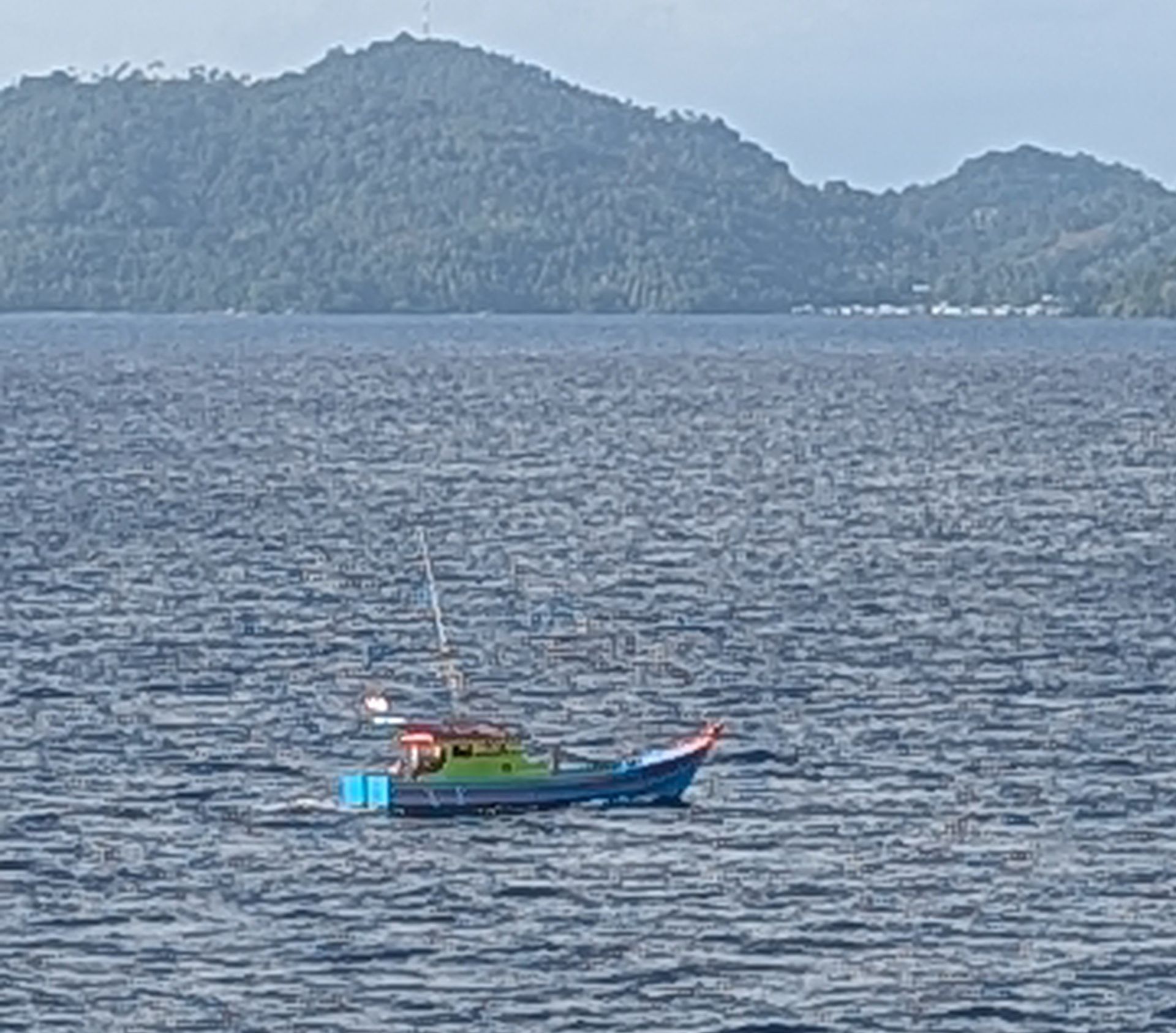
We are advised to stay in groups while walking in the coastal town, to discourage opportunists, pick pockets and assault. Most of the small boats here are homemade canoes that are paddled. As many people as the boat will float are piled into it. The gunnels may be just a few inches above the waterline. The few motorized boats are filled to capacity too. They hurry back and forth intent on something.
We will walk into town and try to meet some people. This is not the poorest town we have visited so far but it feels poorer because of the atmosphere of despair. These are not happy poor people. They are struggling and I sense they are confused by us and some may resent our collective presence. Our clothes, phones, shoes and jewelry, obvious signs of wealth and health are shocking to this population where everyone is walking around in clip clips or barefoot and washing is done in the fresh water streams at the side of the road. Most of this coastal population is addicted to betel. Even the very young children (less than 12 years old), their teeth stained orange, are already chewing it. The adults are aware it causes cancer, but don't understand that it is addictive.
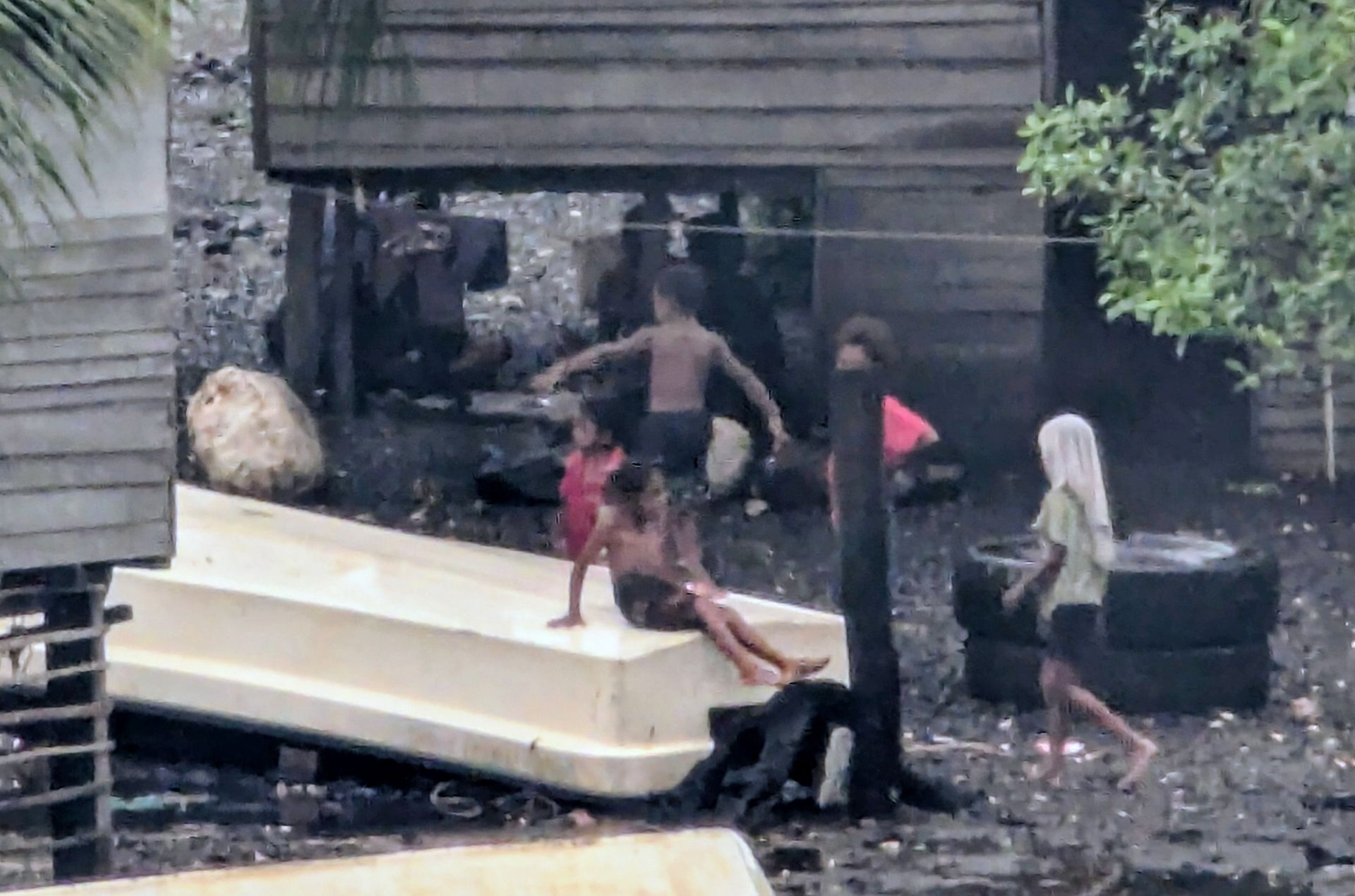
An eight year old girl is playing with her siblings and their pet dogs, using the bottom of an overturned boat as a slide (the rain had just stopped), her hair is long and bright white. Her skin is dark brown like her siblings.
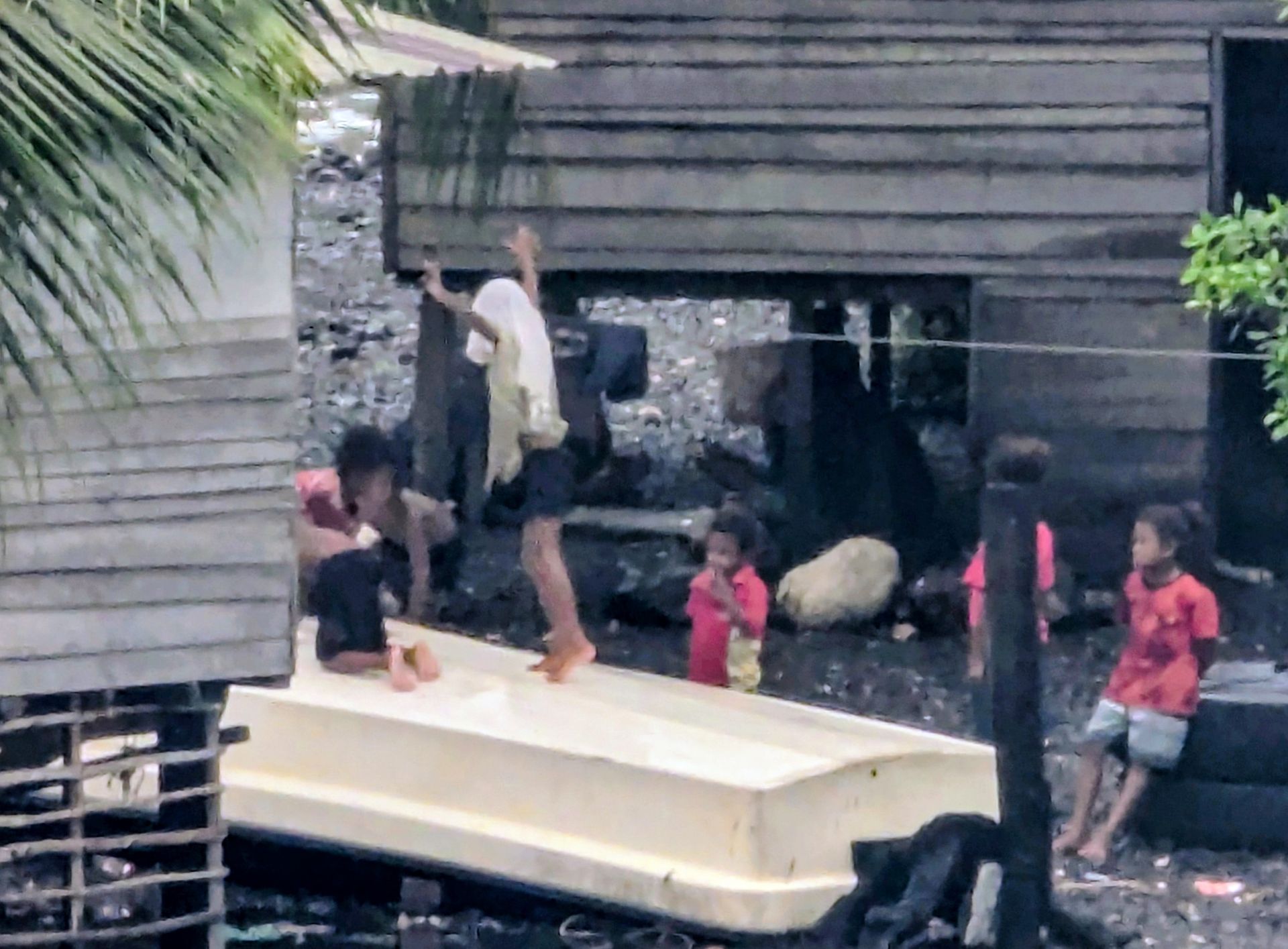
The original settlers of these islands came from one of the first human migrations out of Africa, 40,000 years ago. Black African women carry every possible gene for human variation. This child was the result of two parents with the same recessive gene, or possibly a mutation made this striking result. She gambled about like any 8 year old girl, without self consciousness, in the embrace of her family.
Betel/nut quid, peanut bunches and loose leaf homemade cigarettes are sold at dozens of small stands on the street all along the several blocks we walked. Little else is for sale on the streets. Many people are out walking. Some enter the deteriorating shops, others stand around to talk. One larger building is a general store and a grocery. It is located across from the new construction of a huge shopping center, which will put the older one out of business. Maybe the same person owns both. Capitalism is well understood here by the individuals who own anything. One industry is selling varieties of sea slugs, another is selling shark fins and nautilus shells (an endangered sea animal that doesn't come to sexual maturity for about 20 years). A single gas station is open, with a line of trucks and cars waiting. There are very few vehicles, but still the air is choked with fumes. A few women carry loads on their heads. People are friendly. If greeted first with 'good morning' almost everyone, children, women and men, will smile and respond, 'good morning'. Some young men ask questions. They are curious about where we come from, the ship and Jeff's scooter. A group of men gather around the scooter. They are surprised that it is electric. Jeff explains the Parallel Currency to them and gives them a website card. We find a health official waiting in line for gas and give her a card and a summary.
Almost all the teeth are stained orange from chewing betel/nut quid. The red juice that is spit out stains the ground and the husks of the ‘nuts’, seeds of the areca palm, are everywhere under foot. But there is no garbage litter, on the ground or in the water. Tourism seems to bring this. Tourism and the excesses it brings with it have not yet taken hold here.
We saw very few elderly people. Lots of children, teens and 40/50 year olds. The almost unanimous desire for the euphoria produced through betel/nut chewing is an indicator of boredom and despair and does not bode well for individual aspirations in this coastal town. Papua New Guinea was once part of the British Empire, then England gave it to Australia. For more than 40 years hundreds of thousands of South Sea Islanders were pressed into slavery on the sugarcane and cotton plantations in Australia. This was called “black birding.” Papua is now an independent country.
Boredom is the main reason people chew betel quid. The second reason is social, doing it with friends. They understand that it is a carcinogen but don't understand how it can be addictive. It is often combined with local loose leaf tobacco and it is not presently understood if this enhances the addiction or if one or the other becomes dominant. Betel quid chewing has been around for thousands of years. Magellan reported it when he got to the S.Pacific Islands. It is also used throughout South East Asia and India. Betel quid use predates tobacco which has only come into common use in the last century. Like tobacco, the quid can cause mouth and throat cancers and makes contact with receptors in the brain that activate addiction.
On our way back to the ship we went over to a catamaran sail boat that was docked nearby. It was a marine research vessel sponsored by a New Guinea university. A young man came out to talk to us. He was raised in Papua and had been fascinated by the sea and its life since childhood. Somehow he had found a way to college education in New Guinea and got his bachelor degree. He is now working on a masters in micro biology. We gave him the Parallel Currency summary and our card. The sky was getting grey in the distance, a storm coming, so we said goodbye and made our way back to our ship. Rain started just as we were climbing the ramp.
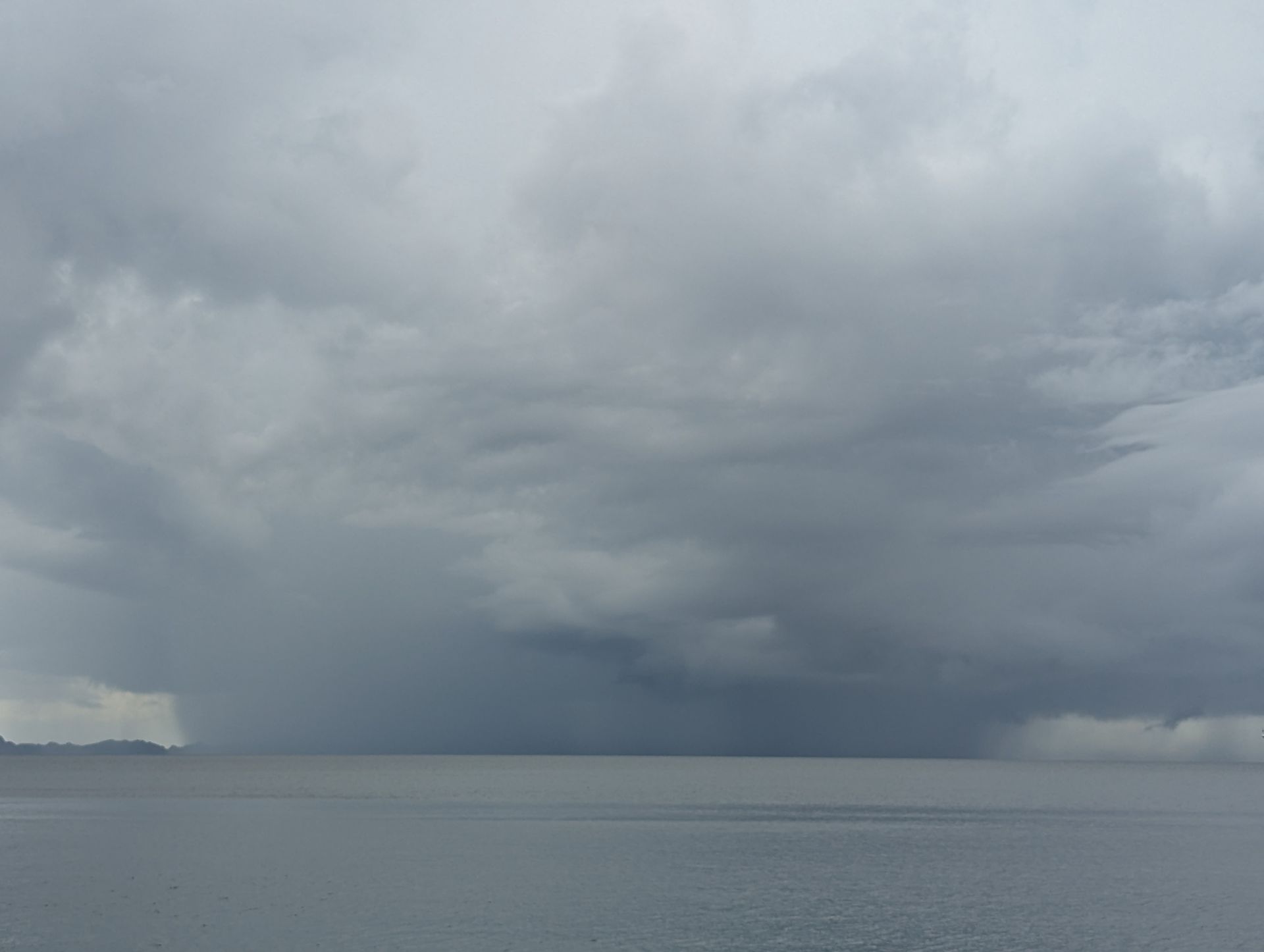
Honiara: Solomon Islands
Two passengers had phones stolen. One, a man on a handicap scooter and the other, a lady. This happened on the first day of disembarking. So the next day only a few people went into town. Later in the day, a shuttle bus was announced that would take everyone to an evening celebration at a local yacht club, in honor of our ship. This helped ease the fear.
When we walk into the city we find the infrastructure is crumbling, the sidewalks broken and difficult to negotiate. Small shops line the main street. Most have variations of the same stuff. Some with more emphasis on groceries. Small solar panels are for sale in several places. Many adults and children walk and socialize up and down the sidewalks. They also relax outside the stores on benches, friendly but reserved. Not as much evidence of betel/nut use here as in New Guinea but well known for crime, theft and sexual assault. The Solomon Islands are one of the poorest island countries in the South Pacific. It was the site of the bloodiest battles of WW2, on and around Guadalcanal. Most passengers are interested in visiting the military memorial, snorkeling and diving on the wrecks. I saw a group of statues near the dock of four local people who represented the participation of locals as "scouts" for the Allies and honoring their sacrifice. Some were tortured, some murdered. The results of these horrible events that played out in what was then a tiny village, have significant repercussions to the present. The people are poor, halted in a nether world between their traditions and a tenuous transition to the lifestyles of the people that descended catastrophe upon them so long ago. A transition that will never benefit most them. They can only be distorted by the consumerism and outsider profit making at the expense of their beautiful islands. The blith, innocence of fun seeking tourists is a painful contrast to their present existence.
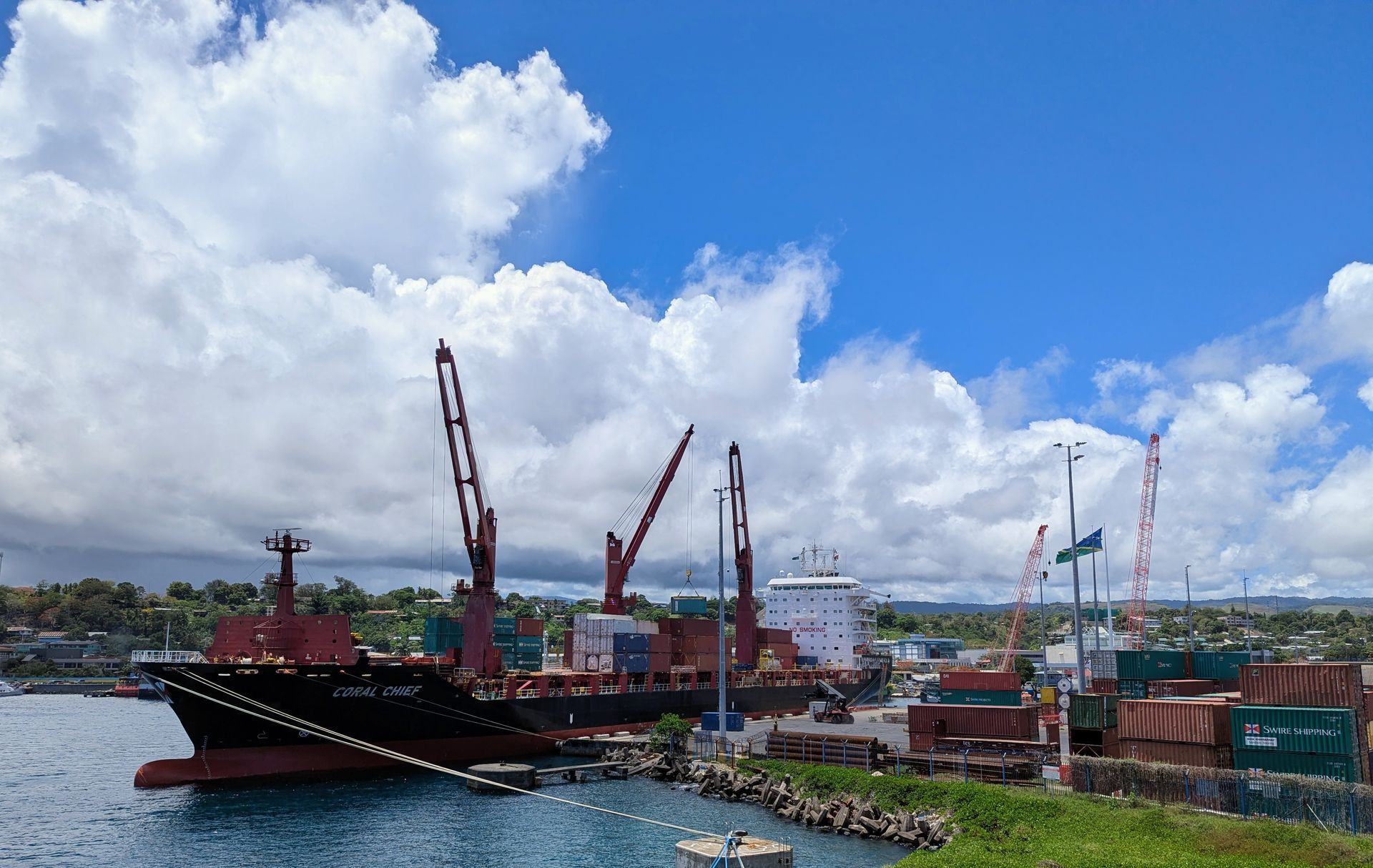
Two friends had walked to a distant war memorial. They took a wrong turn and came upon an encampment of people living in rough shelters that went on for many blocks. This city of Honiara was built after WW2 ended to be the capital. Tulagi had been the capital but was totally destroyed during the war. Where we are docked is a huge port. Massive container ships load and unload. Their contents destined who knows where. Not Honiara.
Several more passengers were attacked on our last day. One screamed and a local man gave chase and got her phone back. A gay couple was assaulted by two men, one went for a back pack and almost withdrew a wallet, the other went for a phone in his partner's hand. They were able to fight them off.
We took the shuttle to the party at the yacht club. It turned out to be a large bar selling local beer. No yachts. There were several motor boats and a beautiful traditionally made sailboat. It was constructed of bamboo with a woven natural fiber sail. It makes one 400 mile trip a year using prevailing winds. February winds favor the return to the island they came from. It will be about a six day sail.
Freedom by boat. This is what they can access if they need relief from land life.
Tulagi, Solomon Islands
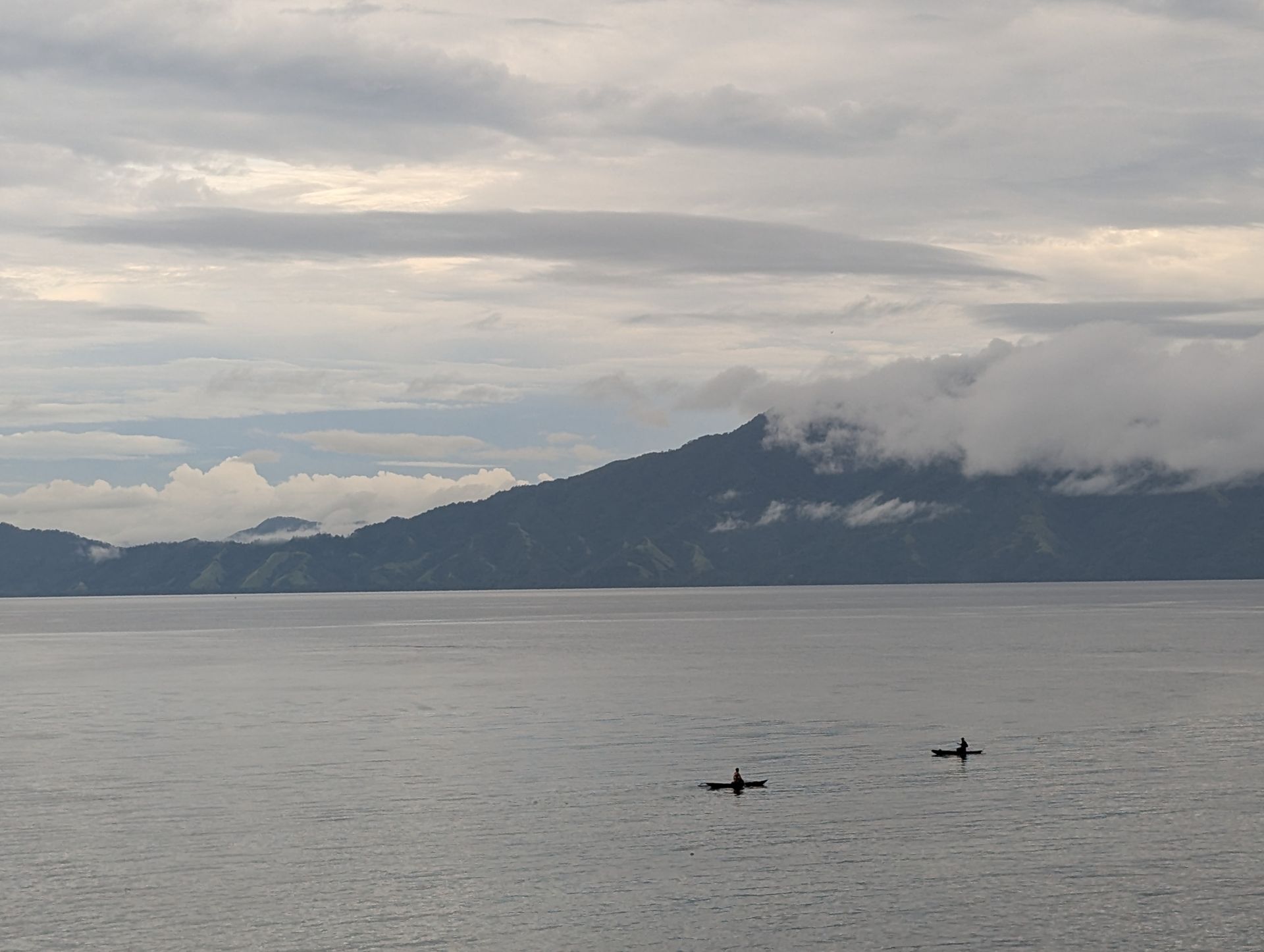
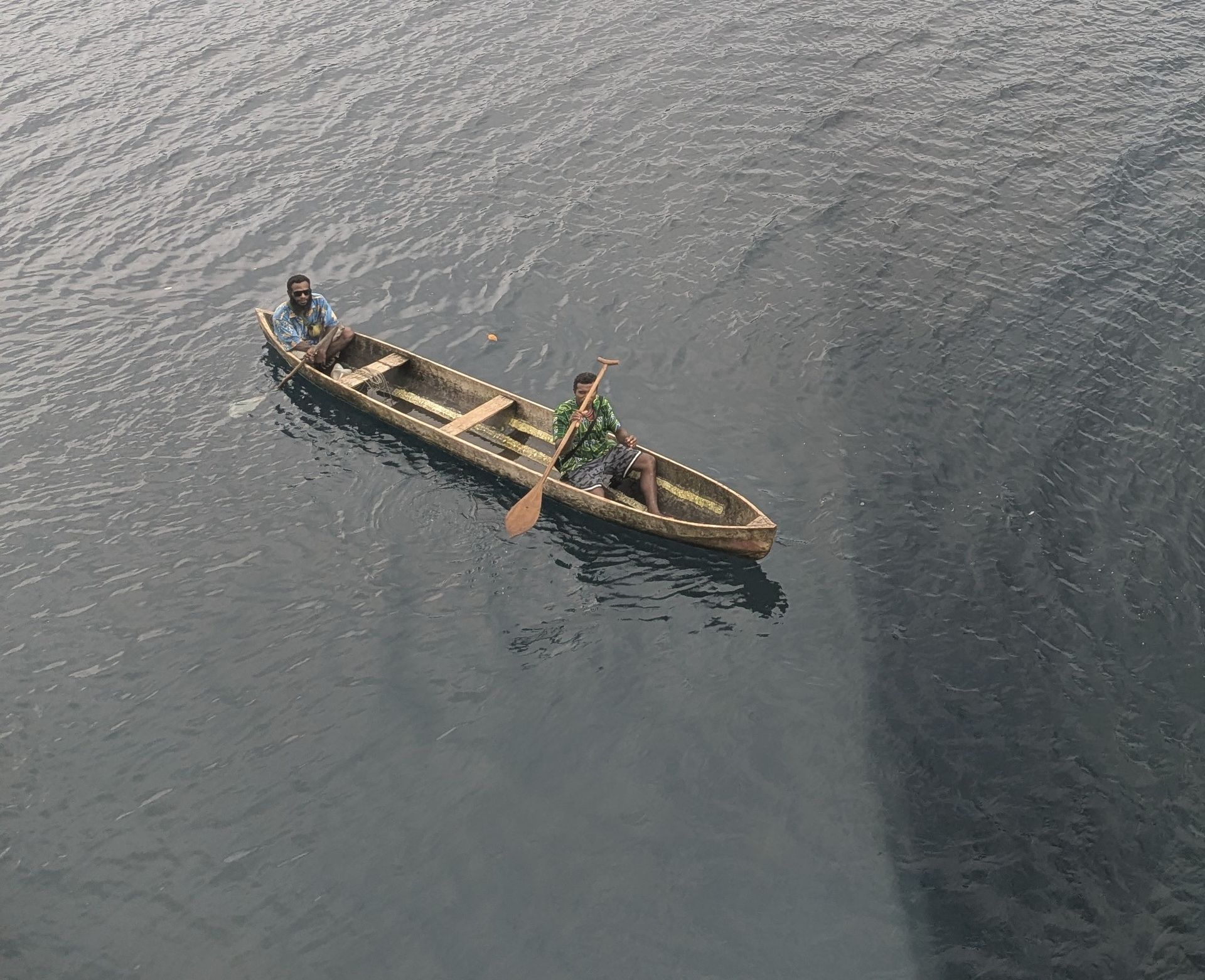
We are anchored off and using our tenders to visit shore. It is raining. I have been watching a dugout canoe in the distance. There is one man in it.
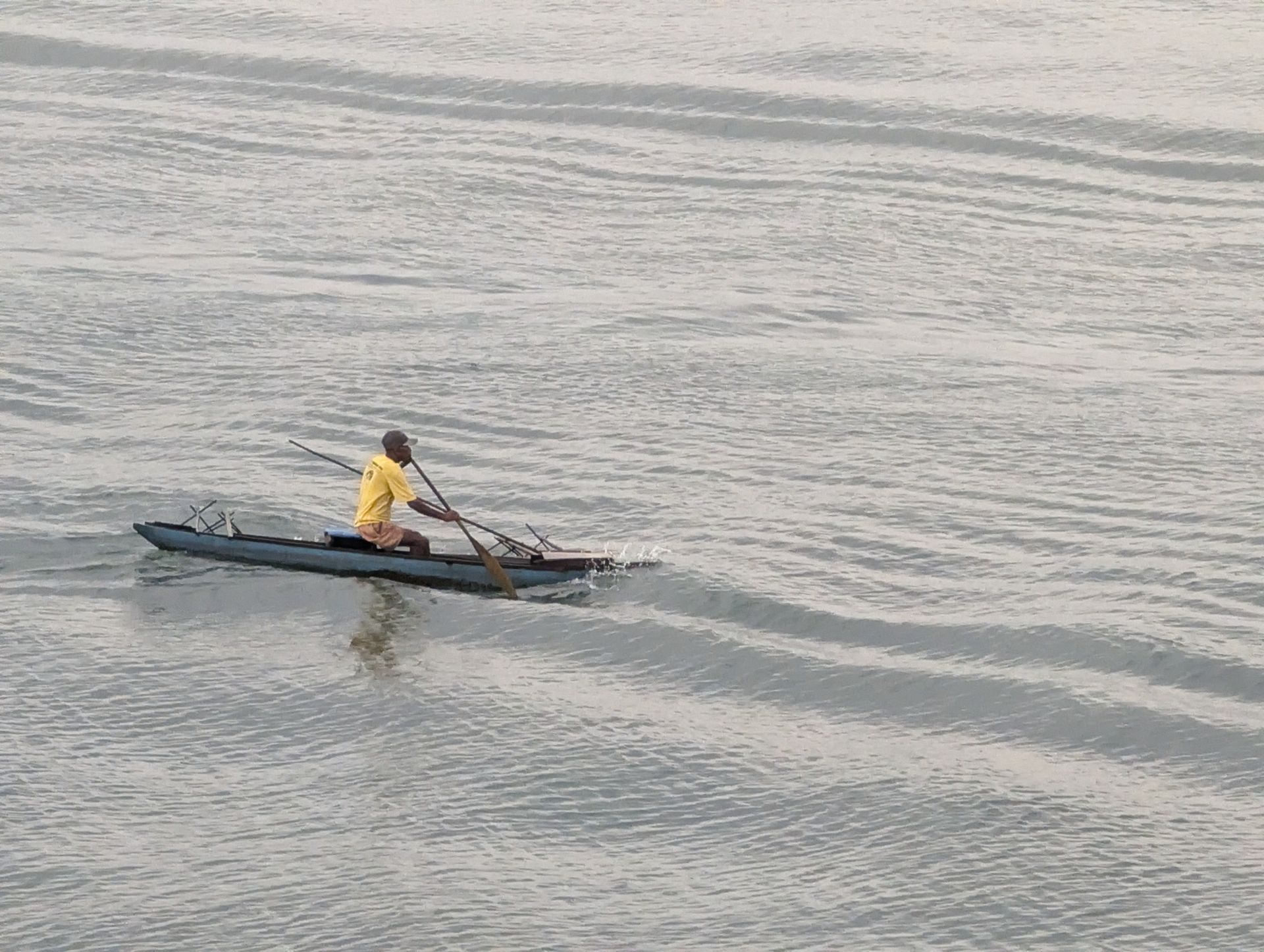
The rain slowly approaches the boat and is raining on it now. The man does not paddle for shore, he remains in the same spot waiting it out. I can't see him anymore, a grey curtain has drawn between us. I'm sure he is bailing and I notice later that a cut off plastic bleach container is used for this purpose. He is enveloped by the warm rain on calm water. This temporary embrace creates a moment of intense existence. There is no garbage floating in the water, only leaves. His canoe is a homemade dugout and the paddle, leaf shaped. Off the coast of a nearby island shallow water begins to glow blue/green as the sun reappears.
Jeff was feeling sick, so we didn't go ashore. But everyone who did said it was delightful. The people were friendly and they felt safe. What a contrast to our previous stop in Honeria, Solomon Islands. Maybe someday we will return.
Loganville, Vanuatu
Two days at sea to our next port, Loganville, Vanuatu. Another county impacted by colonialism, Britain, France and Japan. Then the American military came during WW2 and stationed 50,000 people there. More than doubled the population at that time. After they left they dumped the stuff they didn't want into the ocean at what is now referred to as Million Dollar Point. Millions of dollars worth of military equipment, construction equipment , vehicles, bulldozers, trucks, tanks, etc. were dumped into the Pacific Ocean. It is now a coral reef where tourists snorkel and dive. The country has only had its independence for about 40 years. The government is a representative republic but turns over a lot.
When we walk around, children don't rush to us. Adults watch us pass and seldom make a greeting before we speak first or smile. Which we always do. Again, everyone is fascinated by Jeff's scooter. It activates spontaneous smiles and laughter. No obvious petty theft or threat. Similar assortments of stores and restaurants as we have encountered before, in the same processes of deterioration. It is a Saturday and children are swimming at a nearby beach. They have built a small wood fire on the shore to cook the tiny fish they are catching. An afternoon picnic. Several young boys dive and swim off a short concrete pier. I see them there all day long. They jump in and disappear then pop up again like seals. They seem in the midst of a metamorphosis from landlife to marinelife. Skinny, elastic youngsters, all around 6 to eight years old, cheering and calling to each other as dusk approaches. Confident and at home in the water, they don't mind the approaching dark. A gibbons moon watches with a Cheshire cat smile from behind the transparent grey clouds.
As night closes the light, moths and flies are drawn to the ship's deck lamps, silvery squids rise from the dark ,flick the surface of the water, then dive. We leave the dock, on our way to the next port, Fiji.