Indonesia
Bitung, Sorong, Ternate
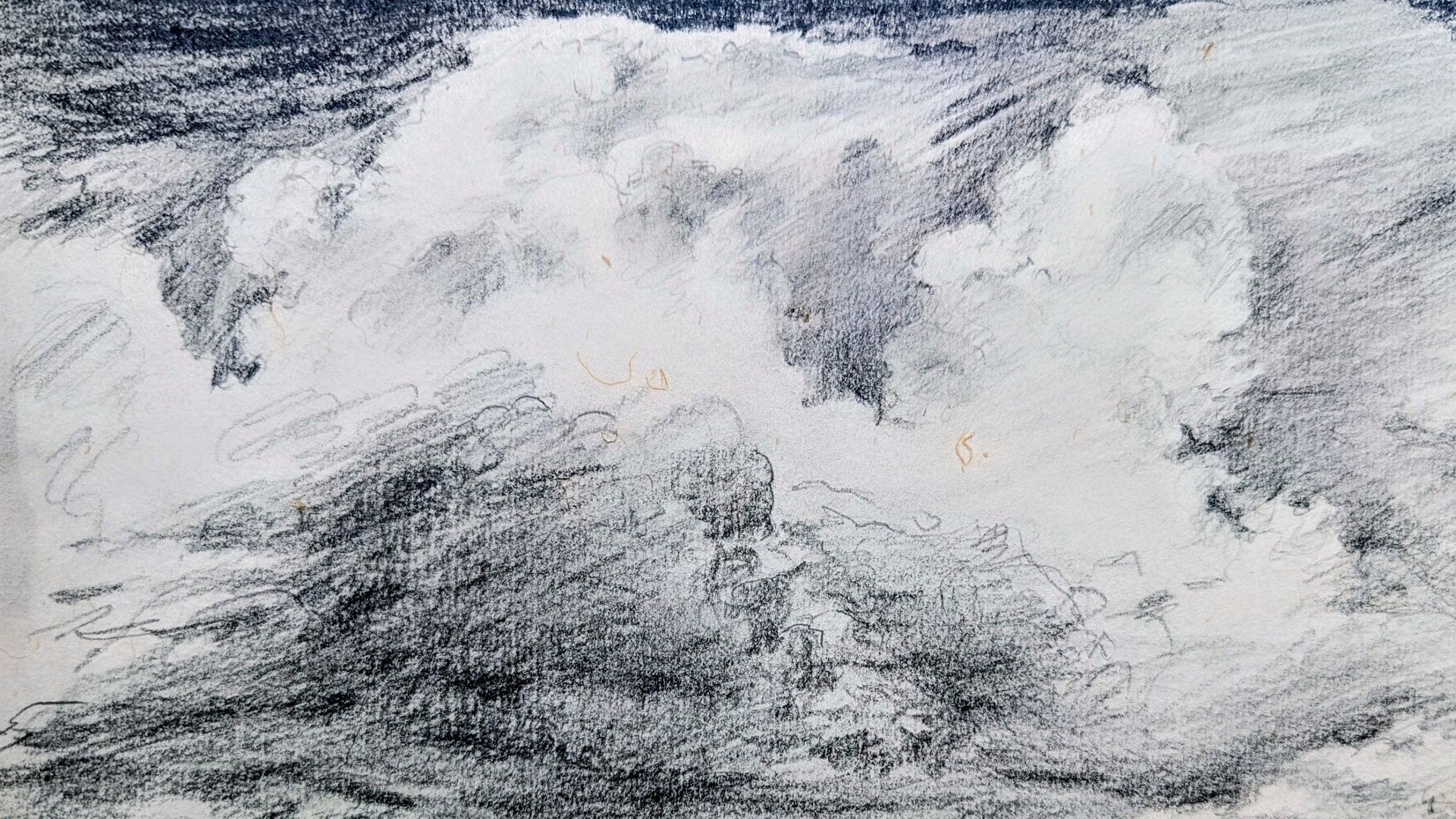
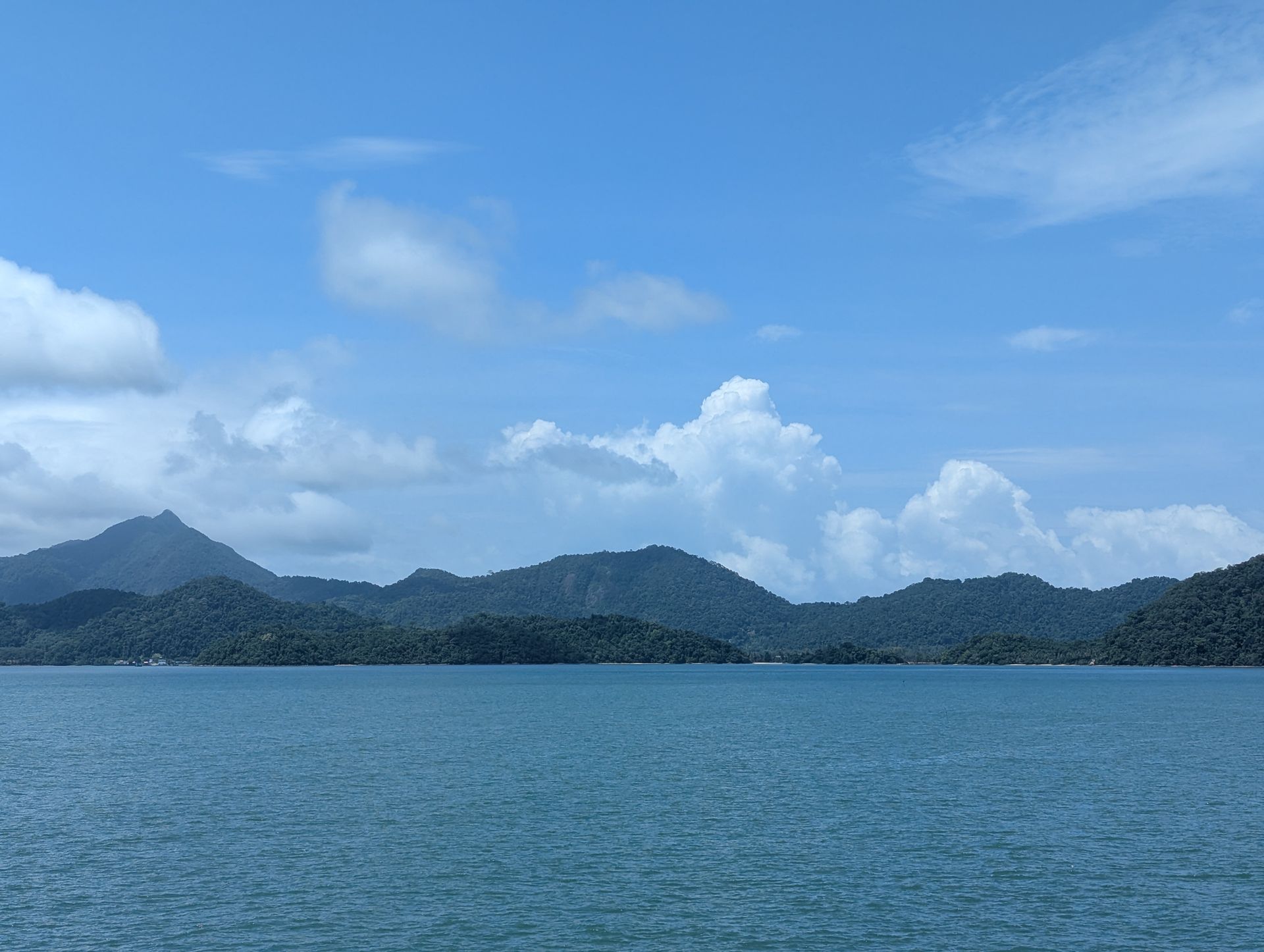
There will be several sea days before our arrival at dock in Indonesia. Walking around the deck reveals a 360 degree view of the Pacific and we are the only boat as far as the eye can see. It is unusually calm. The silver/grey water encounters no resistance from the wind. It feels as if we are moving on nothing, like we are flying. Now and then the silky surface is broken by a fish. It leaves a tiny wake, as the water is zipped open. Sea birds linger, waiting to snatch it from flight Sometimes several fish burst from the surface at once and go in different directions. What urges them to fly? Away from safety? Are they born to seek adventure like children are born to be happy?
When we arrive at port there is a welcoming committee of enthusiastic dignitaries and dancers.
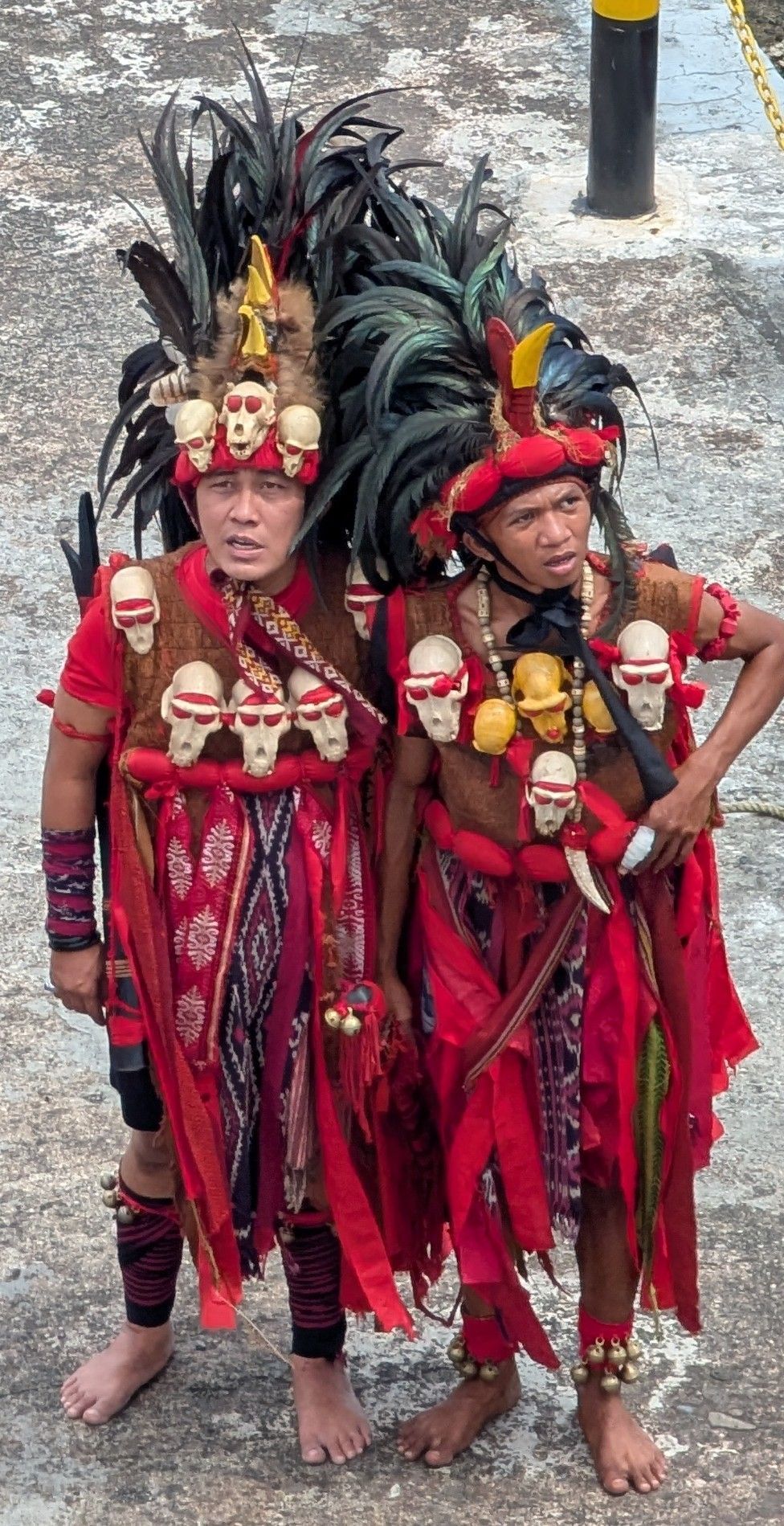
They don't get many cruise ships here. We are only the third one this year. Dancers entertain us by miming a fight between two warring factions. The chiefs separate the warriors before they do any damage with their machetes and knives. Chiefs fight too, bouncing their large bellies against each other. Their headdresses bristle with black feathers, skulls hang from their necks and bounce against their chests, toucan beaks project over their foreheads. There's a lot of shouting, threatening and posturing. Occasionally one warrior rushes toward another.
When we walk into the town beautiful excited children greet us everywhere. The very little girls touch my hands, kiss them, then press their tiny hands together in prayer. Some older children wear school uniforms and backpacks. They want us to sign their notebooks and write down where we come from.
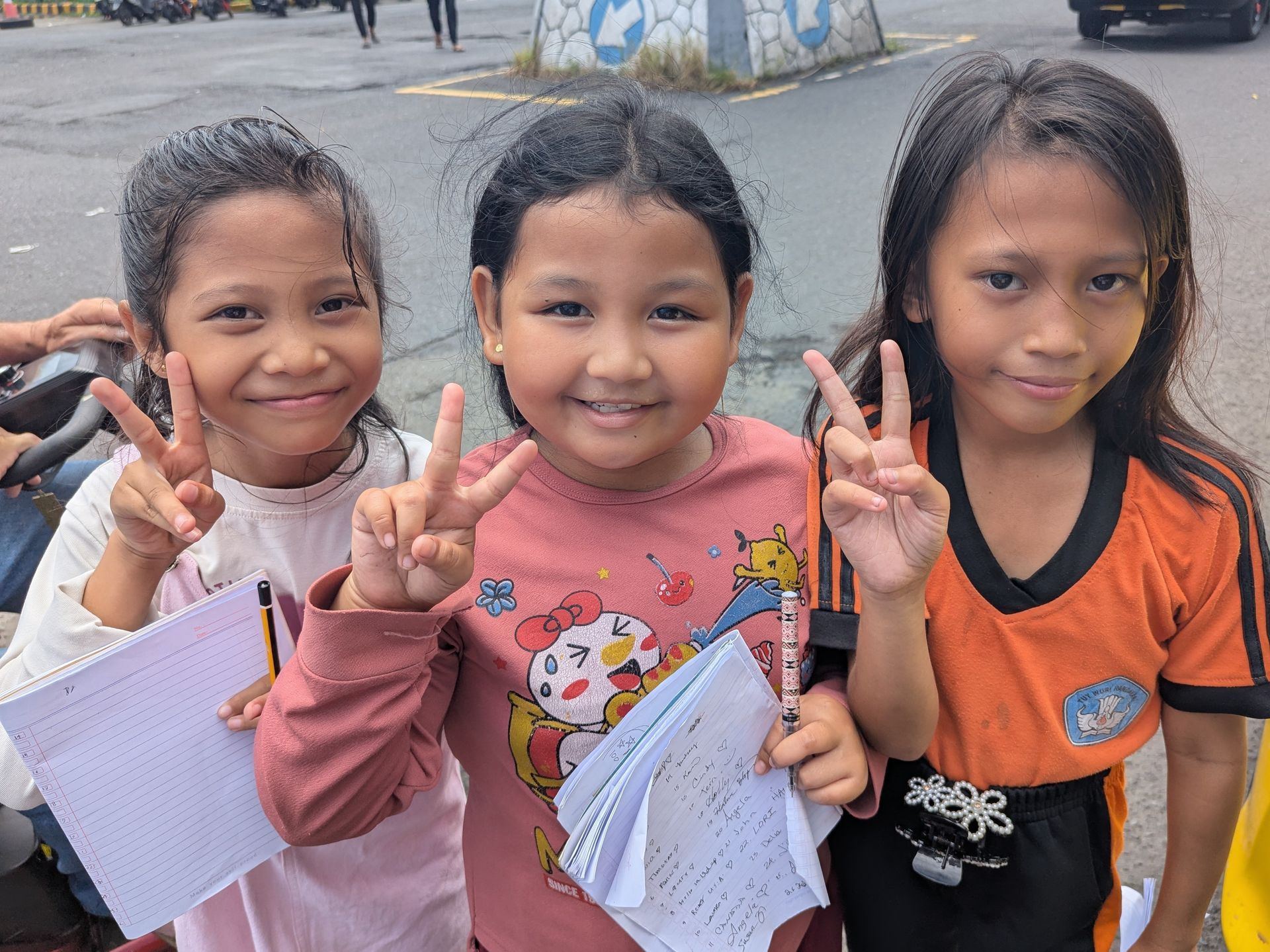
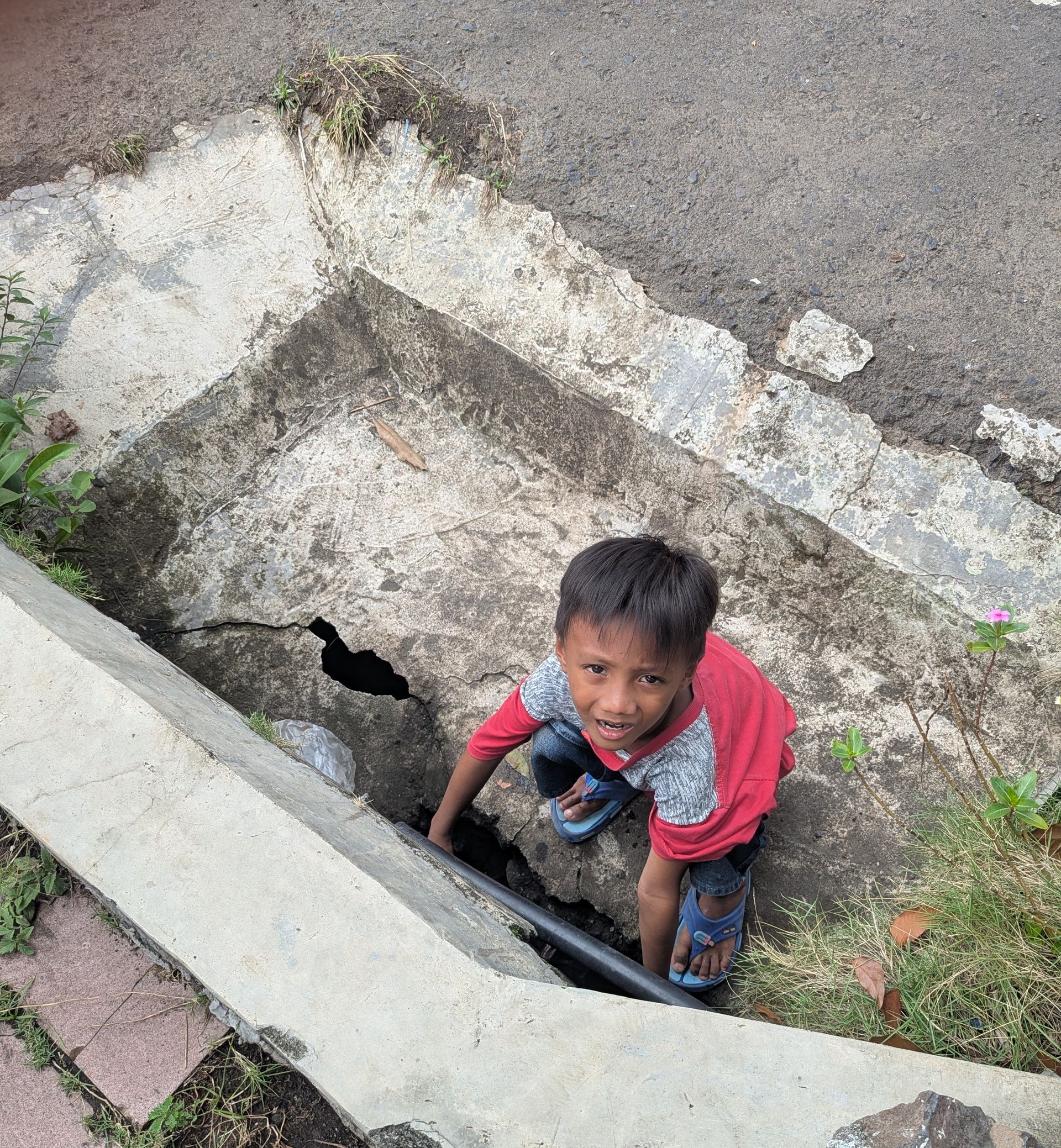
Other children not in uniform are also very friendly and seem left to their own devices. They follow, watch us and with one or two words of English, ask questions then drift off. A very few will brush their fingertips together asking for money. Compared to other countries we have seen so far, there is very little begging though there are homeless adult men. Two young boys are fishing with hand lines, in a drainage ditch that runs beneath the sidewalk. Next to them a small outdoor grill is set up where a woman governs over her tiny open lunch spot, a table and several chairs. The boys are providing her with fish to cook. They are collected in a metal bowl of water on the ground by the grill.
Adults are friendly and extremely helpful. Jeff picked up a wire with his handicap scooter and immediately several men helped tip the scooter and remove the wire.
An amplified male voice is singing. The call to prayer vibrates the air, proclaiming, overwhelming, unavoidable. More male voices join from several directions, like a pack of wolves howling with their leader. "God is the most great, come to prayer, come to salvation, prayer is better than sleep, there is no God but Allah." This is sung in Arabic for about an hour. At the same time a festival is happening, pop music, singing and dancing, the songs blend.
Walking through the city of Bitung, we see poverty, crumbling houses and sidewalks. A Starbucks on one corner, is an out of place foreign oasis of air-conditioning and expensive coffee. No recent upgrading of infrastructure, shops or other buildings, only essential patching and trees are breaking through the sidewalks.
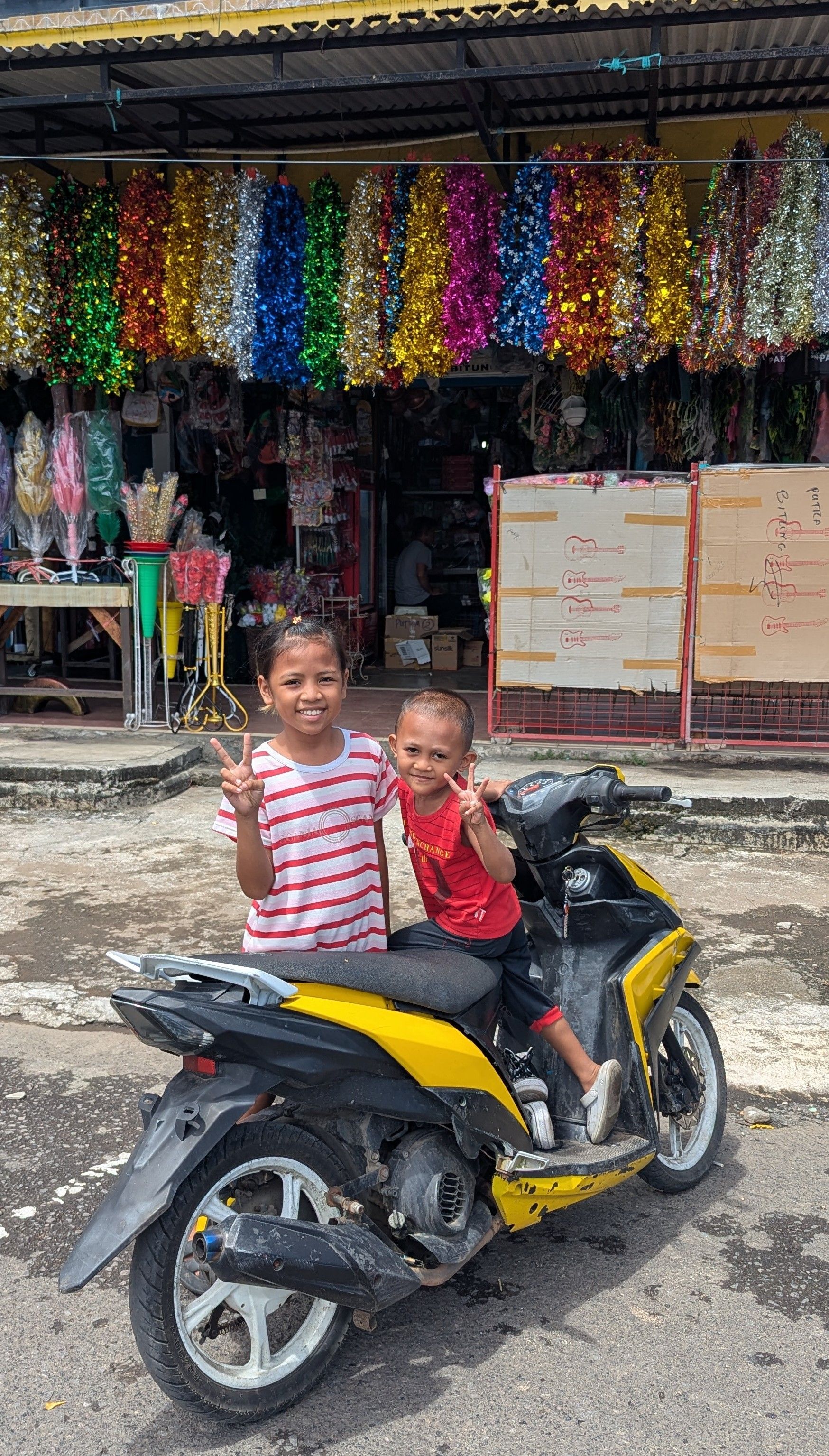
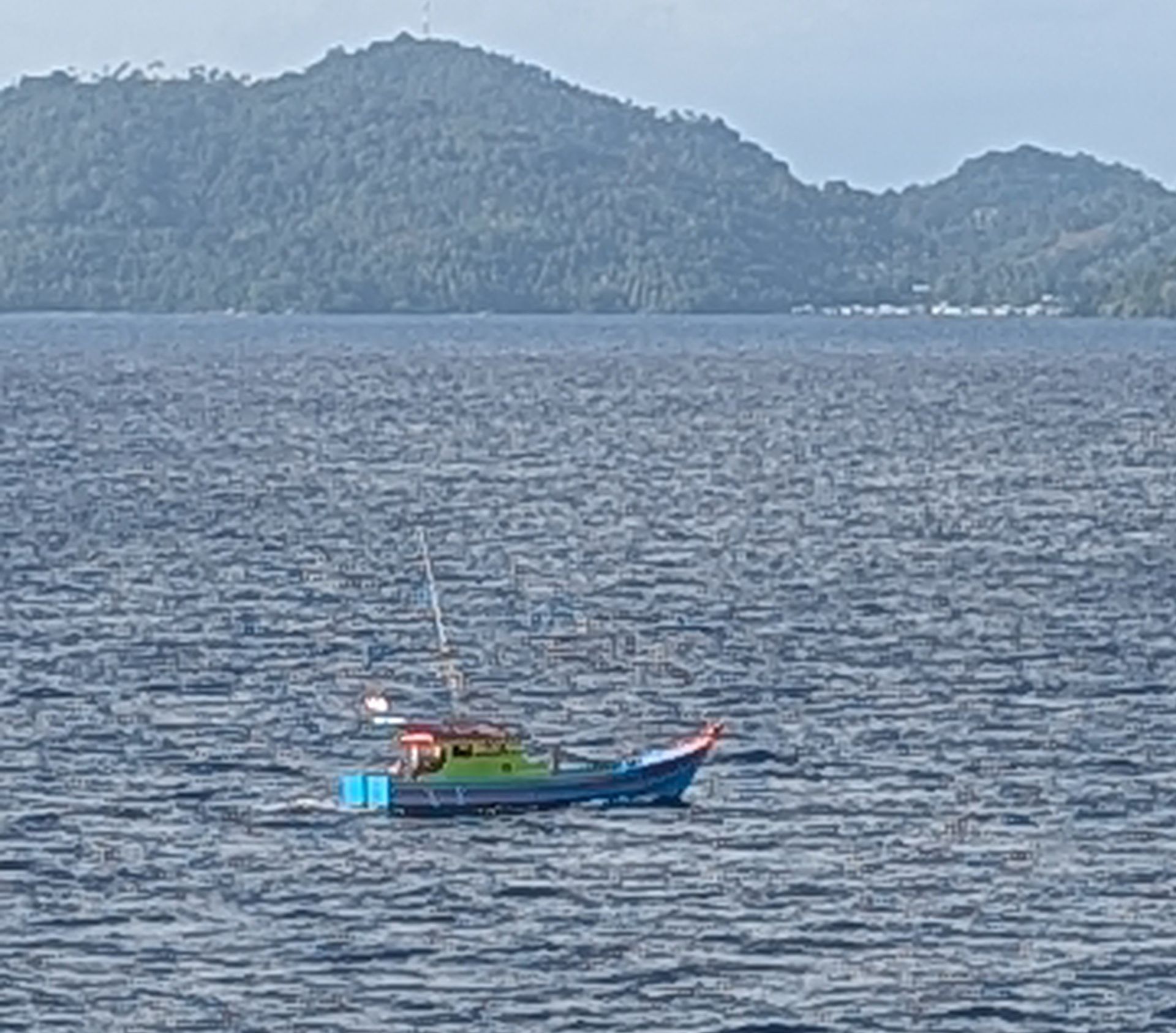
There is an open air repair shop for the gas powered scooters that rush back and forth on the crowded roads. Combustion fumes from the trucks and cars fill the air. Overall life expectancy in Indonesia is around 69 years. Little or no provisions for handicapped people. Tuna fishing, (skipjack), is the economic platform on which the people stand. Fishing is the inheritance and skill passed from generation to generation. The small boats are ingenious and designed for speed, and easy maintenance. A fisherman stands proudly in the raised prow and also can climb a narrow hand made ladder to gain more height for fish spotting.
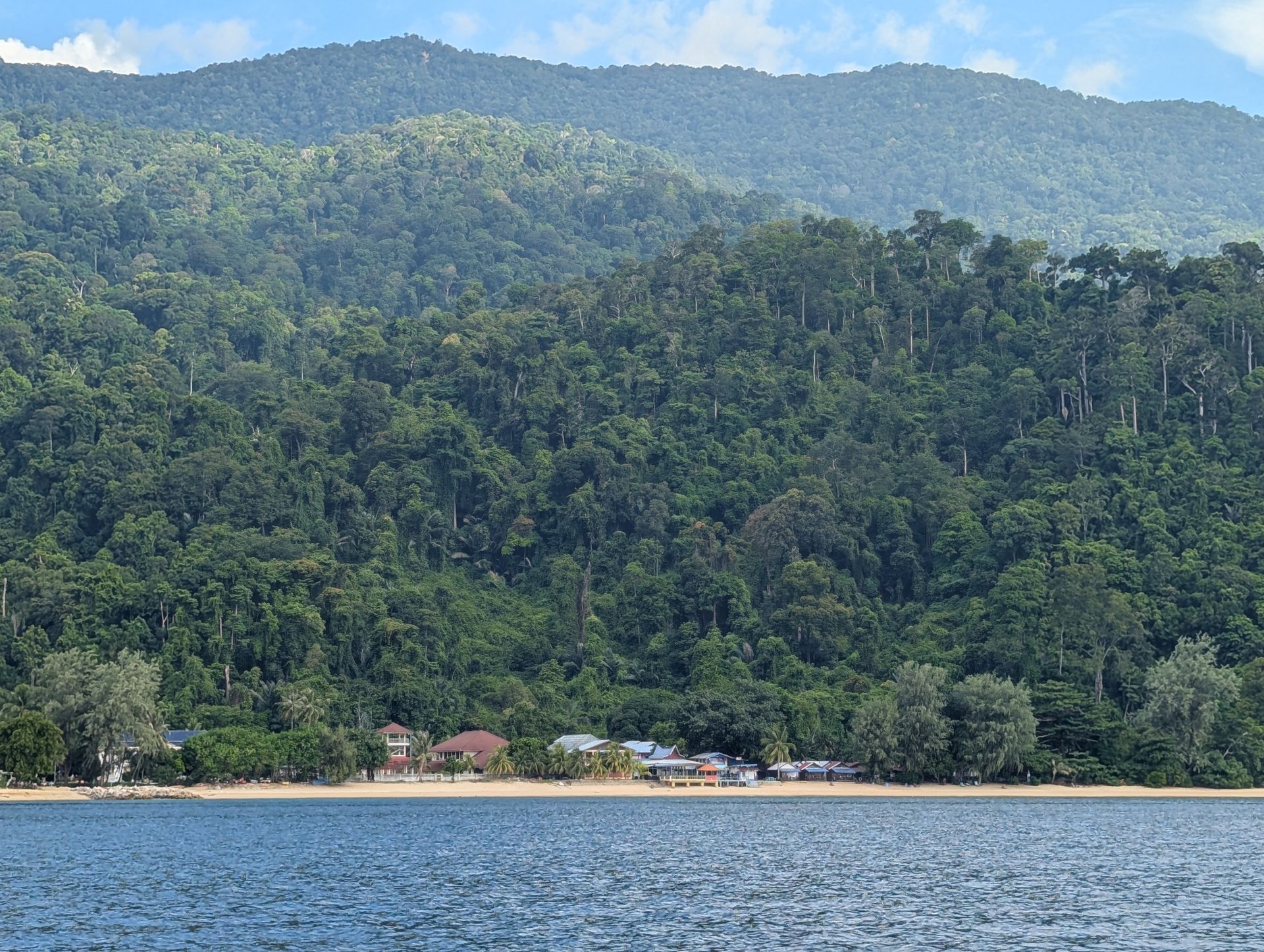
Larger boats collect the catch of the smaller and sell to the local markets and fish processors. These people who live on the shores of their beautiful islands have built fragile raised wood homes and house boats into neighborhoods. They are reaching for survival into the depths and dangers of the Pacific Ocean. Young men live in groups on some of the larger fishing boats that dock together on a local pier. They hang a hammock in the stern for a nap between fishing trips and banter with each other to pass the time.
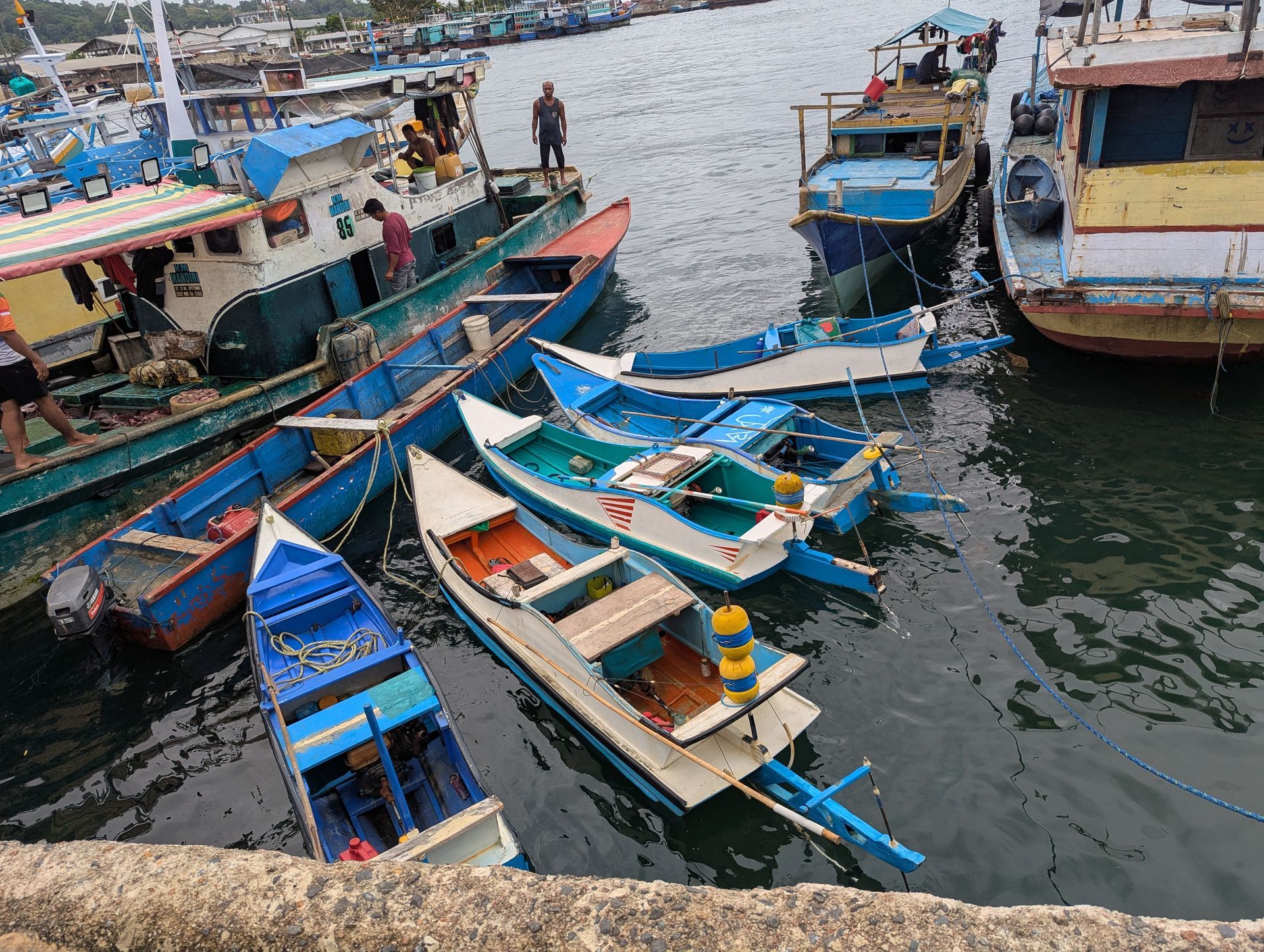
There is an attempt to lure tourists with snorkeling and diving and beautiful views from the mountains, but this is a new and faltering effort because their crumbling infrastructure cannot support it or offer enough convenience and safety. Several passengers paid more than 100 dollars for a day tour to hike and snorkel at a remote island. The boat broke down going and coming back during rain storms and rough water.
Indonesia is not yet able to provide basic needs and sanitation for its existing populations. Garbage is everywhere, some swept into piles and baskets. The dumpster is overflowing and heavy rains which are frequent, wash huge amounts of trash into the water creating a mosaic of color and texture made up of plastic bags, straws, plastic wrappers, lids, cardboard boxes, yogurt cups, styrofoam food boxes and the occasional tractor tire. The unfortunate effects of this pollution are locally understood, graffiti on a wall sounds a warning.
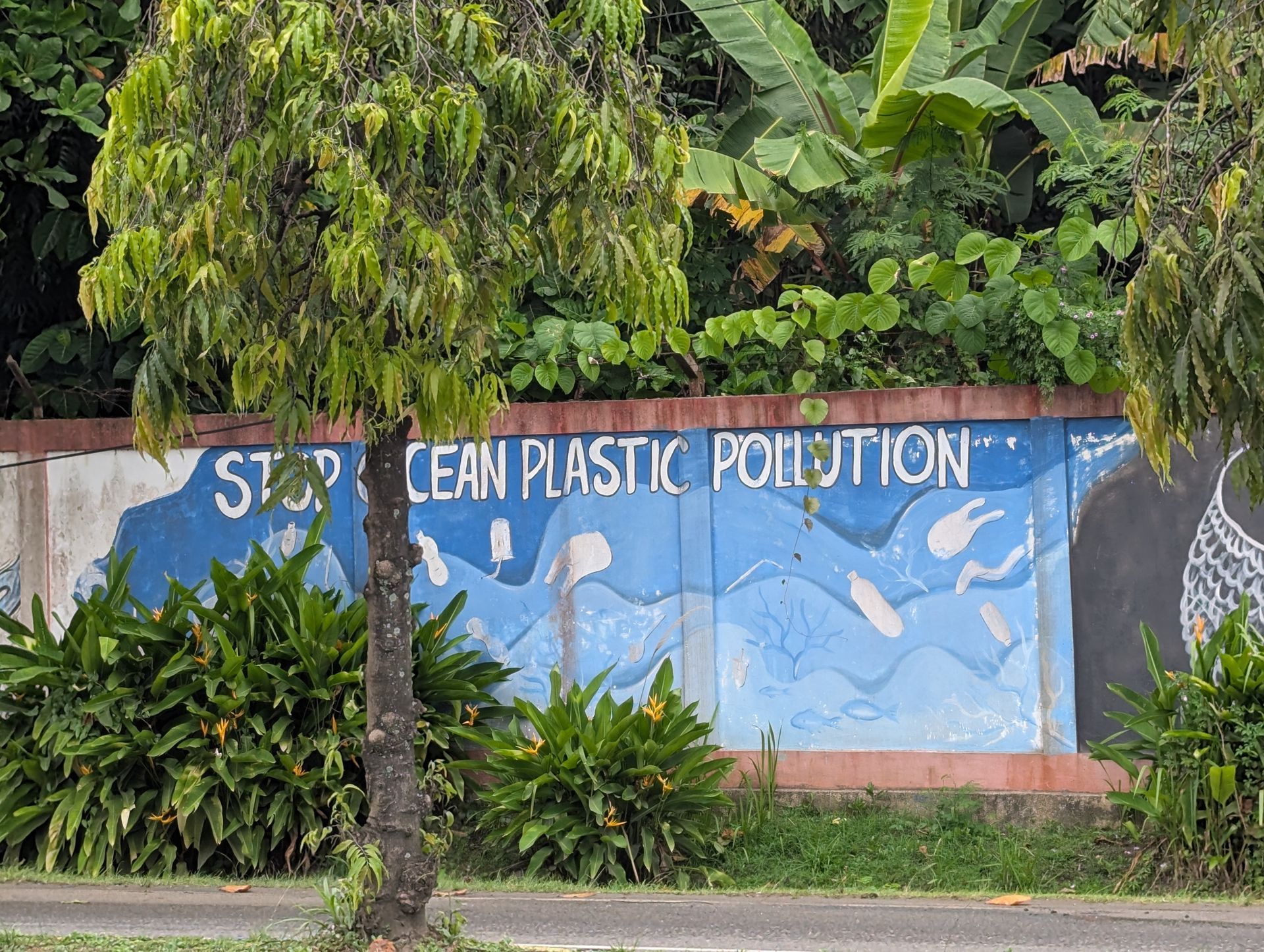
The damage to their marine environment, considered the most varied on earth, is already happening.
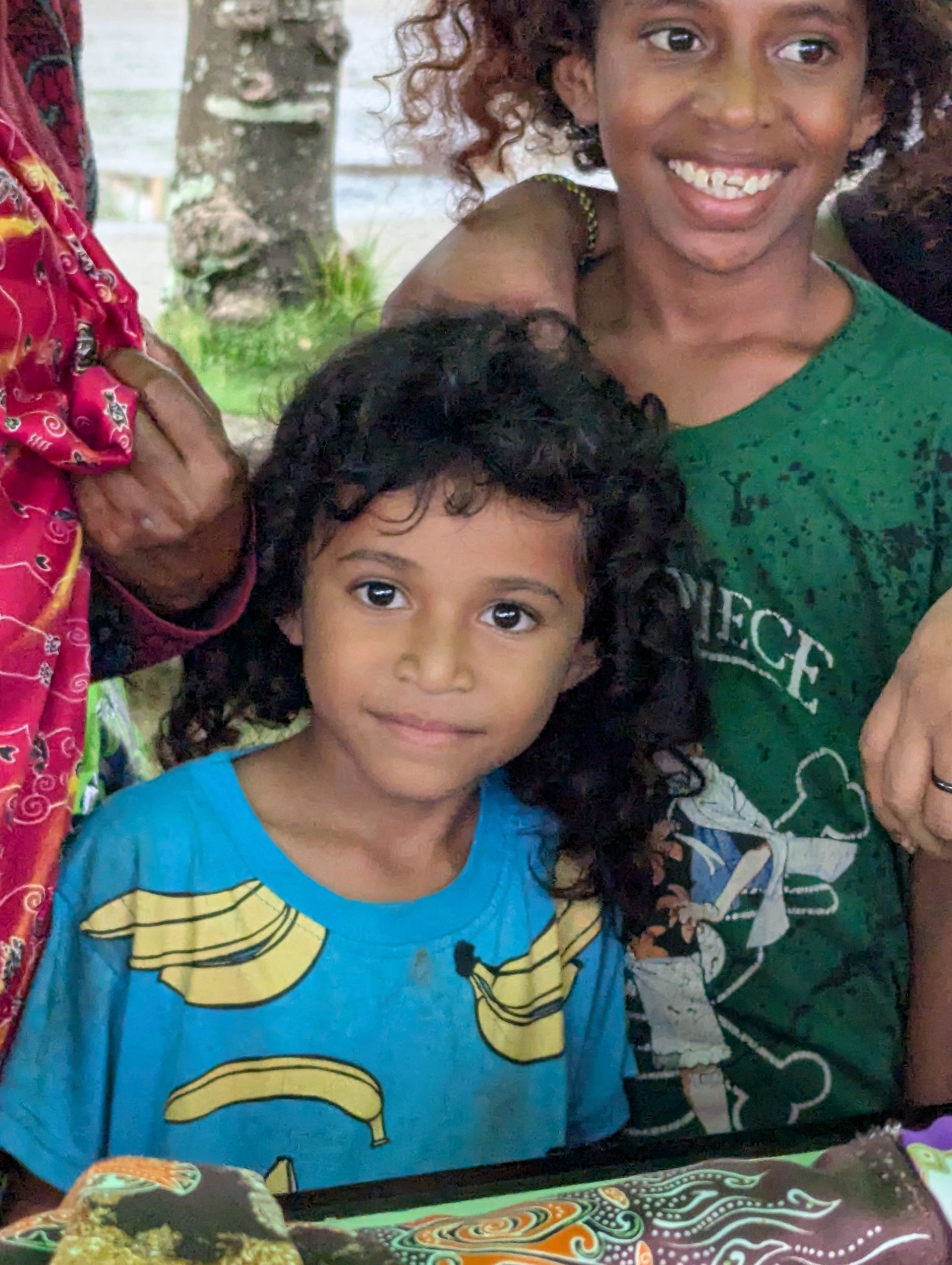
Men with cars and larger boats offer trips to the jungle interior and private island beaches and weep when a passenger pays more than they expect. The exchange rate here is the most extreme we have experienced yet. One dollar equals 16,600 rupiah. Still, the children run to you and smile, delighted when you take their picture. Adults with cameras want "selfies" with you, and with the cruise ship. Some local ladies bring their offerings of crafts and food to sell at the temporary stalls set up near the ship. It is obvious that most of the population here is challenged with various degrees of poverty.
But they haven't given up, there is dignity and curiosity and the children are happy, only repeated catastrophes will quiet their bright enthusiasm.
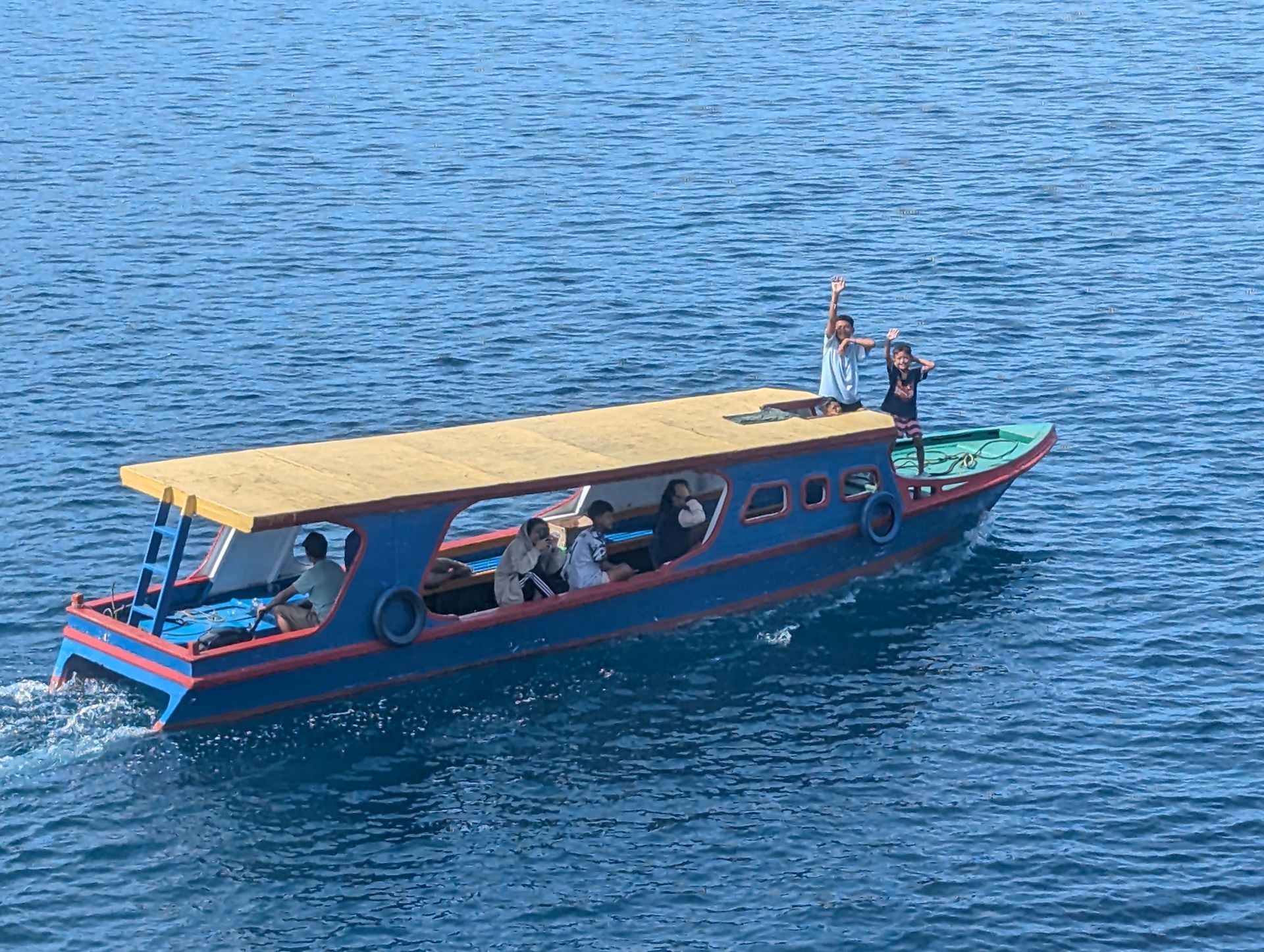
A boat motors by, it has the same melon slice shape we saw in Taiwan and the Philippines, but the preferred color here is royal blue, accented with red. A little boy sits on the upturned prow gripping it with his skinny legs as the boat leaps along over the waves. He couldn't be happier in this paradise of more than 17,000 islands that is coming up against the impossible demands and realities of World economics.