Notes from Fiji hospital, Oceana Hospital system and Denareau private hospital
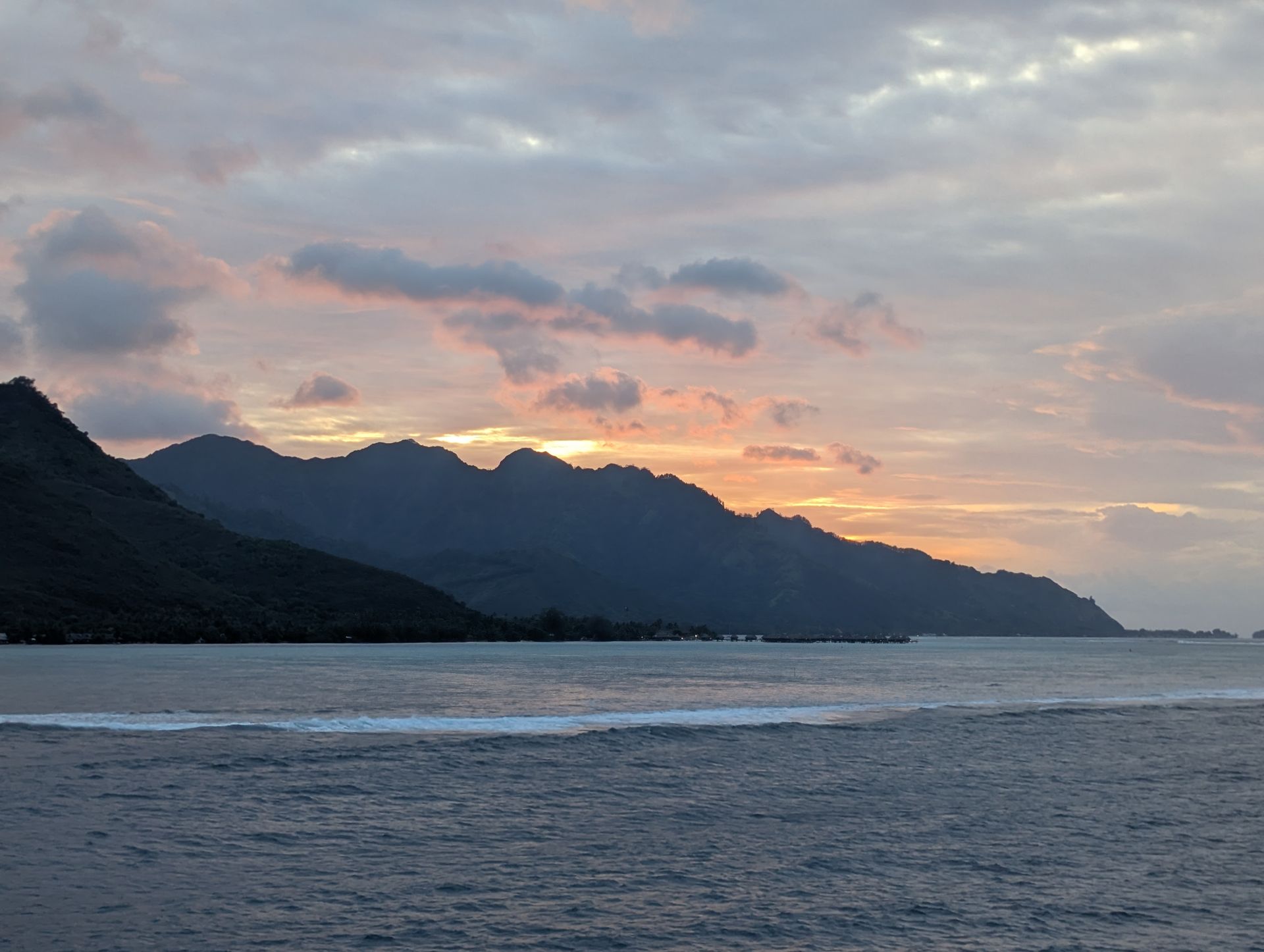
Medical emergencies all have a similar feeling. Intensity, urgency, a changed perception of time; only events and human encounters progress, time seems warped, unimportant.
After several sleepless nights because Jeff was having difficulty peeing and he was beginning to have pain, he went to the onboard clinic to get catheterized. There were three attempts with successively larger catheters. This was painful and distressing for him, though he kept joking
about it, “this is not good sex!” The attempts were unsuccessful. He was given pain killers and an ambulance met us at the dock for a 10 minute ambulance ride to the hospital. Jeff is an 80 year old man with an enlarged prostate so he normally has trouble peeing. But this time it
stopped altogether and there was blood.
We are waiting at the hospital for the urologist. Nurses and a general practitioner have spoken to us in English. Very kind, polite, casual and patient. The urologist arrives and talks with Jeff. He is going to get the operating room ready and put Jeff out. Then he can do the operation.
We wait in our curtained off cubicle Jeff is lying on a bed. A woman who came with her husband, who has high blood pressure, is behind the curtain to the left of us. He had collapsed. She is reciting the Lord's Prayer and Hail Marys over and over in an emotional whisper. She is crying. A young man is in the cubicle to our right. He seems to have broken his arm. It is all wrapped up in white gauze. Earlier a man had been stung by something and ointment was applied. A pregnant woman has come in.
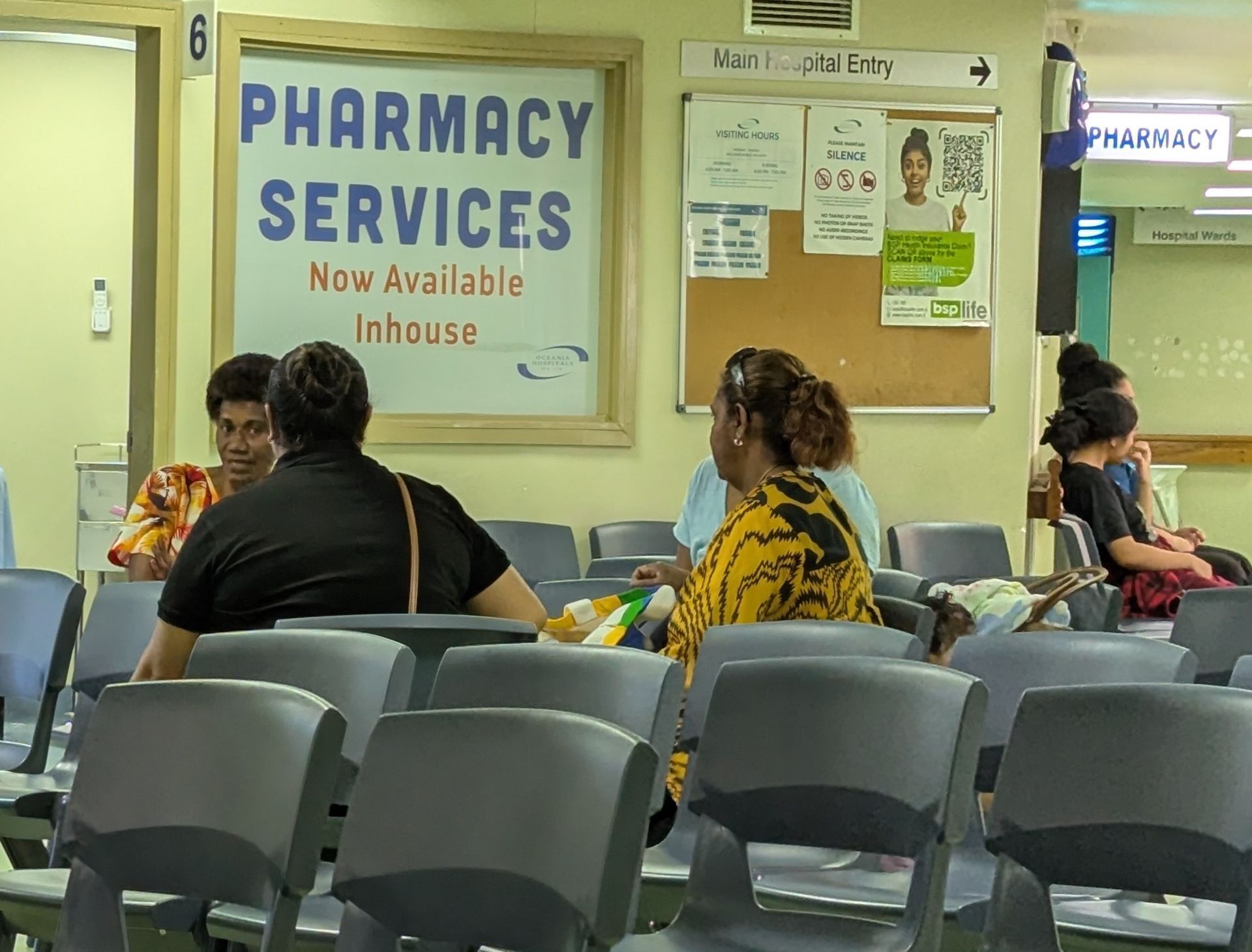
This is a modest hospital, very basic, two floors. They have what they need. A few flies buzz lazily around, but most are killed by the electric device on the wall. A very slight smell of urine is in the air. We arrived here about 8:30. It is now 2:00. Jeff has had an ultrasound, blood pressure checks and an EKG. Now he is in a wheelchair waiting for the nurse to take him to an operating room.
The waiting room has about 10 people waiting. About 50 chairs in all. Not terribly busy for a Saturday. Light and darker coffee colored skin, attractive, rounded features and large expressive eyes set apart the native population. They are only a little curious about us. There is no rushing here.
Jeff is not the first passenger from a cruise ship to have this kind of difficulty, we are told by a nurse. It happens now and then.
They can't locate the doctor. Jeff is waiting in the wheelchair and his anxiety level is going up. He wants to be able to get back onboard before 6:00, when the ship is leaving. Finally he is wheeled to the elevator and taken to an operating venue. The anesthesiologist arrives with a pink hair cover, and black scrubs. A nurse in a pink hair cover also arrives.
“I will put the drops in and the urologist should be able to steer through.” He explains what the options are and says the urologist will too. Jeff is giving the anesthesiologist the Parallel Currency summary. He has lived in Fiji all his life. He appears interested. I give him a card. He
gave me some Fiji dollars to buy hot tea. Jeff and I haven't eaten all day. The public health sector in Fiji is collapsing. “There is money, but I don't know where it goes.” says the anesthesiologist.
The urologist has not turned up yet. Very, very, slow, slow, here in Fiji. “You won't feel pain, you will be out.” the anesthesiologist reassures Jeff.
The doctor has arrived, it is 3:00. He will take a look in and get the urine out of the bladder. Jeff has started peeing spontaneously. “Not enough”, the doctor says. According to what he sees with his scope, he will do what he can today. We may have to stay an extra day. The next port,
Lautoka, Fiji, is about 3 hours away by car.
I am not allowed into the operating room so I wander around, buy a cup of tea and sit outside to warm up. When I returned the nurse gave me a thumbs up. The surgeon found a blockage in the urethra, it is the enlarged prostate pressing against the urethra, we find out later. The urine
has been drained by a catheter that he left inserted, and the bladder was flushed. He told Jeff that a few more hours he would have gone septic and died. Kind of a strange thing to say. We had been there waiting for him since 8:00 in the morning. No rushing here.
Health emergencies are to be expected on a long trip like this. And outcomes are not always good, sometimes tragic. A young woman onboard died of a stroke not too long ago. Pneumonia, flu, COVID, dysentery, jelly fish stings, spider bites, falls that sprain muscles or break bones,
cuts from coral that need stitches, chronic conditions that force passengers to leave the ship and go home. Recently, two passengers died who had been on an 11 day cruise on a ship that anchored near us. They were snorkeling with full face masks and died of carbon dioxide poisoning. This can happen if the mask does not vent sufficiently. The doctor and nurses on board have a lot to do. But there are things they are not equipped for. And that is when you hope you are near a hospital. In the end, we were lucky. We return to the ship in the evening. Our doctor onboard is saying that Jeff should get a permanent fix for the urine situation. He would like Jeff to go to another hospital while we are in Fiji since we will be here for at least 10
more days. We arrived at the next dock and took an ambulance to the private hospital in Denareau. It is on a separate island, about an hour drive, that is accessed with a small bridge. The very wealthy live here. Reminds me of Boca Raton, Florida. Shops, restaurants, fancy homes, resorts. People vacation here from New Zealand and Australia.
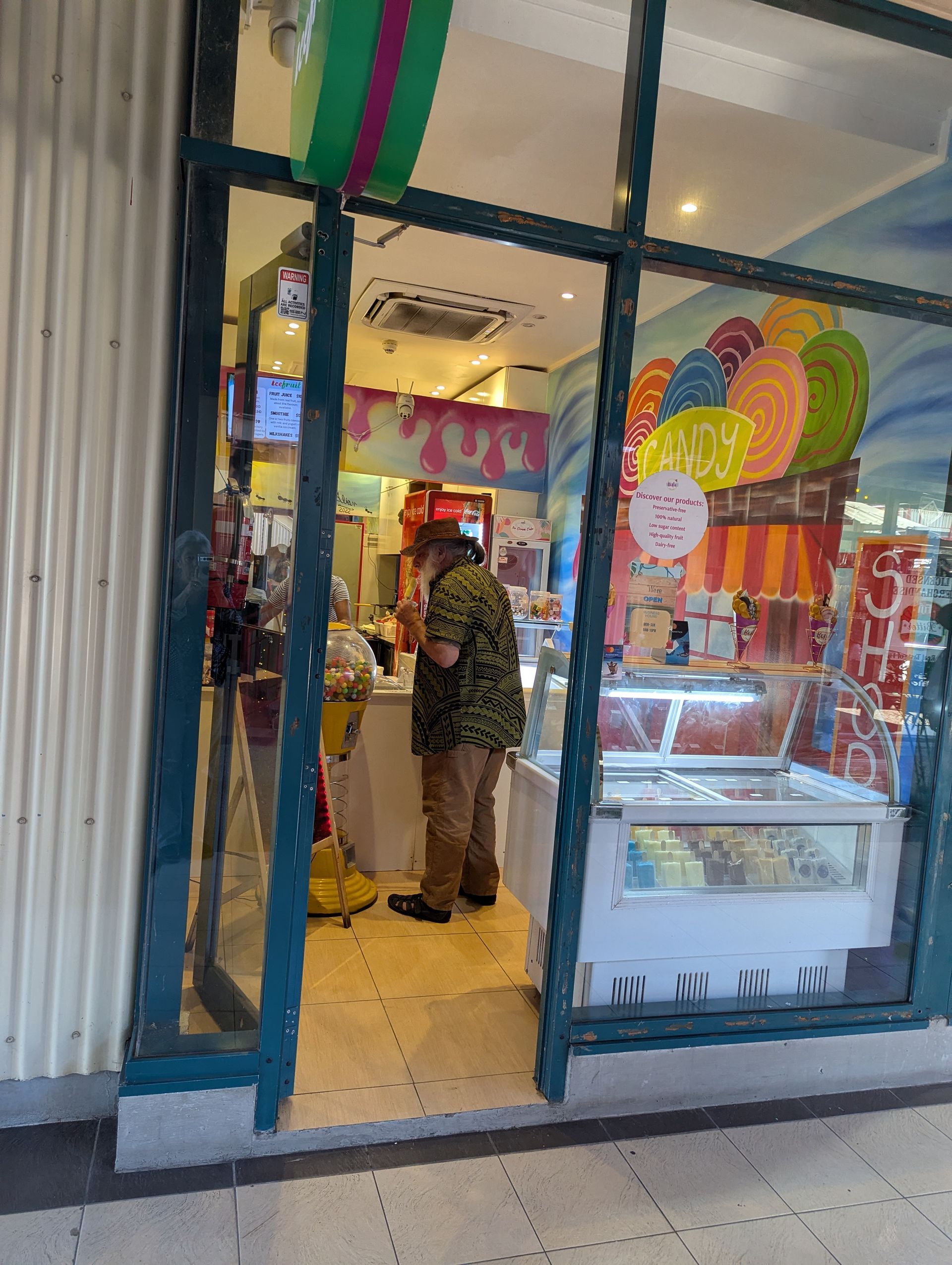
The petite Indian GP is able to understand what is wanted, a subpubic catheterization. She got instruction from the ship doctor and the urologist from Suba hospital and none of it was making sense to her. Doctors don't communicate well with each other it seems. So we try to straighten this out. We are waiting now to see what they will do with us. The contrast between this resort area with its private hospital and the previous places and hospital we experienced is extreme. They have all the modern equipment, and even a helicopter at their disposal. The bright young Indian/Fijisava GP is arranging things, she is efficient and charming. We killed some time by sharing a breakfast at one of the restaurants, an interesting interpretation of eggs Benedict. Neither of us had the energy or curiosity to browse the expensive gift shops. Jeff buys a fruit pop that we share, then we go back to the hospital and Jeff lies down.
Eventually we are informed the operation cannot be performed till tomorrow so we have to stay overnight and be taken back to the Suvu hospital in the morning. A three hour trip by ambulance. There is only one urologist in Fiji. And we have already met him. We are taken to stay at a fancy modern house owned by the private hospital, located in the suburbs among others like it. Each with a dock on connecting canals that go out to the ocean.
Small tastefully landscaped yards separate the homes by about 20 feet. The backyards are dominated by swimming pools. A couple and their two year old are living there, but are leaving just as we arrive. The wife injured her hand getting off a sailboat ladder. A doctor recommended surgery. But they want to have it done in New Zealand and will fly there. The private hospital that is better equipped than any other in Fiji is not good enough. They are friends of one of the fancy hospital's investors and are guests of his in the house. This must be the reason it feels sterile and not like a home. It is rather new, very modern with three bedrooms and baths, a high ceilinged living room/ dining room, granite kitchen counters and a breakfast island. It feels empty even though the family had been here quite awhile and the husband runs a waterfront restaurant nearby. No cooking has been going on, only reheating in the microwave. There are several boxes of granola bars in the cabinet and canned spaghetti, nothing worthwhile in the
refrigerator. Even the child's toys scattered about seem sad. The closets are empty, it feels like no one lives here or they have been gone for a long time. We will be picked up at 4:00 am to drive 3 hours to Suva hospital where Jeff was catheterized three days ago.
Now on our way, it is dark. Our driver, “Captain Reggie” says, “The night is getting smaller.” His ambulance interior is decorated with fake flowers, ivy and other unexplainable textures and objects. He is an Indian National. He narrates as he drives. He explains to us that milk comes from New Zealand, juice and beef from Australia, almost everything, 80 percent of what the island needs, is imported. Very expensive for the population. Even though Fiji has the best fruit it has no factories to make juice. Jeff gives the Captain the Parallel Currency summary. “I will do it! I am part of the Parliament here. I can get to the prime minister.” The ride was very interesting and not only because of the entertaining driver but also because we passed through beautiful countryside. It reminded me of central Florida, the trees and plants were familiar, except there are mountains. The mountains are strange shapes and make recognizable forms like you can see in clouds. One they call the sleeping giant. You see his head, his body and toes, a recumbent silhouette in black volcanic rock. All the mountains are dark, sharp and craggy, with deep valleys, covered with green vegetation. They grow sugar cane here and brew their own beer. Homes vary a lot. There are poor areas, but not as extreme as other places we have
been, and they transition to suburbs around the local general hospital and shopping areas then to extreme wealth in the resort areas. The country people who live on small farms and in little villages also work in the hotels and resorts in the wealthy areas. We see them, mostly women, waiting for the bus, which they pay for, on the side of the road in the dawn light. It is around 5:00.
“ If you need something you will see it, if you don't need something you will not see it.” our driver opines. The day is opening. Islanders are Fijian, Indian, Filipino and some Chinese. There is interesting history attached to all these groups, the order and reasons for their immigration. We are waiting for the doctor, it is 7:00 am. Jeff is finally being operated on, it is 12:00 pm. There was no need to get here at 7:00. But we have learned by now that time doesn't exist in Fiji. In the operating waiting room the TV is showing medical soap operas. Nurses and doctors flirting and emergencies happening. Men in charge. Everyone is white. After Jeff's operation we stayed overnight. The doctor wanted to see the drainage run clear or pink.
We left in the morning around 7:00 with a taxi we found outside the hospital. A nice guy, Indian, not talkative. Three and one half hours to where our ship was anchored. We pass again through beautiful countryside, mountains, valleys, and people riding horses. We make it back to the
tender and then to the ship. We are both exhausted. The ship will travel overnight to Savusavu.