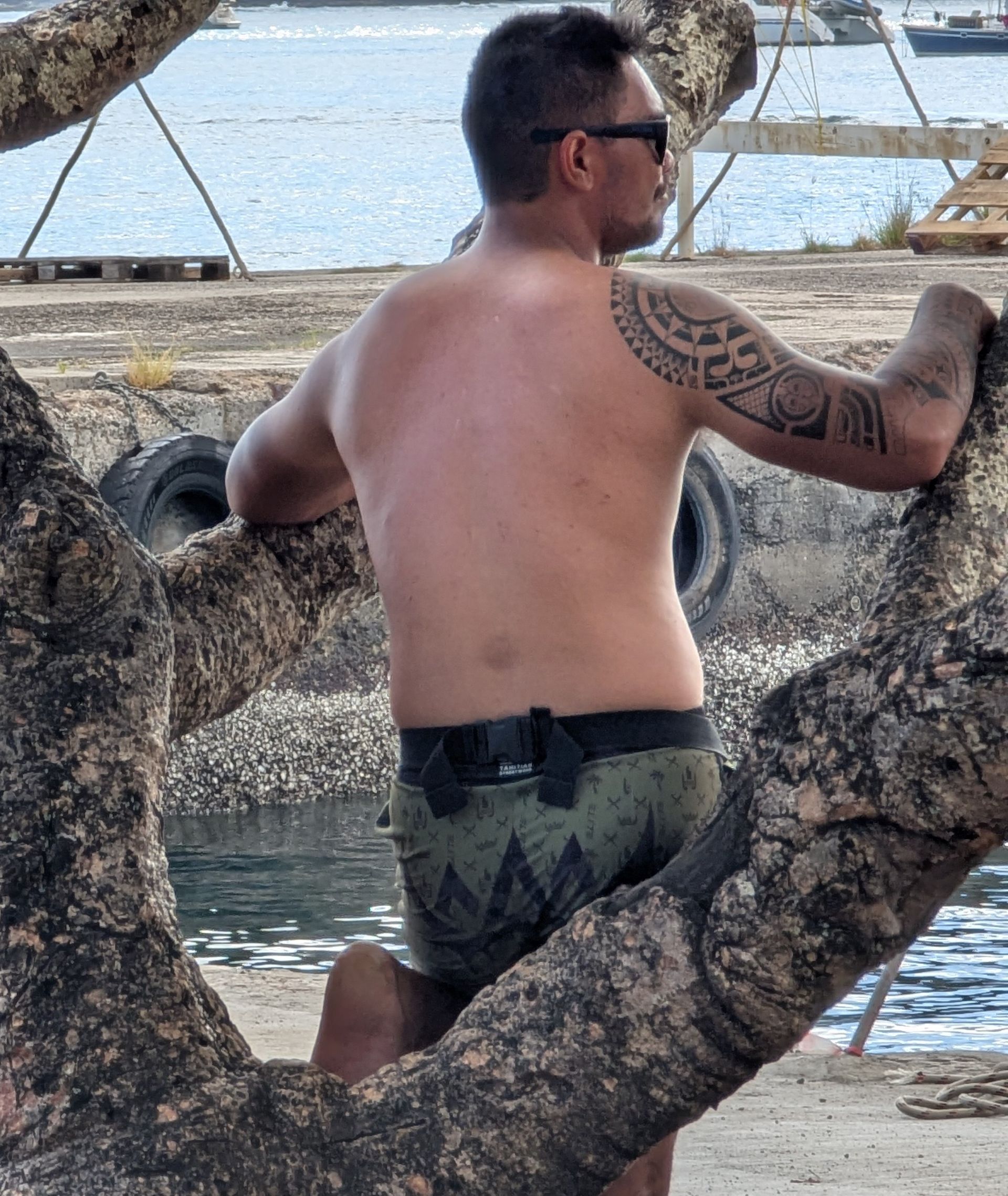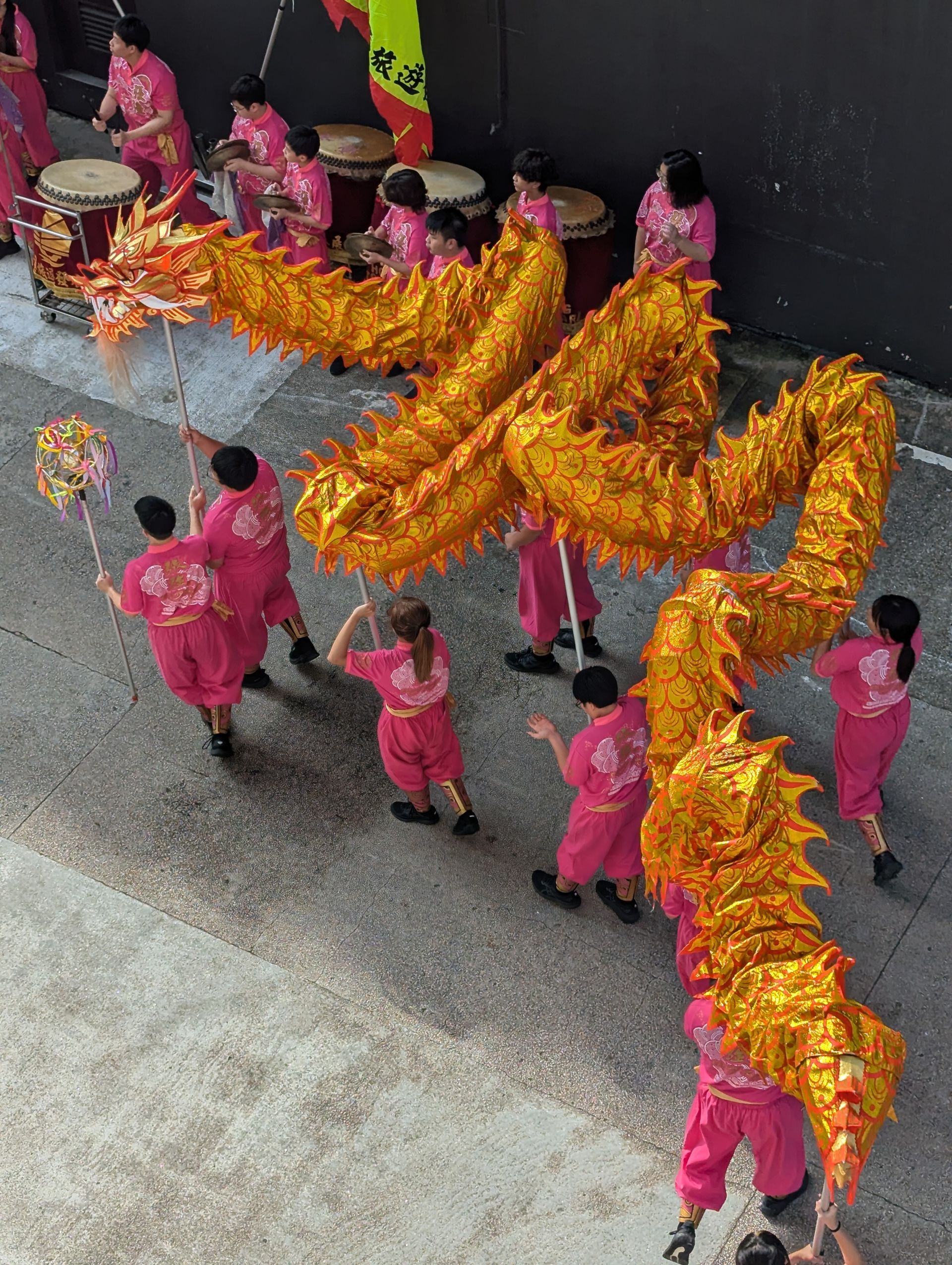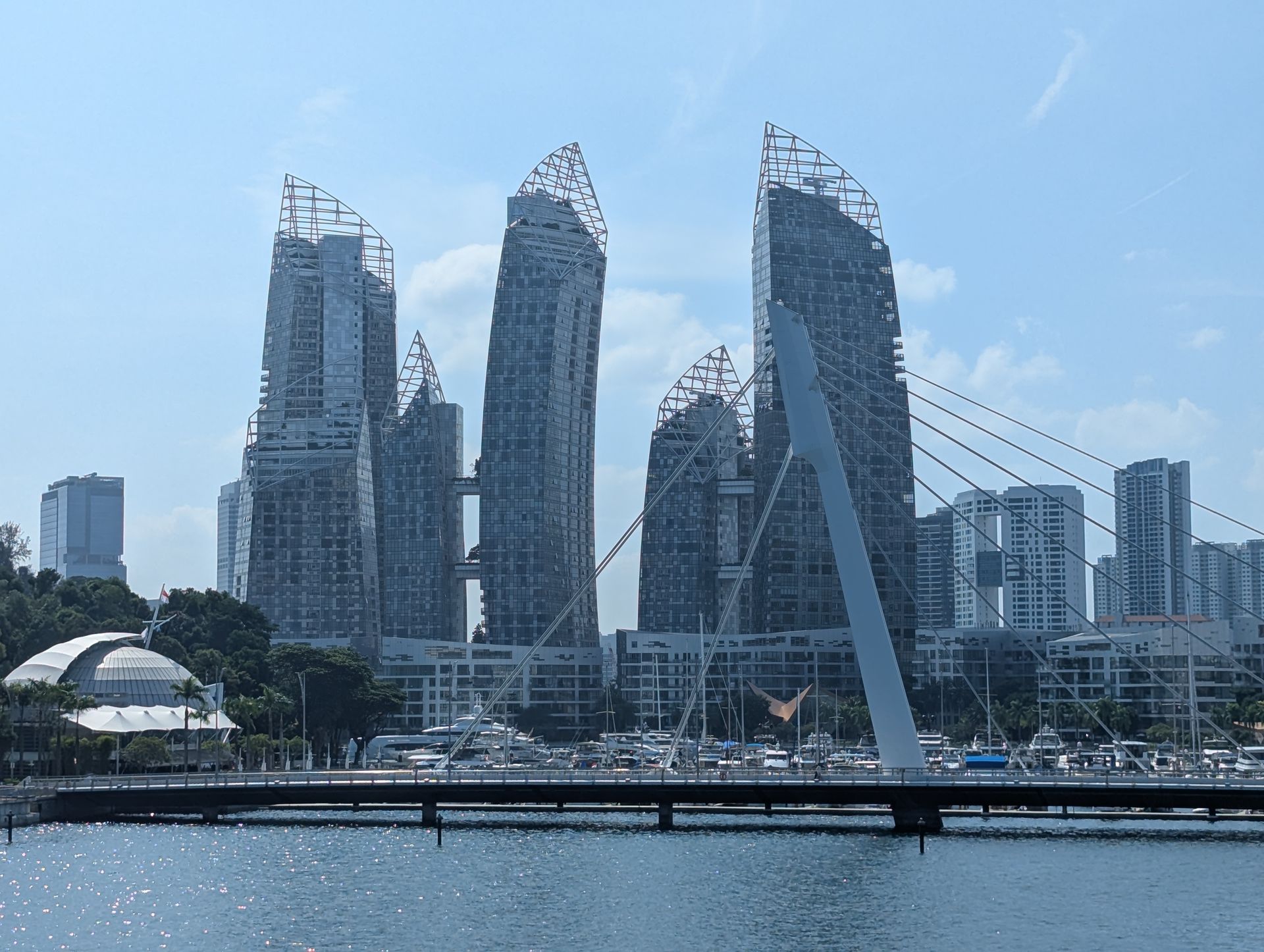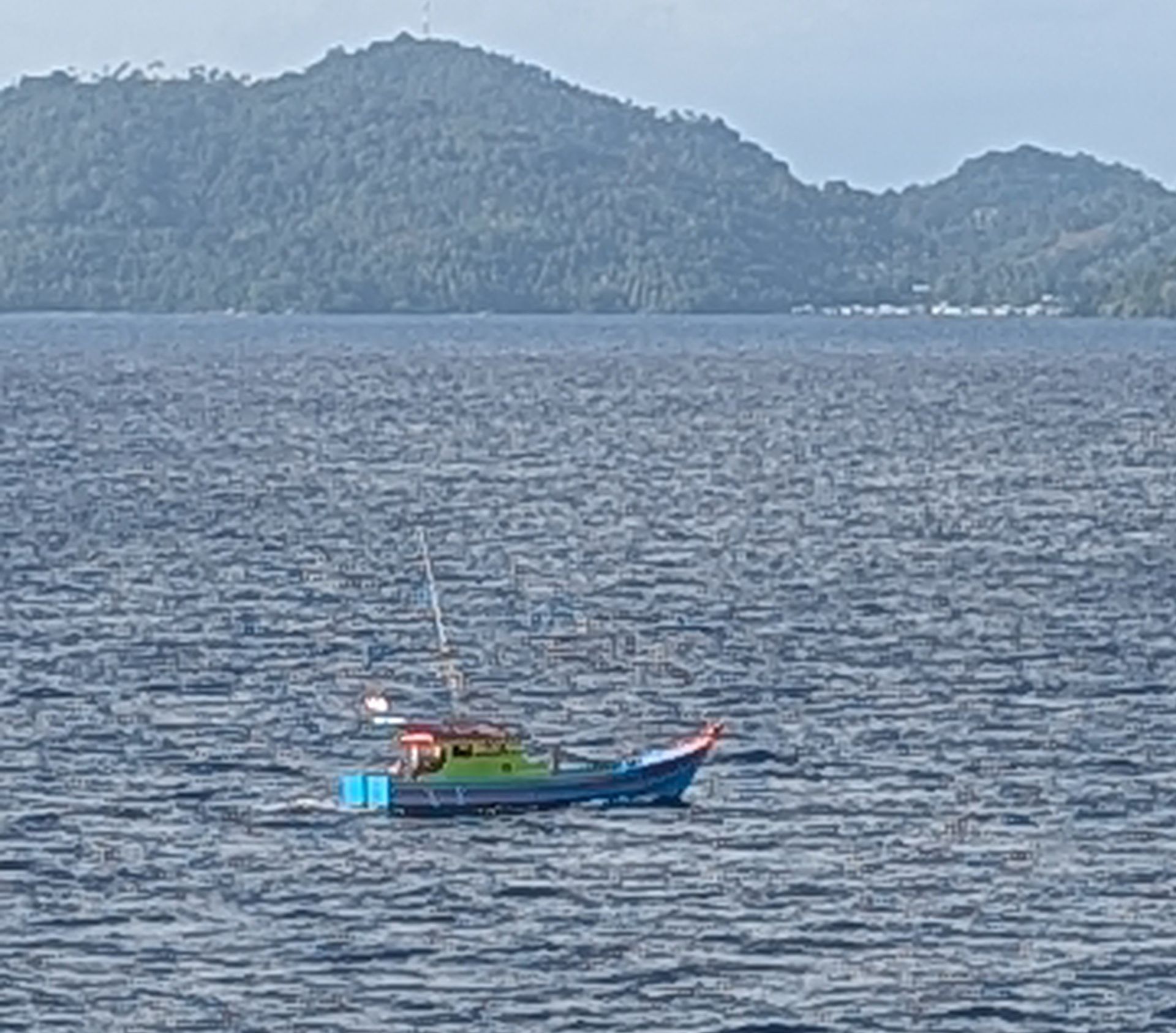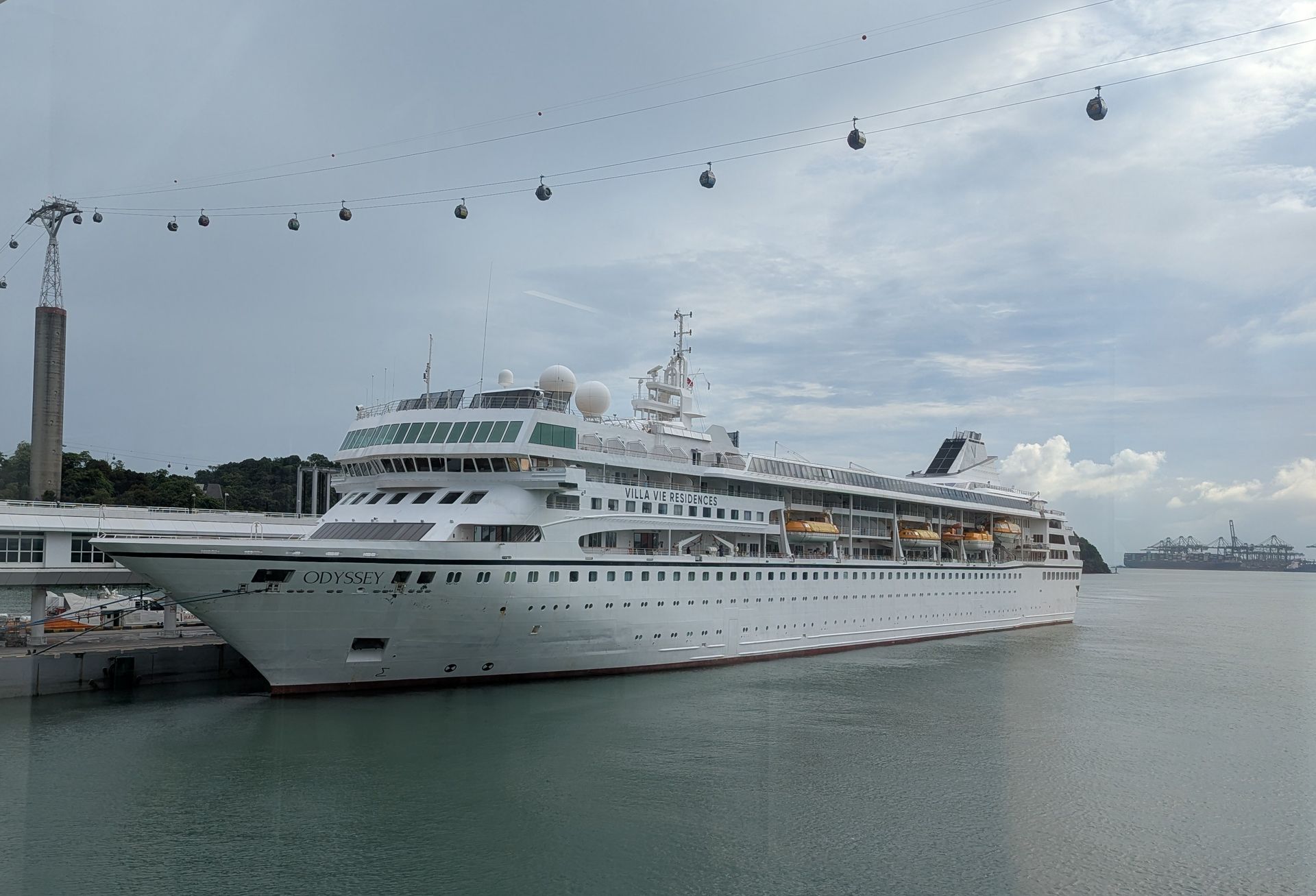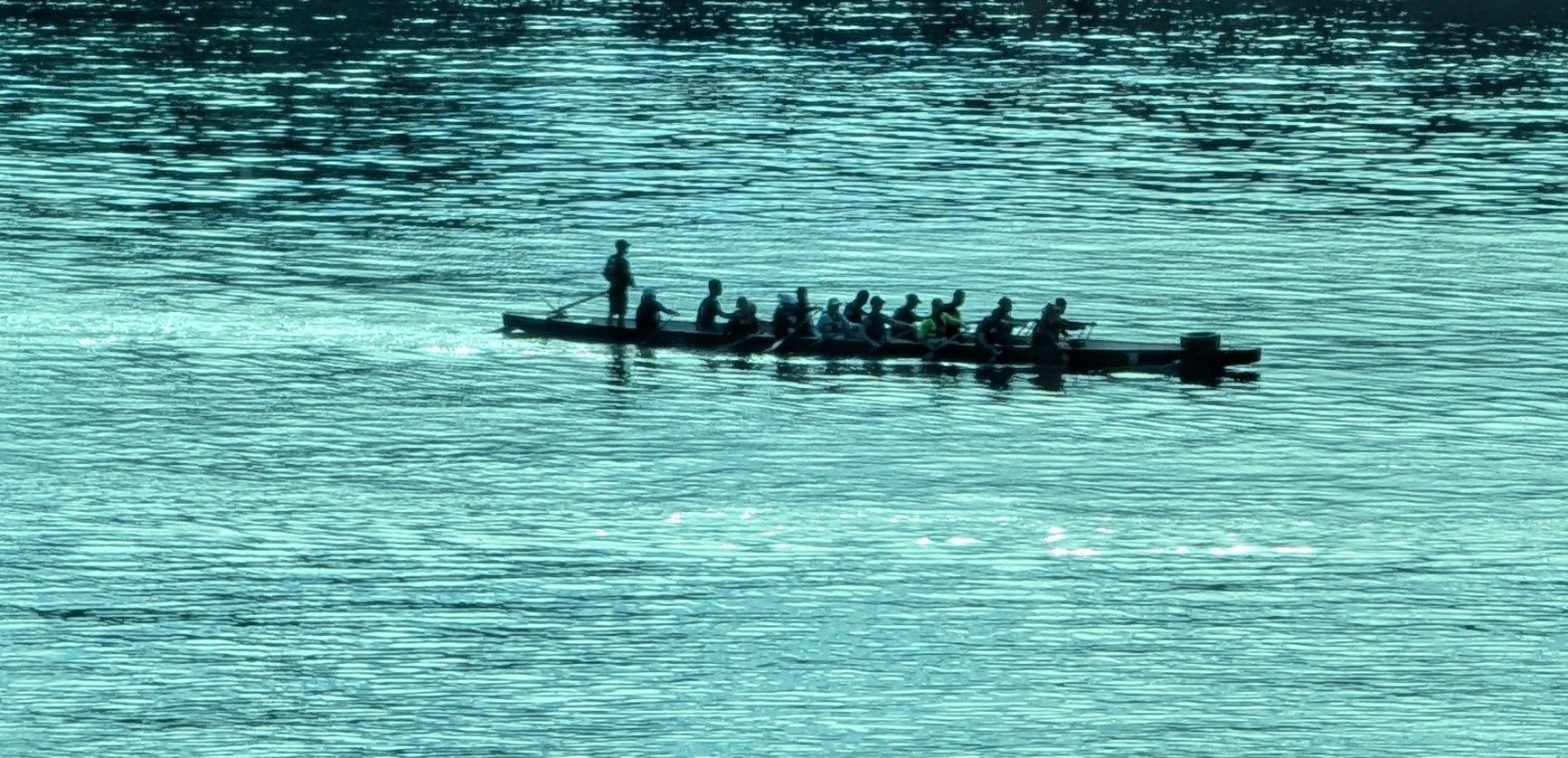
French Polynesia, the islands
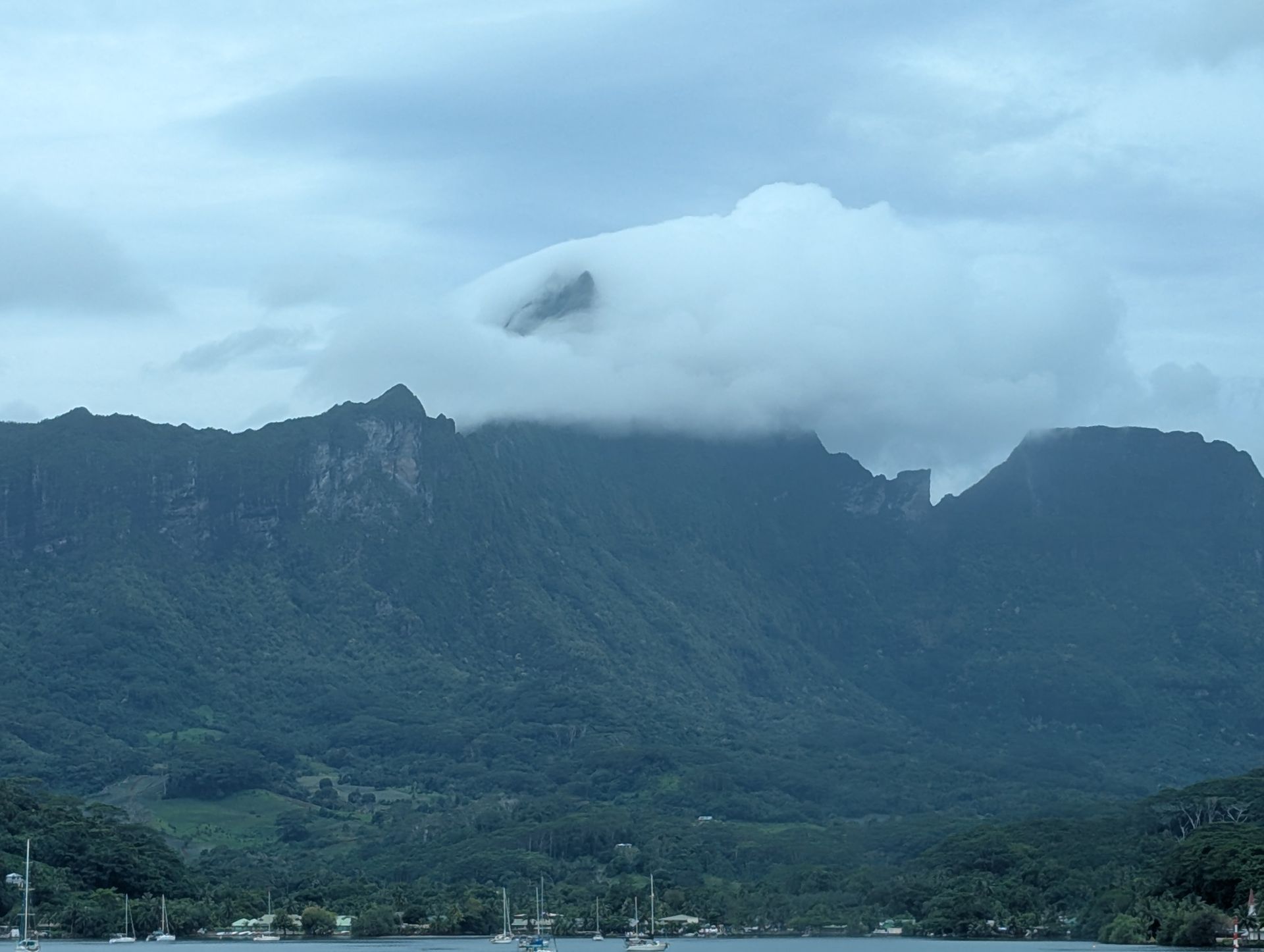
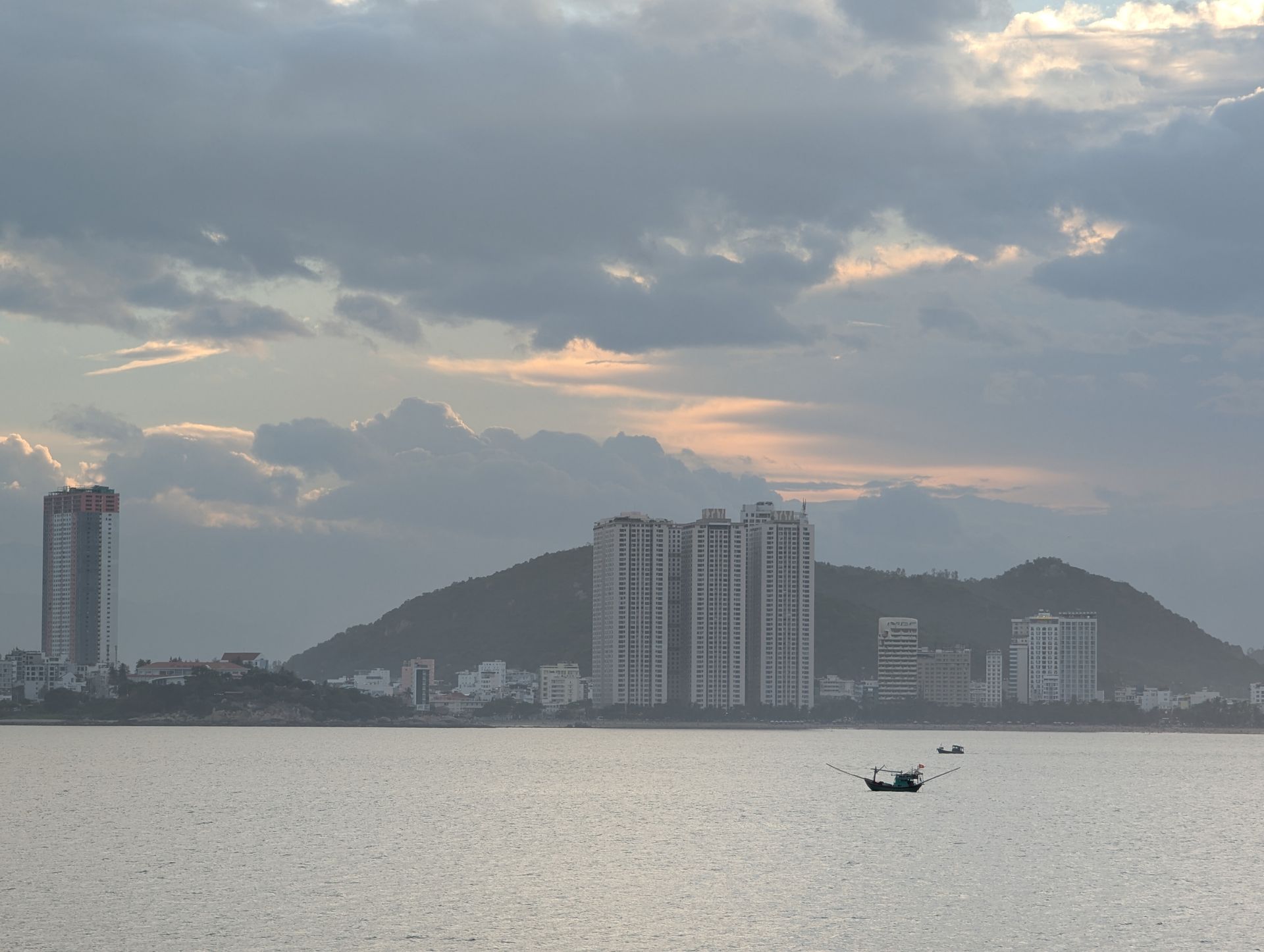
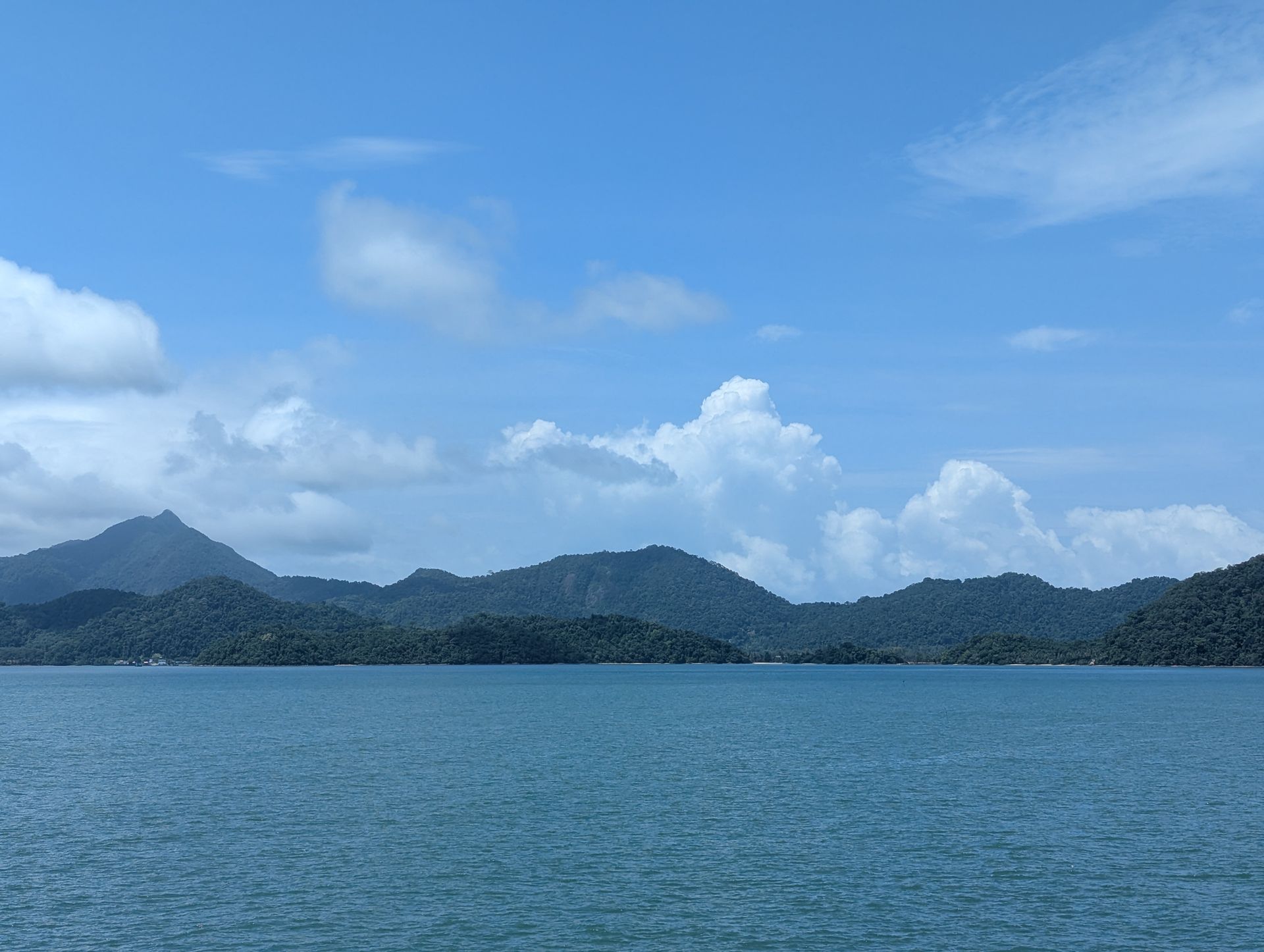
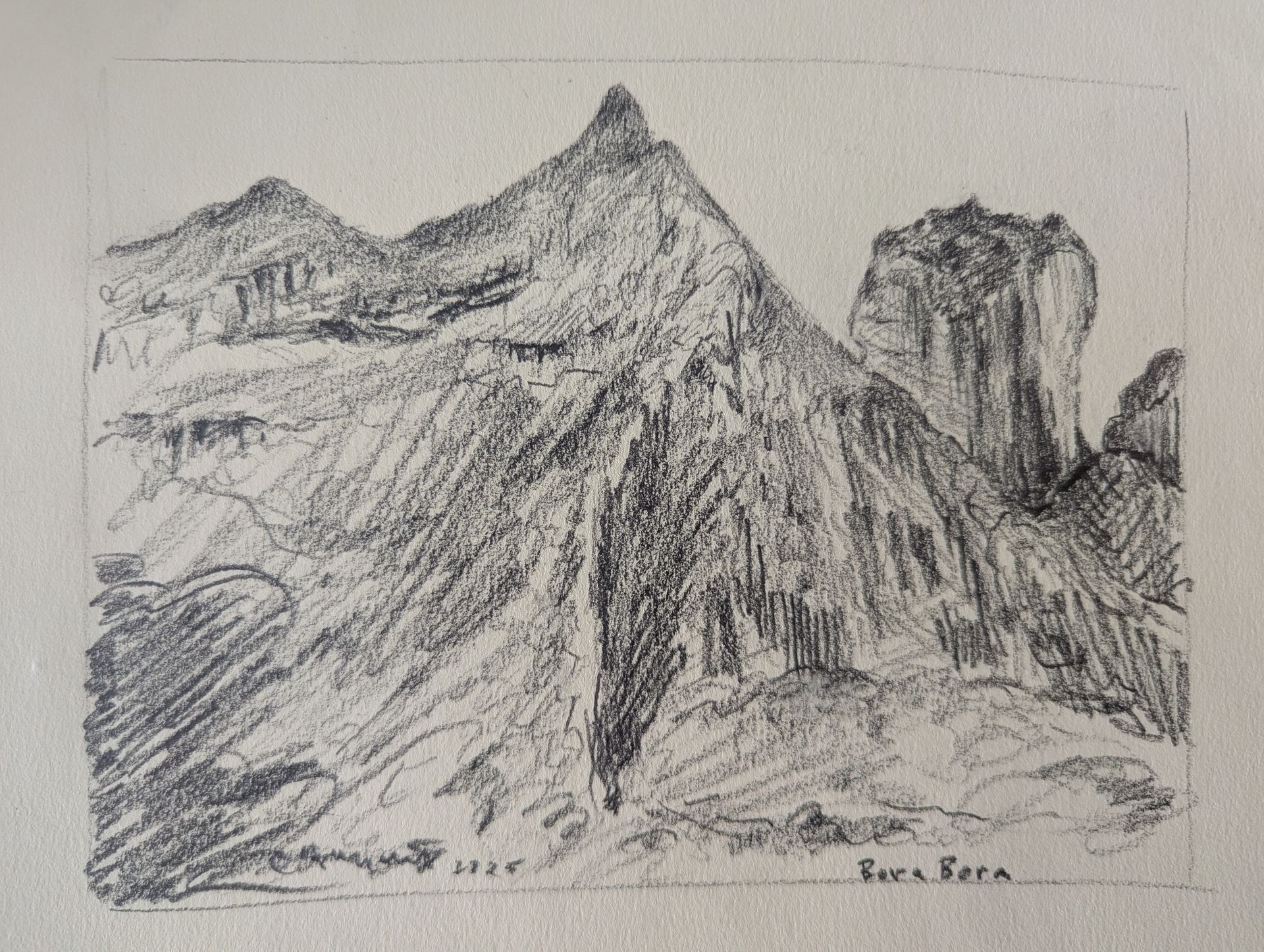
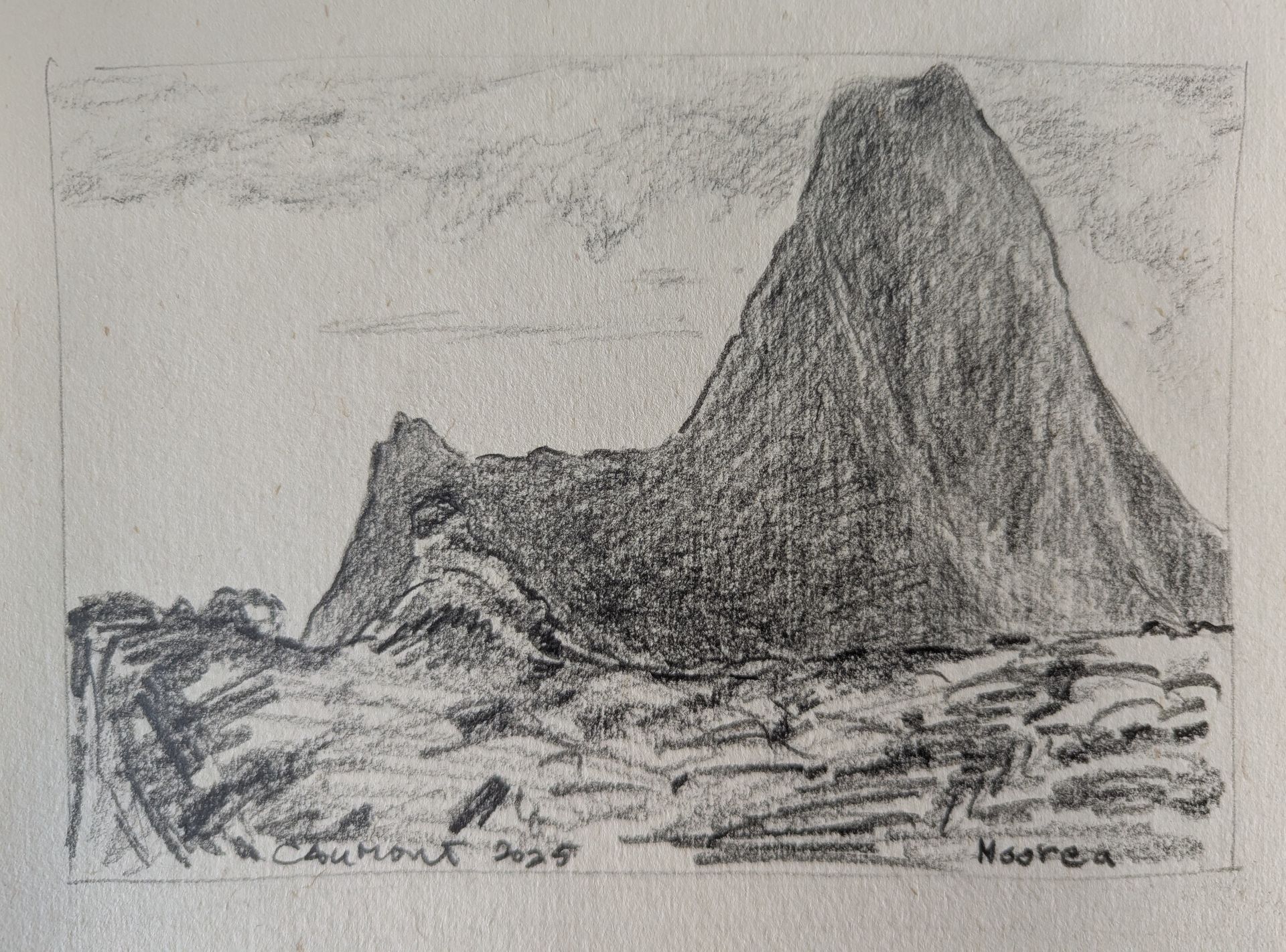
The float of cloud drifts and encircles a mountain leaving just the very top, a pointed witches cap poking through. These islands have the most magnificent mountains. They brood around the harbors, snagging the clouds that pass. No doubt they have inspired fantastic stories. The cloud shadows create chameleon-like changes on mountain surfaces, making them even more expressive than oceans that amuse themselves by hiding what they contain; mountains are hysterical by contrast. Always looking for attention. “Look. Look again!, what about this?” They may hold a pose for a while seeming docile, then you look up and they have disappeared. White mist covers just a grey suggestion, then suddenly black silhouettes like broken giant teeth rise defiantly. So much animation, millions of years after volcanic upheavals shook these mountains from the sea depths.
We are in Papeete now, at the urologist. This is the first change of Jeff's catheter since his operation. It is supposed to be routine but, we are advised, should be done by a doctor the first time. The first attempt was unsuccessful. He was unable to enter the bladder. Jeff is drinking water to inflate his bladder. The Doctor thinks this may help. So we wait. Papeete is a big city. The port where we are docked is one of the largest we have seen.
There is a marina with lots of catamarans and a lovely waterfront park, which I walk through to get to
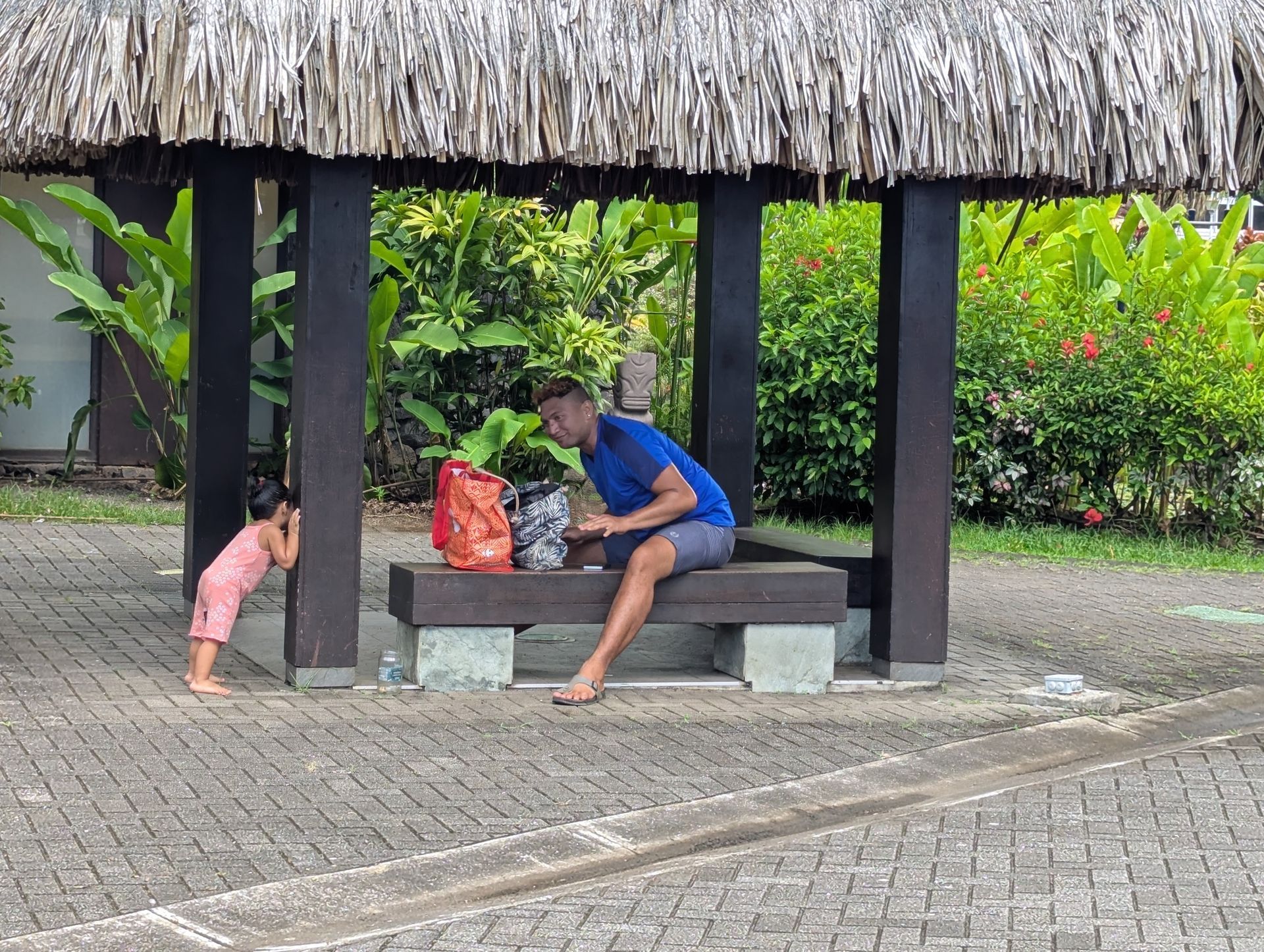
the hospital several times. People lounge, children play, flowers booming all around, feral chickens, wild birds commenting from the palms and grazing on the grass. Right next to the park is the main road, traffic, noise, business and office buildings and then private homes block
after block climb the mountain slides.
Most of the local people speak French. A few speak English. Our urologist was French. He spoke reasonably good English, but this became a problem when subtle description was necessary. In the end I think we understood each other well enough. The doctor tried again to insert the new catheter. This time he was successful but the tube had a very small diameter and we told him it would clog up because Jeff has been passing blood
clots. This created an emergency and the necessity to go to the hospital, where Jeff was operated on for 2 hours and stayed overnight for observation and flushing of his bladder, 20 bags of water through the night. In the morning the doctor informs us, “If it runs clear or pink I can discharge you. But you must walk around and see how that goes.” We are able to return to the boat in the early evening. A nurse from the hospital, Solange, kindly drives us back. The moment we exit her car, rain comes down heavily. We walk through it carrying all our stuff, getting soaked, and arrive at last to climb the ramp into the ship. We both are exhausted and Jeff has begun to bleed again.
Three days later Jeff's urine is only a little pink. He has more energy and is able to walk the ship to meals. He has been advised that he needs prostate surgery. A sonogram had shown that he has a very large prostate. And this is probably his main problem. I began researching urologists in Australia.
We traveled overnight and anchored near the French Polynesian atoll, Fakarva, south of Papeete. A low crescent shaped island, sparsely populated with coral reefs all around and abundant varied sea life. Again, passengers rush to observe the underwater world.
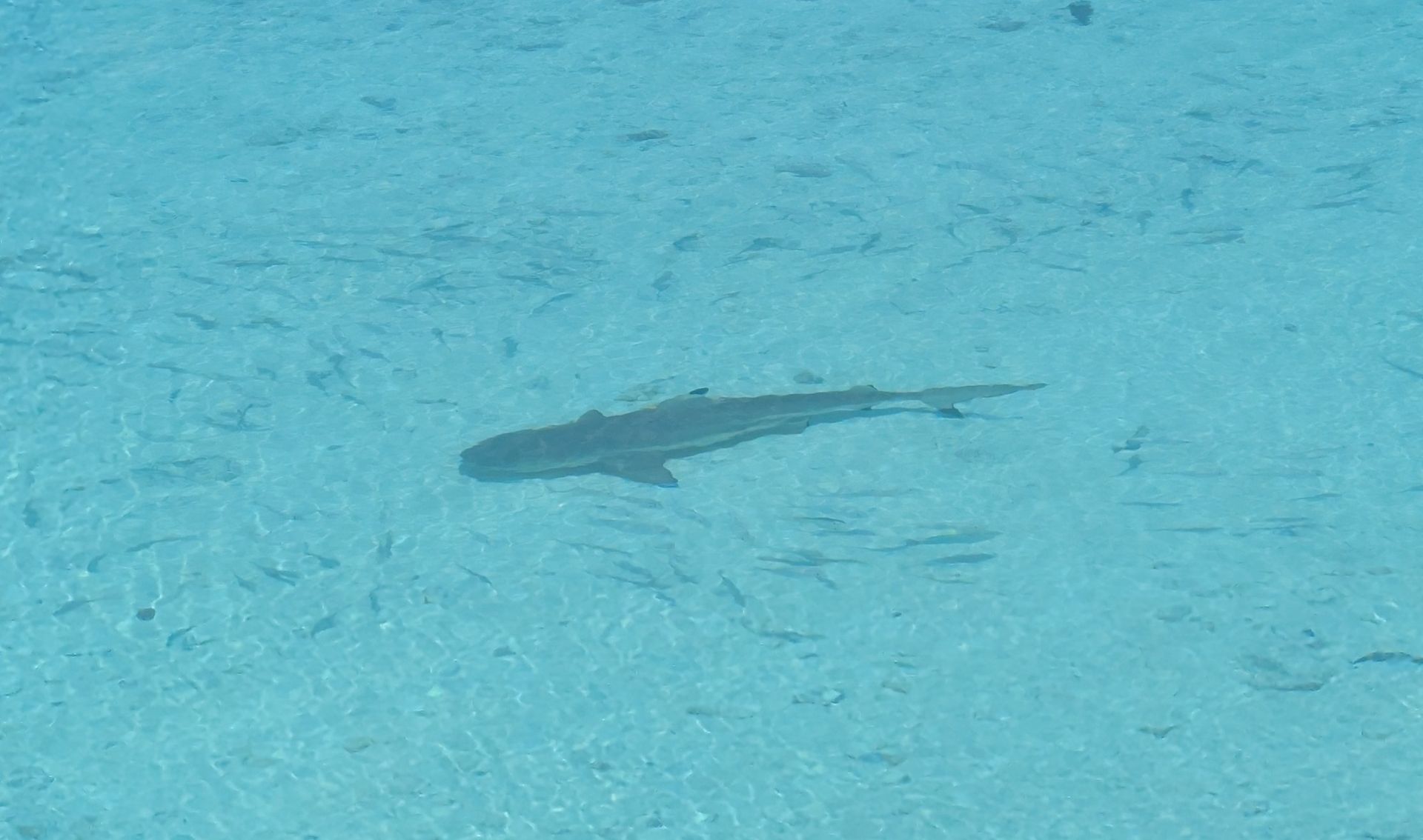
Snorkeling and diving are something of a phenomenon, like birding. It attracts similar enthusiasm and fanaticism. It demands expensive equipment and extensive travel. “Birders”have a “life list” of what birds they have seen and photographed and where. Fish and underwater animal enthusiasts make photographic records but don't keep lists as far as I know. They talk excitedly about what they have seen and this enthusiasm is not dampened by seeing generally the same creatures in successive locations, island after island. This is why I compare them to “birders,” they seem to get an emotional rush from the combined anticipation and sightings. We are cruising the South Pacific Islands almost exclusively so that passengers can snorkel and dive.
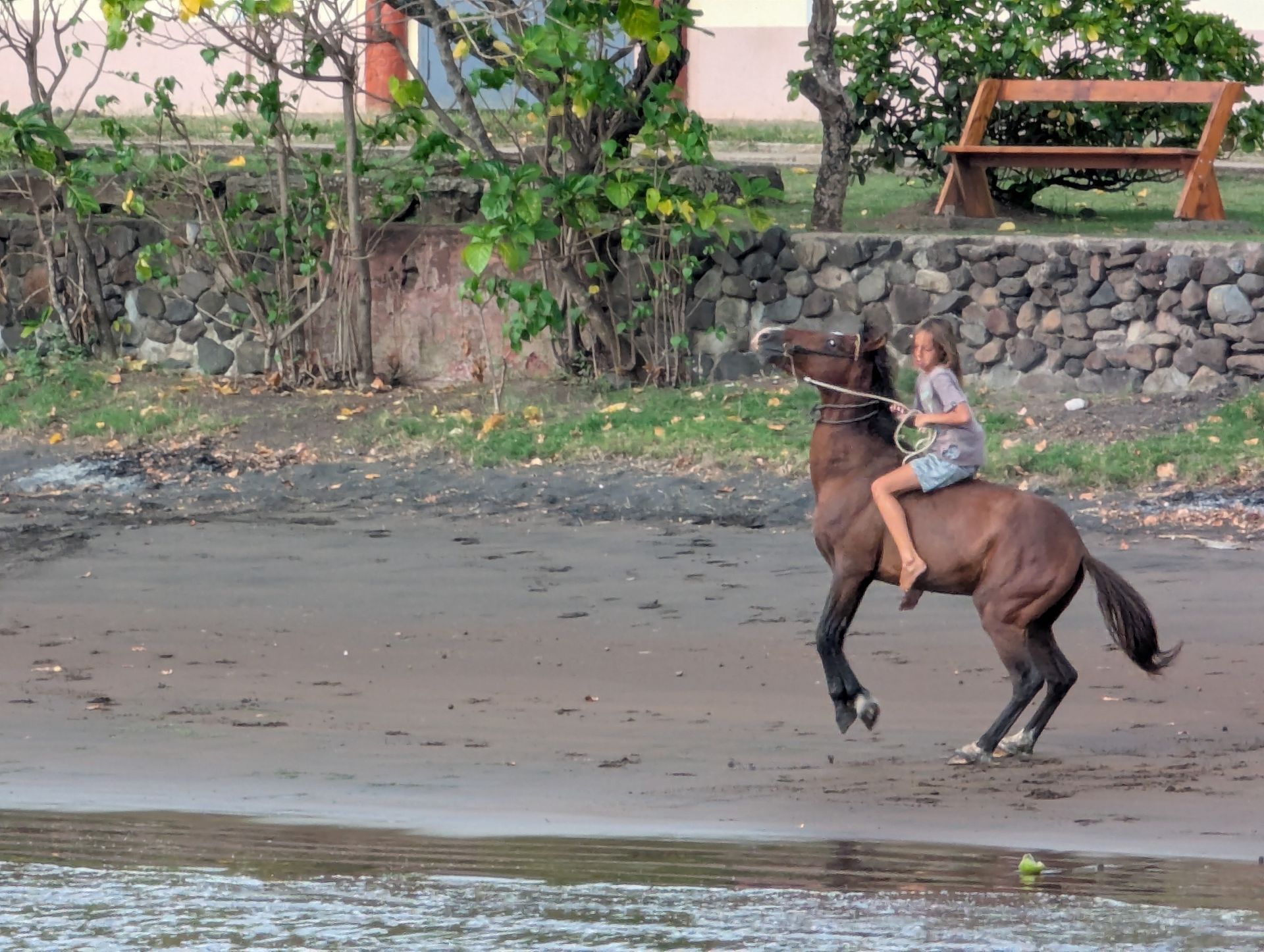
Fortunately there are many other things to be interested in on each island. The breathtaking mountains, the kind, generous local people, the smell of flowers blooming everywhere and the clear turquoise water where its shy inhabitants are visible even to those of us just looking from the shore. A young girl rides her horse bare back along the beach while we wait for the shuttle
back to the ship.
We traveled overnight and are now anchored in a harbor with about forty sailing catamarans and a few mono hulls. This is one of the islands of the Marquesas, Hiva Oa, part of the most remote island group in the South Pacific and French Polynesia.
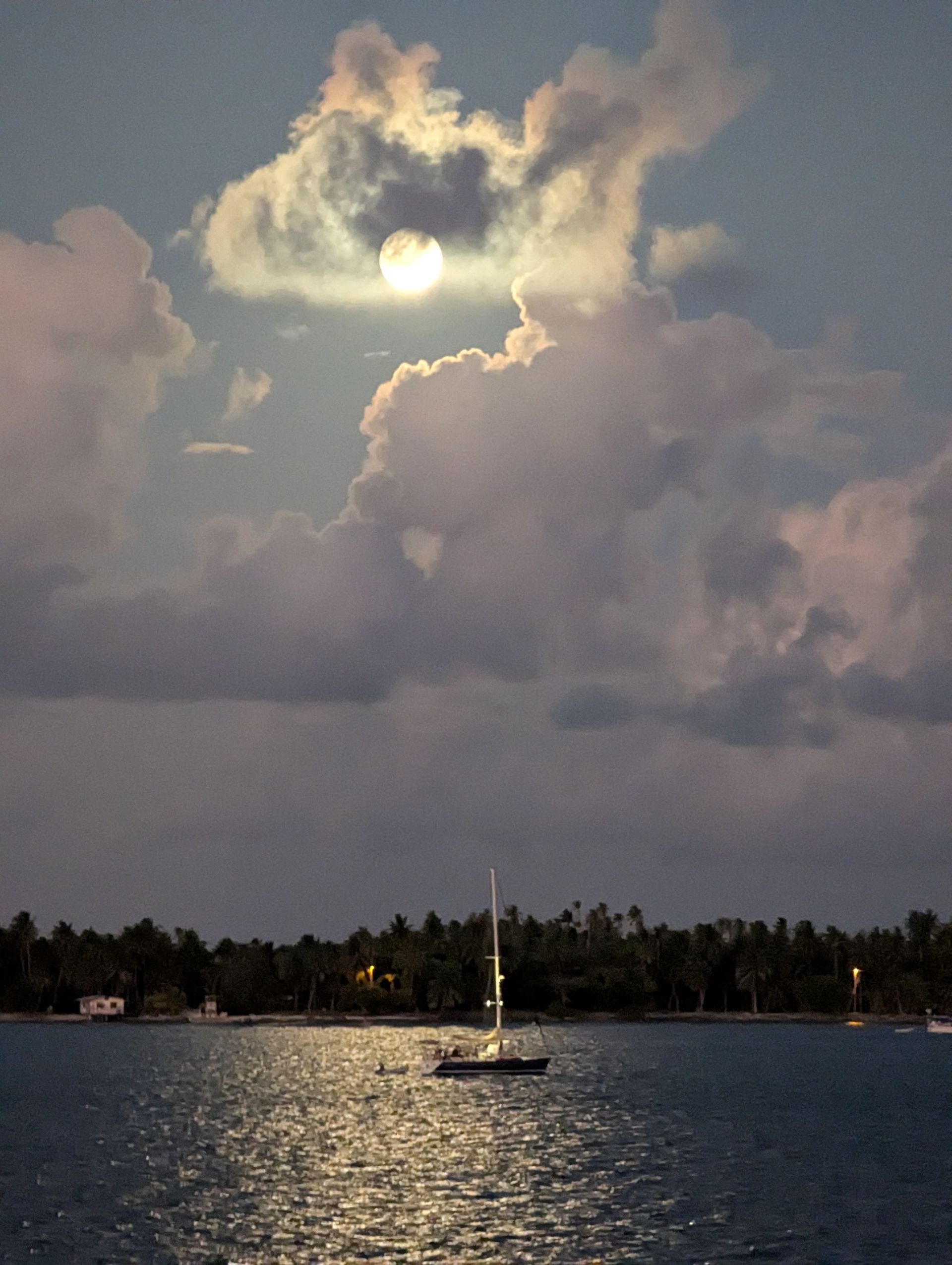
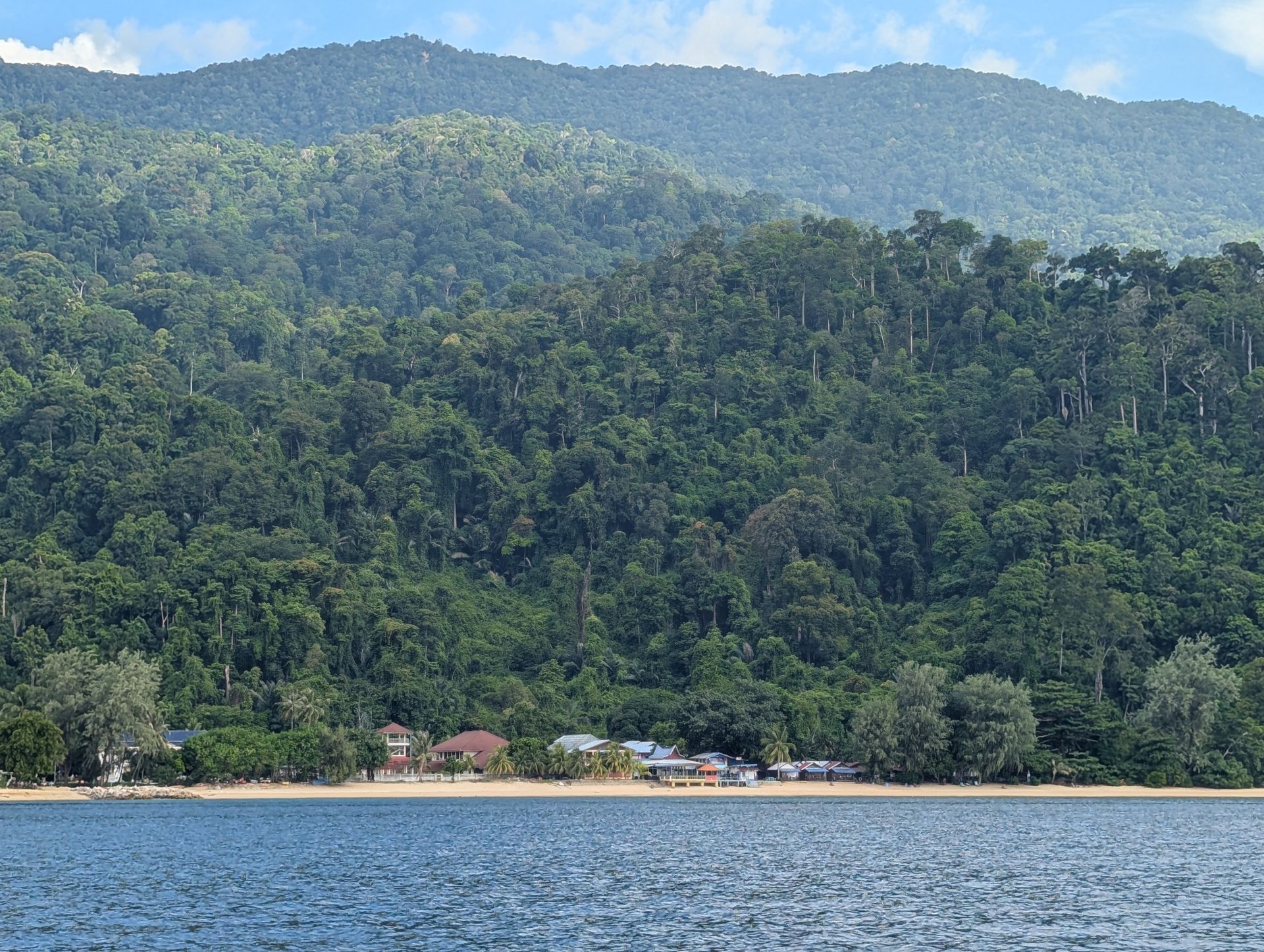
There is a significant number of the population here that feel left out and under subsidized by the government and talk about becoming part of France. Hiva Oa is divided into 6 communes that have their own representatives. The total population, which is concentrated mostly at the capital, Atuona, amounts to around 6,000 people. The surroundings are breathtaking. Volcanic mountains rising to great heights all around with massive rock formations balanced incongruously on their tops, deep valleys dive into shadow. There will be a dance performance in the early evening on shore. Jacque Breil died and was buried here. Also, Paul Gauguin.
Now we are on our way to the Cook Islands, two sea days. We are still waiting to hear when our appointment with the urologist in Brisbane will be for Jeff's surgery. The ship has cancelled an arrival there for environmental reasons. But we can still fly there from Cairns. We have been advised that this is the best place for the operation. Jeff is still weak and occasionally bleeding. I am tired and it is hard to sleep. I try to keep focused and do some writing.
We hear from the urologist and the dates they offer are beyond the window of our stay in Australia. So we pivot and look to Sydney for a urologist and I pick out a lady this time. Her office immediately came up with a convenient date. So we are now planning to fly to Sydney
when we arrive in Cairns, find a motel and proceed from there. I write in such detail about our medical experiences because it may be useful for long-term travelers to know. You have to be flexible and ready to change tack. Give plenty of time, if possible, to make arrangements.
The Cook Islands were cancelled from our itinerary because cyclone Cody is in the area. So we are back in Papeete and spending an extra day. This is fine with me because I enjoy their waterfront park and everything is easy access. Walking through the park this time I noticed a memorial. It remembers the nuclear bomb tests the French did on these islands in the 1960’s and the suffering of the native people.