Singapore
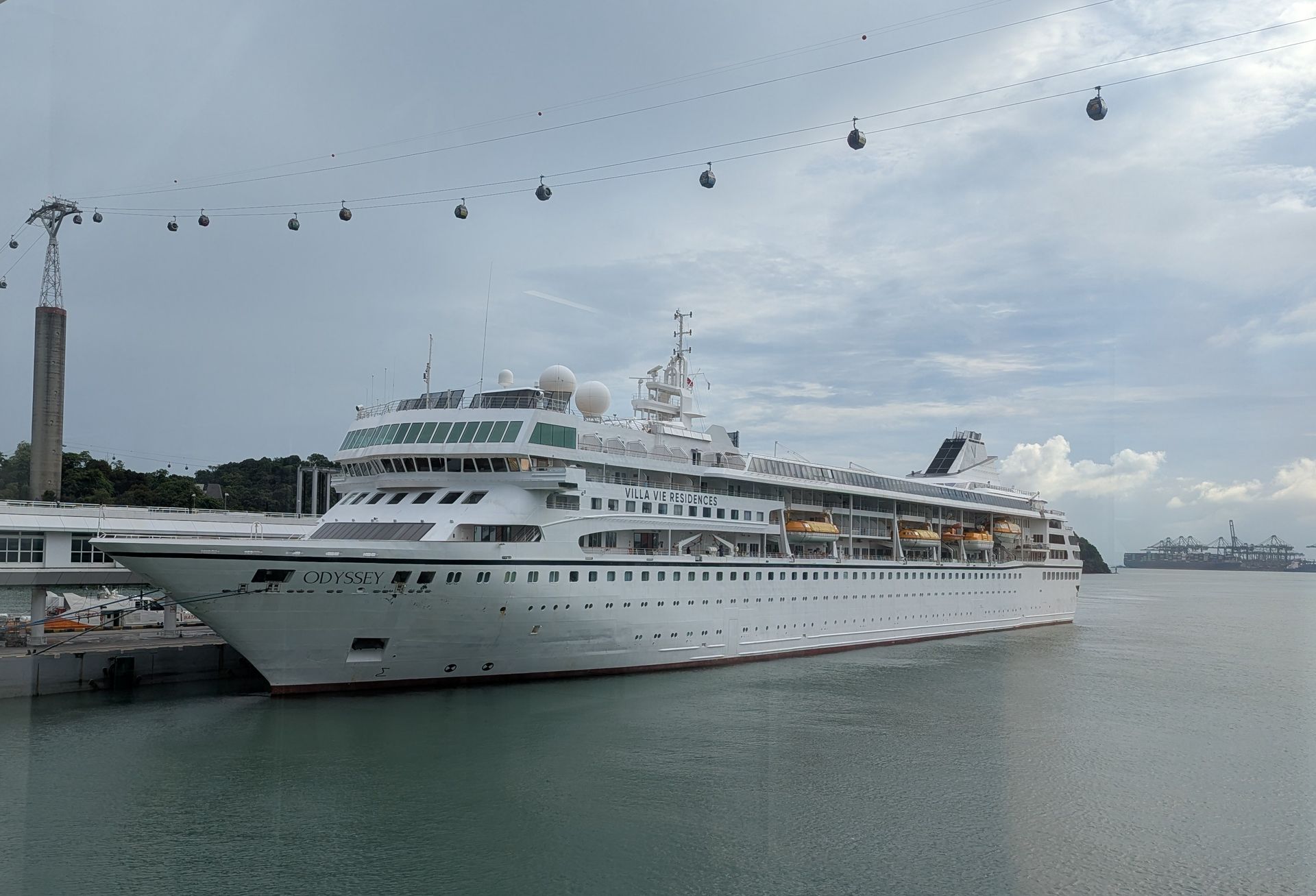
The reason our ship is returning to Singapore so frequently, while traveling in South Asia, is because they have the most dependable supply of marine diesel fuel. Since the war started it has become the foremost consideration of our voyage.
Several new fuel saving activities have been recently introduced. Traveling at slower speeds between ports, drifting with engines off, staying at ports longer (four days instead of two) anchoring out near island villages for several days, and a 1,500 dollar fuel surcharge monthly per cabin was recently attempted as a mandatory requirement. When it was resisted, it was made voluntarily. Many passengers cannot sustain this increase in their monthly fee and some passengers have contracts guaranteeing no monthly fees if 300,000 was paid upfront for lifetime ownership of the cabin. This was very uncomfortable for many residents for several reasons. The prospect of the cruise possibly going bankrupt was raised in many minds. And the lack of foresight on the part of the owners has created anxiety. Ever since the war started it has been clear that fuel was going to be a problem. Their answer was that availability was going to be the problem, not price. This proved to be wrong. The price of marine diesel fuel has more than doubled.
On a residential cruise ship there is a unique dynamic which is not available on land. Getting the passengers to pay for the company's money emergency can not work because if a passenger cannot pay they just leave the ship, then the company loses monthly fees and the surcharge. The owners and wealthy passengers can't pass the expense on down, it comes back to them and they have to consider paying more themselves. On land the prices increase to compensate elite business owners, they can avoid tax hikes with ‘clever’ accounting and they get tax breaks from the government, while the rest of the population has to pay the higher prices plus higher taxes. This cruise situation is more representative of what people can afford to pay or not pay. An interesting real life example of a successful challenge to unequal economic pressure. Of course this has caused resentment and misunderstandings because everyone, even the wealthy, have to think about how important this cruise is to them and how much more money they can spare to keep this business venture afloat at the expense of their own future wellbeing and interests.
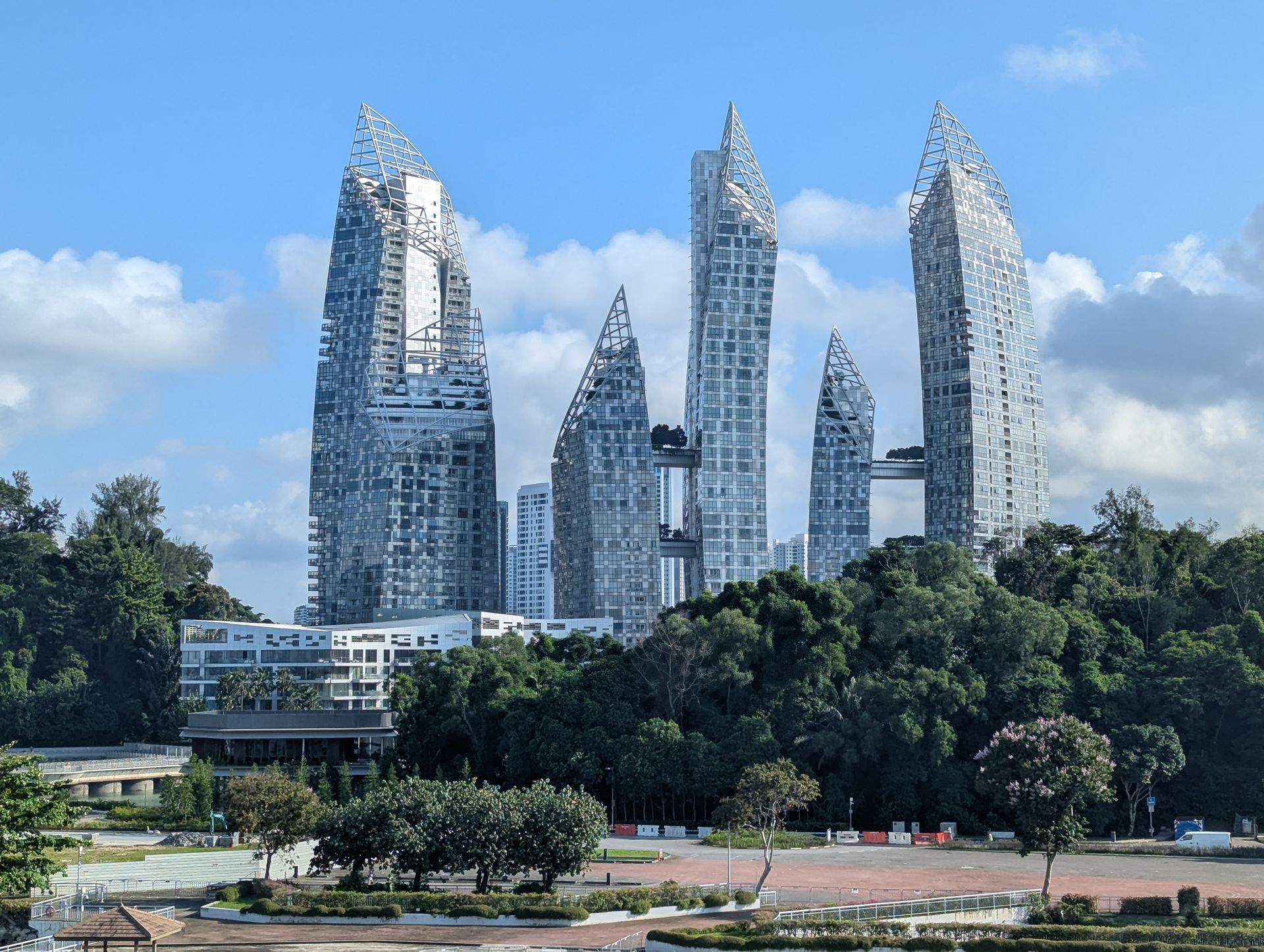
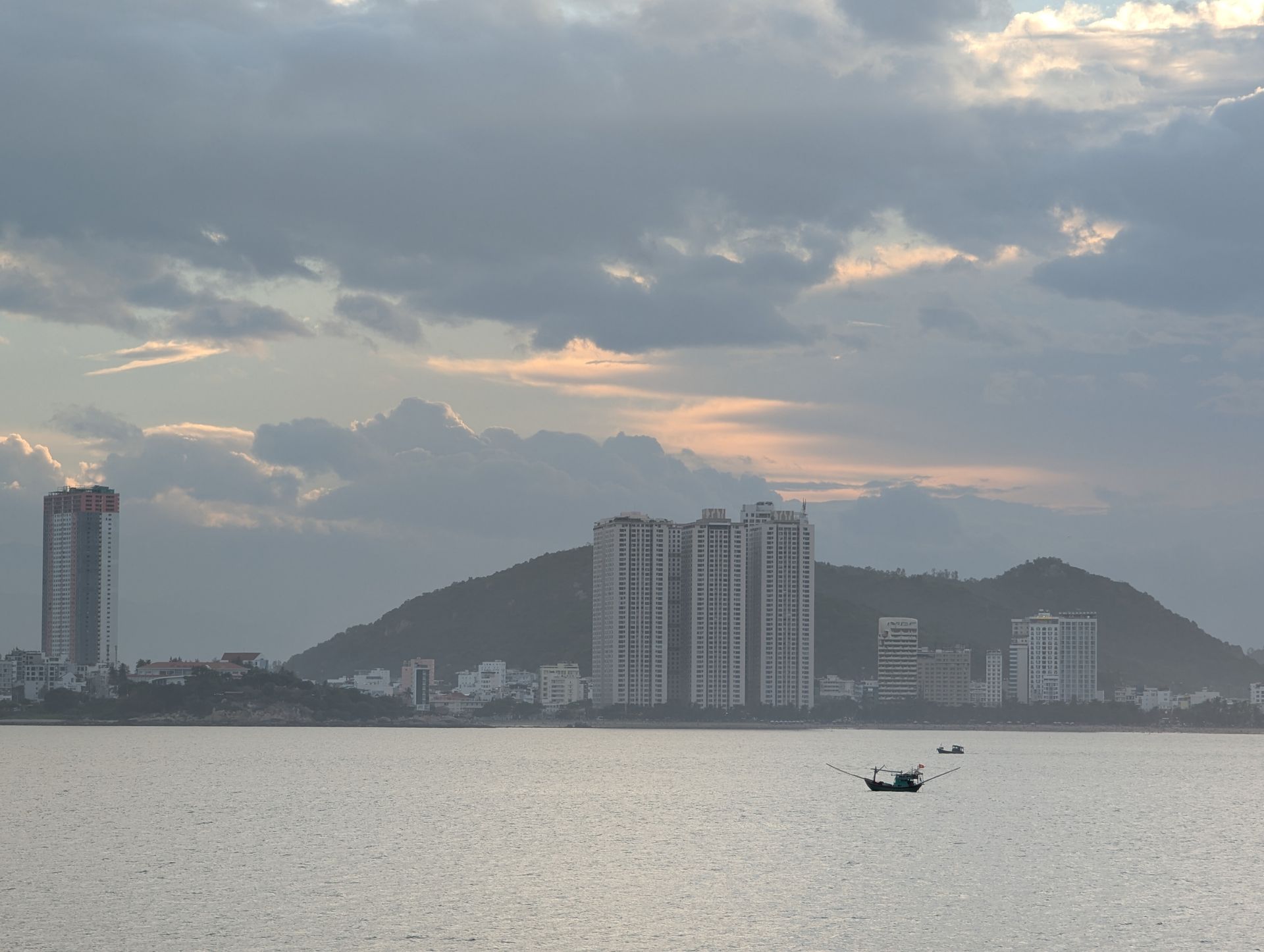
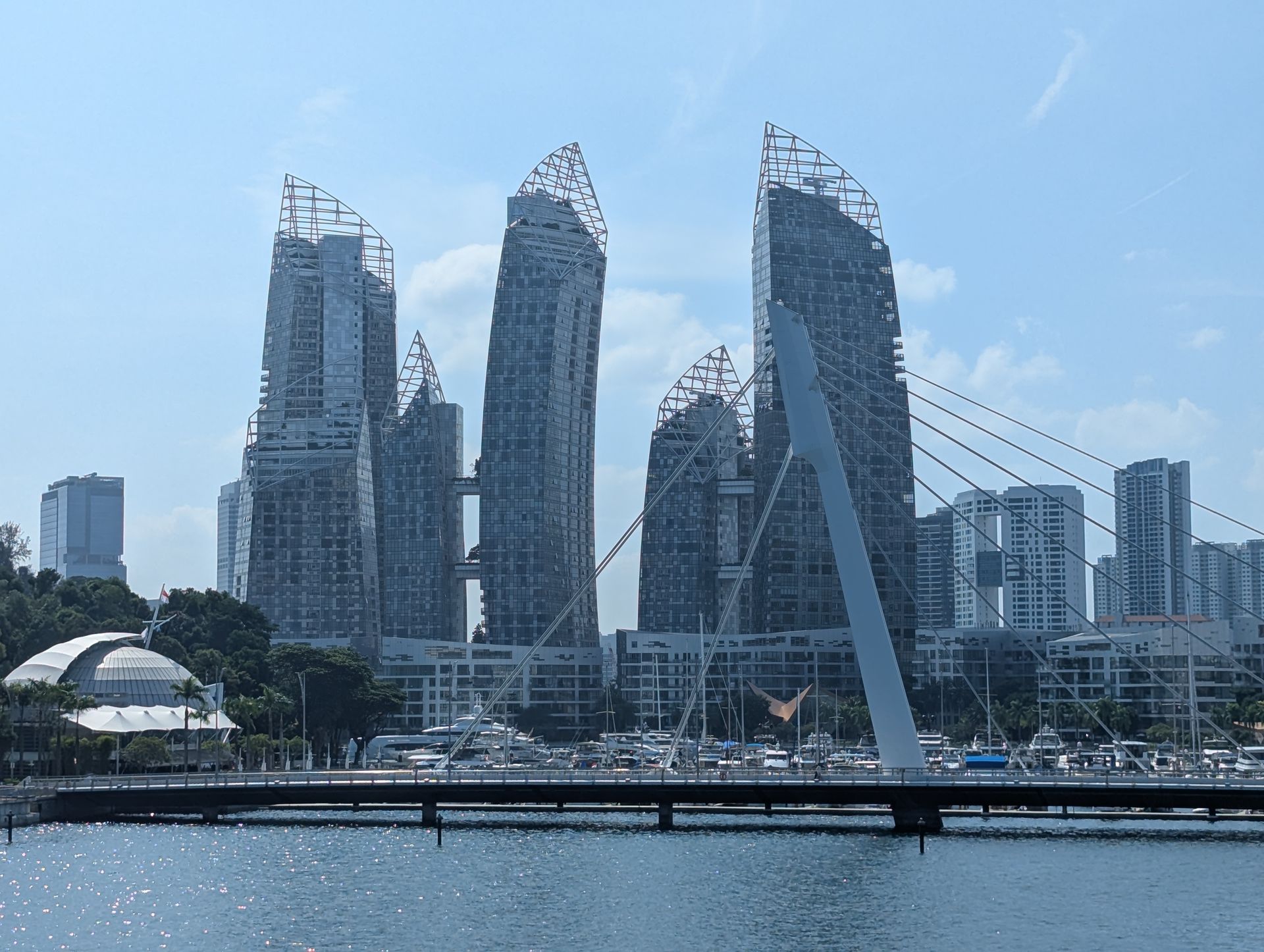
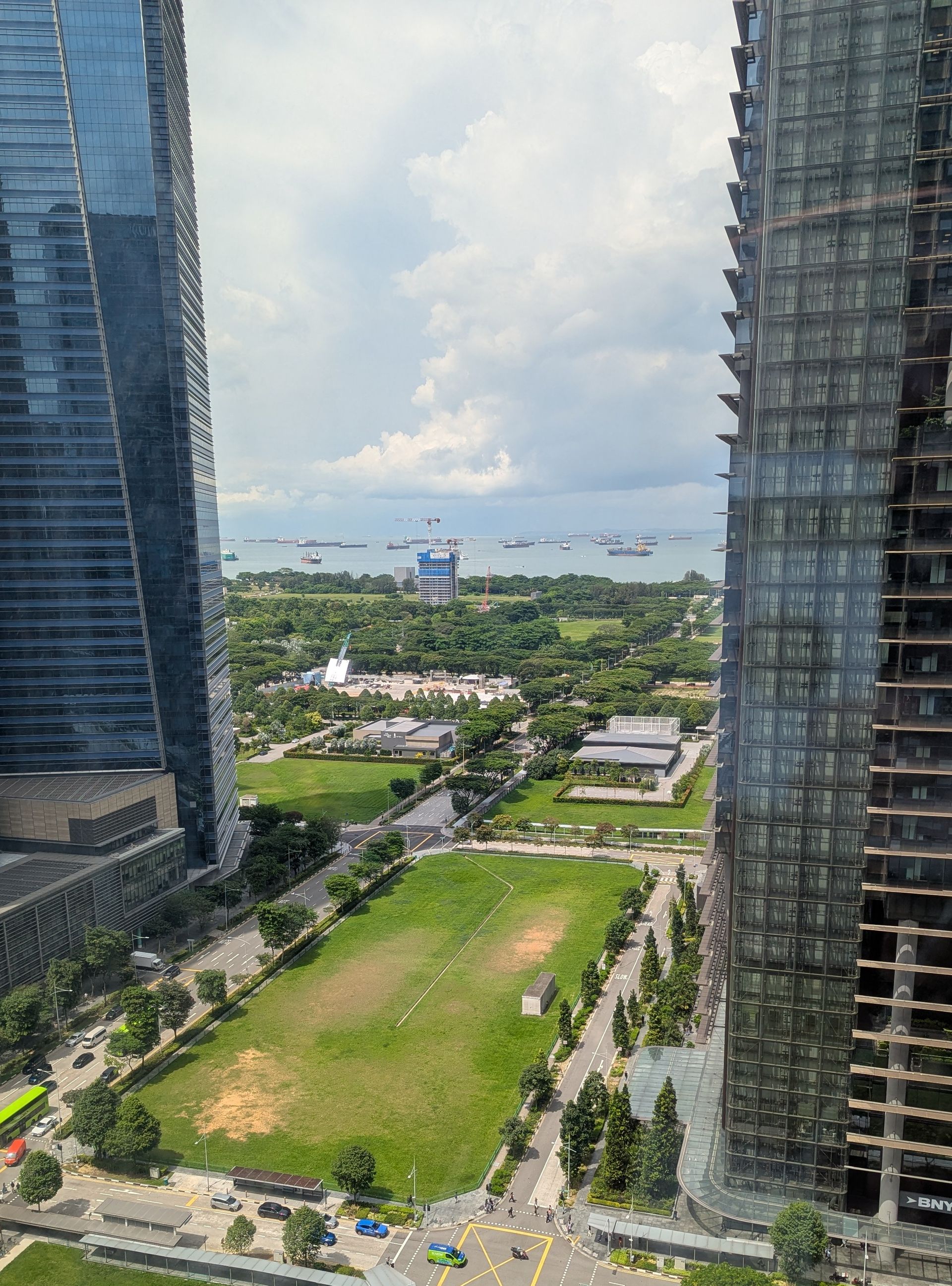
Singapore is a fortress of buildings. It is an island nation with very little land so they have built on every bit of it and up as high as they can. More care is taken here about the visual aspects of the buildings than in Manila. Modern designs and colorful lights at night jazz up the city. They are even digging down to create subterranean infrastructure. You can walk for miles in the interconnecting malls and never go outside. A funicular crosses from one side of the harbor to the other as a public transport system and when it lights up at night, the individual cars sparkle like Borg cubes drifting in space.
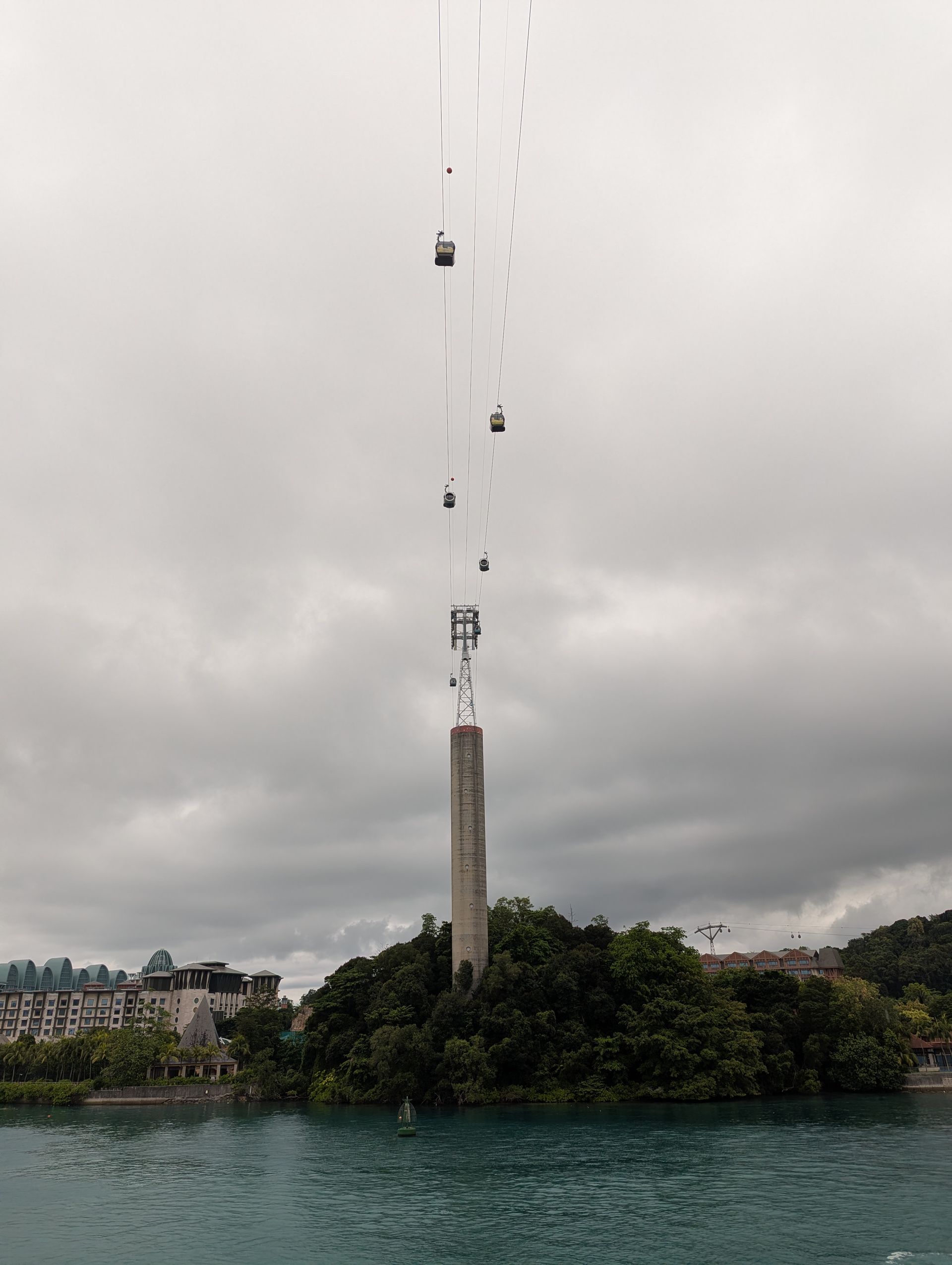
Colorful monorails glide by and are also part of the public transport system, which is excellent here and its use encouraged. Car ownership is a luxury, enforced by the government. To own a car an individual must first purchase a certificate of permission (entitlement) for $100,000 Singapore dollars (about 77,000 USD), then on top of that buy a new car. After 10 years the certificate must be bought again and another new car purchased. You also have an option to keep and repair the old car. This keeps the number of cars on the roads low and the need for more roads and car infrastructure low. Also the air quality benefits.
There is a very significant effort going on in Singapore to have living greenery wherever possible, even inside the malls. Trees are planted, parks developed, flowering vines drape down walls and walking bridges, varied grasses cover many apartment rooftops and an initiative to grow leafy edibles vertically and hydroponically has begun in some indoor structures. All these efforts are enthusiastically supported by the government. The results are beautiful and almost make you forget the stillness of the metal and glass buildings and the lack of natural environment.
Many of our best conversations happen with taxi drivers. They are happy to answer questions and have questions of their own when they learn that we are Americans, like “How could you reelect Trump?” and “When is this war going to be over?” One of our taxi drivers said he was born in Singapore and is very happy and has lived nowhere else. He informs us that healthcare is subsidized by about 80% but still very expensive. His answer, “Just don't go to the hospital!” He complained it is too hot, “It is summer here all the time!” And there is no countryside, “Just concrete buildings.” Jeff asked him what he wished for, “Money, more money!” We have had to take a lot of taxi rides in Singapore because Jeff needed to find and buy a new handicap scooter. Even though the nation state is highly regulated and people are watched everywhere with cameras, the taxi cabs don't appear to be bugged and the drivers are very candid about their lives and politics. We ask about the millionaire population and are told that they are mostly wealthy foreigners, like Zuckerberg. The minimum income needed for a good life in Singapore is 60,000 in Singapore Dollars (about 56,000 USD) and less than 50% of the population earns this amount. The top 20% own more wealth than the remaining 80% combined. Averaging about 5.3 million net worth per household. 5% of the population owns 33% of the total household wealth.
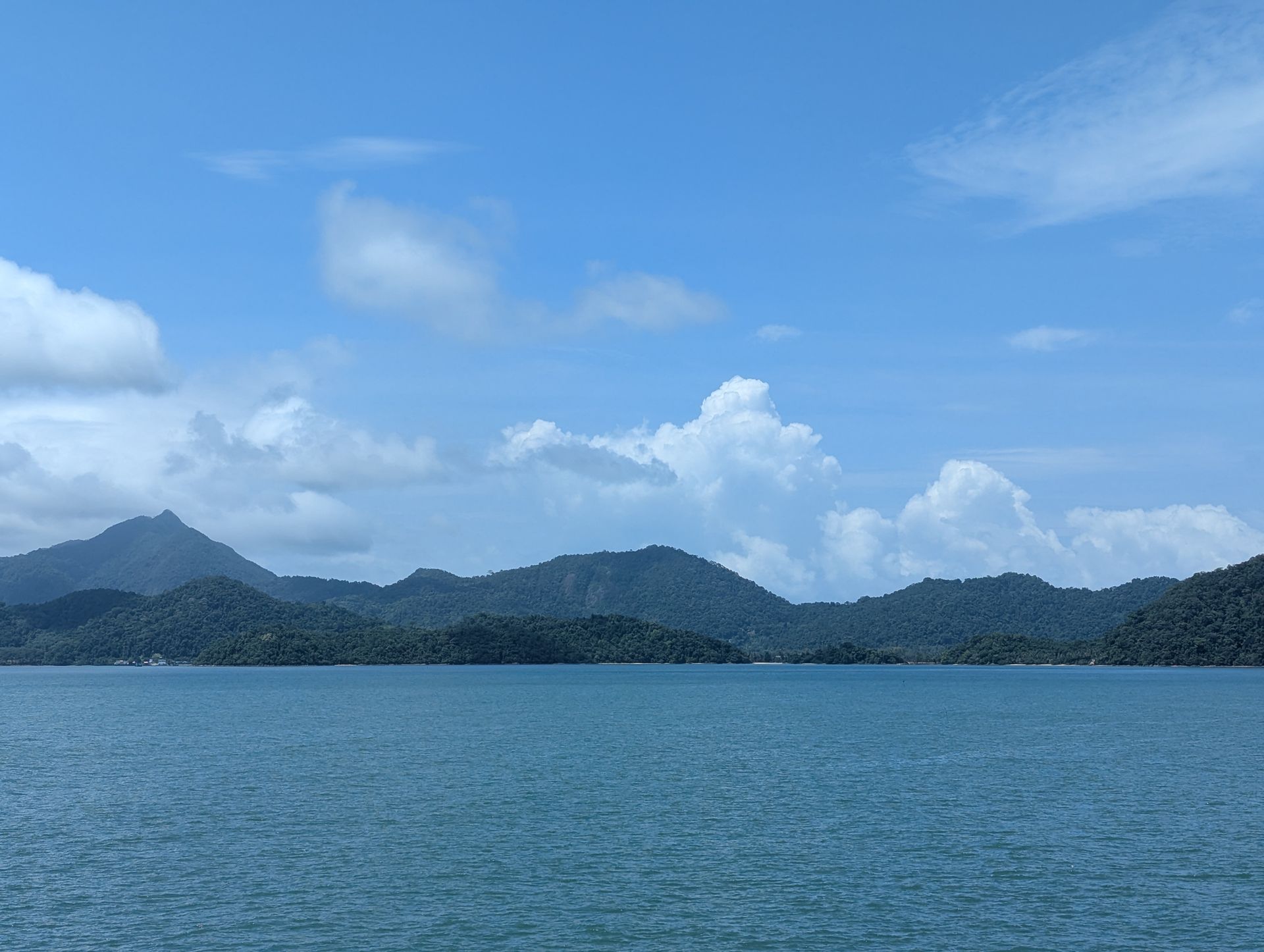
When we left Singapore on the 20th of June, going NE, to the island of Tarempa, Indonesia, we passed many hundreds of anchored, empty oil tankers.
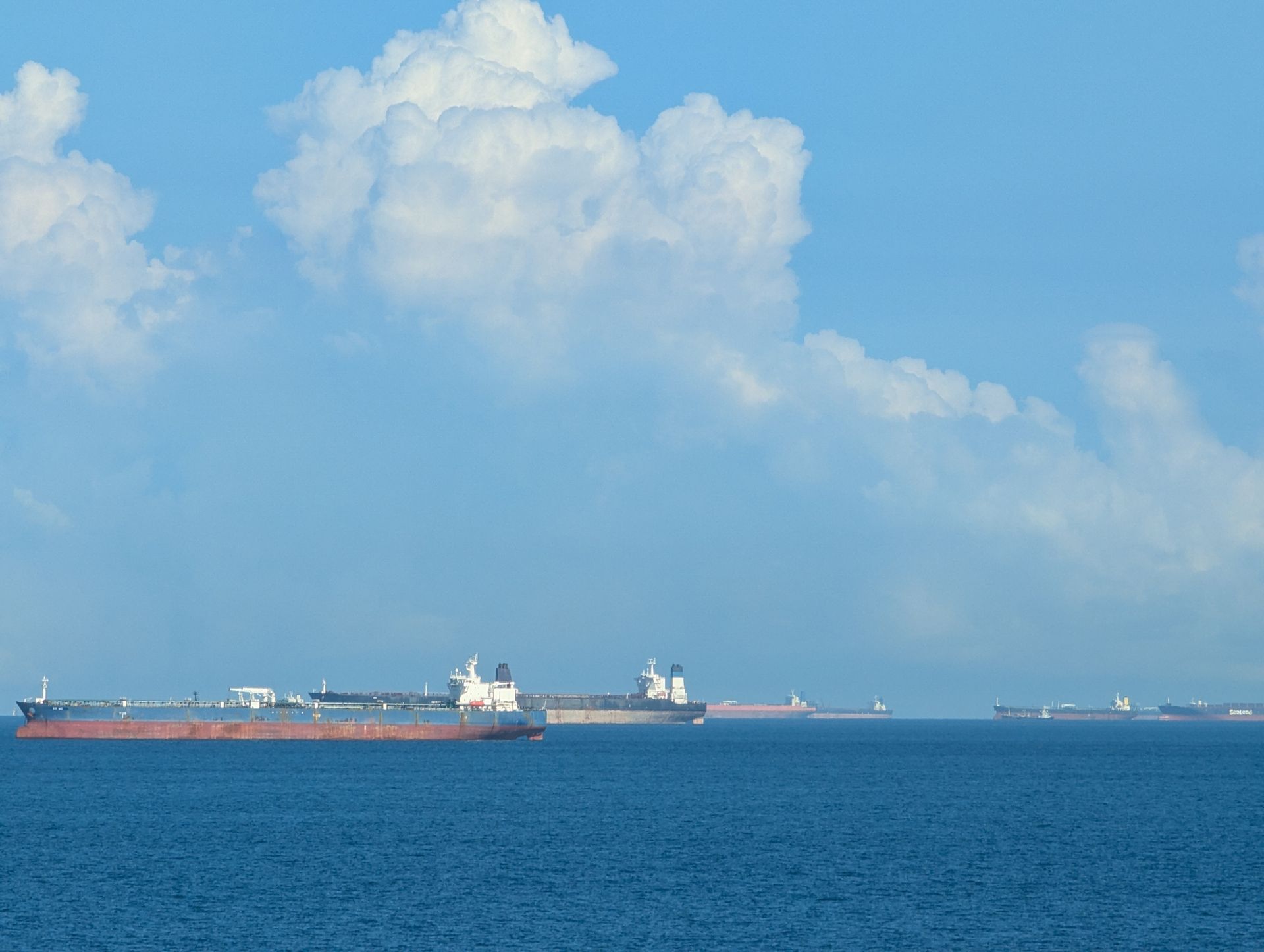
A few cargo ships were moving SW toward Singapore. The Strait of Hormuz was said to have opened on the 20th. At this point the Memorandum of Understanding and cease fire are very fragile. I have never seen so many empty oil tankers in one place… They may be positioning themselves to go through the strait of Malacca on their way to Iran. There are so many questions. Later I learn that these empty oil tankers are waiting there because it is the “ultimate holding pattern zone” between the intersection of the Pacific and Indian Oceans. They are waiting out the crisis in a safe place until the Middle East Transit Lanes are verified clear of hazard. Safety concerns are a massive factor keeping tankers stationed near Singapore and the oil tankers are prepared to keep their crews at sea for long periods. Accommodations are good and everything is provided just like on a cruise ship.
We are concerned that few people are thinking on board our ship and in the places we visit about what they can do as individuals to lessen the possibilities of man made crises, like wars and debilitating economic stress. They don't think they have the power to do anything, even as they feel the effects. Just as these things have evolved bit by bit over time, they can be dismantled in the same way.