Tarempa, Island
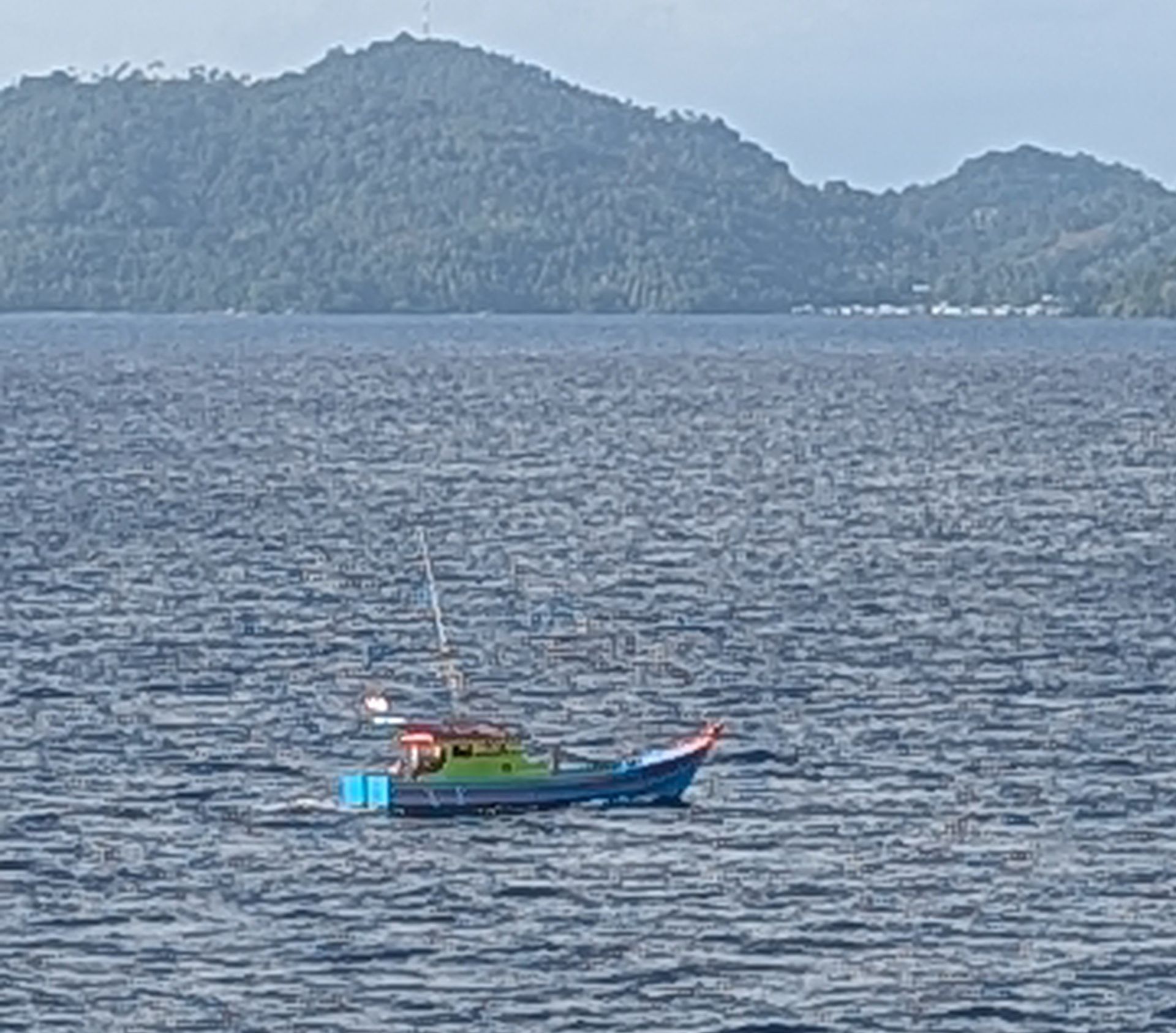
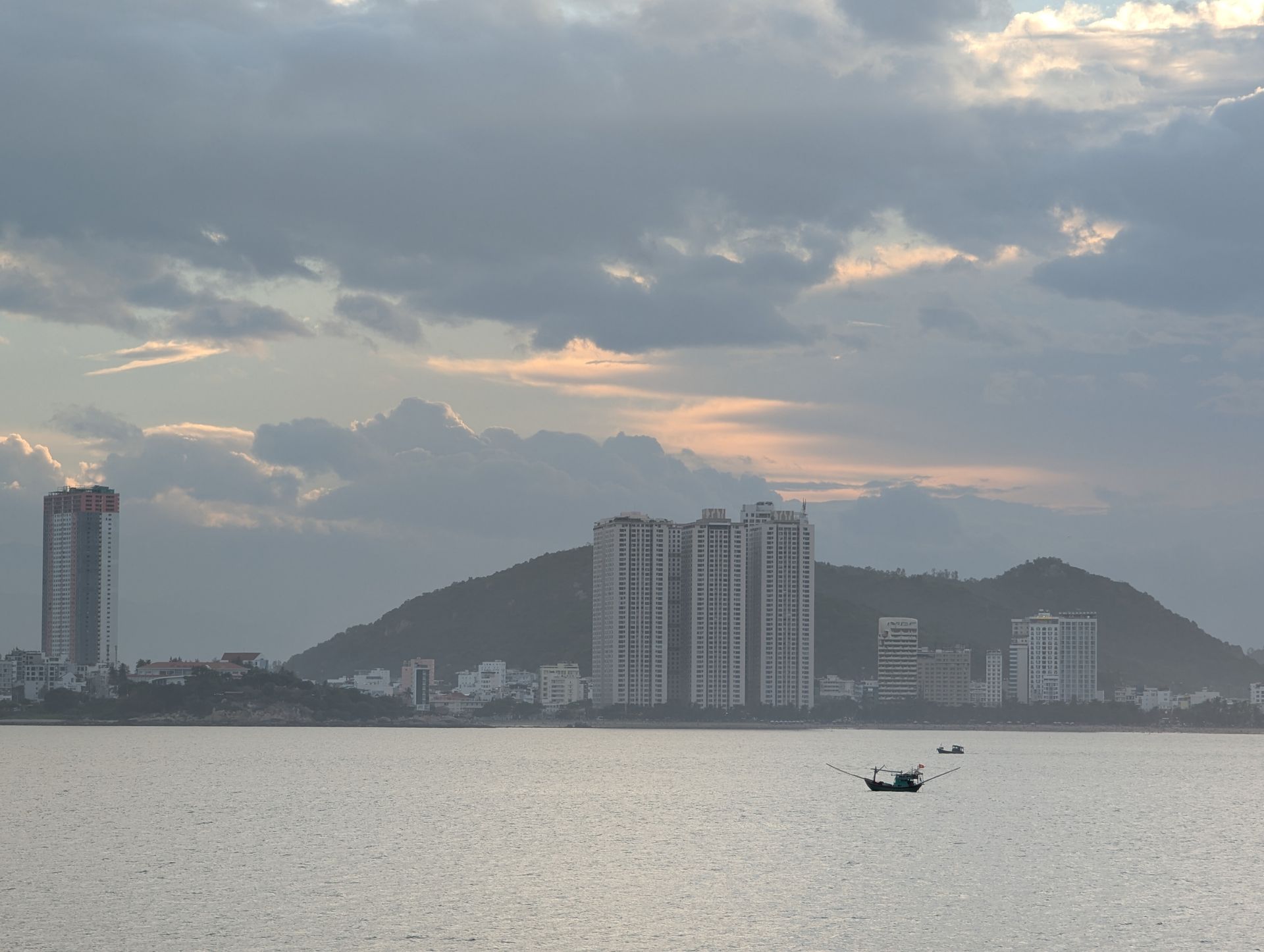
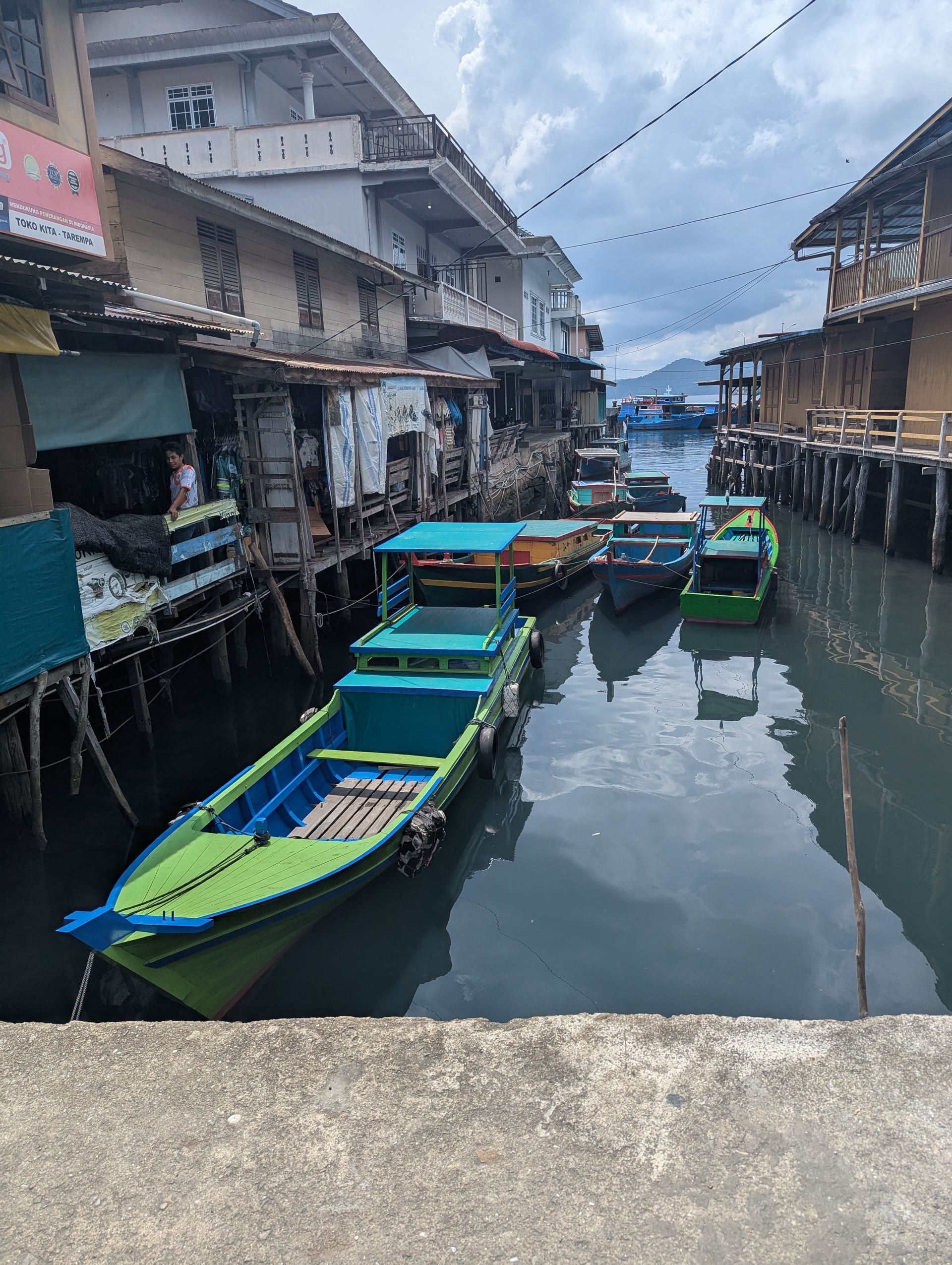
On this island the local boats generally have blue hulls with a red stripe and a green cutty with a small solar panel on top. There is not as much activity on the water as we saw in Coron. Just a few boats venture out in the morning and throughout the day.
We happened to arrive on the 19th anniversary of the incorporation of the village and they were having a celebration. Jeff was able to talk to several members of the local government who were out and about and introduce them to our Parallel Currency concept. According to one official, a person can rent an apartment and have meals delivered and light cleaning done for less than 1,000 USD a month while living on their island. They asked Jeff how to solve their problem of no doctors in their new hospital. He suggested the Cuban model. Start a University. Hire teachers that can train doctors and nurses and whatever skills the island needs. Offer this education for free to the local population. Offer the educators housing and hospitality while they are teaching and a good deal for their retirement. They were intrigued and wanted to keep in touch. It would be very interesting to hear what happens. Maybe we can visit again in the future.
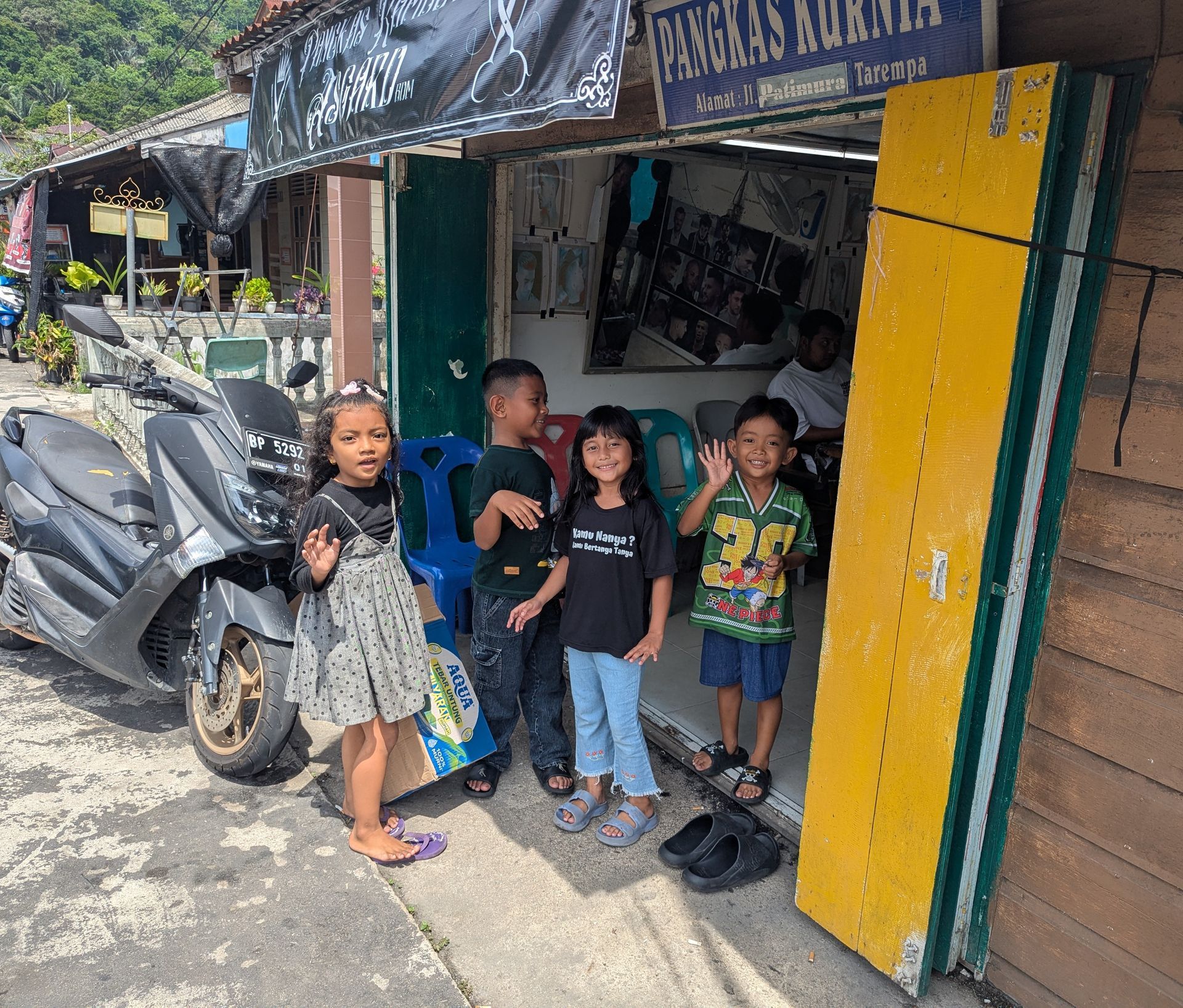
When we explore the village, using Jeff's new wheelchair for the first time, the going is a little rough. There are avenues between the open shopping booths but they are for walking and motor scooters.
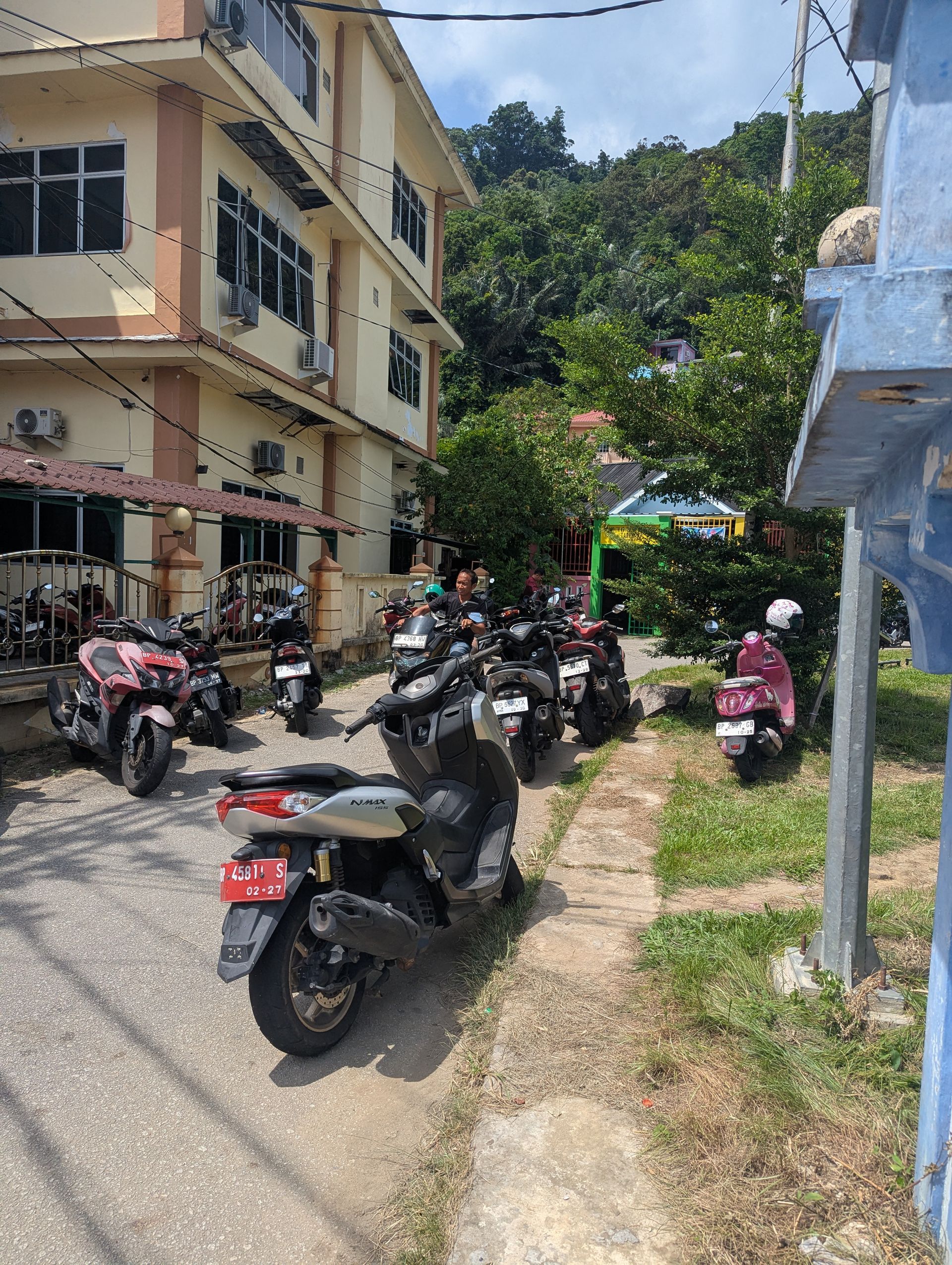
Motor scooters are ubiquitous where there is a population struggling economically or just emerging, like on islands. Here they are no exception. They are navigating blindly their emergence into the world wide market riding the cheapest gas powered vehicles they can find. But all the distances are short in this small village, it is easily walkable. Using scooters is a strange choice. What are they rushing to?
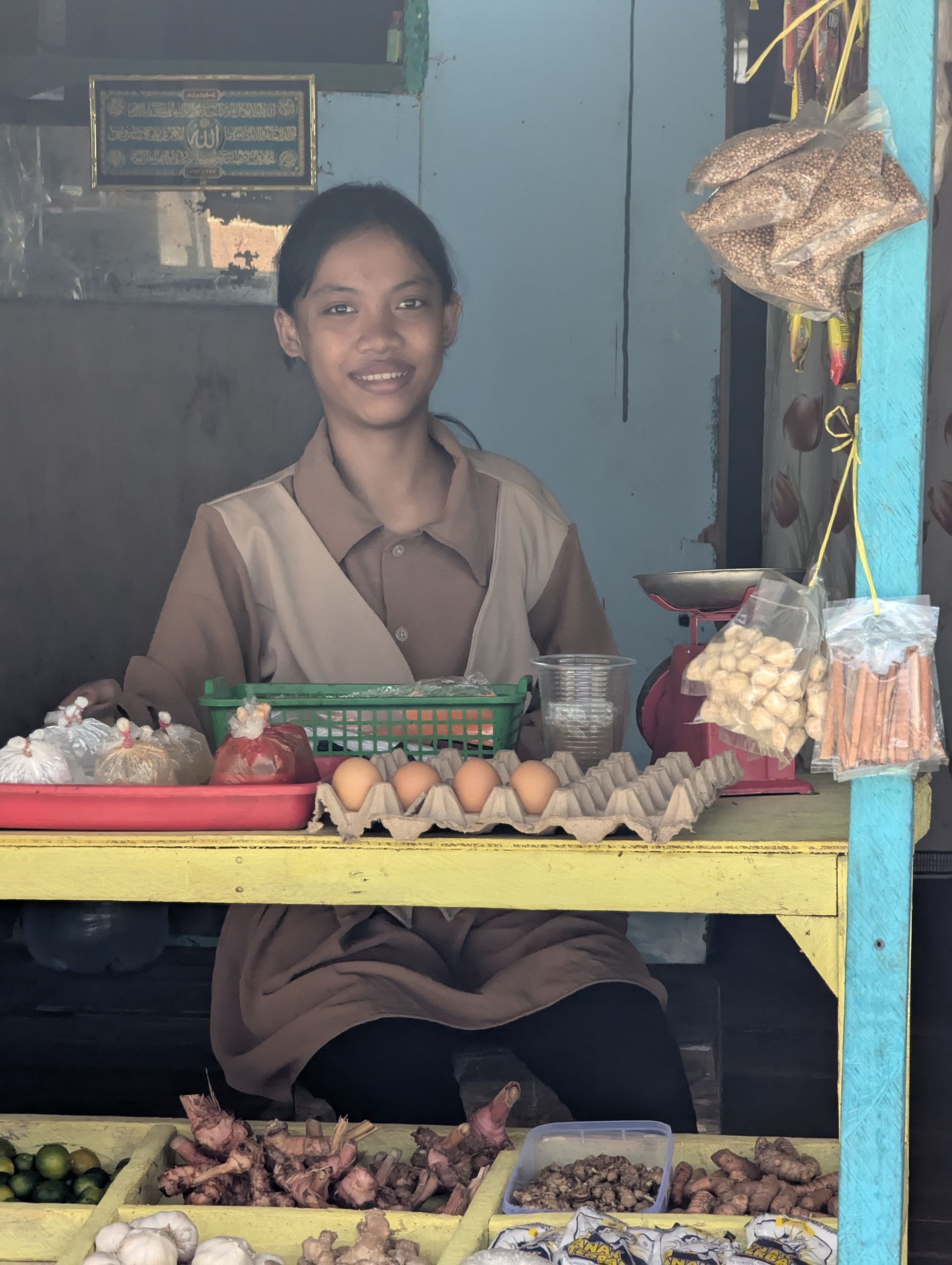
This is a poor island, but there is enthusiasm and hope. They are eager to have their pictures taken with us. We unexpectedly become representatives of our country. A huge responsibility and that makes us feel unworthy. Like getting a prize and you haven't done anything to earn. It is impossible to not feel tenderness toward the people we see and meet.
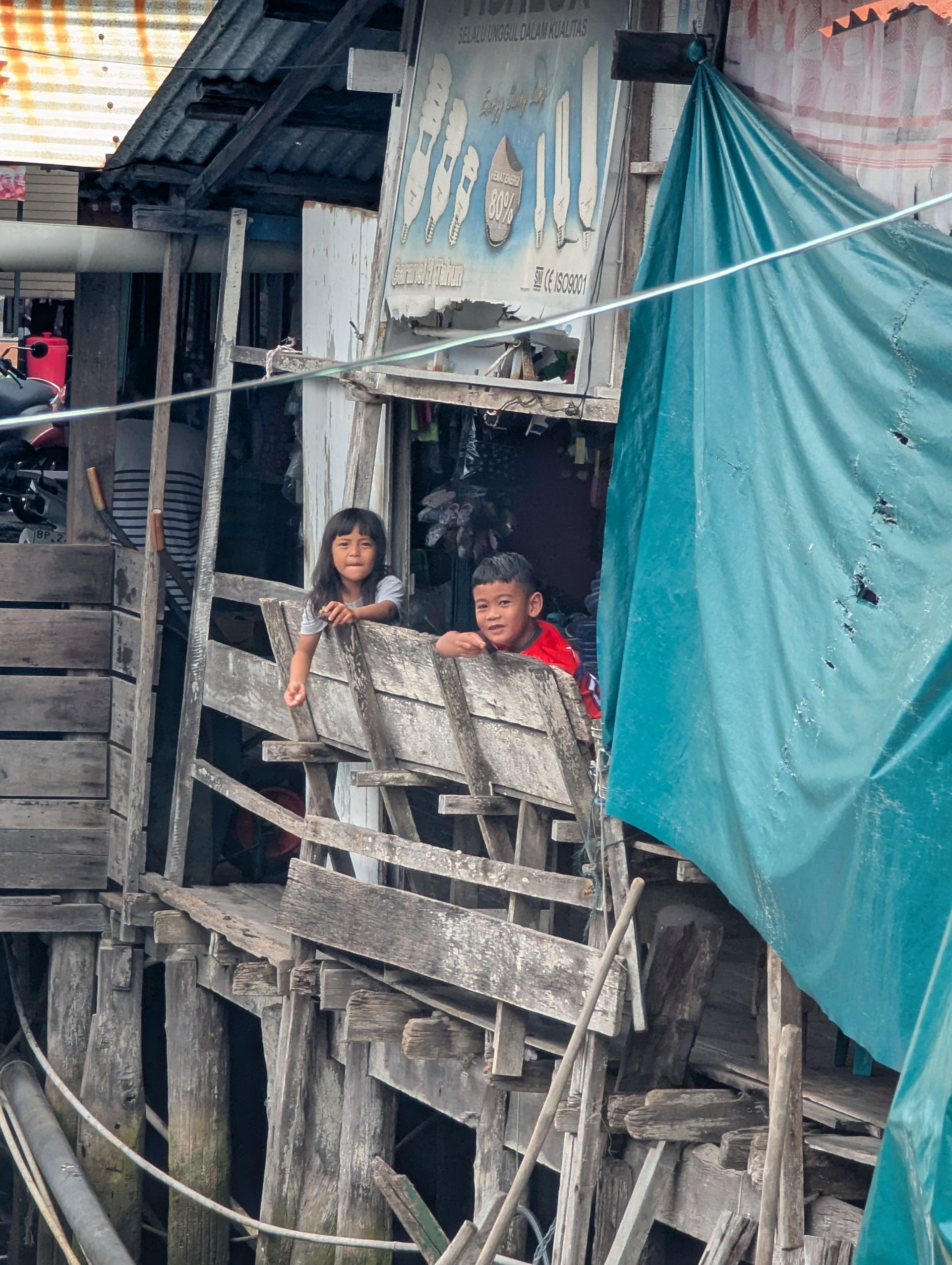
They are so eager, so curious and generous. So innocent seeming by comparison to what we know of other ways people can live. This to some could be defined as poverty. But this isn't the poverty of sadness, disease and despair. Their lives are rich in real contact with each other and with nature. They have a chance to not succumb to the mistakes of ‘developed’ countries. They might actually see the traps and avoid them.
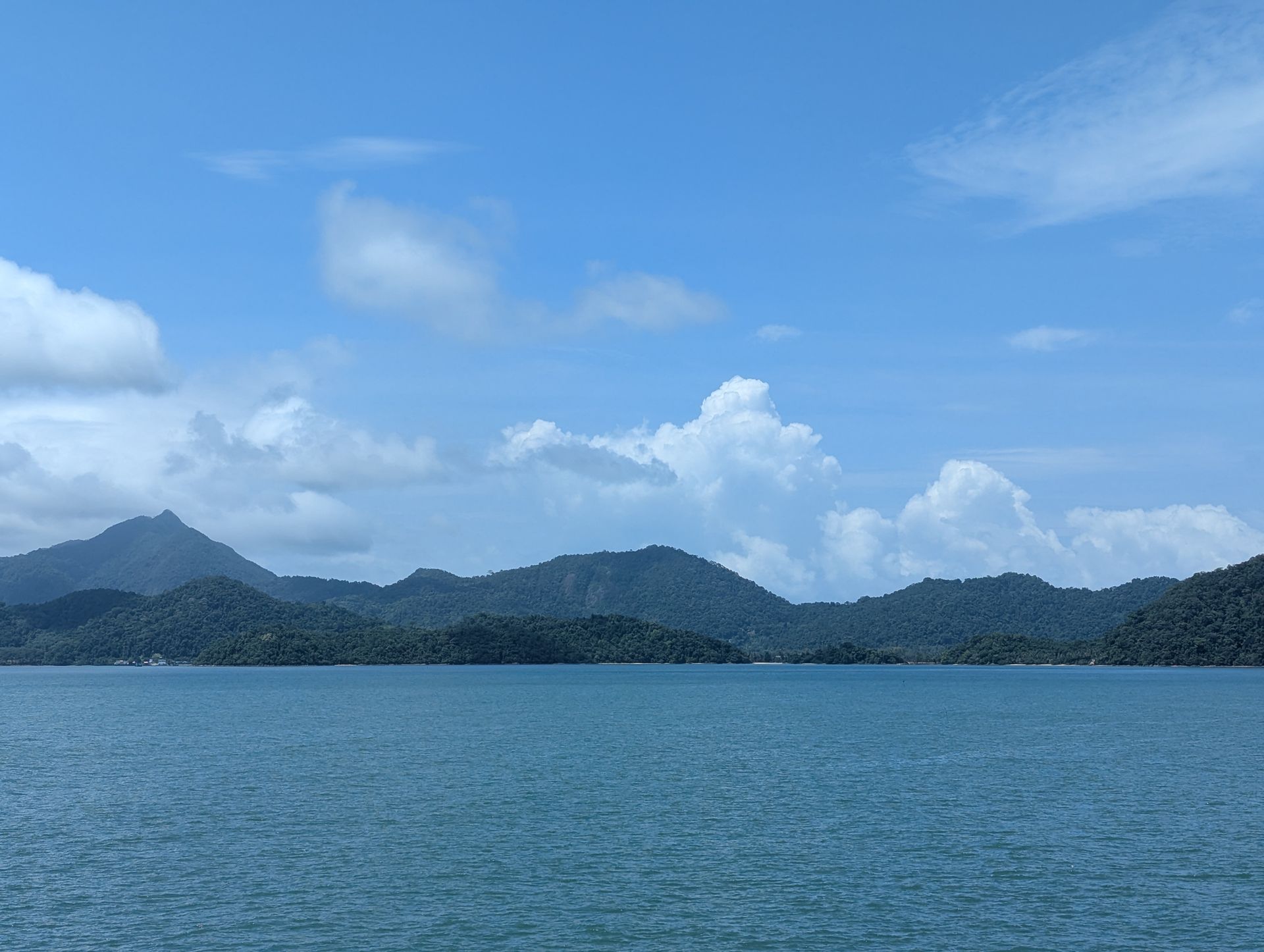
We are on our way. Traveling NE, at an average of 6 knots. No hurry, this is a fuel saving strategy. The captain later cut the engines entirely and we floated for about 16 hours. Occasionally container ships and oil tankers pass us. The sensation of floating in a ship can be compared to floating in a space ship. Both use specialized containers in alien environments to protect the lives of passengers. And they are similar in the way they hide their domains from us. Occasionally a pod of dolphins, who are mammals anyway, (they vaguely remember when they tried living on land) poke out of the surface and follow or frolic with our ship, like the little mermaid wondering if she is missing out on something. Once, an adventurous duo competed to see how long they could surf our wake. But in general all that happens on the water is under it and hardly ever seen while underway. The grey, blue steel of the moving water stops your eye and protects the secrets of the deep. Similarly, we see and understand very little of the workings of outer space. An excellent observer might glimpse the passing of a “shooting star”. Very few people have access to excellent telescopes and the time and patience needed to observe. Even then only the thinnest film of infinity is sensed.
We have anchored off Bintan, Indonesia. It might not be too interesting to visit. It has been developed over time as a resort area for Singapore because of its proximity, a 45 minute ferry ride, its lush habitats and snorkeling. We are told that there are twelve resorts on this small island and a shuttle will take you on a loop to see them all! Many passengers like to visit resorts and stay there overnight or for several days; the other entertainments are snorkeling and hiring a driver to take you sightseeing. We feel like the ship is already a resort and are not tempted to go to another one. Places that make a great deal of their income from tourism are very much the same. They advertise a “culturally authentic” dance and locally made crafts, indigenous cuisine and whatever promoters can imagine completes foreign expectations. A performance we see to different degrees almost everywhere except the big cities where they are making money in other more dependable ways. Jeff spoke to a government representative who was shocked and delighted by the suggestion that they could be teaching nurses, doctors, engineers, etc, at their university, not only hospitality workers. Living off tourists is a precarious choice for their future.
We finally took a shuttle ride to the island and discovered something unusual. There is always something to be interested in if you make the effort. We had heard about a ship motel that was on the island from other passengers and decided to take a tour. The history of the ship was interesting. It began as a cargo ship, was converted to a passenger ship then sold to a group in the 1970s to become part of a fleet that distributed books and good works to hundreds of struggling countries Worldwide. This ministry is still functioning. They are called GBA Ships. Finally, it became too expensive to pass inspection for seaworthy certification and was bought, taken to land on Bintan Island and upgraded into a motel and resort. The proceeds go to a local orphanage, we were told. We depart in the evening for Tioman Island, Malaysia.