Chapter Five – Mexico (5/25)

June 2, 2025

Mexico, 5/5/25.

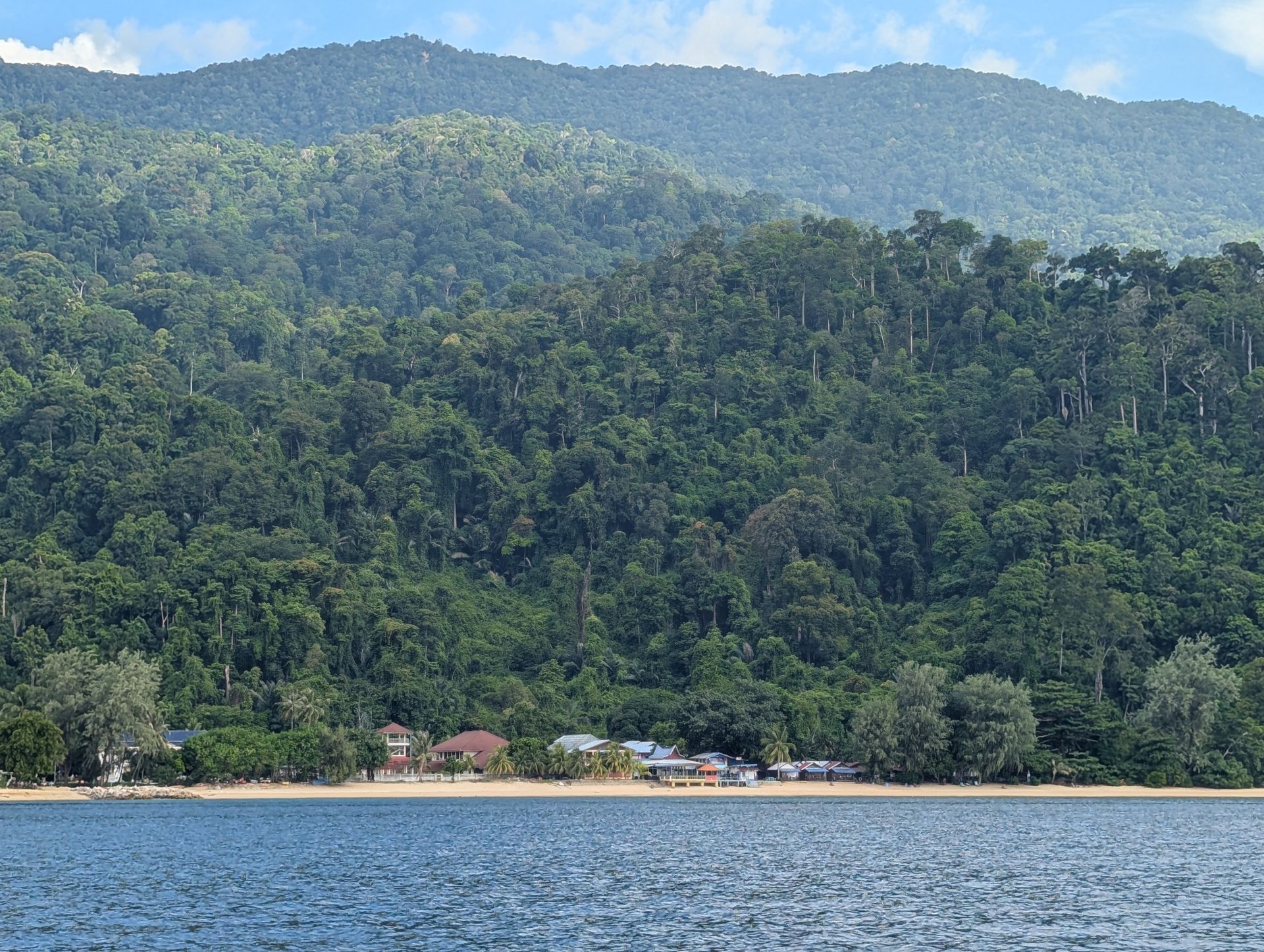
     We take a shuttle into the town of Tapachula, $25.00 for 2 people. 

    A much longer trip than we expected. And the temperature is in the 90’s Fahrenheit. Along the way there is time to observe; houses made of concrete blocks with metal roofs, windows with no glass and entrances with no doors. Motorcycles improvised with seating arrangements to carry more than one person or an open structure to haul wood (for cooking?) and other necessities. 

    Bananas and mangoes are exported. Magnificent mango trees, 50 feet high, are visible from the road, disappearing into the distance in rows. When we get closer to town the traffic increases and suddenly we are behind an open police vehicle with two officers seated facing outward with assault rifles cradled in their arms. No expression on their faces. In the town we see more of the same. We are informed that they are keeping the people under control.

    The town is very active with people moving in every direction. Like currents of blood in a circulatory system. We are in search of a hardware store. “La ferreteria.” I keep repeating this in my mind. Block after block of stores all around us, into the distance. We arrive where we were told to go, and don't see a hardware store. I asked a local man, “ La ferreteria?” He looks at me with a blank look. “Oh, You don't speak Spanish!” He gestures behind him.

     We were standing right in front of it and didn't realize what it was. It is simply a long wall with all the hardware displayed on it and several men behind a shallow counter to take your order. Jeff found a salesman who spoke English.

     “What are you doing here if you can't speak Spanish?” The salesman was from Long Island, NY.

He actually had what Jeff was looking for.

    While we wait for the bus back to the ship we listen to men playing beautifully carved wooden xylophones. 

     The sounds of Tapachula's heartbeats.


At Sea


Acapulco, Mexico. 

    The anticipation of arrival. The experience of sighting land in the grey of early morning and watching it approach as light opens, is magical.  Nothing there, then something then as distance shortens buildings are visible and the spell is broken. This fascination must be a throwback to the earliest sailing experiences. Sailors at sea for months with no land in sight, then there it is, shadowy grey on the horizon, a wild hope. 

    Acapulco has grown from a dozen dwellings, two or more churches and the beginnings of a fort to uncountable homes and buildings in little more than 400 years. The natural harbor that lured the Spanish here in the 1600’s is the main port of the city. There is a sense that building upon building has been constructed in order to climb as high as possible up the mountains. The dwellings are cubes of different sizes. Nothing, it seems, is ever removed just built on top of, climbing higher, and they seem to be attached to each other. Some places there are gaping dirt and concrete holes where buildings have collapsed. But the integrity remains. Like houses of cards held together with glue. (The devastation of hurricane Otis still remains after two years, contributing to the dismantled aspect of the city and distress of its people.)

    A magnificent stone Spanish fort still stands, overlooking the harbor, cannons at the ready. It houses an excellent museum. Suddenly I realize that the present buildings have been arranged like the blocks of stone that form the old fort. One supporting the next and traveling organically around obstacles and existing boulders. Confining and supporting the land, it shelters an ever growing hive of humanity.

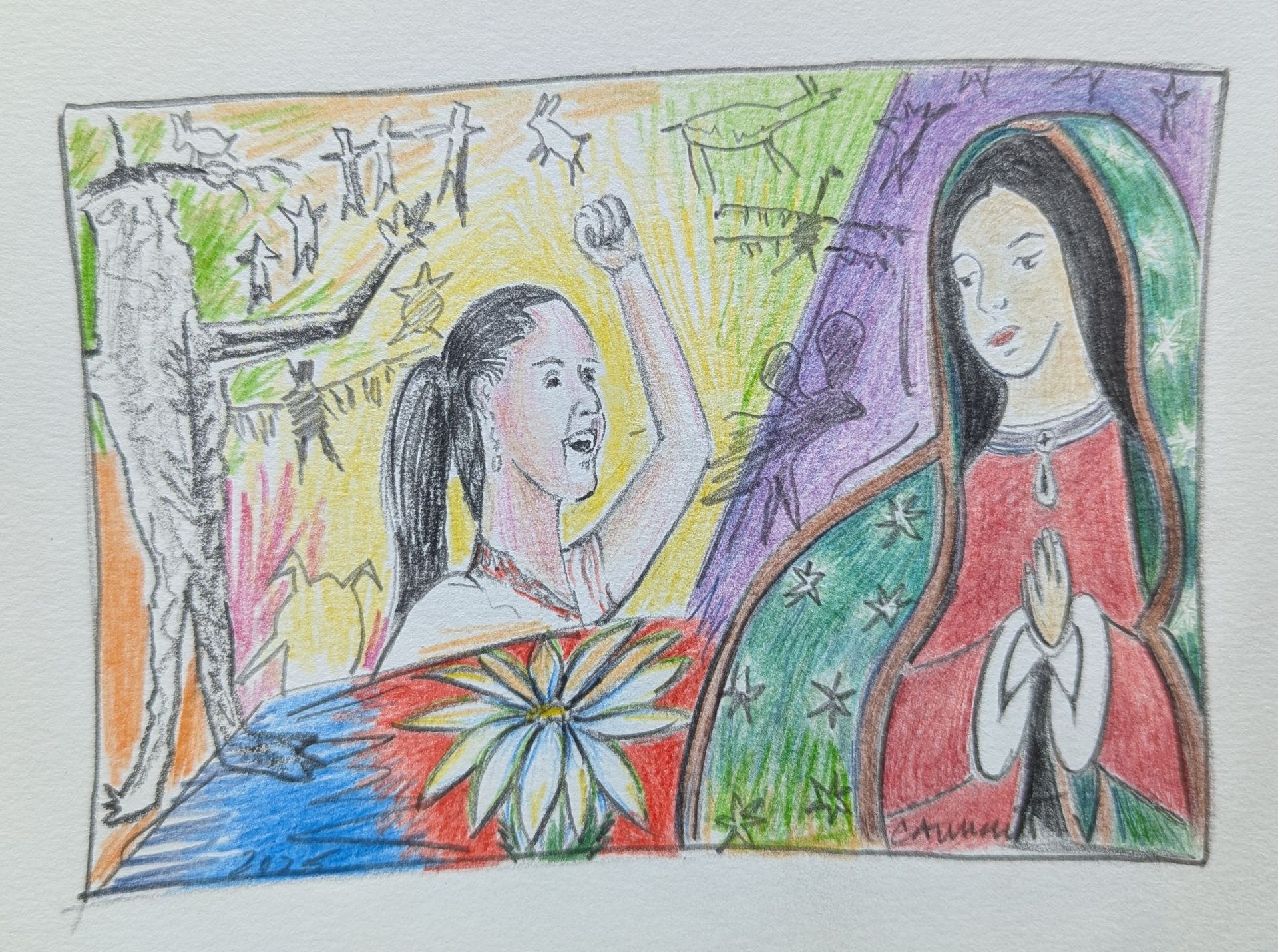
    The President of Mexico, Claudia Sheinbaum visited Acapulco while our boat was docked there. She is much loved. “She is helping the people!” 

A local man said.

Cries of “Presidanta Acapulco te ama.”  “We love you!” Car horns echoed around the harbor as she passed with her motorcade. She is their wild hope.

    A highly educated woman, President Sheinbaum has a PHD in physics with a special concentration in energy engineering. Her parents were politically active, they marched in demonstrations for human rights in their day. She has made progress with getting large solar arrays built in Mexico (the largest in the Americas  opened in 2024).
At Sea 


Manzanillo, Mexico 5/11/25

     This is a well kept city. Very busy with lots of shops and restaurants. Colorful homes, worn out but maintained with pride. No garbage on the streets. It benefits from sport fishing for sailfish. There are tournaments every year. It has become an international tourist destination with fancy resorts, also a major shipping port.


At Sea


     We are underway again, traveling at about 12 knots (approximately 12 mph) and we will arrive at Puerto Vallarta around 8:00 am.

I am sitting on the top deck waiting for the setting sun. I read that it is possible to see the ‘green flash’ when the sun  disappears at the meeting of the sea and sky. And there it was. A green light flashed for just a second as the sun vanished! The lamplighter was on duty.


5/14/25, Puerto Vallarta, Mexico, arrival


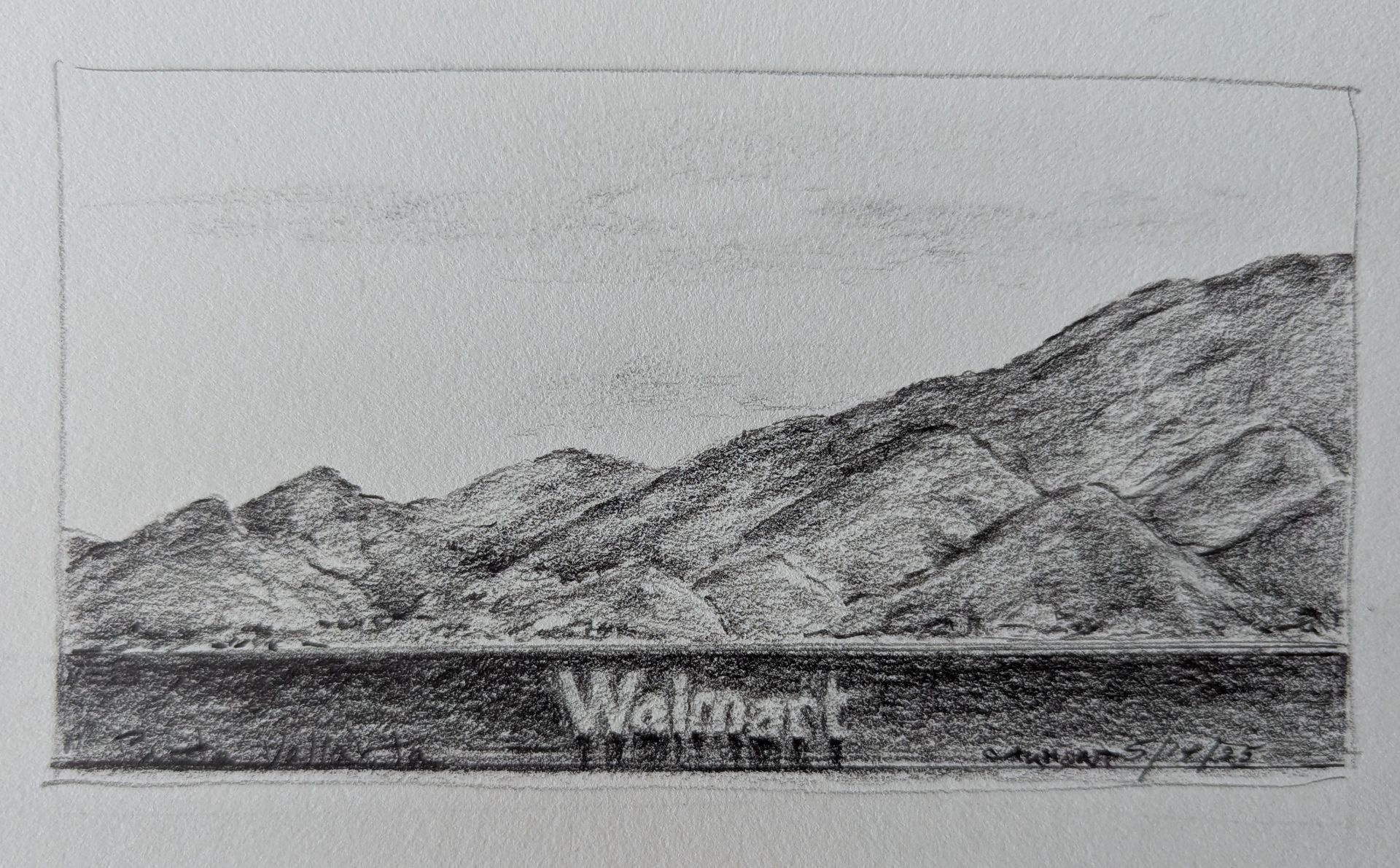
     Its coastline looks like Miami, Florida. High rise condos everywhere, a Mall and Walmart. Jeff had to have prescriptions filled so we walked to the Walmart. The maze designed for people on cruise ships made a 10 minute walk an hour long. The object was to make everyone walk past the shops and restaurants etc. and buy something.

     At the Walmart we are greeted by 4 men. One of them says, “You are tourists, do you need some help?” I replied, “ It doesn't matter that we are tourists, every Walmart is the same, Worldwide!” He laughed. The pharmacy did not have what Jeff needed.
     One interesting thing was a wild bird rescue, cobbled together with cages and chain link housing about 30 Macaws, a few hawks and a barn owl. It was located at the edge of a huge parking lot and gave the impression that the city wanted them to give up and leave. $2 to visit. 


At Sea, 5/17/25


     Mazatlan, Mexico. 5/16/25

     This city does not display military presence like the previous cities we have visited.

     We walked into town and found pleasant  neighborhoods with wash lines on the roofs and images of saints and the Virgin Mary painted on walls along with some angry graffiti and a mural of a pod of dolphins. The quiet and charm are interrupted by truck traffic from the shipping port. The wealthier people move to the other side of the harbor and build their homes.

     “Let it be known that nobody crossed my path without sharing my being. I plunged up to the neck into adversities that were not mine, Into all the sufferings of others.”

Pablo Neruda


At Sea


Topolobampo, Mexico 5/20/25
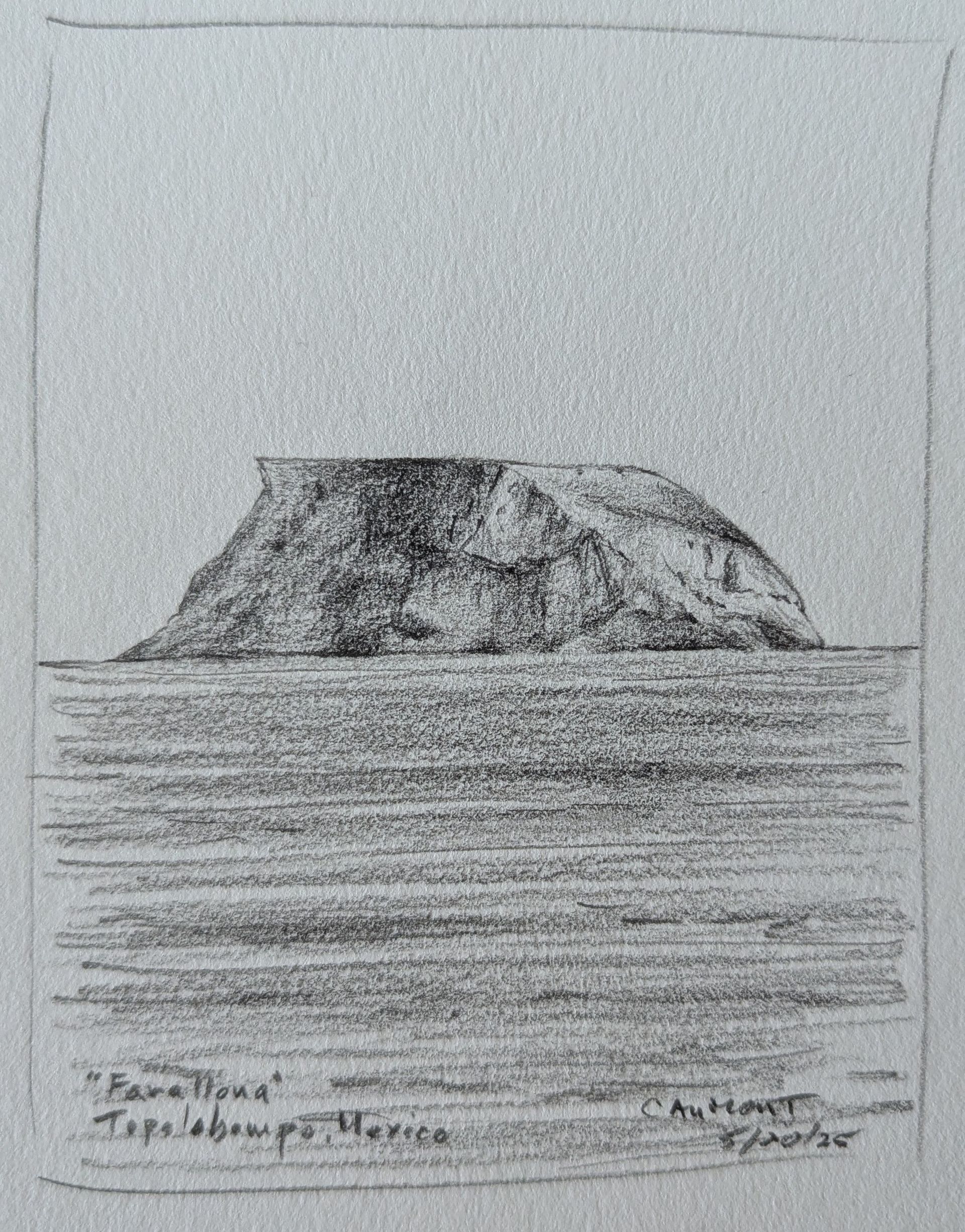
The approach is magnificent, we pass a massive white cube of stone gleaming in the early light like an iceberg, then the soft brown textures of Mexican mountains on either side appear as we approach the port, and grey stone cliffs rise behind them. 

     We hire a taxi to drive us around. The city is near where we dock but we are not allowed to walk through the shipping port. 

     Topolobampos brightly colored houses climb in Mexican fashion up its hillsides. We were told that the city will paint your house for you. The government will pay for it. Just choose a color. And people do.

     A man jumps out, runs in front of our taxi to talk to someone he knows in a car in the next lane. He has a rubber eagle mask covering his whole head. Our driver says that it represents a soccer team that just won a match. He is like an animation of the eagle on the Mexican flag, racing around searching for a snake to devour. Is Mexico changing? Is it in search of a new center around which to form?

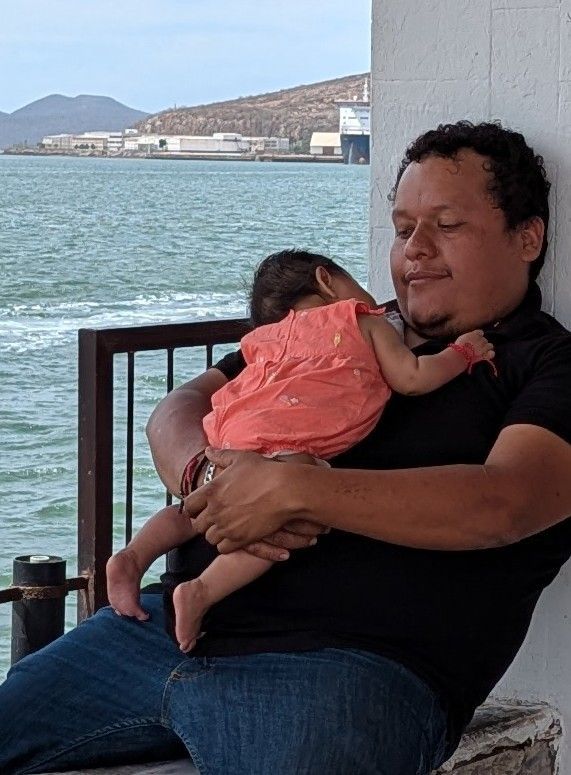
     Juvaer, our driver, speaks English.  He spent some years in NY. He was born and raised in Topolobampo. He still lives on the hillside. “It is a good life,” he said. He had three sons and put them all through college. He is retired from working for a fishing company. He owns two taxis. All his son's are doing well and live elsewhere,”more opportunity.” They did not come back.

     If beauty and serenity, “A good life”  were the things that make people stay, Topolobampo would be the perfect place.
     “Topolobampo, faintly sketched on the shores of sweet and naked maritime California, starry Mazatlan, night seaport, I hear the waves that pound your poverty and your constellations, the pulse of your passionate choirs, your somnambulistic heart that sings beneath the red nets of the moon.”

Pablo Neruda


At Sea


La Paz, 5/22/25

     Another big city. Visitors are deposited from the bus in town like chum thrown into the water. The “sharks” surface immediately. “Where do you want to go? I will take you in my taxi.” “Tortillas are fresh, you want?” By now we have developed some evasion techniques, but it is impossible to be unaffected. You are a mark wherever you go, even if you speak Spanish and can compute the exchange rate in your head. 

     A refuge was the Museum of Art. Unlike most art museums this one shows the contemporary art of Mexican artists. It is not a dusty collection of “European” paintings. These are actual depictions of the dreams and nightmares of Mexico. The collective unconscious of a nation is on display. And the building that houses it is new, modern and clean. No fee.


At Sea 


Cabo St Lucas, 5/23/25 

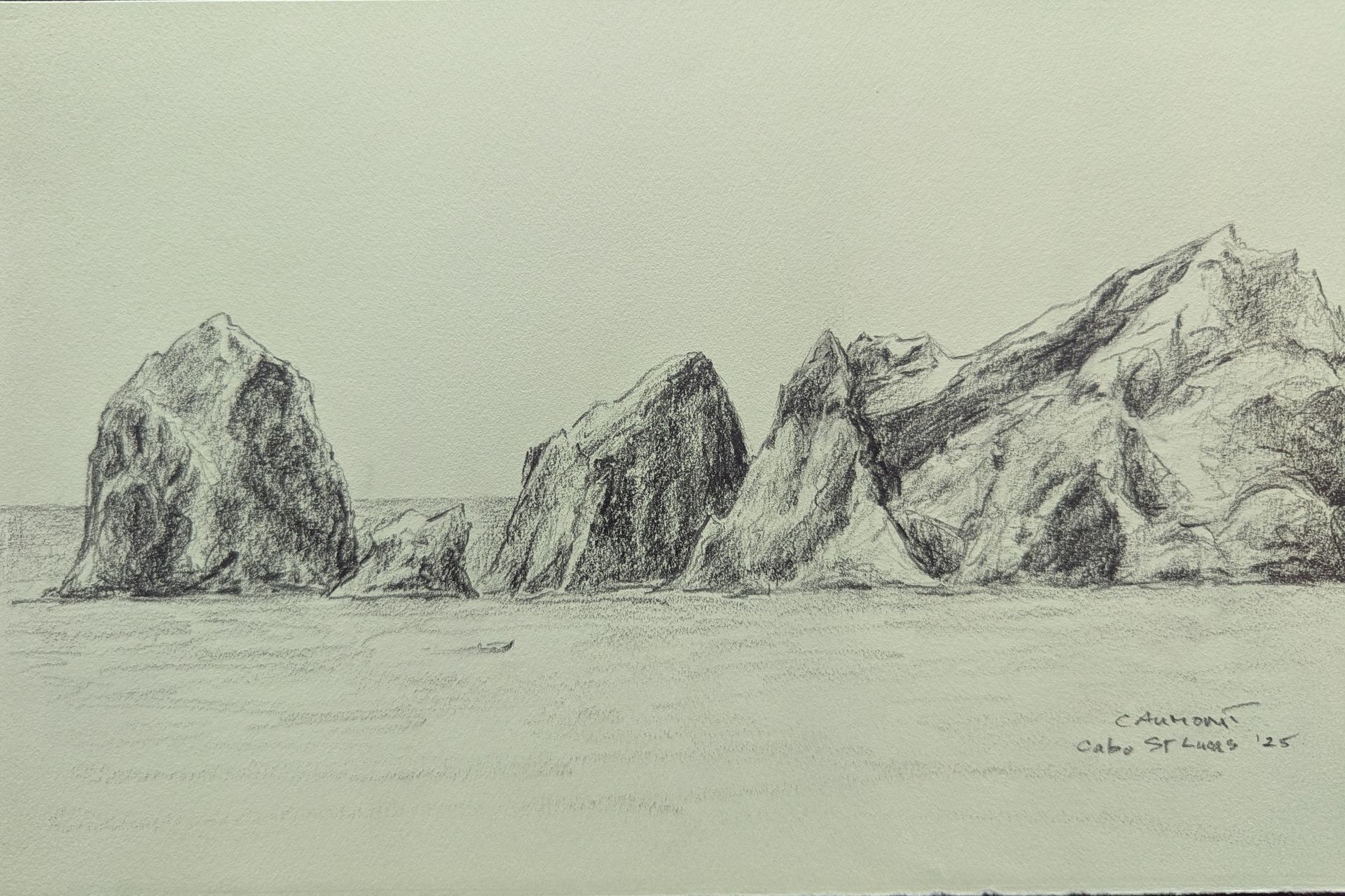
     We anchor out in the lee of a high wall of rock islands. Tenders meet our ship to take passengers ashore. I am not tempted. Another overcrowded resort city on beautiful beaches under magnificent mountains. Jeff went ashore to interview a local person and take their picture. I will draw the mountains.

     The result of Jeff's interview was similar to one he did in Topolobampo. Both individuals were young women, one a recent college graduate and the other a highschool student bound for college. He asked them what they thought of their new president. They both felt that she was concentrating too much on the poor and elderly. “What about me?” An older woman he interviewed in La Paz said something similar, “She is a Communist!” Why are people who want to help humanity dismissed? Have we been too hardened by past behaviors and wars to imagine something different?


     Pre-industrial quaintness and beauty have been almost completely irradiated from the small and large cities we visited along the coast of Mexico. Market economy stresses that force people into purchasing and consuming modes that are beyond their earning abilities are evident everywhere. Yet, the blind men trying to describe what an elephant looks like from one small part they encountered were not accurate, as we know. There must be wonderful places still to be found in Mexico. Our little town where we come from nobody knows about or cares. It has unspoiled beauty. 

     Fortunately nothing can obscure the magnificent geology of Mexico’s coastlines. Rock mountains jut from the sea like giant petrified hands, huge white boulders surrounded by water in the middle of nowhere, sharp crested islands peer down at your insignificance and the vast blue dome of sky over everything. Just like what the native people saw thousands of years ago. All our building and crawling about on these surfaces and our pursuits in these skies are just a temporary distraction of our time.
May 8, 2026
Our arrival on the island of Waingapo is welcomed with a red carpet. The carpet leads expectantly to where several men wait, holding 11” by 14” laminated photo narratives of tours they can take you on and tell you about with three word comments in English. Past them chairs, also covered in red, have been set up under an awning for our “dignitaries.” Beside these are a few tables with souvenirs. Several young boys wait on either side of the red carpet to perform for the passengers as they disembark. Many local people are also waiting in the growing heat for the Exodus of the passengers. Ours may be the first cruise ship that has stopped at their island. One passenger finally emerges and avoids the carpet and the boys. They are shocked. Eventually a group does come out together and allow themselves to be greeted and entertained. They have selfies taken with the boys. Then return to walking and looking into the screens of their phones, bowed over them like they are praying After exiting the port area there is a long walk through parked cars, trucks and taxi drivers out to the crumbling asphalt of the main road. It is lined with vendors, a gauntlet of drinks and snacks. A ferry is unloading, people and motorcycles are streaming out. These are the customers the vendors are waiting for. A large number of motorcycles are parked on either side of the road waiting for their owners. We make our way between the crowds of people and vehicles to the hot uphill slope of the road that goes somewhere, which is hidden from sight by bunches of dark green trees. Shortly we are defeated by the heat and start back. Access to other parts of the island that are considered appropriate for tourists require a taxi, negotiations for price and where it will go. Generally we try to avoid this and are most interested in what we can observe and who we can meet by walking. We talk to a motorcyclist on our way back who says he has access to local Royalty. Jeff describes the Parallel Currency concept to him and gives him our website card. I am also able to pick up some interesting scraps of paper from the garbage that lines the road. I use their patterns and color to create abstract images on postcards I make to send to friends and family. In the end this has turned out to be a very satisfactory walk. There are very few palm trees here, which is remarkable. A different ecosystem than Bali. The mountains are low, flat topped and shelved. They define the spine of the island. Bunches of dark green trees patchwork the slopes getting denser as they approach the water. The water is blue/green and clear, fishing boats are high prowed and the smaller boats have outriggers made of bent PVC tubing. It is now early evening and the sun is low. I am walking around the outside deck of our ship taking in the 360 degree view and the sounds. On the starboard side a band is playing on shore and a singer starts up a contemporary tune. As I round the bow a chant drifts through the dusk, the Muslim evening prayer. This dominates the port side then at the stern blends with the music on shore, which dominates on the starboard side. Round and round as I walk they alternately blend and retreat, blend and retreat. I notice as I look out over the port side that the tide has gone out and long flats of seaweed, rocks and soil are exposed. People have walked out onto these surfaces to harvest edible sea life, gathering them into plastic buckets and bags. I feel like I am watching history.
May 4, 2026
We dock at the port of Bali. It is too hot and far to walk anywhere, so we hired a taxi driver for the day and invited our friend Wido to come with us. He is Indonesian, his home is in Jakarta and this is his first visit to Bali. Indonesia is a country of 17,508 islands. There is a governor on each one who communicates with the central government. Few Indonesians have visited every island. What strikes me immediately as our driver, Budi, finds his way through the dense traffic, is the careful weeding of the center island between opposing lanes. This is exceptional because of the extreme heat. No one could be doing this during the day. People must come out at night, when it is cooler, and meticulously pull the weeds. It becomes clear as the day passes and more and more of Bali is revealed, that attention to detail and extreme patience is a characteristic of the Balinese. The traffic is a dense mix of motorcycles, cars and trucks.
April 28, 2026
Like an exotic jewel set in the archipelago of Indonesia, Bali glitters and enchants. The Balinese have retained their unique community through intense social/religious bonds, hard work, exceptional talent and great sacrifice through the centuries to become a beautiful, gentle and inspirational community. Now, because of these unique qualities and accomplishments, finally and fatally they have become a primary tourist attraction that presently dominates 80% of their economy. The irony is that this may be the thing that destroys an incredible place and its people that hundreds of years of oppression and wars did not. If they don't soon diversify and return to the trusted systems that meant survival for their society over more than a thousand years Bali will no longer be a wonder of the World. Their unique form of Hinduism understood the root of survival when their irrigation system, subak, was first built. It was defined as a religious object to be venerated and protected with prayer, with temples and maintained by priests. Rooted in the Balinese philosophy, Tri Hita Karana, the principle of achieving harmony between humans, nature and the divine. It was the source of the staple food, rice. Water came from lake Batur, in the crater of the extinct volcano Kintamani, irrigated the hand cleared and formed terraces of rice paddies that descend in beauty and function to the sea. Seedlings hand planted by the women, sheaves of rice attached to the ends of poles carried across the shoulders of the men to the storage huts simple activities, carried out over more than one thousand years, that meant survival for a society. And the ancient kings of Bali also came together to sanction the subak. Agreement between religion and state. A rare thing in history and in the present. So what is happening now? How is tourism threatening the survival of the Bali we have come to know and admire? Aren't people coming to praise and enjoy? Isn't that a good thing? It is not the intentions of the visitors, it is the structures built around tourism that make tourism possible, they have become destructive. Why are they destructive? The answer is water. Because of the demands of hotels and resorts for fresh water, the water table has dropped by around 60%. Into the void presses the salt water of the sea. Not only is the amount of fresh water that feeds the subak compromised it is threatened by salination and made unusable for rice growing. This situation is sometimes referred to as being caught between a rock and a hard place. The government needs to step in and limit or freeze new construction of resorts till a sustainable balance is found. Also, water use needs to be prioritized and rationed for essential use, the subak system as a primary user. Finally, the income from tourism must be distributed back to the Balinese people for their dignified survival and flourishing. The dependency on tourism has created an imbalance. Men can be seen sleeping rough in the parks. There is desperation in the eyes of the women who sell clothing and souvenirs in the outside stalls. The main profession encouraged for children is hospitality work. The majority of profit from tourism needs to be returned to the people. They have earned it, they have built what we admire, they have carried in their hands and hearts the unique social compromise that has survived to this day against impossible odds and now it is being challenged by economic forces, more subtle but no less aggressive and destructive than war. Susan Caumont
April 17, 2026
Sea days pass differently than land days. At sea the ocean and the ship's passengers are the changing features. Land life has extra distractions, vehicles, shops, museums, temples, churches, gardens, bird song, dogs barking, taxi drivers, venders, airplanes, the full extent of human activity. During sea days I prefer to observe the ocean. I am aware of the passengers; like being part of an extended family or small village where you know most of the people a little and a few well. But the opportunity to be on the water for long periods is special. Sometimes, when the ocean is calm, a criss-crossing pattern may be seen on the surface, a delicate weave of vibration. I wonder if marine life is creating it, communicating. Other times the water heaves and agitates like an angry crowd is running here and there under a silk sheet. We sail six days from Adelaide to Fremantle, for the most part we encounter easy swells on this trip. The ocean lets us pass with tranquil, breathing heaves up and down. When we arrive there is an art festival in progress downtown. Crowds of people have traveled by train from the suburbs. We walk in. Some streets are blocked, making way for displays of crafts, performers, food venders and pedestrians. People are all around, eating, talking, buying stuff and watching the performers. Clowns, singers and acrobats compete for attention and overhead huge soap bubbles float, generated by the children nearby. It is a perfect day and everyone is out to have a good time.
April 7, 2026
Our stop in Melbourne was only for a day. There are plans to return after we visit Tasmania, which is just south of Melbourne. When you look at a map you can see where the island broke from Australia, a ragged triangle torn from the continent. England brought their convicts here to establish a penal colony in 1803, (convict transport ended in 1851, 50 years later) the colony eventually became Hobart, the capital city. Convicts were brought by sail. All the way from England around the southernmost tip of Africa, Cape Agulhas. A cape historically known to clipper ship sailors as a significant hazard, notorious for mammoth rogue waves of up to 30 meters (100 feet). What could these unlucky people have done to be banished on such a dangerous trip and so far away to an “uncivilized” island? Turns out prostitution and unwed pregnancy was enough to get sent there if you were a woman. And being an orphan, if you were a child.
March 25, 2026
The yellow pilot boat is approaching. A pilot will be brought onboard to guide our ship through the harbor. As we progress, a stretch of islands pass us on the left then, the coastline, on both sides. Sailboats, white triangles against the dark blue water, shine in the distance. Cliffs drop sheer from the pastureland to the tan beaches. Dark green groves fill the crevasses. We cruise along under the dome of the sky. Soon we will be docked at Port Melbourne, Hobson's Bay, Australia. Living life onboard, traveling around the world, I feel like a spirit watching the living as they go about their activities. I am a temporary exhalation, undetected then gone. But their doings remain in my mind. Humans are so very busy, especially the young adults. It takes significant aging to bring on stillness and reflection. My obscurity can make me sentimental. I feel a general affection for anyone who passes. I saw a baby watching sea gulls eat the French fries that someone had tossed to them. I imagined her forming her own impressions of everything around and not yet named. I wished her well and hoped that the war would end soon.
March 12, 2026
The most important thing we have to do, now that we have re boarded our ship in downtown Sydney, is to increase the number of pages in our passports. Most countries will stamp a whole page and sometimes two. Our passports, though new, only had twenty eight pages. This will not be enough to get us around the world! So we made an appointment with the US Embassy, along with 50 other passengers, to address this issue by purchasing larger passport books which have 52 pages. The Embassy was new and modern, the employees good natured and efficient, considering that we descended on them all at once. We conducted our business in an orderly manner under the watchful eyes of the US President, Vice President and Secretary of State, whose framed photographs dominated the far wall.
February 23, 2026
After all our planning for Jeff's next operation and waiting out the days till we arrived in Cairns, Australia, we finally flew to the Sydney airport. It was evening when we got there and both of us were exhausted. We both thought why call an Uber, there are a bunch of taxis hanging around, just take one of them to the motel. That was a mistake. We ended up paying $100 for a 20 minute trip in no traffic. Uber would have been half, I found out later. Since then we have taken several Uber rides in electric cars. And they have been excellent experiences. Australia has been importing Chinese made electric cars. We got to ride in a BYD and Uber drivers like to talk. We conversed with a Japanese driver and an Indian driver, both men. Both had been in Australia about 15 years. They seemed to like being in the big city. Both agreed it is generally too expensive. The driver from Japan, his wife works in the hospital and they have children, he likes the flexibility of the job so he can be involved with school and activities. The Indian driver has a son and would like to return to India so his son can experience his homeland. We are resting at our motel and I am outside watching the wild cockatiels.
February 11, 2026
We have several sea days before we arrive again in Cairns, Australia. This means we will not see land for a while. The rhythm of sea days is very different from shore days. There are a variety of activities you can participate in. Almost anything you can imagine is being invented as a result of the variety of people onboard, some of whom want to duplicate the entertainments they enjoyed where they used to live.  This is a residential cruise ship so a lot of the passengers are onboard long-term, meaning many months or years or the rest of their lives. The longest stay, if you “buy” your cabin, is 15 years. When Jeff and I bought our cabin that was all that was offered. Now you can buy a cabin for 5 years. Each circumnavigation takes about three and one half years. We are going to try to stay onboard for at least one circumnavigation. Before the sea days began, we visited two of the islands of Tonga. At the first stop, people scuba dived over a reef right next to our ship
January 27, 2026
The float of cloud drifts and encircles a mountain leaving just the very top, a pointed witches cap poking through. These islands have the most magnificent mountains. They brood around the harbors, snagging the clouds that pass. No doubt they have inspired fantastic stories. The cloud shadows create chameleon-like changes on mountain surfaces, making them even more expressive than oceans that amuse themselves by hiding what they contain; mountains are hysterical by contrast. Always looking for attention. “Look. Look again!, what about this?” They may hold a pose for a while seeming docile, then you look up and they have disappeared. White mist covers just a grey suggestion, then suddenly black silhouettes like broken giant teeth rise defiantly. So much animation, millions of years after volcanic upheavals shook these mountains from the sea depths.
More Posts