Cambodia
Some impressions, as our shuttle takes us from the port to the closest city, Sihanoukville.
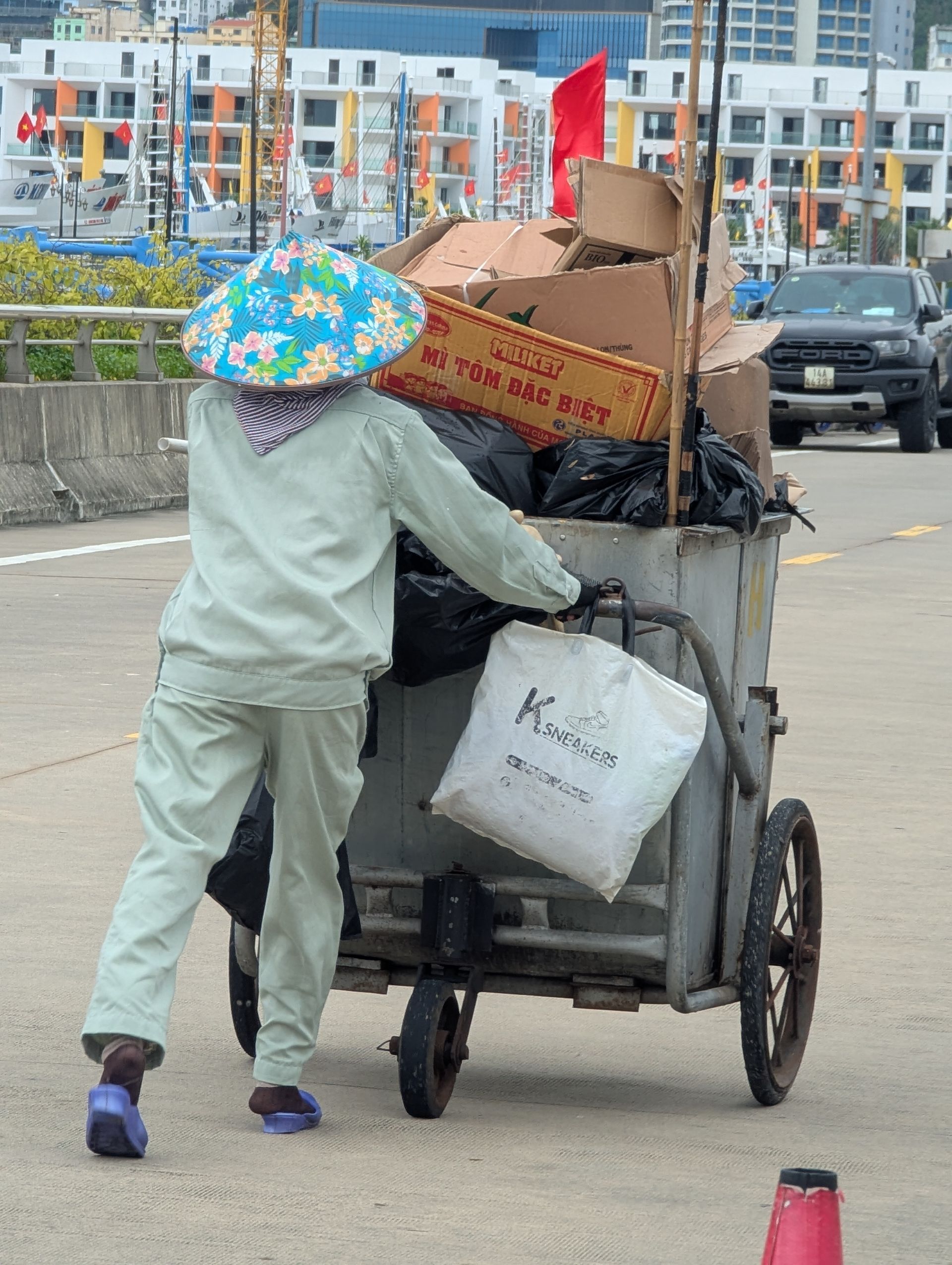
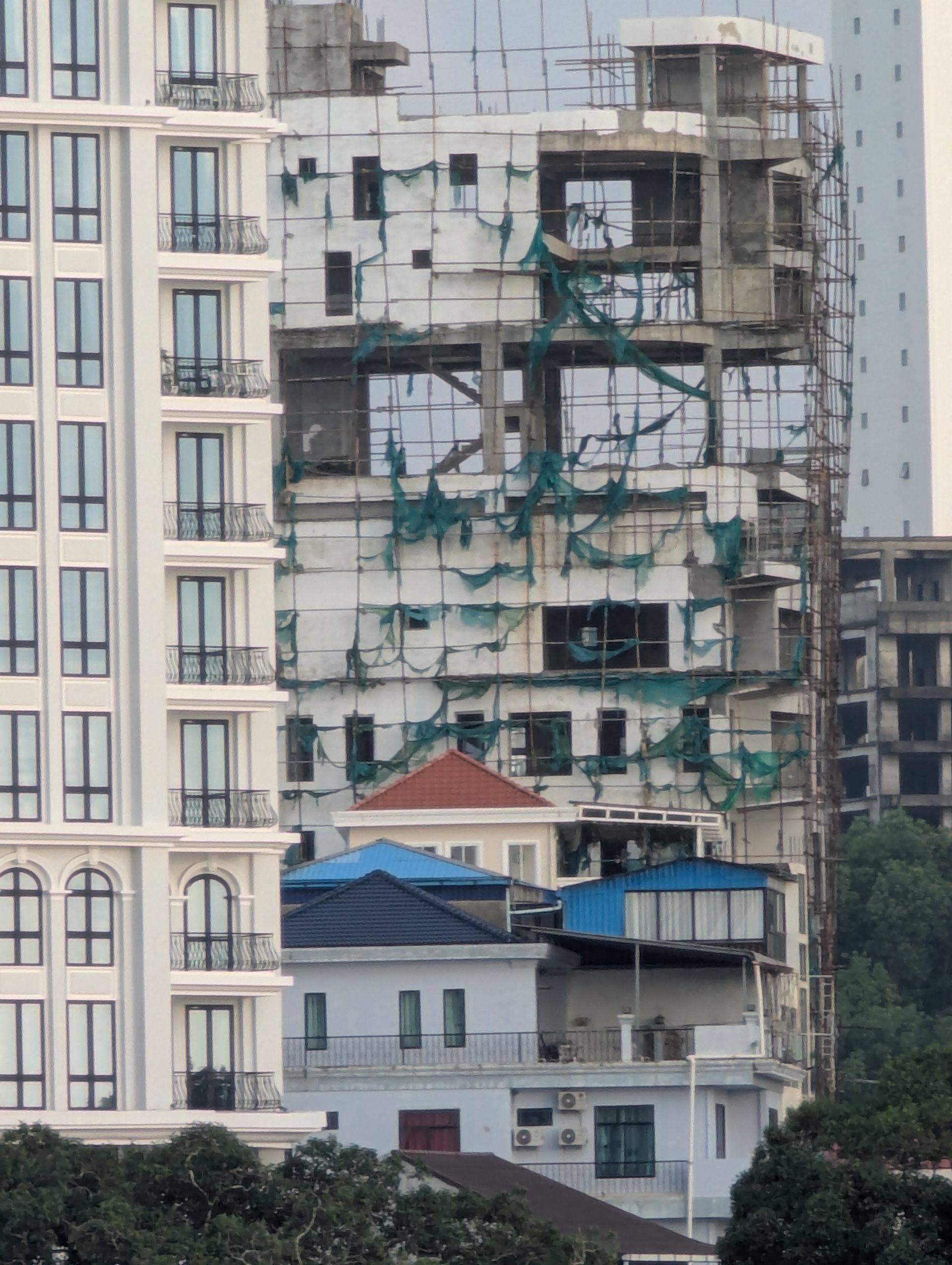
A feral dog is eating scraps from a bowl placed next to a pile of garbage. A yellow plastic gas can has been cut length wise in half to make a planter. The papaya tree is planted in it. Two men dressed in black squat on their haunches and collect rocks into their buckets. A family is living in the green space between the roads. They have strung hammocks. The young child is swinging in one as she watches the traffic. Block after block of small open shops, about ten feet deep, all their merchandise visible, fruits, vegetables, clothes, housewares, tools, fishing gear, a drink stand, a cafe, repeating, over and over. Owners lounge in chairs inside the shops, staring at their cell phones. Many gutted apartment buildings, black skeletal structures, brood between those that have been more recently built.
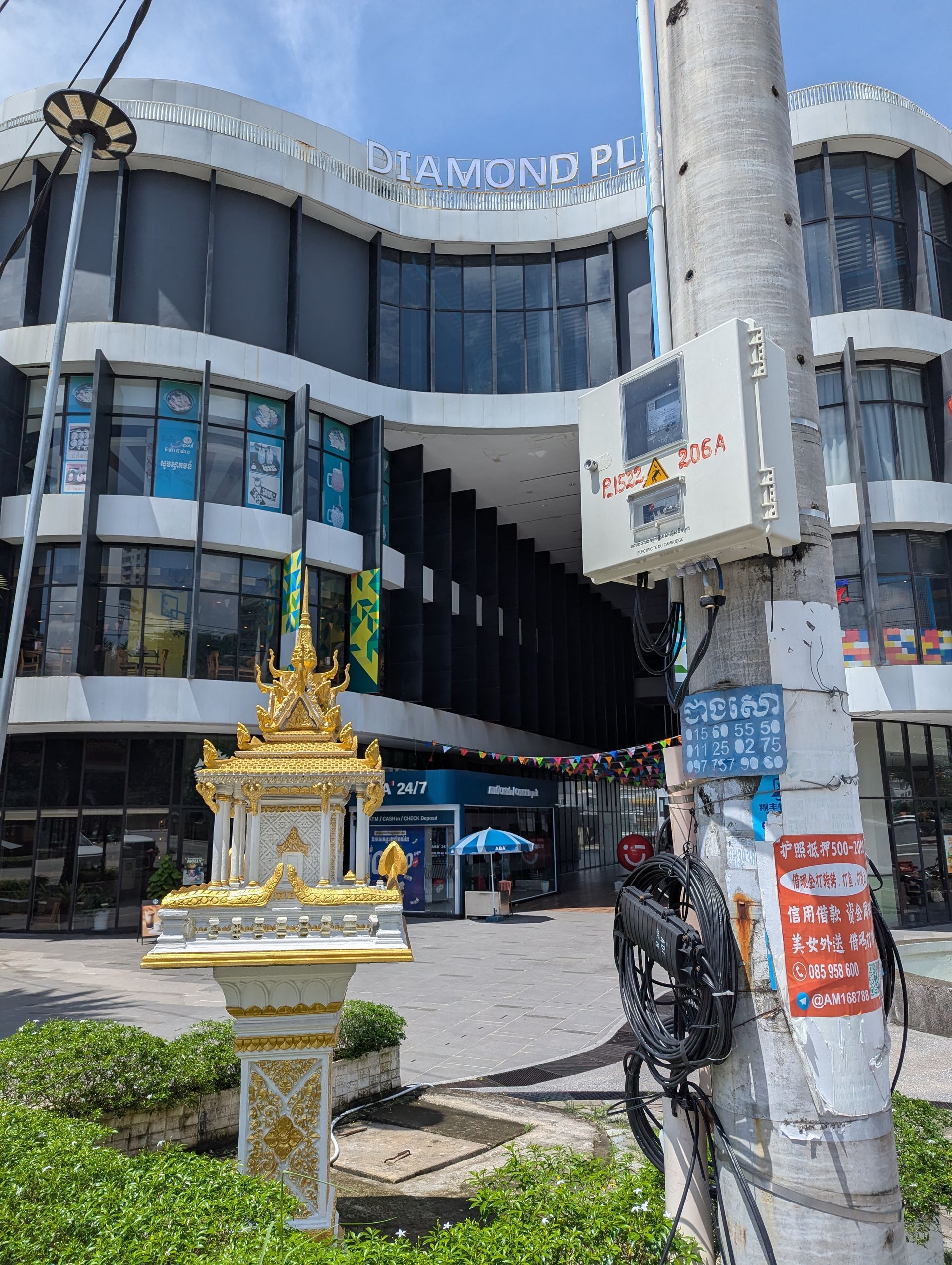
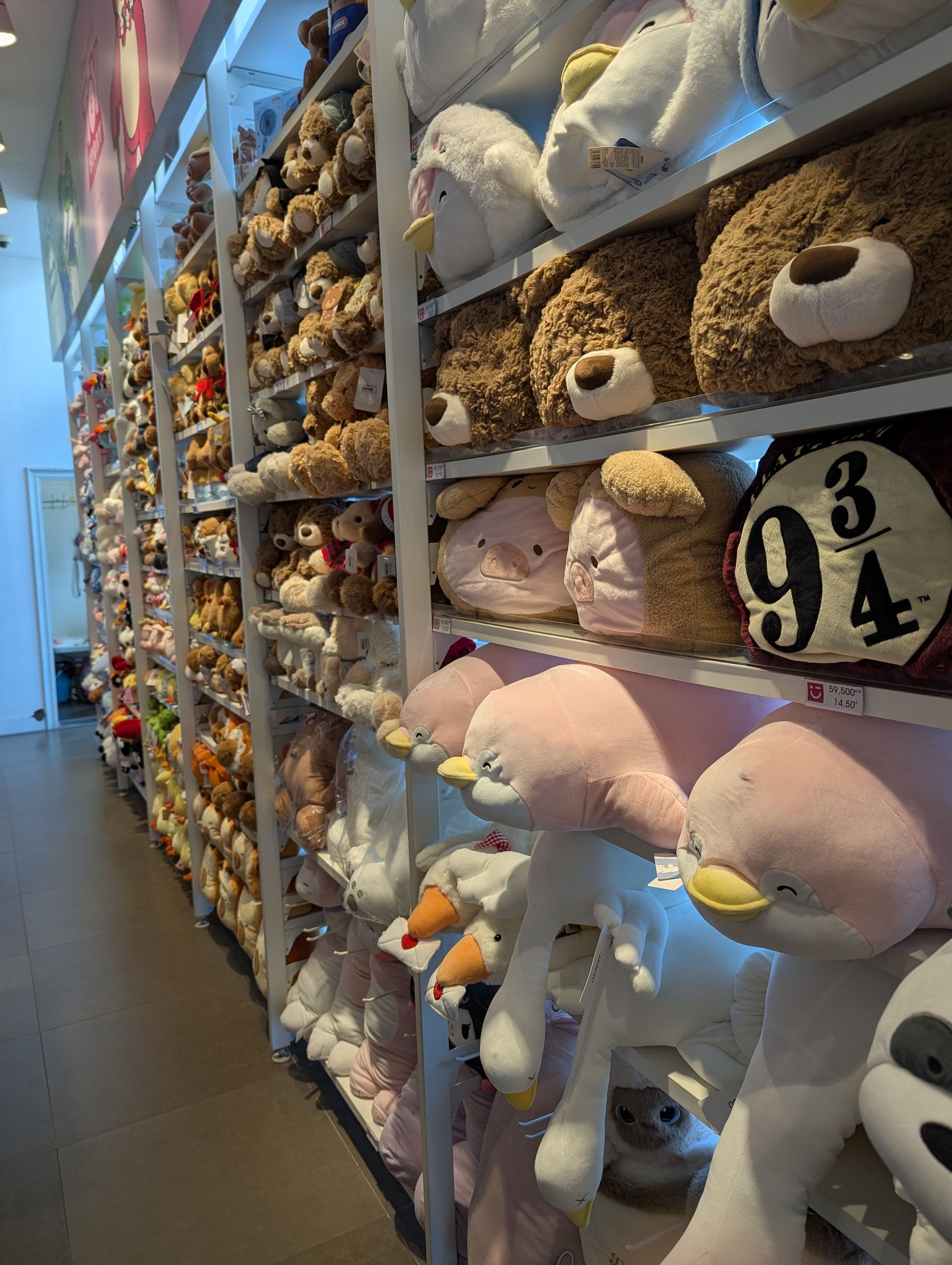
The driver parks across from a mall that has a small temple in front. Dozens of thin brown men appear at the shuttle windows waving laminated photos, offering tours. As you cross the street they gather around you, insisting, plucking at your shoulder. The traffic is sparse, mostly scooters. The upper two stories of the mall are almost deserted. Local businesses have not rented space in the several years the mall has been here. The ground floor has fast food from the US, Burger King, Kentucky Fried Chicken, Starbucks, and a souvenir shop with rows and rows of stuffed animals on shelves along the walls. Children run and play in the hallways and adult men take naps on the benches and chairs in the empty, air-conditioned silence of the upper floors.
Many passengers skip the shuttle ride altogether and take planes and buses to assorted tourist attractions, temples, beaches, zoos and the “killing fields.” They stay several nights at resorts, ‘five star service’, apartment size rooms, tropical plants, spas, excellent food, a huge swimming pool, and all this for “just $160 a night.”
A curious looking ship is docked opposite us. Its guts are an intricate puzzle of plumbing and tanks, all visible. It reminds me of the clear plastic figures that used to be sold to teach anatomy to children, the “visible woman”, and the “visible man.” But these are the ship's metal “organs.” There is a small submarine attached to its side and a helicopter pad on the top deck.
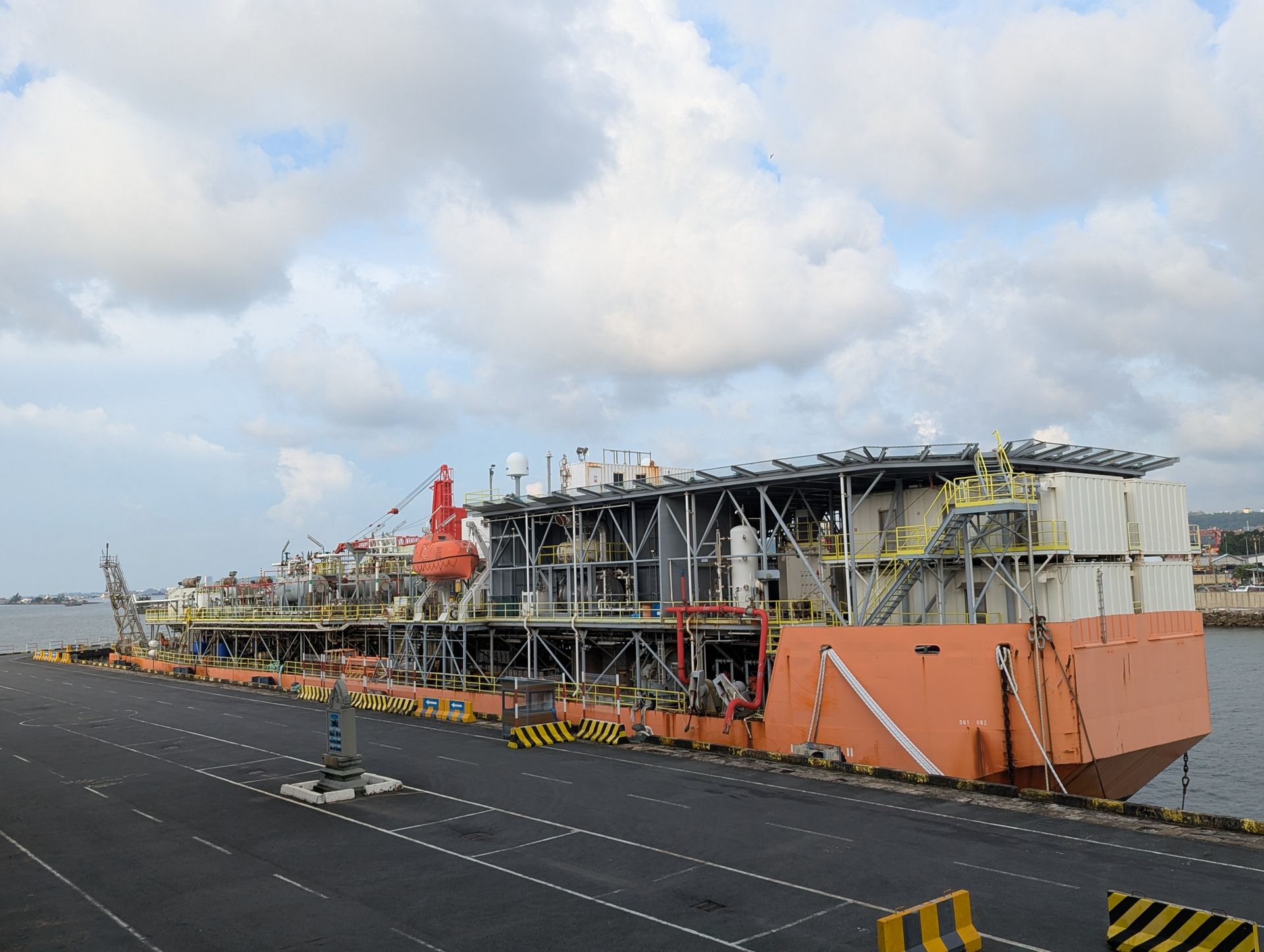
I look up the name, Ingenium II, and find an interesting history. This is a mobile refining ship that travels out to Cambodia's oil fields and minimally processes the oil coming from the rigs, separating and cleaning the water which is returned to the sea and flaring the natural gas. The crude oil is then pumped into a tanker that has come alongside which eventually takes it to the marketplace to be sold. Now it gets more interesting, it seems a tanker, the MT Strovolos, one day absconded with the crude, sold it and kept the profit. This was a commercial tanker hired to take the crude from the Ingenium, at Cambodia's Apsara oil field to be sold into the marketplace with profits to go to Cambodia. The proceeds from the sale were meant to pay for domestic education and healthcare. Since then the regulatory framework has been severely tightened. The assets of the responsible company, KrisEnergy, were seized and Cambodia has enacted a strict application process, The One Window Service, whereby operators are kept within local marine jurisdictions to prevent ships from fleeing territorial waters again. Before this incident Cambodia had no land based refining capacity and sold their crude to other countries for refining to be completed. They then imported for domestic use 100% of the refined oil. Now there are plans to build a land refinery with completion in 2029, in the hope that the profits and the oil from their own refinery will more uneventfully enter their society. Cambodia also shares an oil field with Thailand. The multi billion dollar (OCA) Overlapping Claims Area, off shore of Thailand has been in dispute for a long time. The UN has recently entered the discussions trying to help them come to an agreement. They hope to create a (JDA), Joint Development Area.
There is a cashew connection between Vietnam and Cambodia. While at port in Vietnam I had time to observe commerce. In front of our ship was a bulk carrier being unloaded and I was curious about what was in the heavy brown burlap bags the grabber dragged from the hull over two days, a huge bundle at a time. Some clues dropped from holes in the bags as they dangled above the waiting trucks and fell with a clink into the open metal bed. I knew this was some kind of food. One that wasn't grown in Vietnam. I looked through the ship's telescope and recognized the distinct shape of unshelled cashews. Turns out Cambodia grows them and Vietnam processes them. More evidence of market collaboration. This time harmonious. We bought some at the mall. They were sweet and delicious.
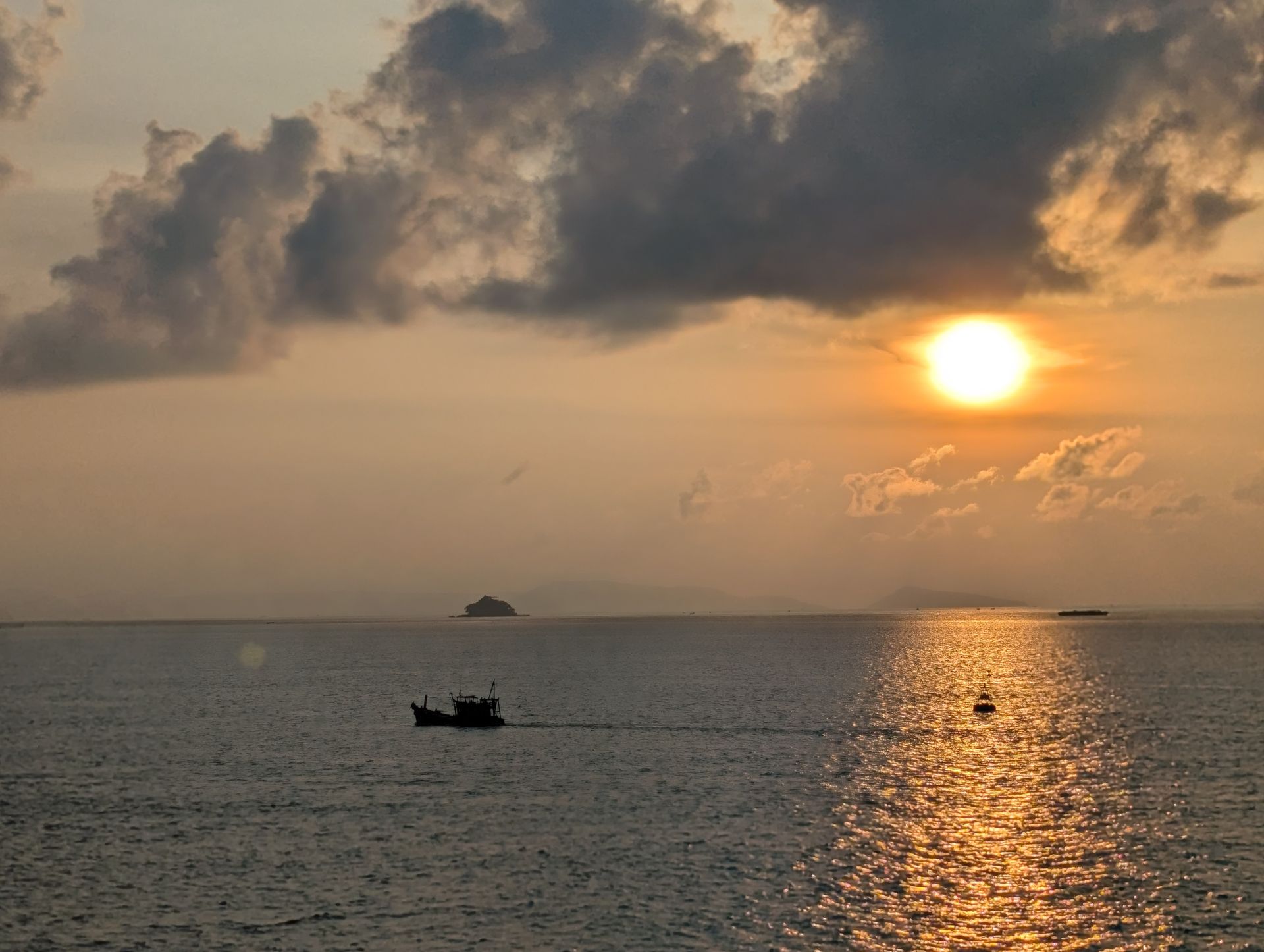
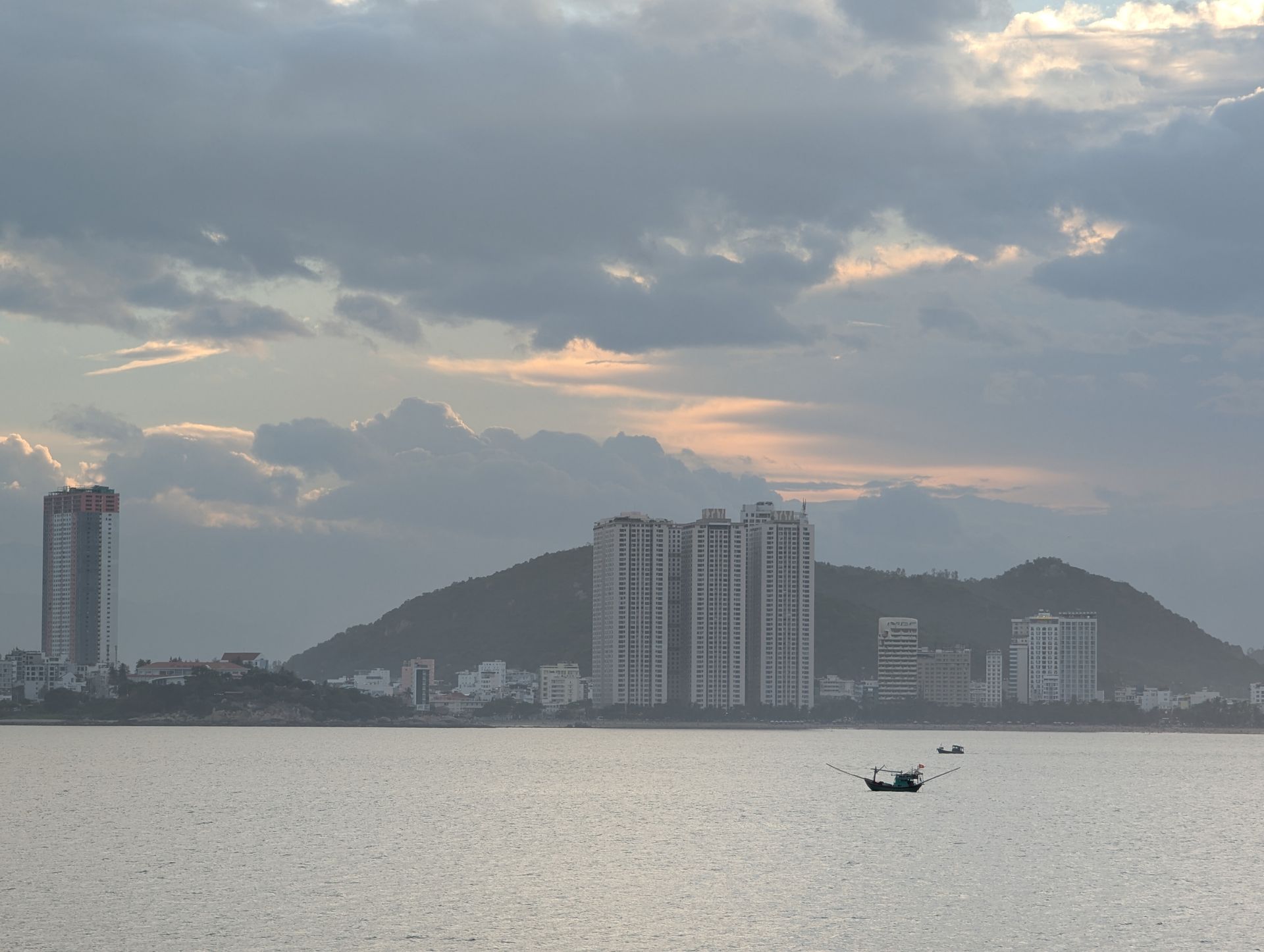
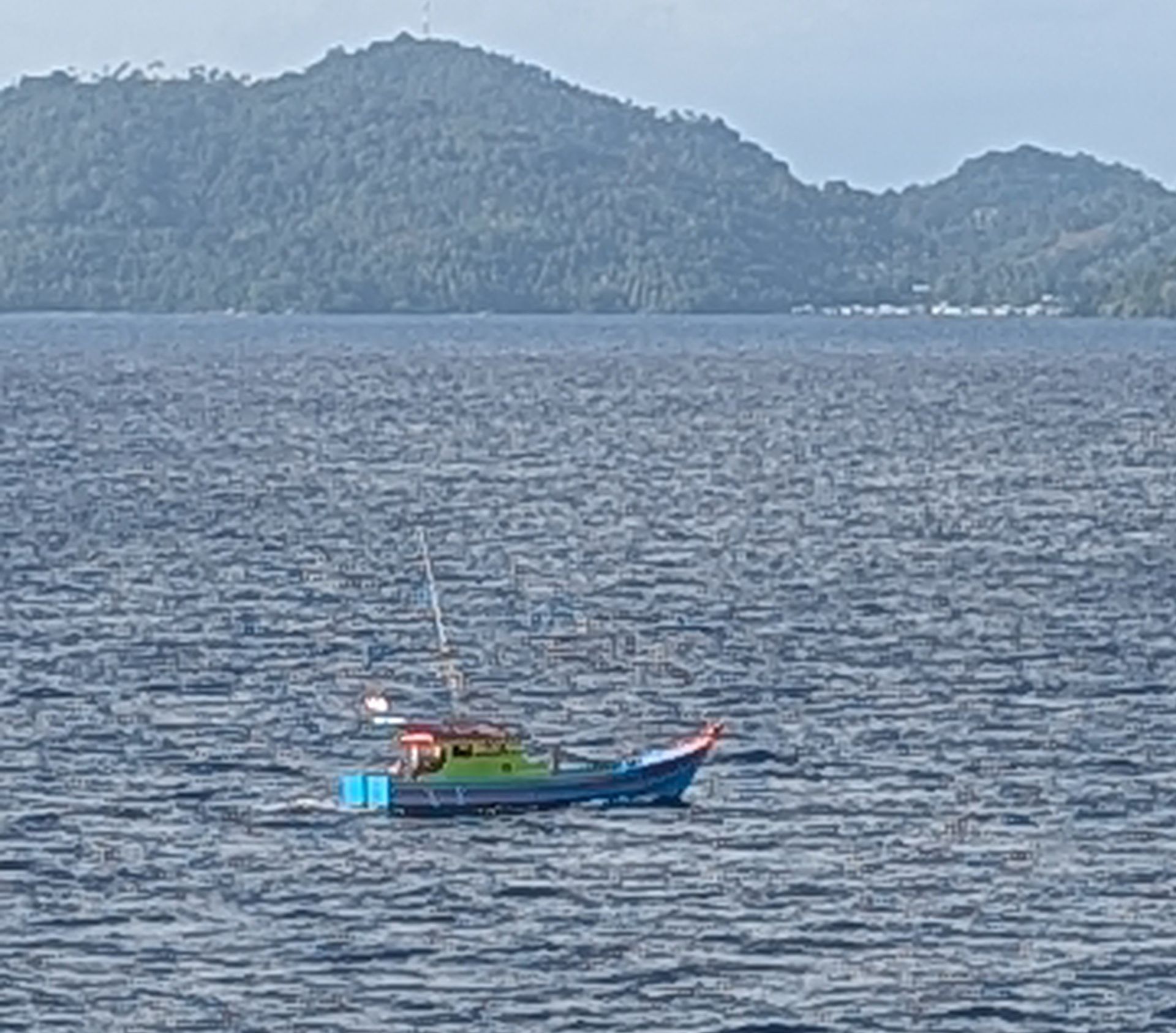
It is early evening. I watch the local fishing boats through my binoculars.
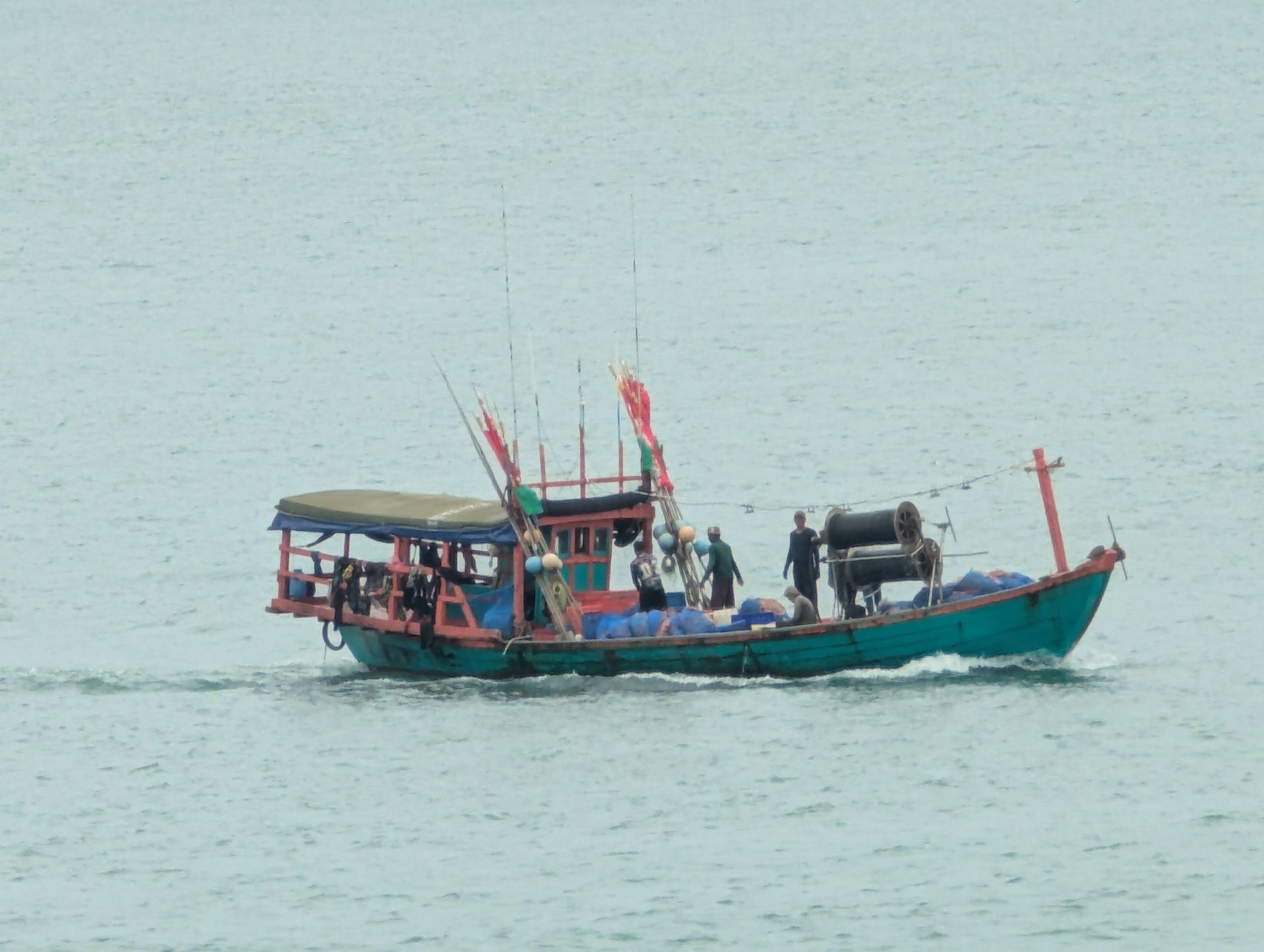
I am trying to enlarge my understanding through the lenses and decode what I feel. The fishermen are going about their work. But there are no answers among those dark silhouettes and their unhurried movements refined over hundreds of generations to sustain their subsistence life. The horrors of the war the US fought here and in Vietnam freezes my thoughts. The US involvement in Cambodia during the Vietnam War consisted of secret bombing campaigns and joint ground incursions meant to disrupt North Vietnamese supply lines. Instead this destabilized the Neutral Kingdom of Cambodia and brought on the rise of the Khmer Rouge and the genocide they committed on the Cambodian people.
I try to imagine what logic may have existed behind all that tragedy. The ignorance of culture that was displayed by the US was staggering. I find no logic, no understanding of why battles are fought over ‘isms'. The suffocation and destruction of countries in the name of fighting Communism in order to spread Democracy, accompanied by the repetitive, thudding impacts of millions of bombs and the cries of millions of people, murdered in the name of an idea. The survivor's descendants will never become believers.