Vietnam
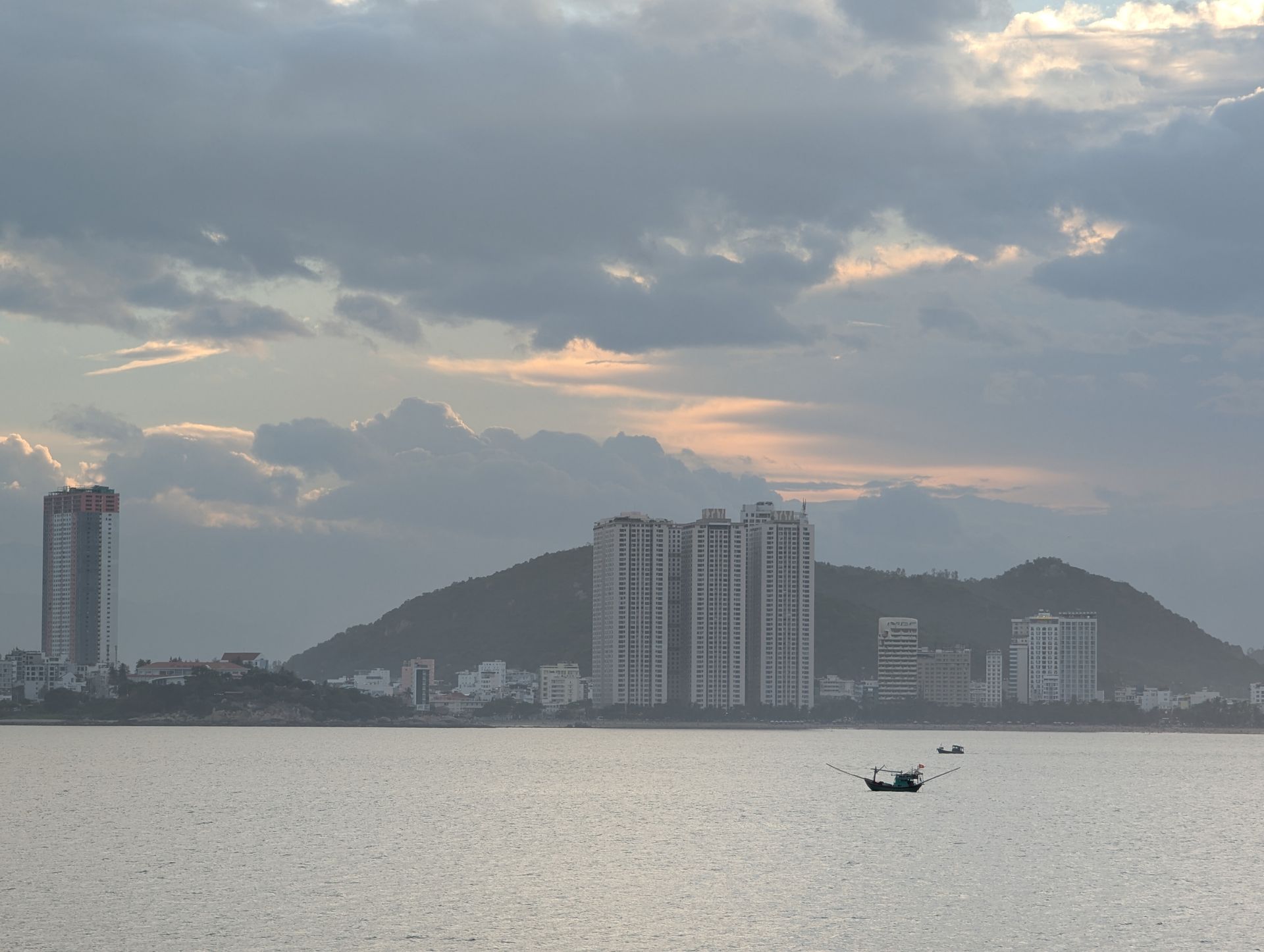
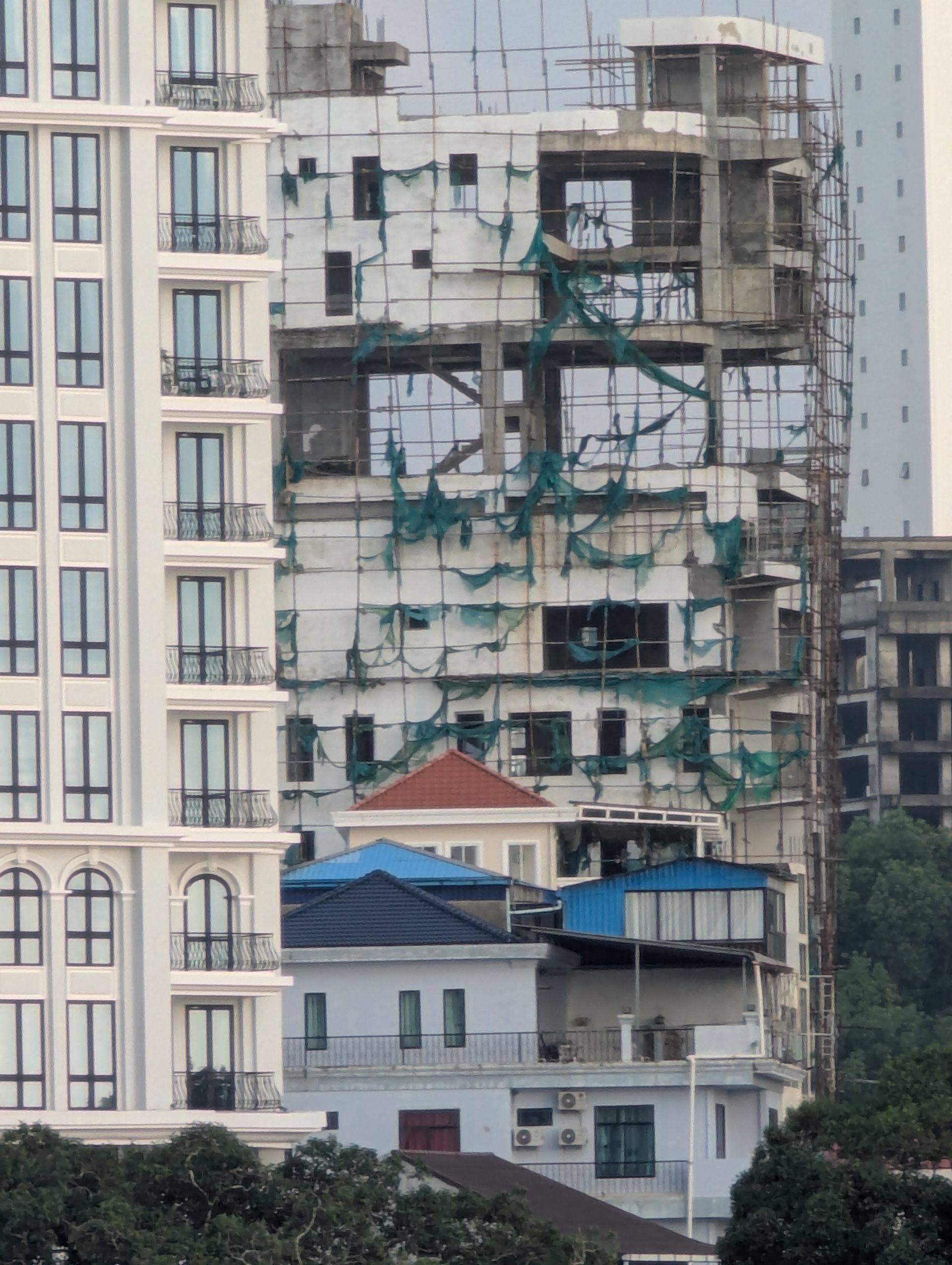
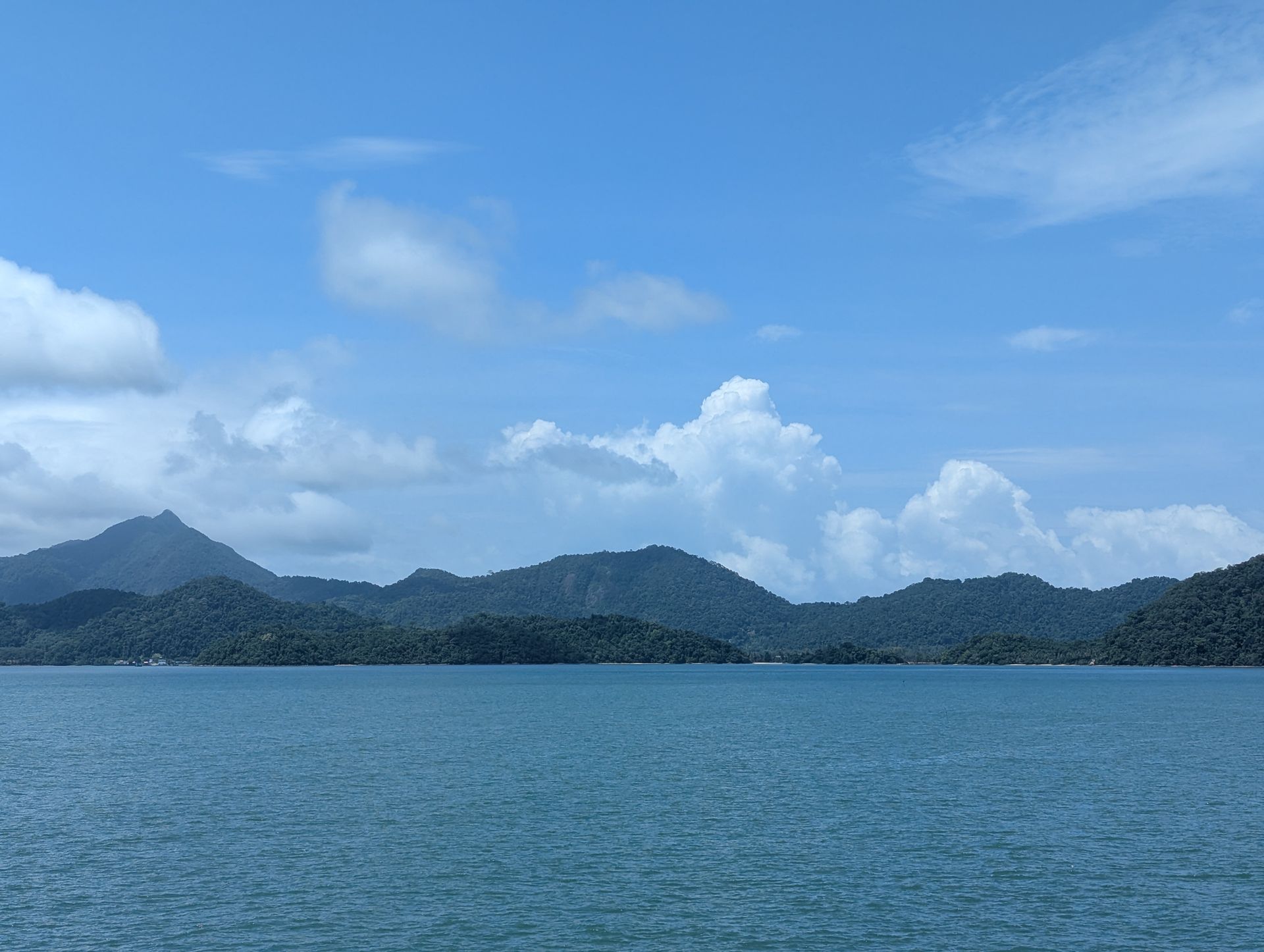
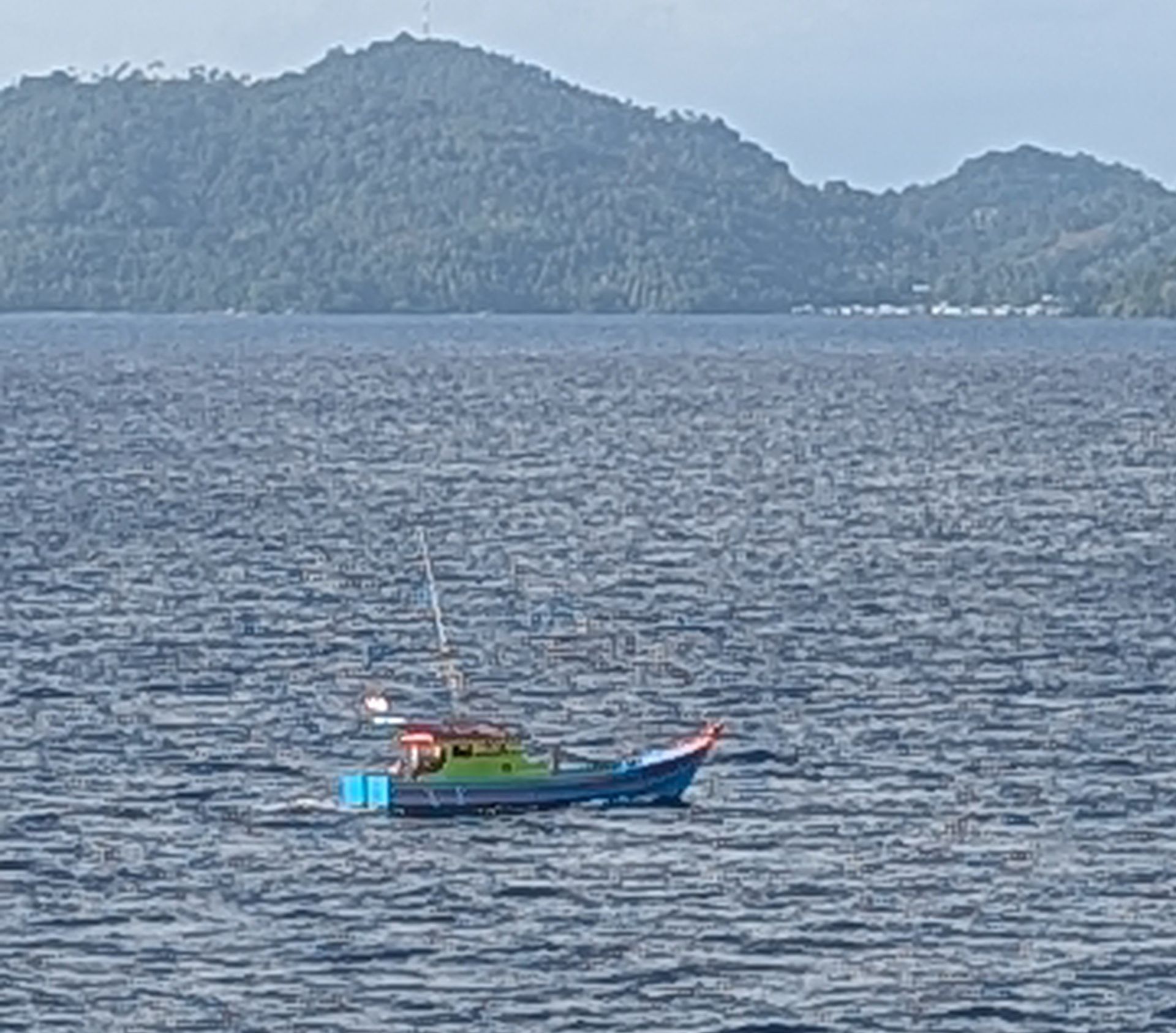
Our first port in Vietnam, Nha Trang, looks from a distance like the landscape of other shores we have approached but as we get closer the green and blue haze of the mountains recedes and the tall white and grey vertical rectangles of the city crowd forward, demanding attention. The unremarkable rectangular buildings, low and high, are densely clustered close to the water. Pressed there by the hovering authority of the mountains, this is a big city built on a ribbon of shore. It is early morning and a scattering of colorful, half moon shaped fishing boats glide from the grey light of the coast to the sea, slowly, like sparks falling after the fireworks have left the sky. We are anchoring here for three days.
I was very young when I became aware of the Vietnam war. In Vietnam they call it the American war. My Dad was a “news junky” and would always turn the TV news on when he got home from work and had changed from his suit into comfortable clothes so he could relax from his government job. He would sit on the couch reading the Washington Post and listening to the news at the same time, until dinner. When we all sat down to dinner we watched the war unfold together. The war was covered on the evening news, everyday. We didn't think this was unusual. We thought, as children, that this was normal. Subsequent American wars have not been broadcast in this way like an ongoing narrative; “stay tuned” more to come tomorrow. The images of people fighting, the narrator's voice, the sounds of guns and explosions, seeing people shot and killed in front of the dark green camouflage of the jungle. This was all broadcast into our dining room during dinner. The Vietnam war taught the US government not to do this with future wars because it backfired. Instead of generating Nationalism it generated empathy and eventually massive protests and a violent split of public opinion. A history that still divides people. Honestly I don't understand why Vietnam allows US citizens into their country. People whose government carpet bombed them. Thousands of these mines still lie unexploded under mulch and debris, hiding, deadly. Yet, I understand that there exists a large expat population because it is so cheap to live here compared with the US.
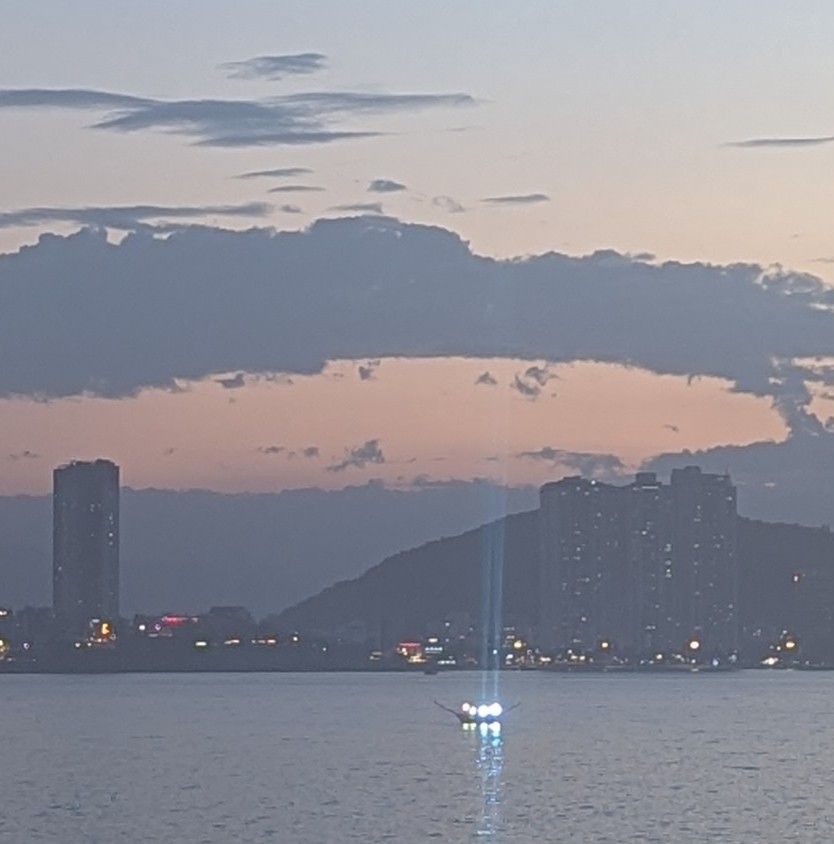
At dusk, the lights come on in the city and the fishing boats light up bars of bright lights to attract squid; a staple on the local menus. It has been intensely hot and humid so we haven't gone into the city. Unfortunately, the last tender back to the ship is around 6:00 pm, so we can't take advantage of the cooler evenings. Passengers who have braved the heat return sweating and panting, with excited declarations of how cheap everything is, especially the food.
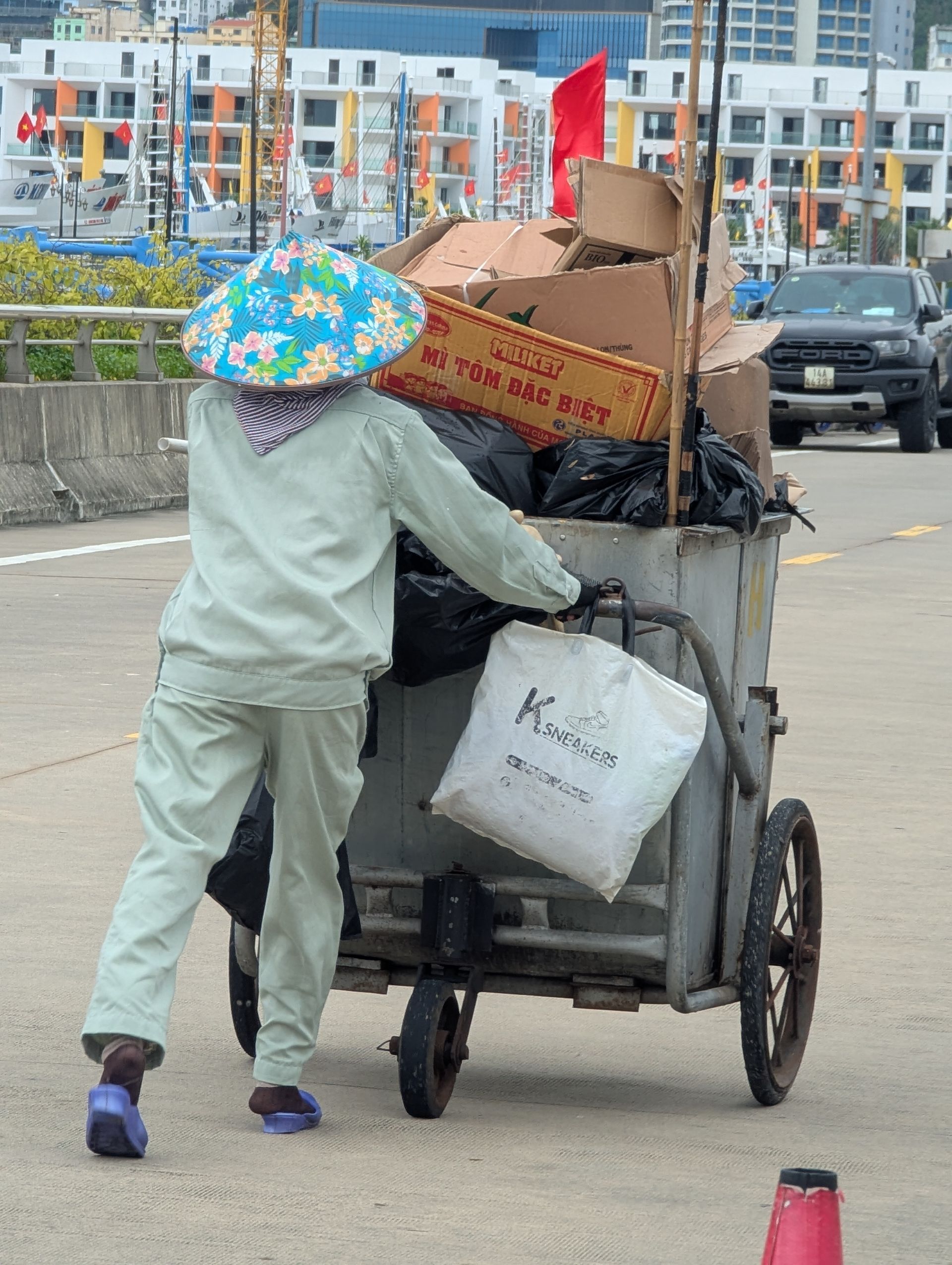
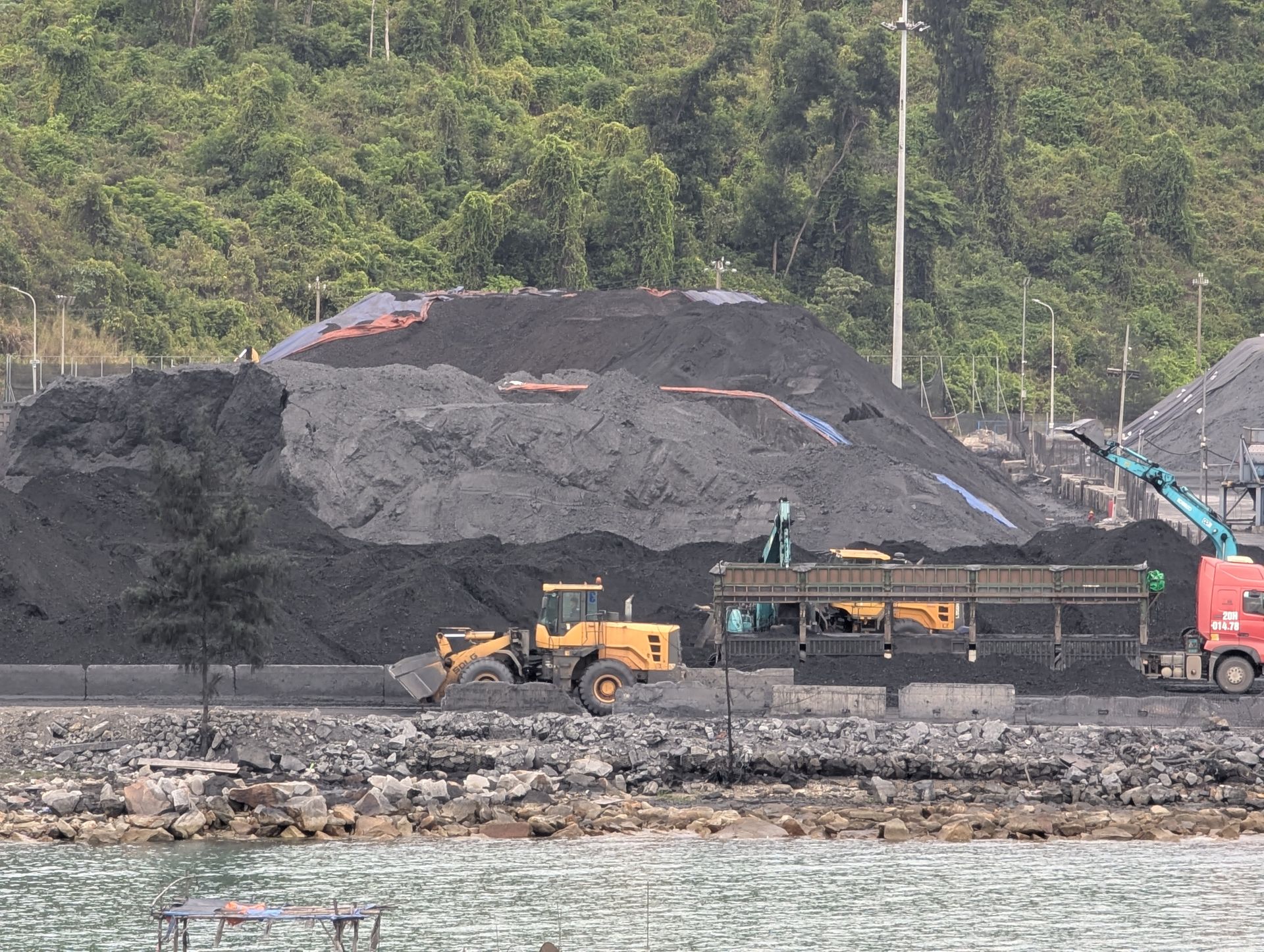
Our next stop is Chan May. It is a port about a 45 minute cab ride from Dah Nang. For 100 USD you can hire a taxi for 5 hours to take you there, drop you off at different tourist spots, then bring you back. The heat is still intense at the port where we dock, so we wait till early evening to take a walk and explore locally. There is no town, just the port with mountains of anthracite coal in the process of being loaded into bulk carriers that are tied to the dock.
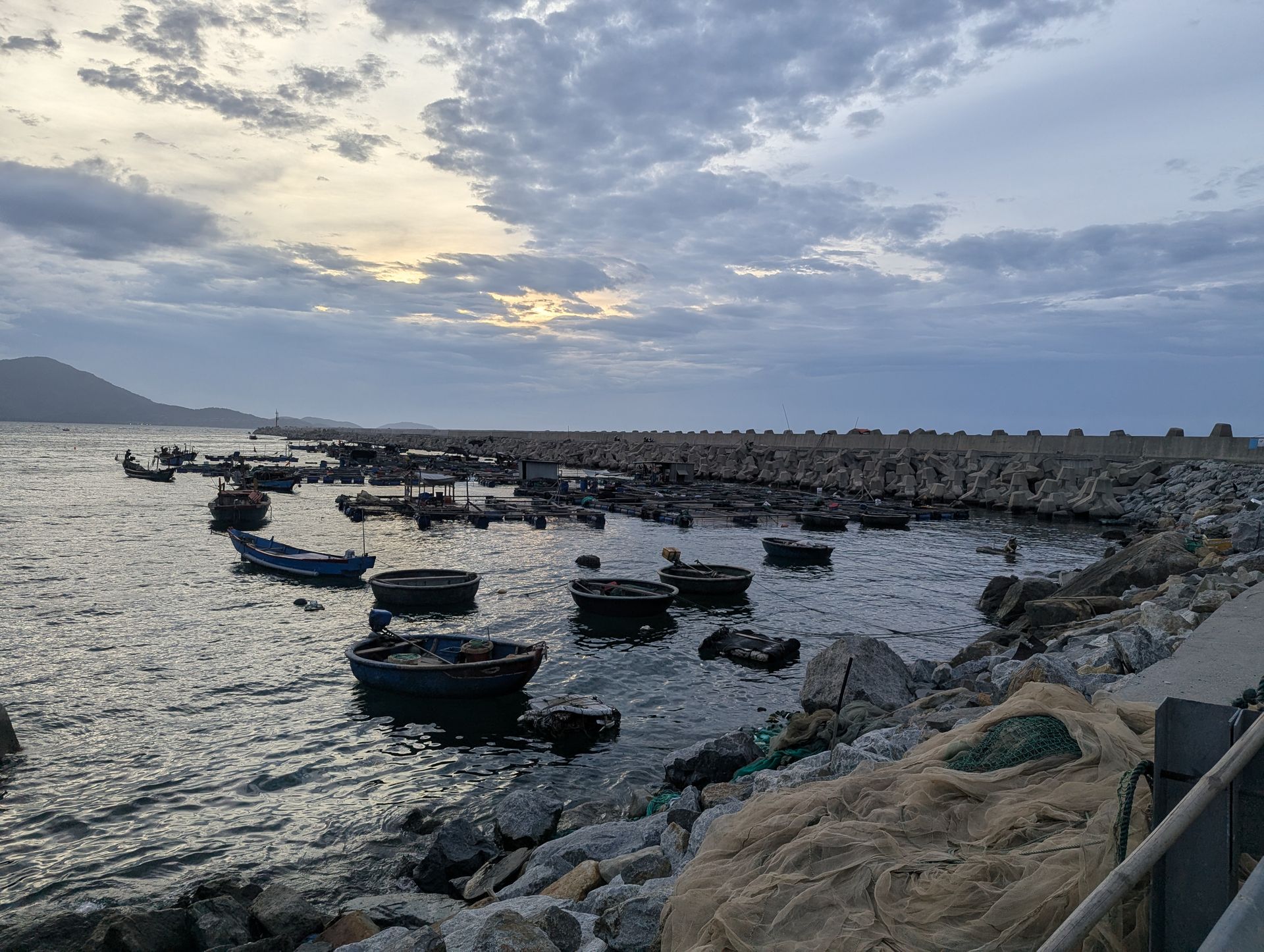
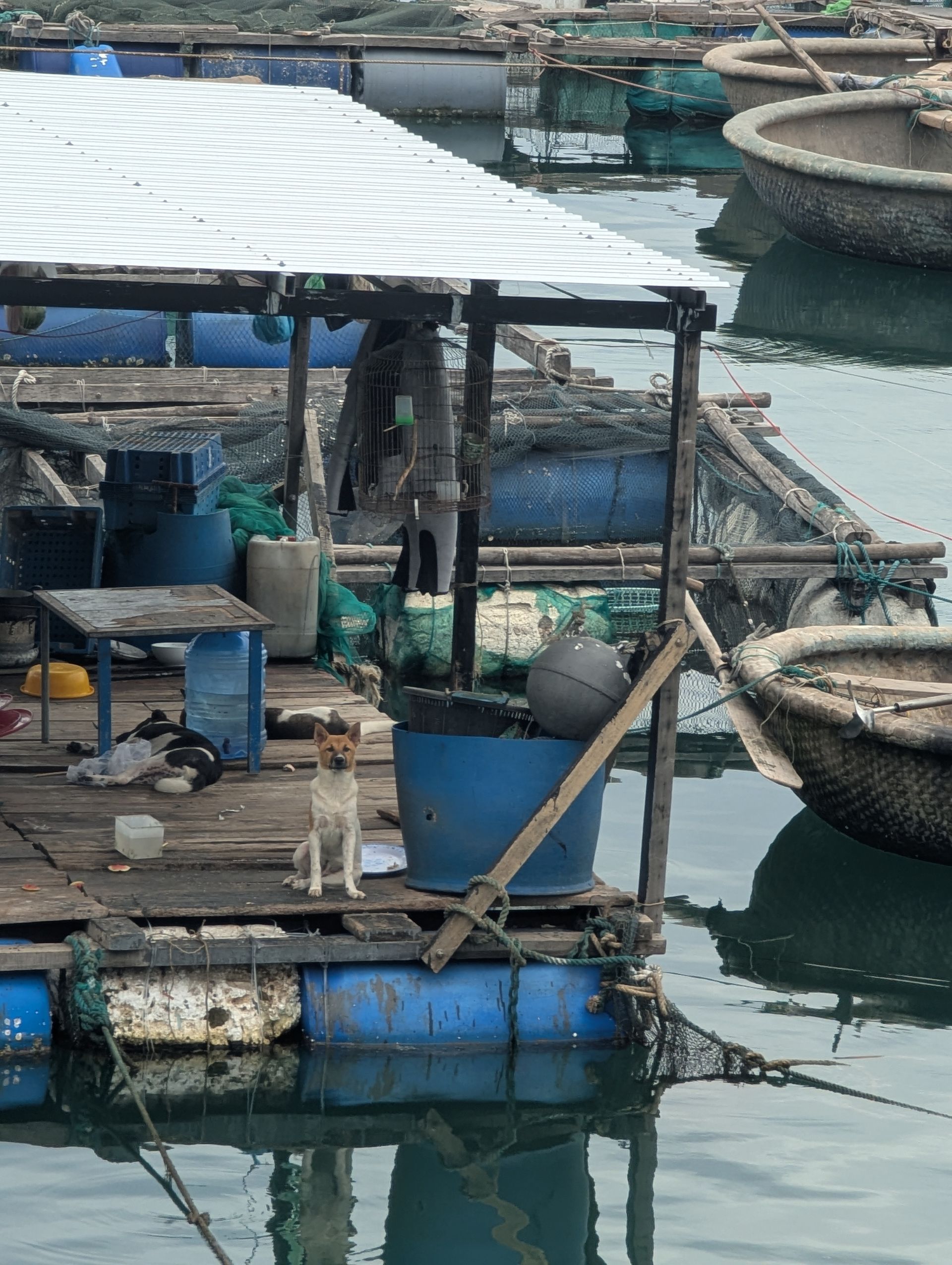
Not far off there is a new jetty made of concrete ‘jacks’. Within its protection the local fishermen have built docks and fish farms. Their basket boats and brightly painted lunate fishing boats are tied to the outside edges of these docks. A few small covered sheds have been built here and there for shelter from the sun and a place for their pet dogs to sleep.
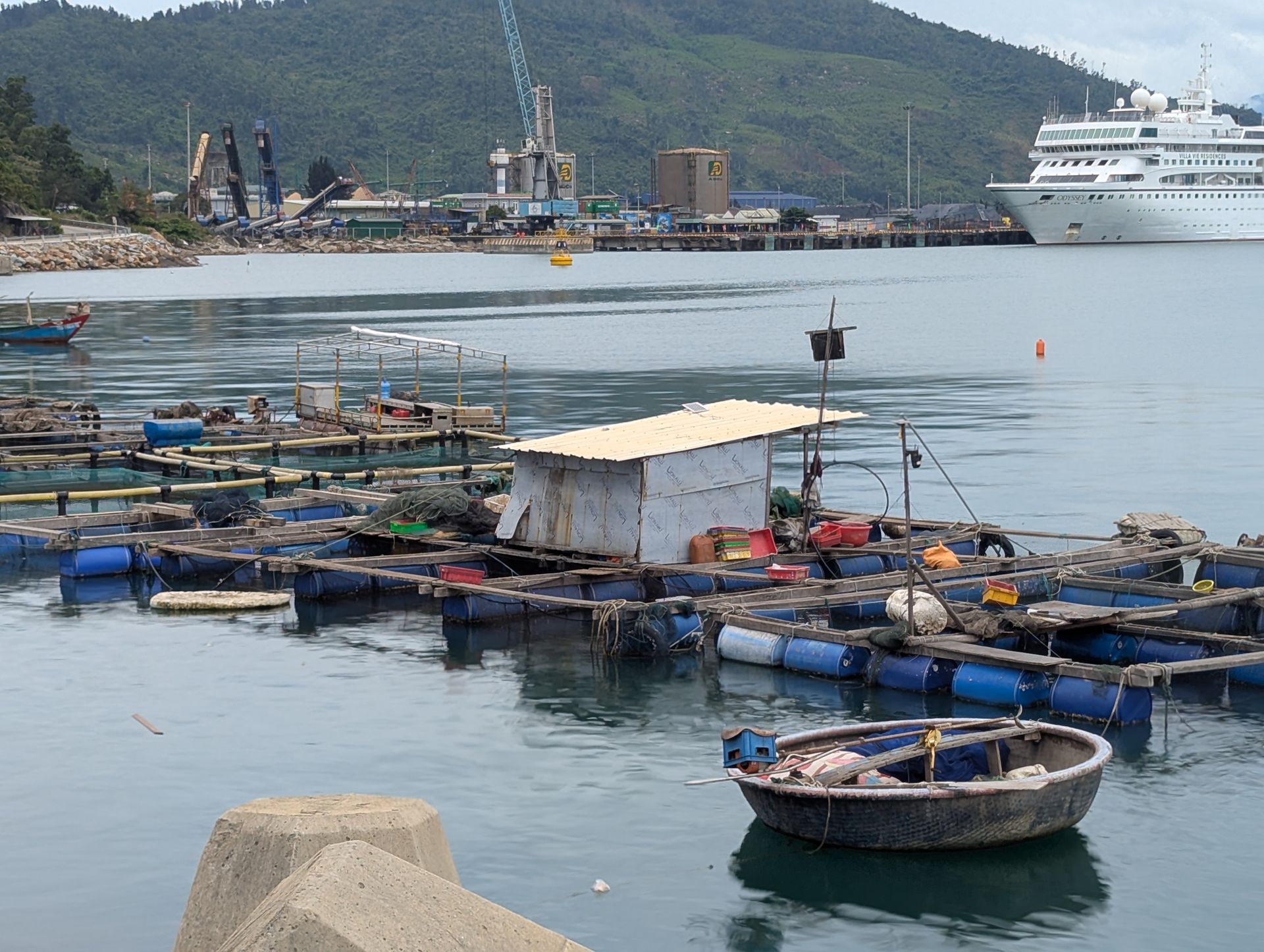
The interior squares of the rafted network of docks are fish farms. Netting has been secured around the edges of the squares and draped into the water to serve as a porous container for the fish. Fishermen feed them daily from buckets of smaller fish and squid that they chop up and throw into the enclosure. They motor out in the early morning to go fishing, sometimes trailing a basket boat ‘dingy’ and come back with fresh fish to sell to local markets and restaurants. The damaged fish are taken home for household consumption.
Basket boats have ridden the tops of waves like a cork and negotiated the rocky shorelines of Vietnam for thousands of years. Difficult to capsize and inexpensive to make, they evolved separately from the round and oval coracles of Europe, America, India and the Middle East. Each region responded separately to the similar demands of their rivers and seas using local materials like bamboo and willow to weave a lightweight boat as a solution to these challenges.
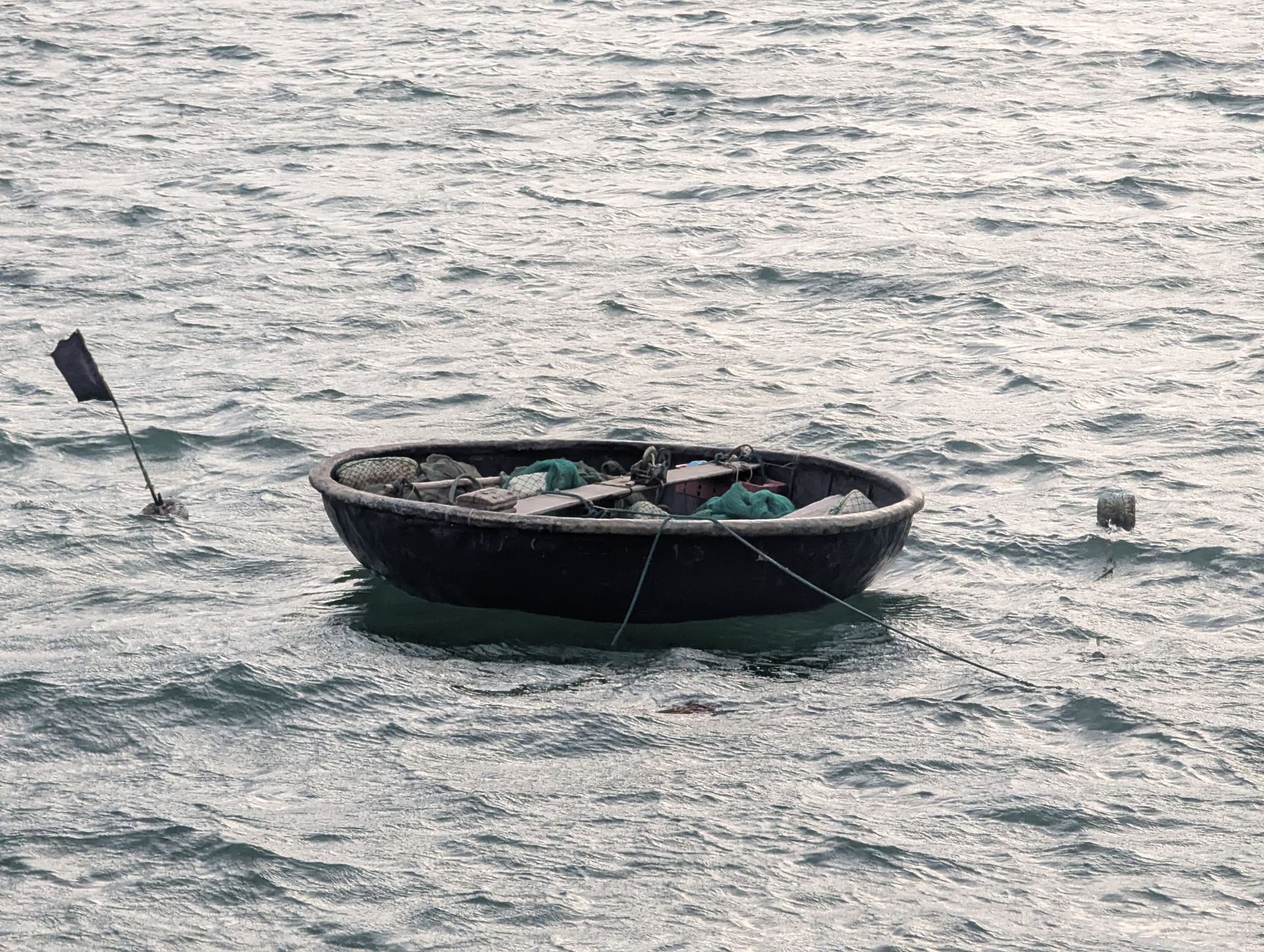
Portable and extremely buoyant, these small boats sitting on the surface of the water are omnidirectional and difficult to sink. They are steered and propelled forward with a single paddle using a special wide flat figure eight stroke, an ‘infinity’ stroke.The paddler sits within the edge of the boat leaning forward. The blade is thrust straight down into the water, with this continuously generated motion, moving forward while correcting the boat's desire to spin. The basket boat can be launched directly from a beach, spinning over breaking waves with the boatman using a sculling technique to keep the direction true. Cargo is placed in the absolute center of the boat.
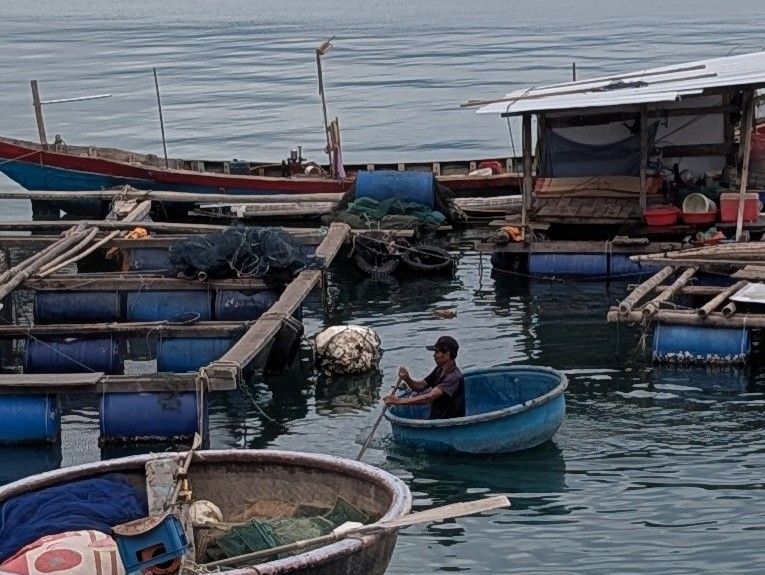
Observing the boats and life on these fish farm rafts made mostly of found materials; driftwood, styrofoam and empty water bottles, along with empty blue plastic water barrels; going unselfconsciously forward, is fascinating. They have solved their necessities with what is free and abundant and their creative ingenuity.
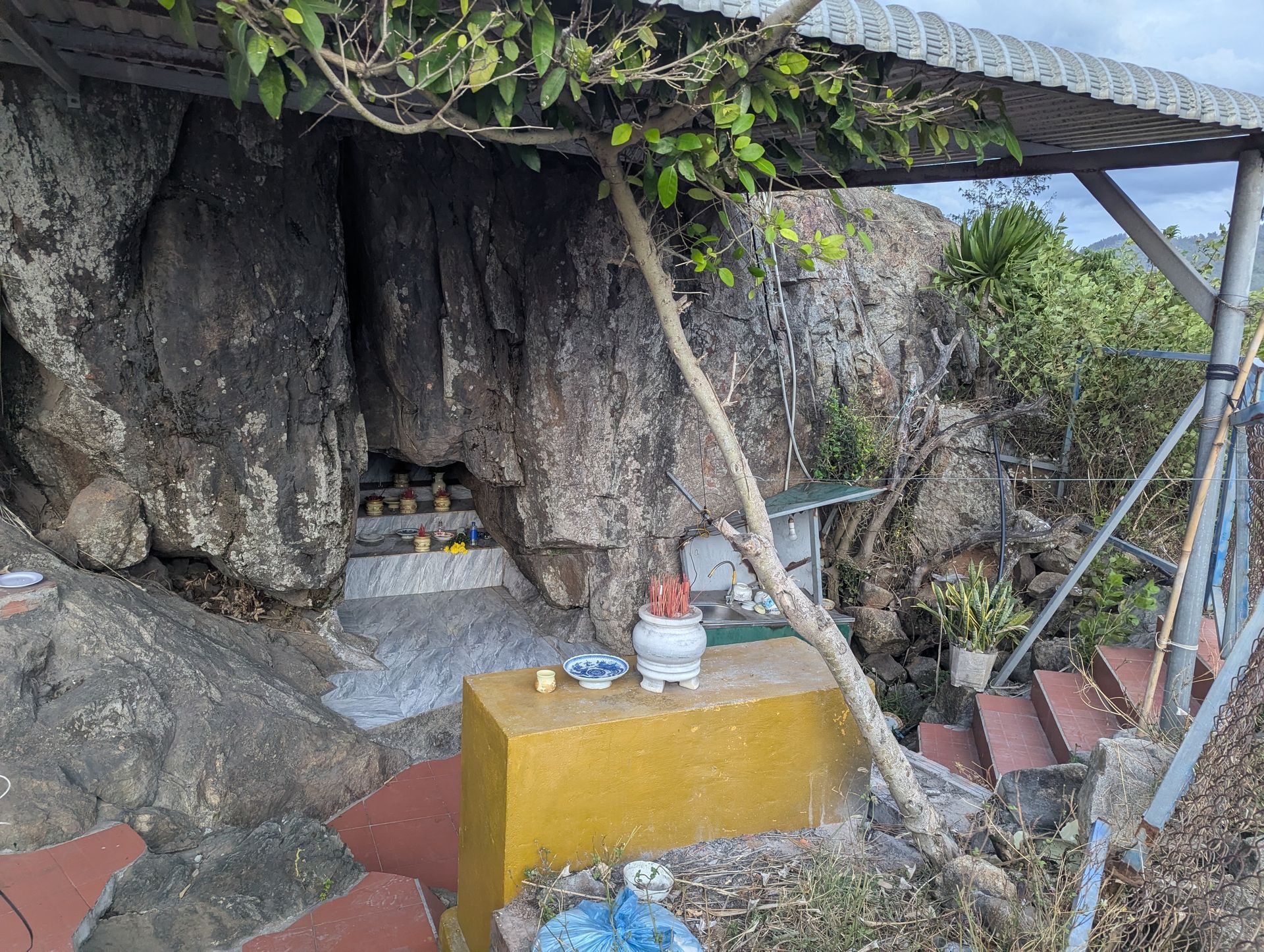
A simple Buddhist shrine has been built in a small cave nearby. There were offerings of incense and the dried remains of grasses. I picked some wild flowers by the side of the road and placed them in a small bowl on the altar.
I had begun to understand something important about the Vietnamese, even though we couldn't speak each other's language, just acknowledge each other and smile. They work hard and build what they need from what they find abundant and free, even what others would throw away. They make a floating fishing village by cooperating, sharing the labor and the result helps them all survive. They are adaptable people whose skills, creativity and persistence have seen them through thousands of years of challenges. I can see why they won the war against the most powerful country in the World.