Palau
City of Koror, the rock islands
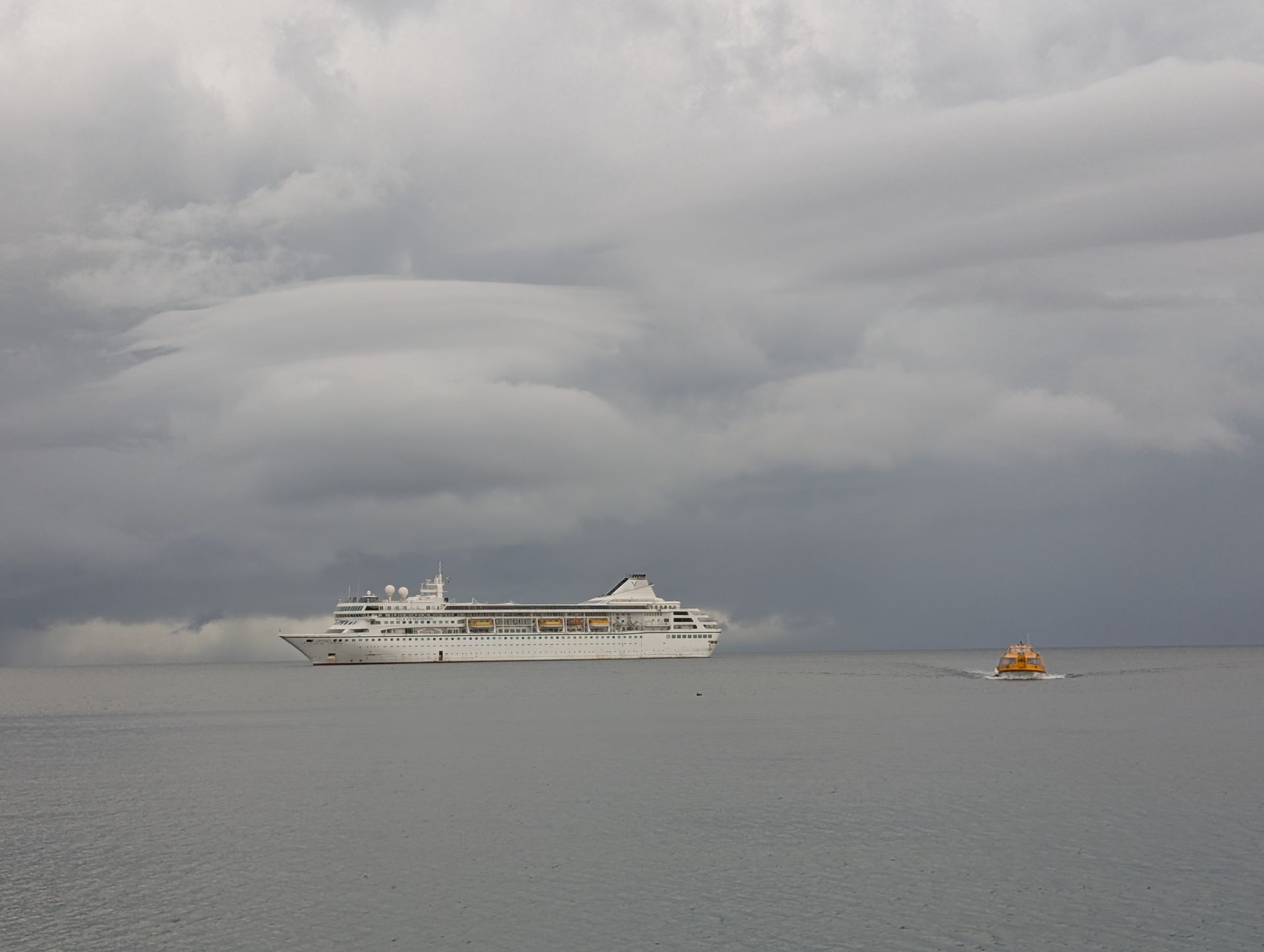
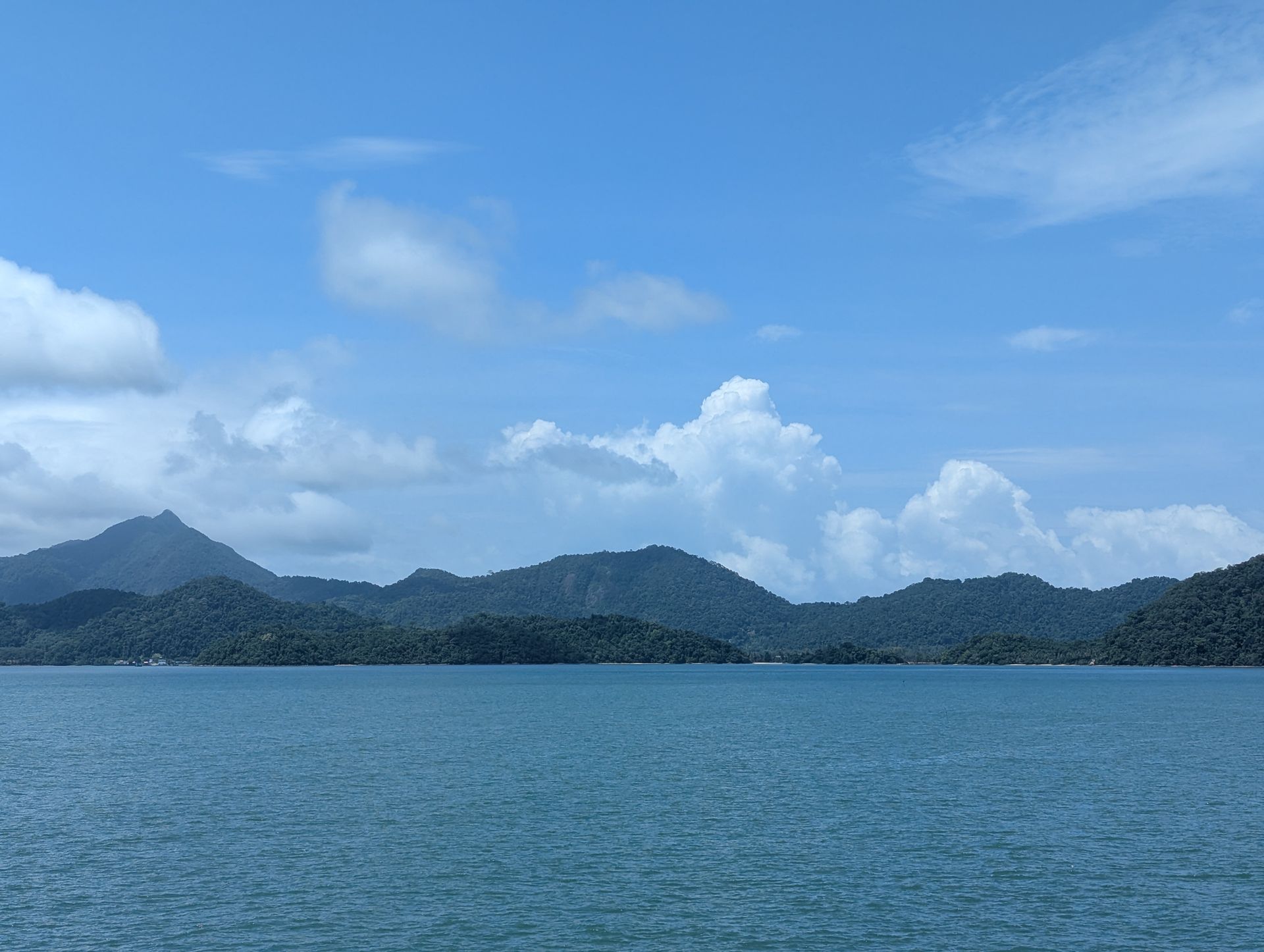
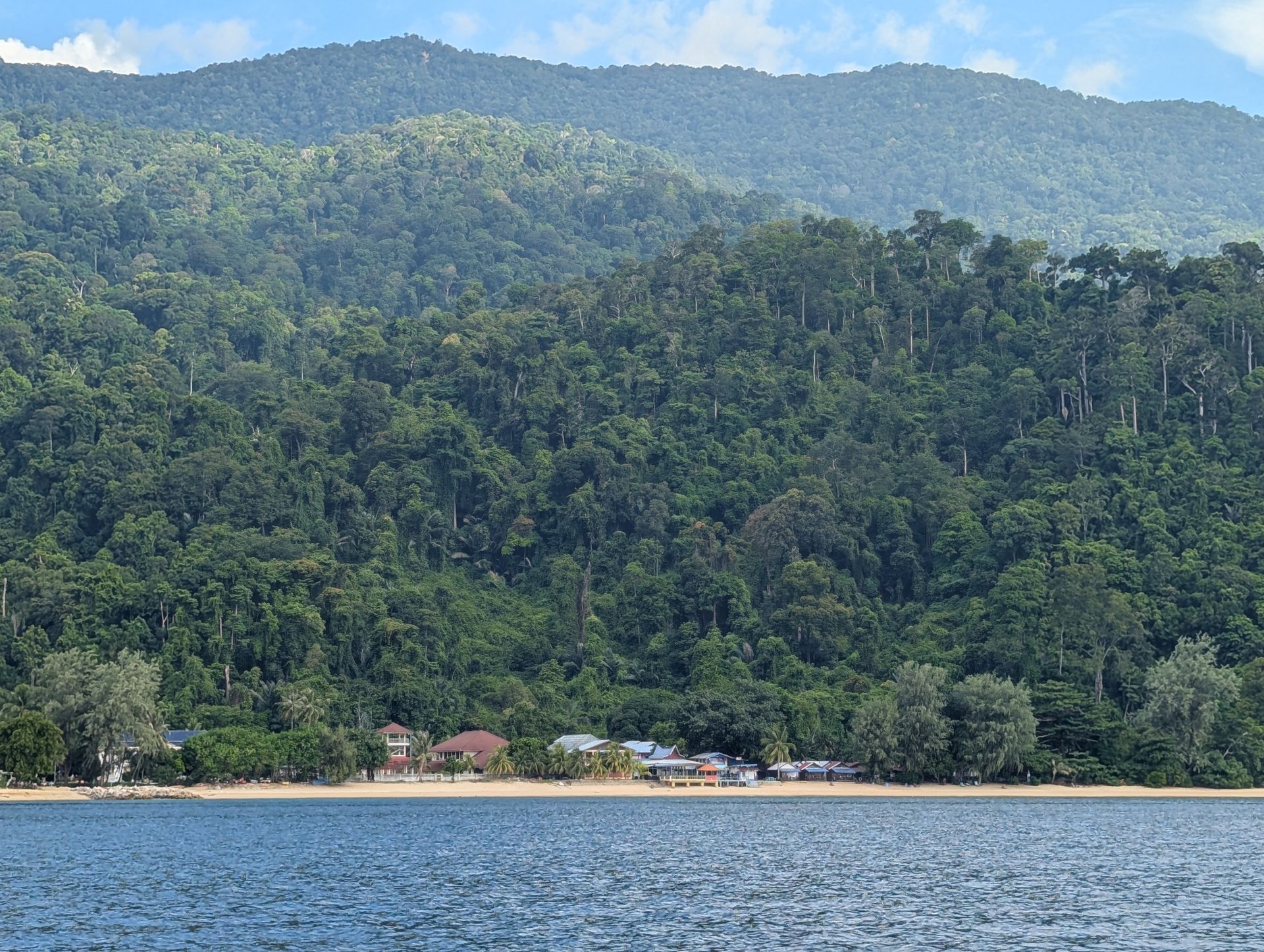
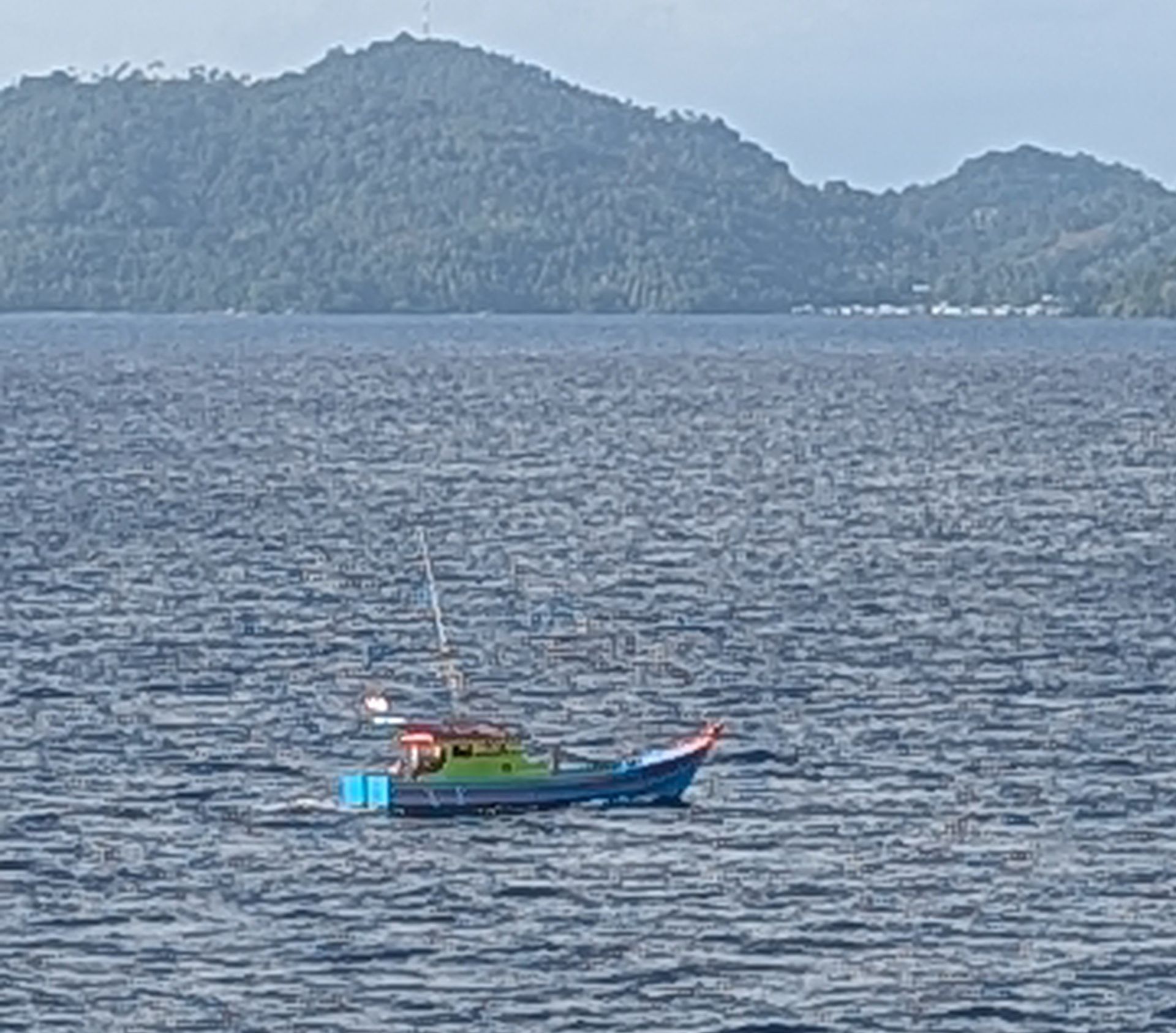
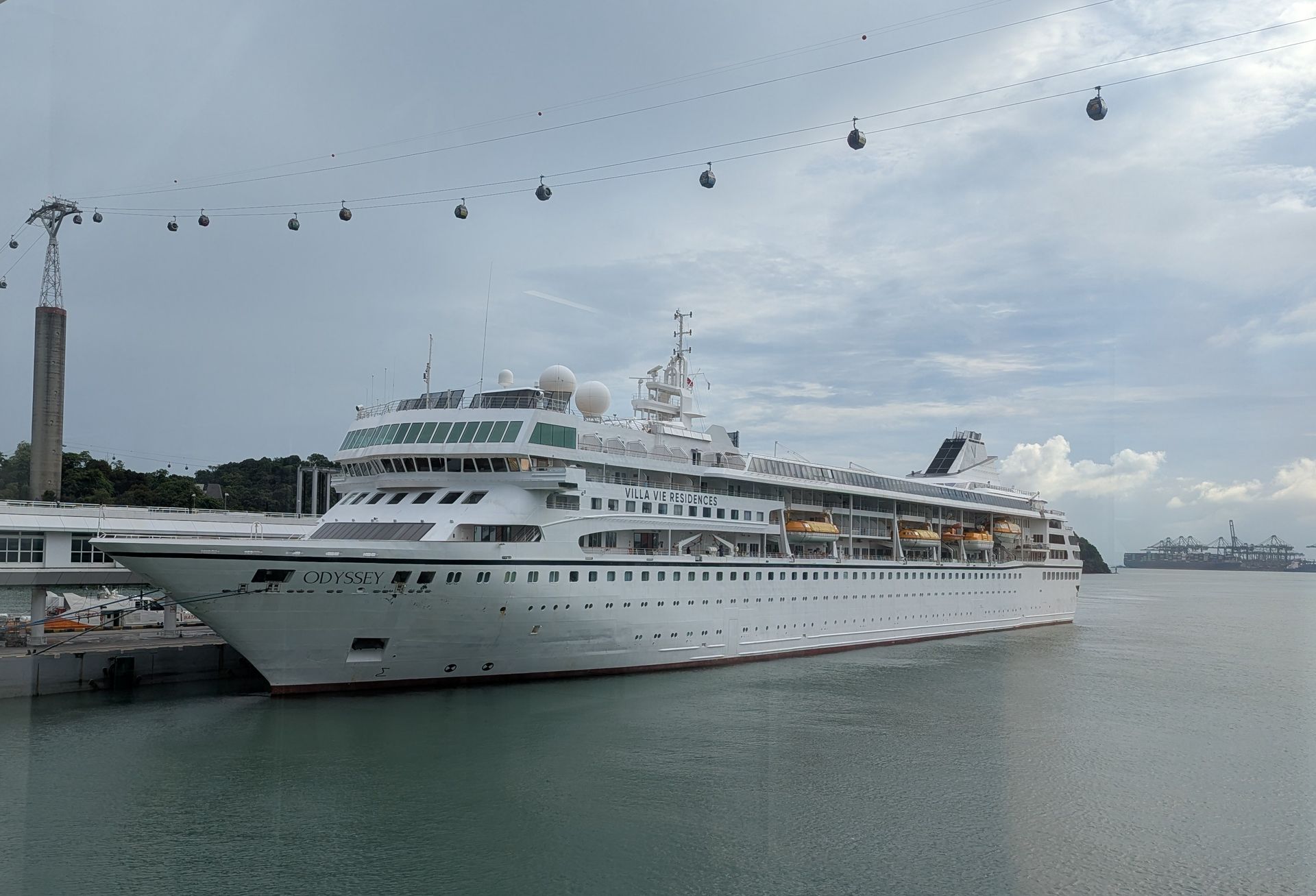
Palau is a country of about 340 islands. Many are uninhabited. They are all beautiful to look at, composed of black volcanic rock with deep caves and covered with lush tropical jungles. We are anchored out, so a tender takes us to shore. It docks at a resort where we can take a shuttle bus into the town of Koror. The resort is beautiful and relatively new. For forty dollars a person we could use their beach and swimming pool. Many passengers take advantage of this to go snorkeling from the beach. There is time before the shuttle bus comes, so I go for a walk. I had spied a shelter on top of a rock overlook as we approached shore and started to walk in that direction on a soft grass path. I can look down into the absolutely clear water on my right. There, a moving mass of pink, orange and blue corals wave, hide and reveal colorful multi patterned fish. I am charmed by their activities and would like to sit and watch for a while. But I know I have limited time before the bus arrives. So I walk on to the base of the small volcanic mountain with the tempting shelter at its top. There I discover stone steps that wind upward. Slowly I climb, pausing frequently because of the heat and steepness of the steps. They snake through a dense miniature jungle, every texture and shade of green, lit with an eerie blue white light broken by yellow sun rays and views out to the ocean. Finally I labor within sight of the shelter. It hovers invitingly just above me. But I am disappointed to see that it is already occupied by two stray dogs. After all my effort I may not attain my goal and see the view from the very top. I had been bitten by a stray dog many years ago and am still very wary. I stand for a while, resting. Then slowly I climbed the last few stairs, all the while talking casually to the dogs about the weather and that I hoped they wouldn't mind if I sat down inside the shelter. They seemed to understand and moved considerately out of the shelter to lie down a few feet away.
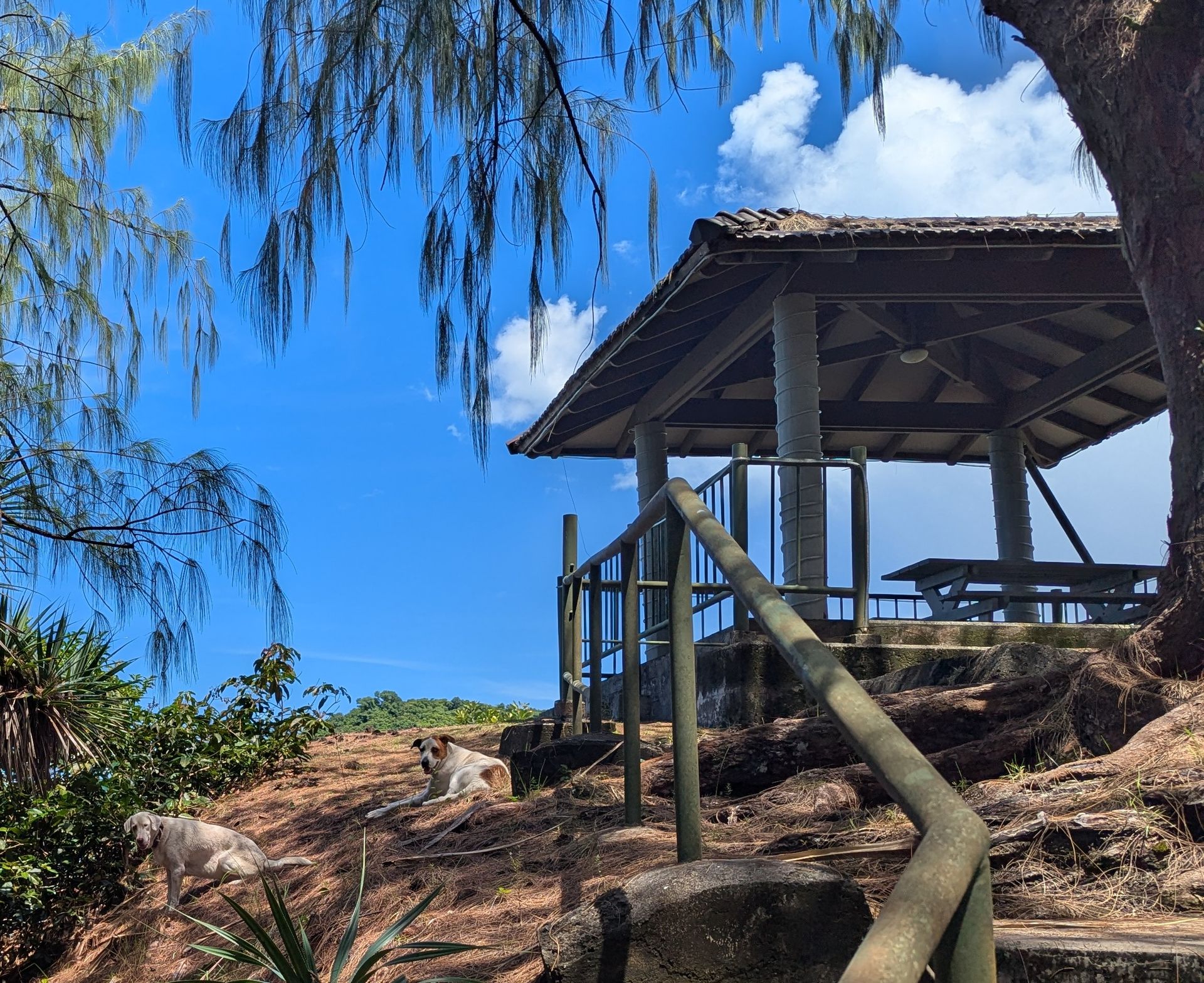
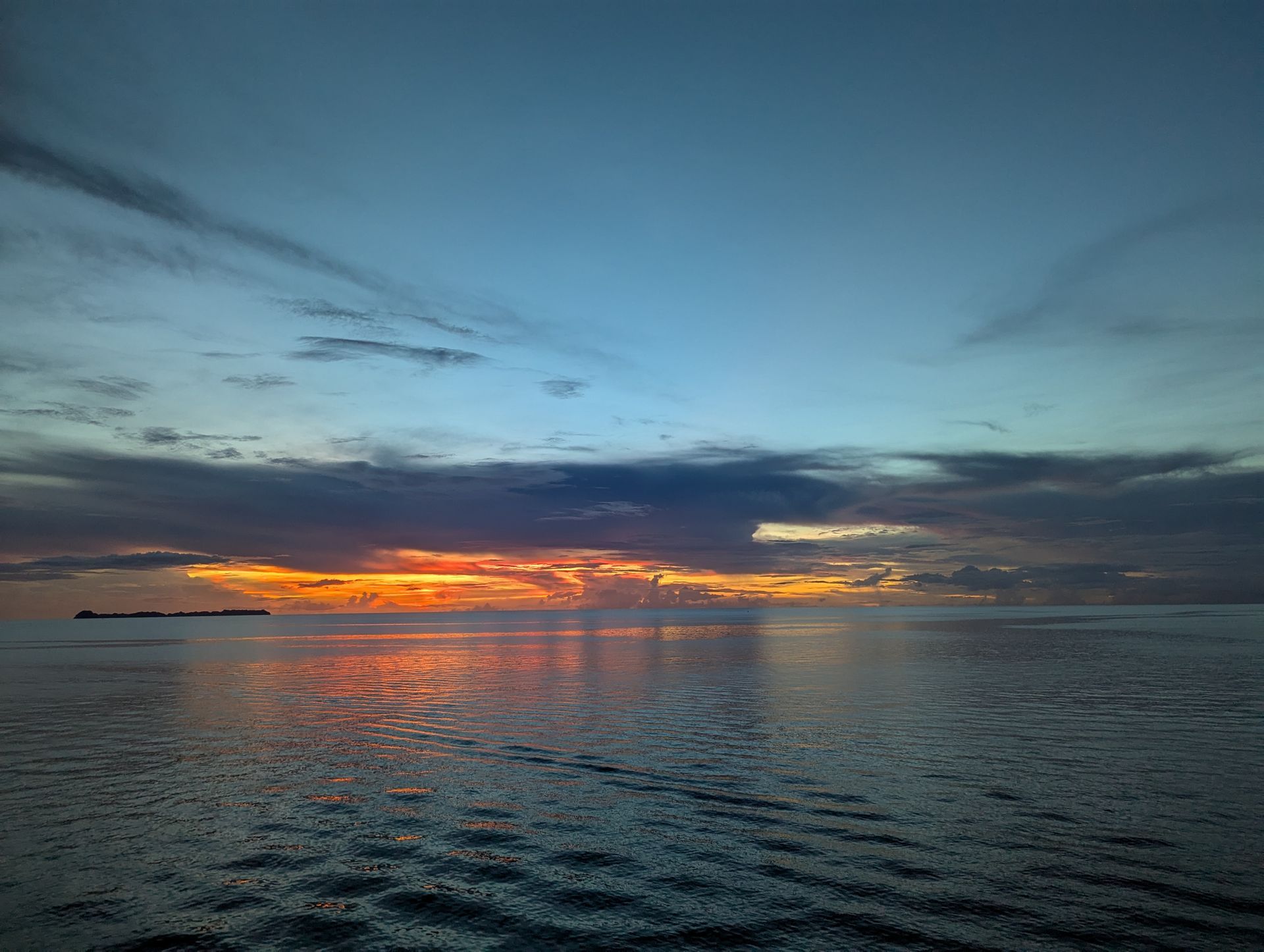
I accepted their polite departure and climbed the rest of the way up. My efforts were rewarded. Below I could see our ship in the distance and beyond a rainstorm on the horizon. All around were the rock islands of different sizes and shapes, dark green domes of vegetation supported by black volcanic rock rising from turquoise water. They developed where tectonic plates had met, subducted and erupted creating a spine of volcanic action. The limestone that had been forming from degrading coral reefs for millions of years had been pushed up to make a chain of islands. They have since been shaped by time, water, storms, vegetation and nibbling sea life into rounded mushroom like forms.
Palau has a compact of free association with the United States which gives them military protection in exchange for the US to establish military bases on some of the islands. There was a large US military presence during WW2. This resulted in a significant presence remaining. This boosts the economy but is described as a double edged sword. Everywhere the soldiers go, more bars pop up, tensions rise and there is human trafficking. The soldiers are only stationed on the islands for a short time and they have no stake in the country. They are not concerned about their behavior and what they leave behind.
Health insurance for the local people is said to be affordable and there is public school and free community college.
We took the shuttle bus into the city of Koror and walked around. Most of the shopping is in a two story building that is referred to as the Mall. A grocery store shares the main floor with a pharmacy, a shoe store and a department store. The second store has a sports shop and the Taiwan embassy. We decided to visit the embassy. A secretary greets us and informs us that the ambassador is not available. Jeff asks her if we can tell her what we would have said to the ambassador and if she would take notes and convey the information. She agreed.
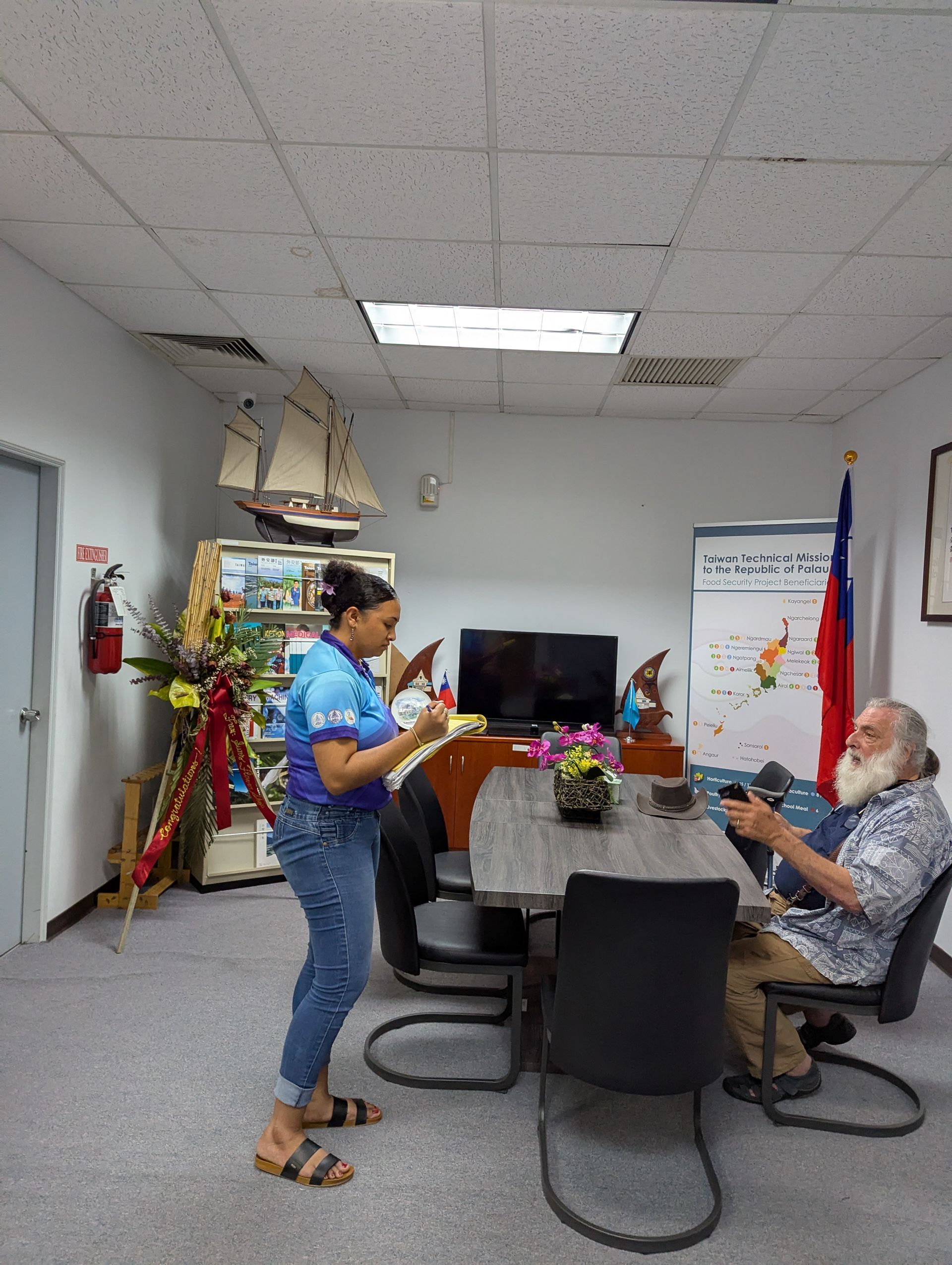
Jeff gives her the summary about the Parallel Currency concept for basic needs and asks her to put it in her own words. Which she does with only some prompting. Then we leave.
Walking the deteriorating sidewalks of Koror reveals a few gift shops, bars, message parlors, small neighborhood markets and a large Chinese restaurant that offers a unique variety of sea food and coconut crab as meals. The crabs are in their own separate buckets with their own half shell of coconut to nibble on. They are surprisingly large, about a foot of glossy dark brown curved shell, with many pincered legs emerging. I imagine the trauma of encountering one in a palm tree. Fortunately they move slowly.
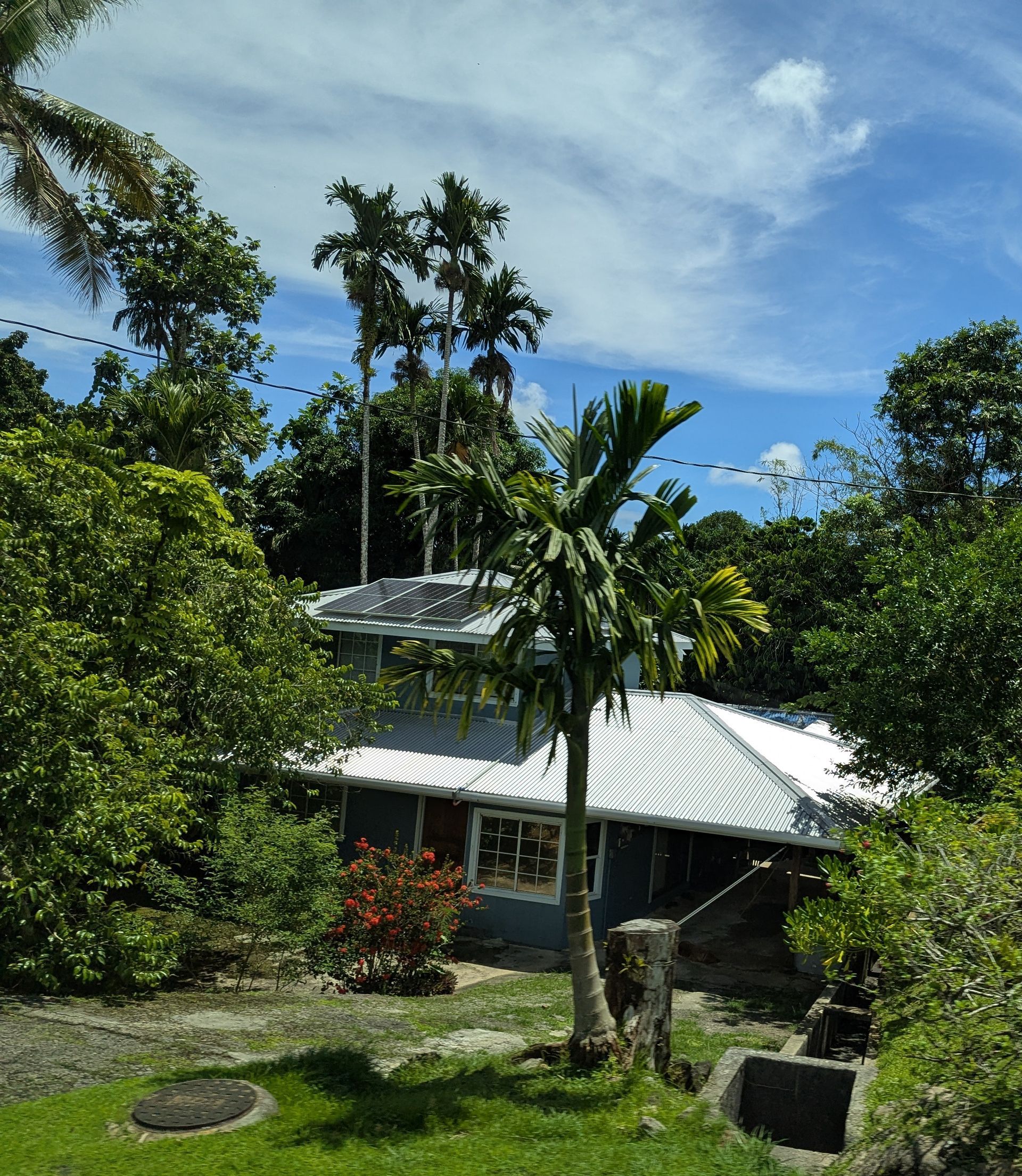
We notice that most of the local people live off the main street in homes and apartments without luxuries or resources to do repairs. Further out of town, overlooking the ocean, are a few nice homes with privacy.
We make our way to the museum. This is an eye opener in many ways. In particular the misunderstandings and mythology surrounding childbirth. Story boards, flat iron wood boards carved in low relief with legends and events, are promoted to tourists as souvenirs. But the carving of these small boards is a relatively new activity introduced by the Japanese artist Hijikata Hisakasu, in the 1930’s. Originally the stories were carved and painted onto the eves of the men's meeting houses, called bai. The beauty and interest of these painted images was recognized and the possibility of marketing them to tourists in a portable form arose. The carvings can be incredibly intricate and exceptionally beautiful. The stories are fascinating. Usually a mythical creature is involved or a fantastical event is depicted that brings the story to a satisfactory conclusion, trees can give birth to fish, a spider advises that natural childbirth is healthier for women than routine cesarean section and a little boy sinks an island because he got too fat.