A Thread for Humanity
A Thread for Humanity
The world economic fabric can only work if there is a thread for humanity,
or we are:
justifying the unjustifiable.
We must find a way to make our human experiment on Earth a success.
With our combined intelligence we can figure out a solution that does not involve wars and poverty.
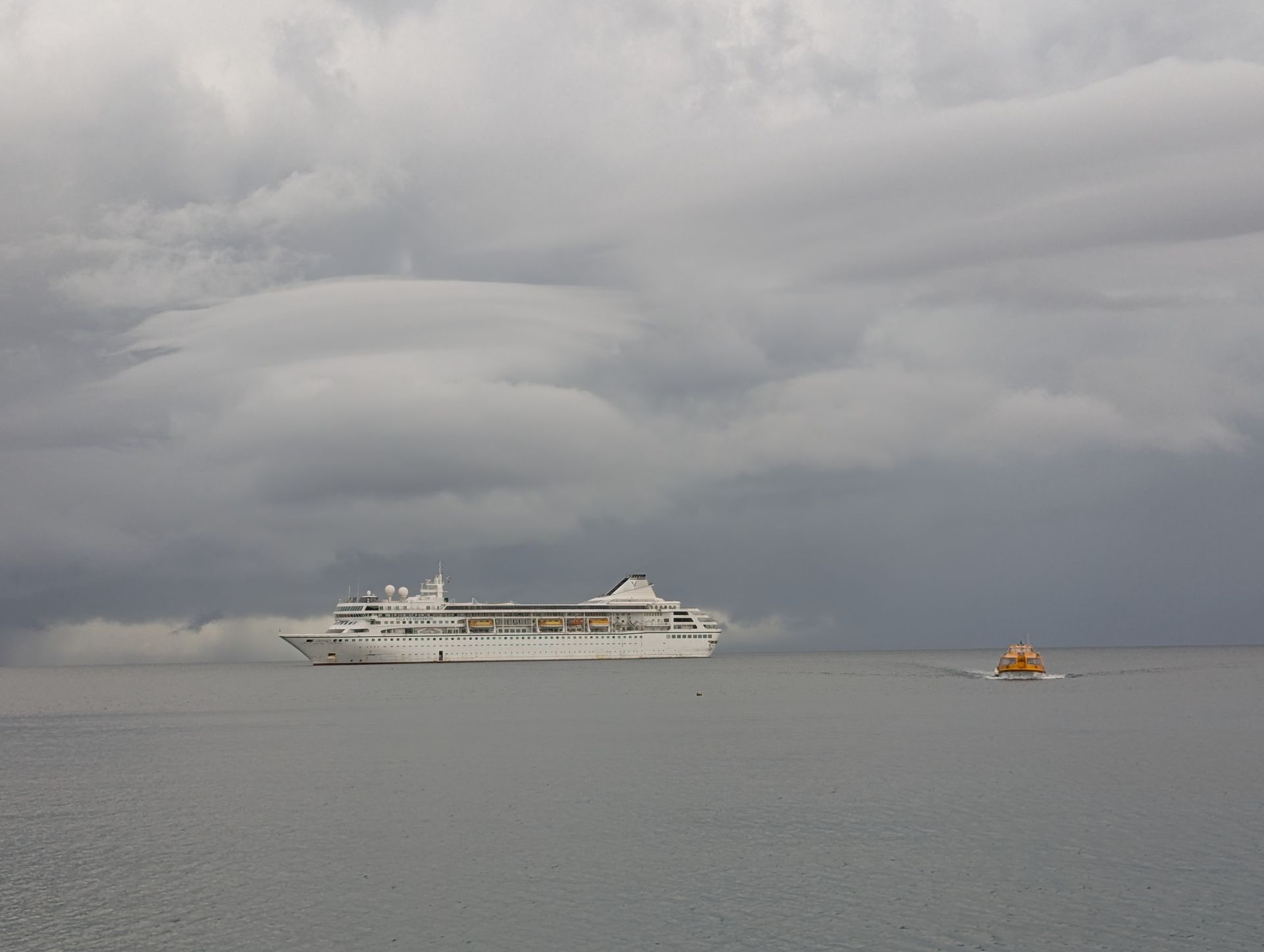
I had a conversation this morning at breakfast with an individual who just boarded the ship in Japan. He was offended by the English language account of the US involvement in Japan that he read at the Hiroshima memorial. He felt it was inaccurate and unflattering. This appeared to me to be the wrong thing to be reacting to so strongly. There is no way people are going to flatter a country that inflicted unprecedented violence and tragedy on them. Governments start wars and people suffer.
We have to stop trying to justify the unjustifiable.
There is a human part to war; it is not a virtual experience. No government has a right to maim and kill its citizens, or those of another country.
We have come to a point where no person or country is so remote that it is unaffected by whatever wars and economic oppressions are presently happening, either directly, indirectly, physically or emotionally. An agreement is necessary to make sure every individual has a road to self sufficiency. Like a seed placed in the ground. Agreement on a good course of action will grow a little at a time. One conversation at a time. Governments will not originate this kind of agreement, they need to be guided by us.
We may feel discouraged because there is so much disagreement at this time. But we have done and still do difficult and seemingly impossible things together every day. Adjustments that make life possible. People just get on with it, in spite of governments, in spite of politics or money. We have a cohesive, intelligent, subconscious agreement to cooperate so we can move on, survive and continue, not to Nirvana or Utopia but to the evening, to the next day, and through that. For instance, the double line between two directions of traffic. We agree not to cross it as we travel at high speeds past each other. We are making a survival decision. We know that if we cross that line it may result in our death, the death of another person or both. Even in a traffic jam when patience is strained, we wait. Few people will break from the line and try to drive on the shoulder. We wait not because we are mindless followers, but because this is what a frustrating situation demands. Our turn will probably come. When we get near to escaping the congestion we often exhibit generosity. No one is to blame, we are ‘in the same boat.’ “You go, I will go next,” you think in your mind as the lanes blend and you let a vehicle taper in ahead of you. You don't care about what sticker they have on their bumper and whether you agree with it. This is how we progress till finally we are free to go our separate ways. This is freedom. Not the freedom that is promised in constitutions and propaganda. This is a kind of freedom formed by agreement with fellow humans. And you know it is real as you drive away from the congestion, open your window and the fresh air blows past your face.
This is the subtle kind of freedom we have cultivated together through careful evolution as we encountered obstacles, major and minor, for thousands of years. The result is that we have built enough safety around our humanity that occasionally individuals can have a chance to express themselves, meaningfully. Time to think and imagine. This is the ultimate freedom that is sometimes possible. A gift we can occasionally give with cooperation that relieves tension and conversation that builds acquaintance and familiarity. Made possible through consensus and our common ability to compromise and connect.
An important conversation people need to have now, so that further agreement is possible; is understanding how they are being affected by World Economics. Are things getting better for most of us? Or just a few. Why? Ask yourself, what is money? Is there a way to use money so that it provides essential basic human needs to everyone, food, shelter, education and healthcare, at no cost to them? This is the tread for humanity that is missing from our economic fabric.
Today, World Economies do not significantly value humanity or nature. They are both used only as resources that can make profit for companies, governments and countries.
Consider a Parallel Currency. Leaving the existing currency patterns in place, and adding a separate currency dedicated to basic human needs, food, shelter, education and healthcare. This sounds very simple and you might ask,”why hasn't this been done before?” Because our modern economic systems' main focus is profit making and because we have not had instantaneous communication for very long. Also, the need for this has not been as intense as it is now with populations more than quadrupling in a generation. Today, ideas can be introduced quickly Worldwide and considered by billions of people.
Profit from the basic human needs can only be made by making these things artificially scarce and their prices high. This stops a huge percentage of people from even surviving. Economics has become a danger to us all as we move through our lives. We are being forced into competition with each other for basic needs. Money in exchange for human survival has the long-term effect of stifling social development.
Poverty has only been thought of as a natural human condition for possibly several hundred years. For thousands of years we cooperated and made sure that everyone in a community had basic needs. There was not a word, poverty. Our populations were small and every person was valued. Now our populations are huge and through profit economics, basic needs are monetized. If you can't afford them you and your family don't survive.
We can create and spend money for whatever we choose. With a Parallel Currency dedicated to basic needs that is destroyed after use, inflation is not an issue. Taxes for these needs and services are not necessary. The money can be printed as needed and cannot be saved or invested. A Parallel Currency will provide basic human needs to everyone, not charge people for them as we do today. This is vitally important because our survival is at stake.
Communicate with each other about how you would like to see our future evolve. What people agree upon becomes a direction. Imagine how a Parallel Currency for basic human needs would change the economic equation and its results.
With a common direction we can go forward and recognize the obstacles to avoid. As momentum builds and we approach closer and closer, we will know we have arrived when, some fine day and into the future we will never hear again, “If I can't work for money, my family will starve.”