Chapter Four – Costa Rica (4/25)
Preface
Dear reader. These journals may feel critical and reveal too much of the underbelly of the countries I am visiting. My intention is not to write a travel journal that invites you to leave your lives behind and drift into other cultures finding and sampling their delights. I once heard “travelers' tales” described as seduction.
I am writing from personal experience of a small sample of these countries. The portion that accumulates at the ports and harbors. With an eye to the impacts on these countries of our global economy. Our ship is basically following the routes of containe MOr ships and oil tankers. We dock where they load and unload cargo. We, as passengers, are also defined as cargo in transit. Another kind of stimulation to the local economy. We buy diesel fuel, water, and food for the ship, and unload garbage. Passengers go to restaurants, buy gifts and tours.
I am viewing the life accumulated in these port towns and their vicinity as a microcosm of the country I am visiting. It is from this point of view that I write. I apologize for any omissions due to my shortcomings. I am trying to be true to what I see from where I am. I am only a visitor too.
CAW, chapter 4
Costa Rica, 4/27/25
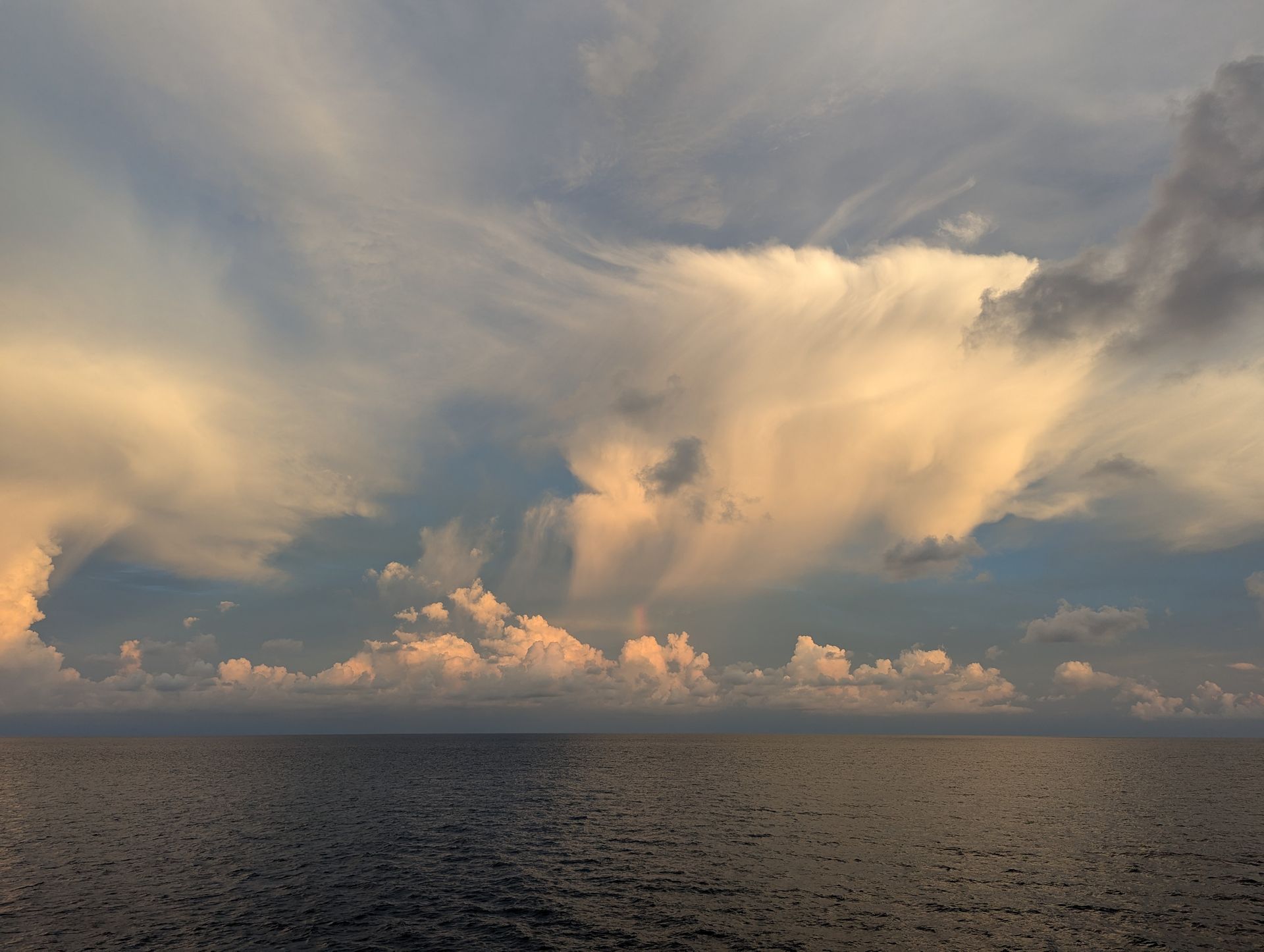
We approach Quepos, Costa Rica on the largest and deepest ocean on the Earth, the Pacific. It averages around 14,000 feet.
We glide past four gulls who observe us as they ride the swells on a floating log. Costa Rica appears very rocky and mountainous. Waves halt at its rough edges, climbing bright white before they subside.
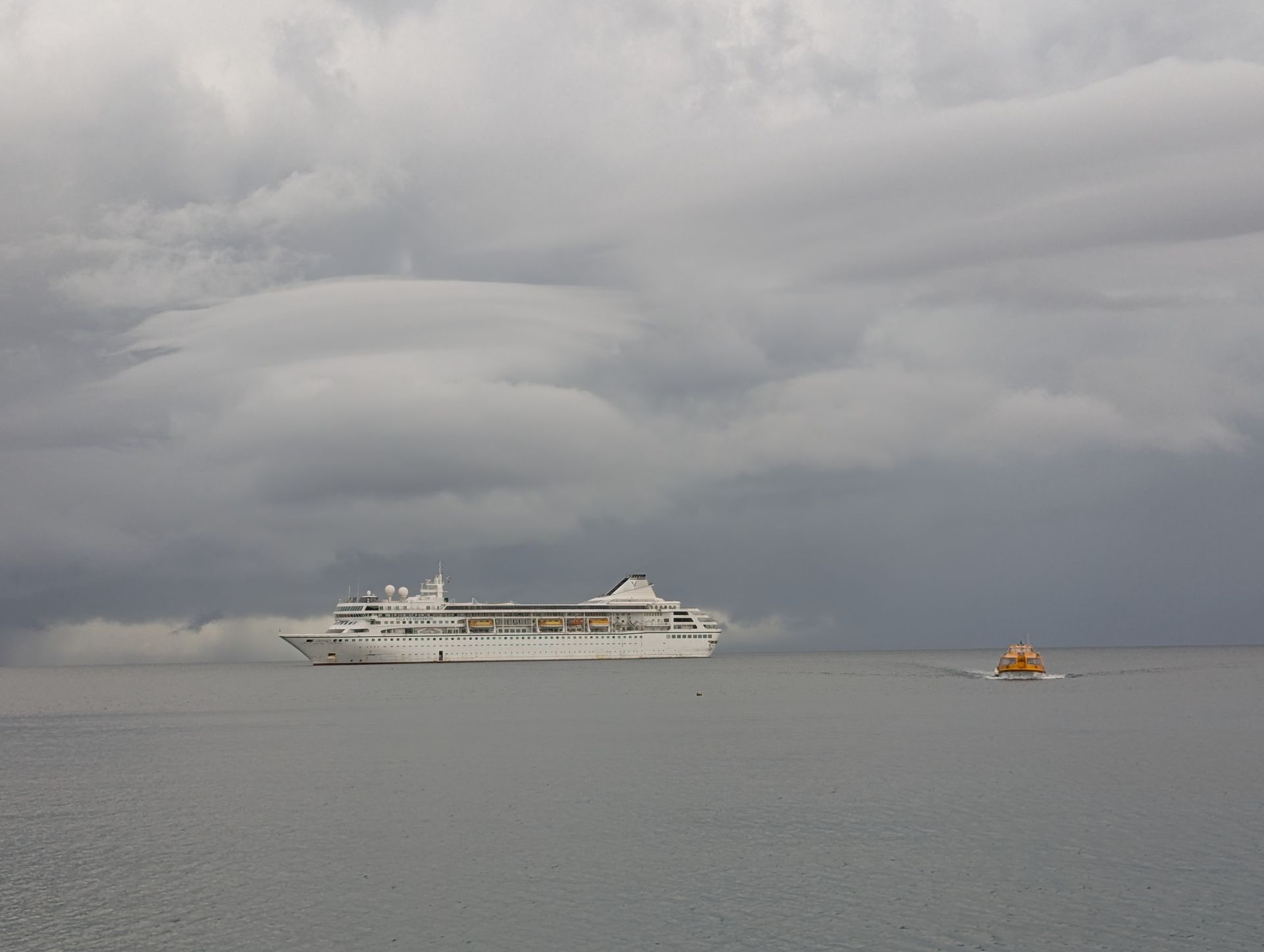
“We cannot play against Nature.” Captain Val has announced. The swells are too high to use the tenders from our anchored ship and go ashore. We will go and dock at the port of Puntarenas Costa Rica, an overnight trip.
4/28/25 We walk into town from the ship. It is very early, 6:30, because we have all been asked to disembark. There will be a US Coast Guard inspection of our ship today in anticipation of our entrance into the US in June. Around 2:00 we can get back onboard.
In town we are instructed by a local tour guide,
“Go to the left, to the left. More things to the left. Nothing to the right.”
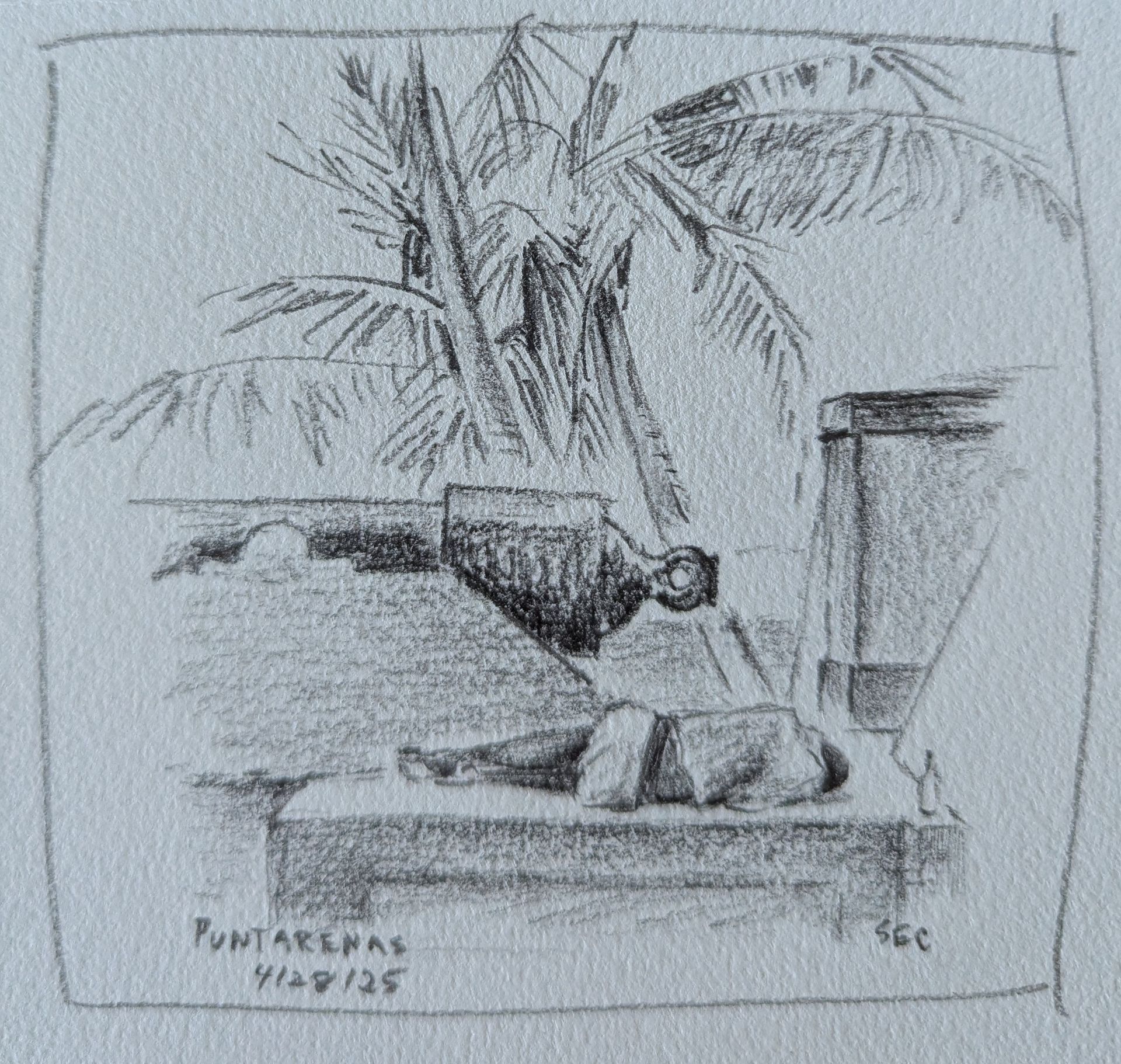
So we go to the left. A man is sound asleep under one of the cannons that memorializes the past colonial dominance of Spain.
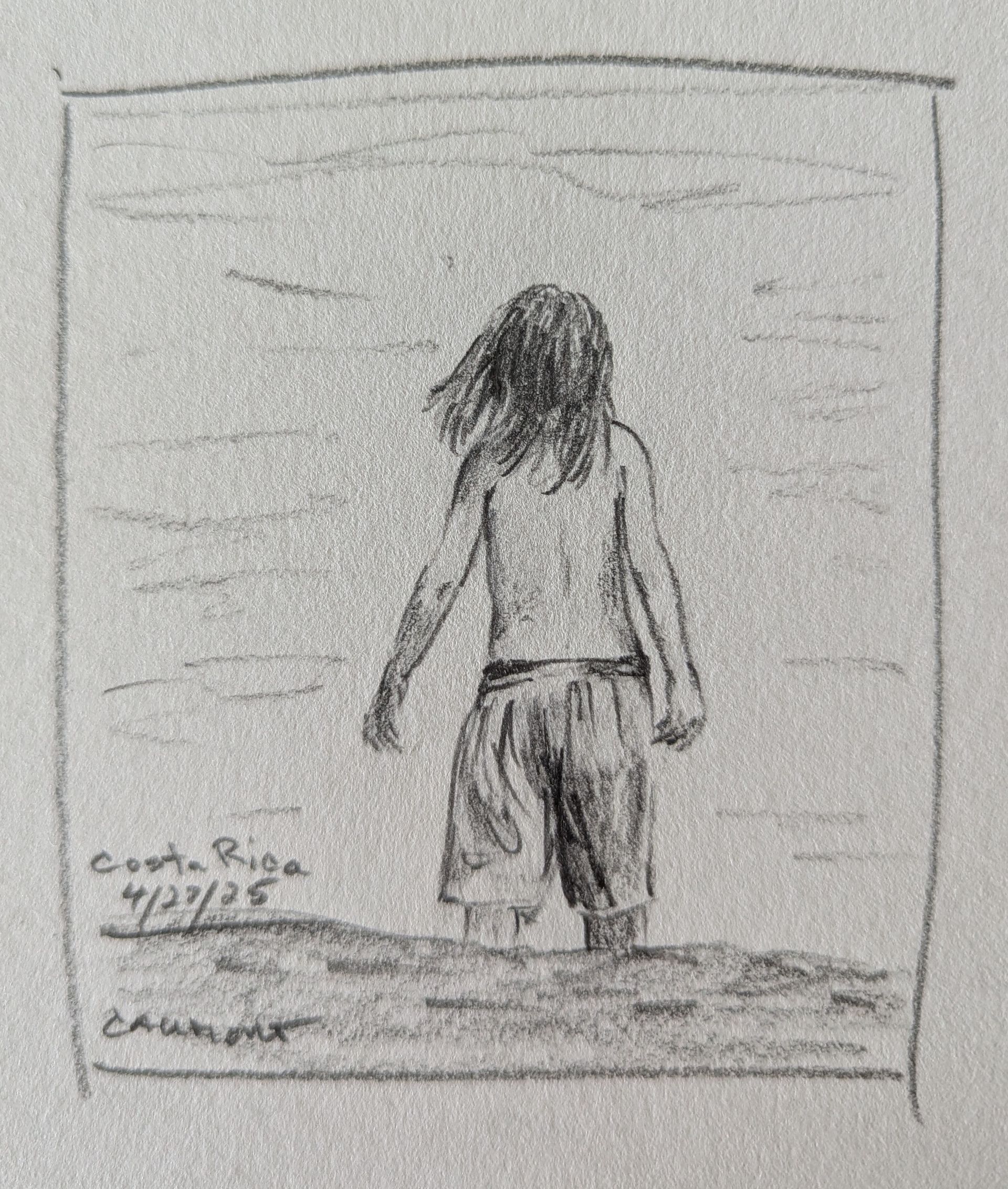
We sit for a while and watch the ocean. A bird laughs at us from a tree. The sand is grey/brown, tinted by the grinding action of the waves on black volcanic rock. The waves roll in with long heaving sighs, curl to shore then intake and withdraw. A young boy with shoulder length hair ( his skin the color of the sand under his feet) stands looking out at the ocean. He points then looks back at his family, smiling.
Costa Rican citizens pay into the system as workers, then get free health care. Education through college is free if you make the grade. If you fail twice, the student is thrown out of school. There are private schools, you can pay for, that are not as strict. There is 99.7 percent literacy, 87 percent have college degrees. They abolished their military in 1947. Clearly they don't plan to fight anyone. Jimmy, a tour guide, excitedly tells us all this. But what we see as we walk around is very different.
We visited the aquarium, which is, “To the right.” Built about 23 years ago and intended as a rescue facility. It was beautiful when first built but now everything is worn and some things are not working and some animal enclosures are empty. The fish, turtles and one crocodile are well taken care of but the infrastructure is falling apart. Workers are fixing the plumbing.
The situation is similar at the port city. Things worn out or out of use, a nice open theater is deteriorating. People sleeping rough on the beach. Individuals and families approach and ask for money. “ I am a single mother…” A lot of garbage has washed up from the ocean onto the beach and into town. About 20 local people have assembled to pick it up. But two blocks further into town huge bags of uncollected garbage and unbagged mounds rest on the sidewalks. Run down rows of houses, some advertising apartments for rent. A small grocery, pharmacy, and a hardware store are the rare commerce along with tiny breakfast/lunch & drinking places. Few locals speak English. The taxi drivers and tour guides are fluent in English. They want to take you into the interior (they carry a brochure of pictures to show you) where you can see the wild animals at several national parks, ride zip lines, walk boardwalks into the clouds, go on a scenic open boat tour and eat at a fancy restaurant. “See the crocodiles!” Other options are to rent a luxury bed and breakfast or Villa. But you must make online reservations ahead of time.
There is affluence here but not for the majority of the people. We are finding this to be the case in every country we have visited so far. A combination of the debilitating impacts of colonial slavery revealed in the present and modern Global Economics imposing its trade imperatives are seen everywhere.
At Sea
“We are trapped.” Anna Maria, local woman
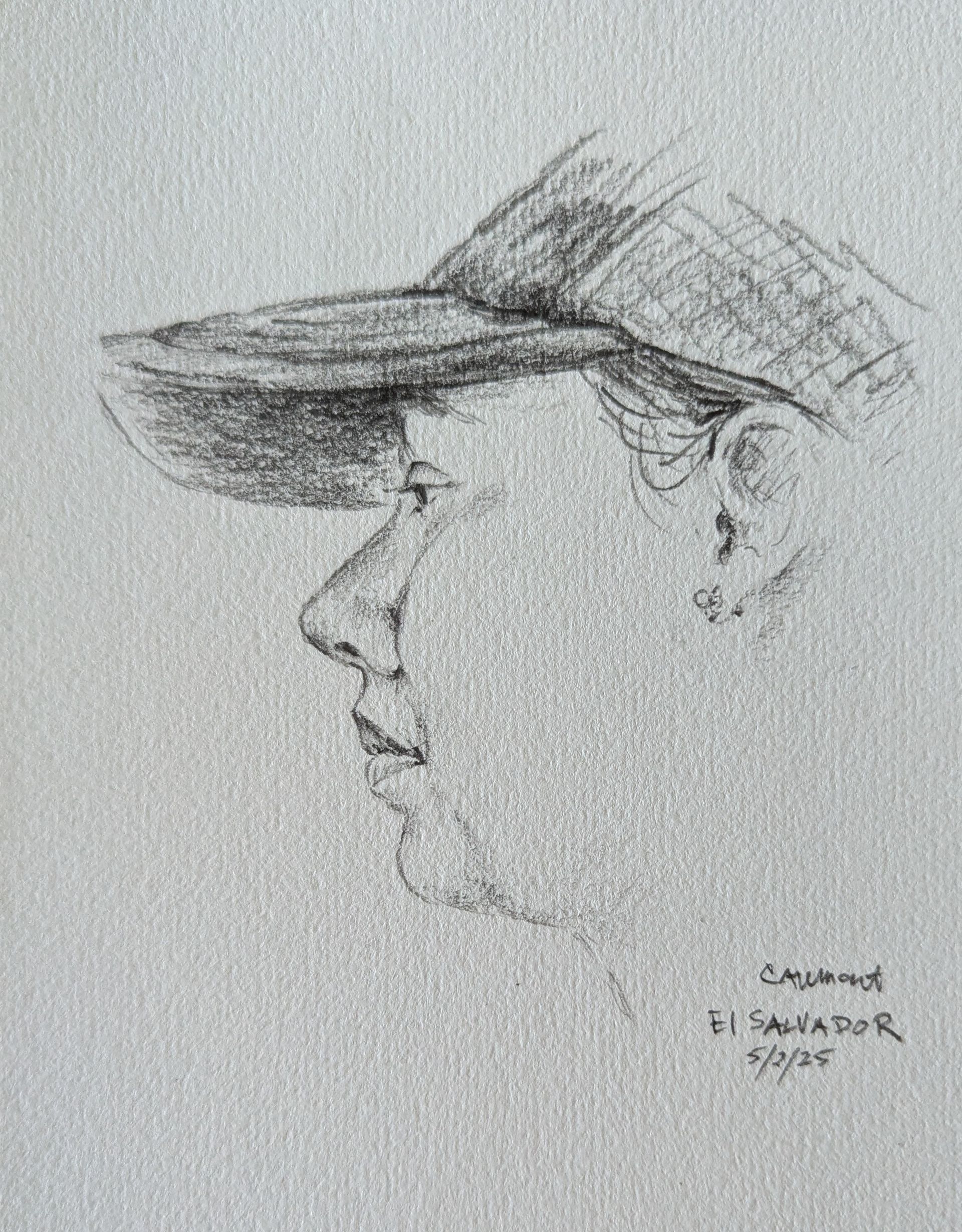
El Salvador, 5/2/25
Presently, El Salvador is absorbing Venezuelan “illegal immigrants and criminals” from the US. ( A new revenue stream for the country). They were expelled by executive order of our US President, into the Terrorism Confinement Center in Tecoluca, El Salvador. Even legal immigrants are being “picked up” and deported without due process. The Alien Enemies Act is being invoked as the US did during WW2 when citizens of Japanese descent were ‘rounded up’ and placed in concentration camps in the US. The difference is that the US is not at war.
We are docked at the port of Acajutla where El Salvador’s oil refineries are located, 2 main ones, a Chevron lubricants plant and a diesel gas terminal. You can see the grey blue silhouettes of at least a dozen tanker ships waiting on the horizon to come in and get filled. Our ship is being filled with diesel.
We will disembark, walk around and talk to people.
We interview a young woman at the dock (Anna Maria). Gentrification is damaging the country, she says. It's too expensive for most people to buy a home or rent. Education is free through secondary school but college requires passage of a strict exam to get in and very few qualify. This is necessary because so many want to go to college but there are very few state colleges. There are private ones but too expensive for most of the population. No healthcare if you don't have a good job. Anna Maria works for the government and still can't afford to buy a home. She lives with her mother. She learned in grammar school that 16 families own the whole country. In recent years international investment has come to buy up attractive real estate from local families (making those families millionaires). The investors then build luxury villas and B&B’s to rent to tourists, driving housing prices too high for locals. No $500 a month rent anymore. Now 160 families own 87 percent of the country.
“We are trapped.” Anna Maria says.
In the evening a highschool band played for us on the dock below our ship. All boys except two girls on saxophone. Drums, trumpets, bassoons, a clarinet, and metal grater like tubes that are stroked with a stick making a metallic blend with the rest.
Some of our fellow passengers are dancing.
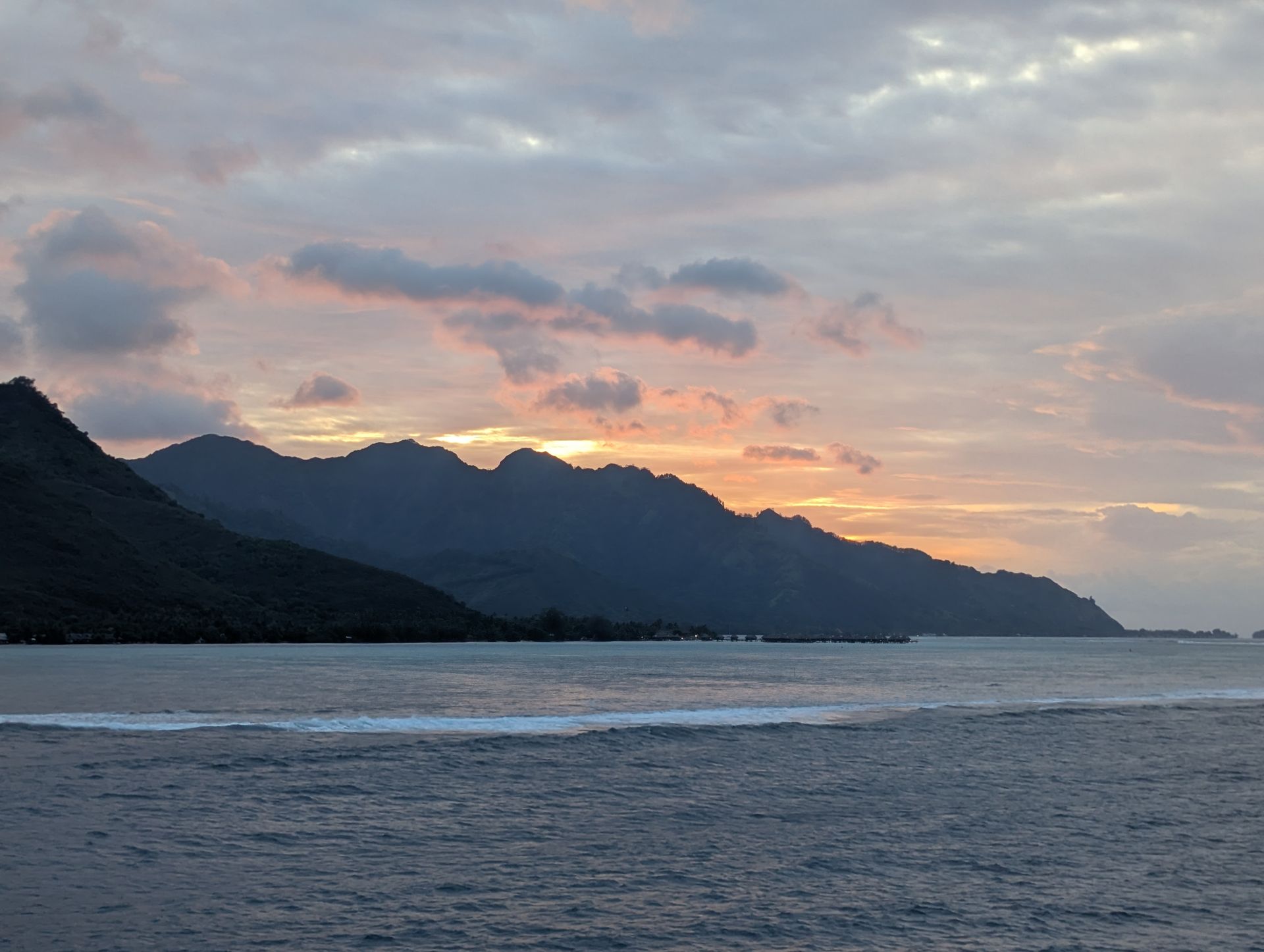
As we listen, the sun disappears. For a moment it is a perfect red ball held at the blue grey meeting of sea and sky.
At Sea
Guatemala, 5/3/25.
At the port, Amis Hero from Panama is unloading coal. Three tall cranes move independently up, down, over and down like they are controlling puppets below. From another view I see that huge buckets hang from their cables. They dip into the hold of the ship, grab the coal, bring it up and drop it into a huge hopper. The coal then works its way up a long rail to be dropped onto mountainous coal pyramids below.
Guatemala does not produce coal but imports it, mostly from Columbia and the United States, for its domestic electricity generation.
Containers are off loaded here too. Several acres of them are stacked 5 to 10 high and enclosed by a 10 foot concrete block fence that is topped with 10 feet of chain link fence and razor wire on top of that. This is the first time I have seen security like this for containers.
We spoke with Cesia Lopez, she learned English by listening to it spoken while she worked in a shop. She told us that there is free education. But the colleges are located in the city, where students must pay for food and rent (between $1,500 to $2,000 a month for rent) There are not enough jobs. So graduates leave to find jobs in other countries. Healthcare is expensive. It is cheaper to live in the country because they can provide their own food with gardening and agriculture.
Outside investors are buying land from locals like in El Salvador. They drive up the prices of housing with luxury rentals and expensive new homes. Young adults, with their own young children, live with their parents.
The local women make amazing weavings and intricately embroidered fabrics and offer them from multiple open markets. “You buy, you buy.”
“Come! you look.” Bargaining is an art form here. The vendor suggests an outrageously high price then, as you keep refusing, successively lowering it till, finally, it is less than half of the original price requested.
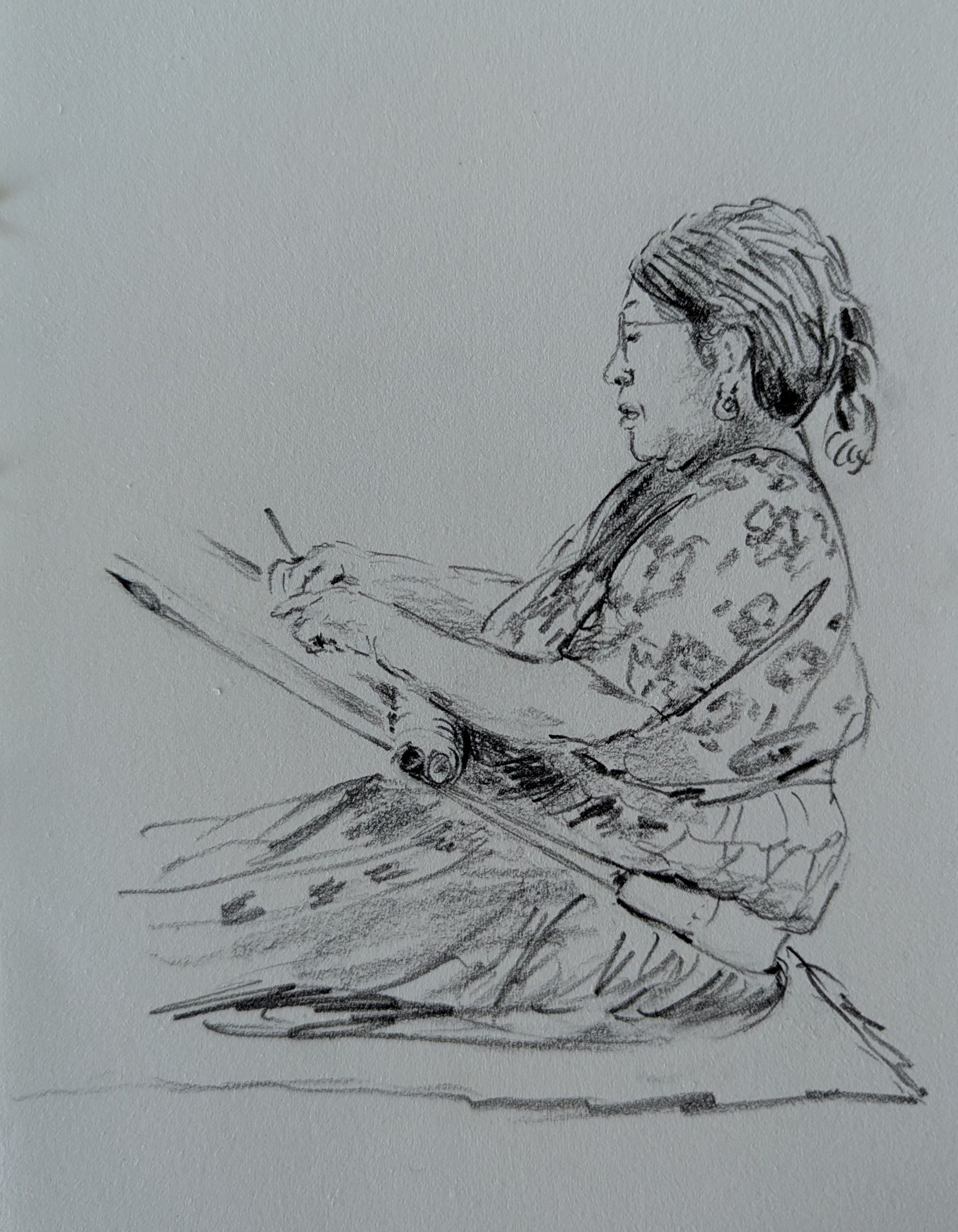
Bright colors are everywhere. An elderly woman sits on the ground weaving on a backstrap loom. A technology that was invented thousands of years ago by native women of the Americas.
A group of birds has formed a funnel in the sky. Round and round they spin. Not a murmuration like starlings make, this is different, more designed, not freeform. Similarly, we also get sucked into our own little coves, circulating.
Now we are on our way to Mexico. Our ship leaves a wake like a snail leaves its trail.
At Sea