Chapter Thirteen – Japan Part 2 (7/25)
Shizuoka
There are more “normal-shaped” people here, but still no homeless. With a little research I was able to find out why we see no homeless people. It is not because they are not here. The homeless rate in Japan is considered the lowest in the world, one person in 34,000. However, this count only includes those sleeping rough and excludes those who have no fixed abode but sleep in all night cafes, capsule hotels or cars. In 2002 “Special Act, in regards to supporting the autonomy of the homeless population,” was passed by the government. People without income, savings or prospects were able to receive livelihood protection but this was aimed mostly towards men. Traditionally, women are taken care of in their families. Women escaping domestic violence are able to receive support, refuges and shelters. Also minors are able to access child welfare institutions. Historically, men were the sole providers for their families and companies believe married men work better than unmarried men because the former feel more obligations and responsibilities. There is “ageism” prejudice not only toward old men but also unmarried men over 35 years old. They find it difficult to get jobs. The capsule hotels moderate this situation. For 1,500 to 2,000 yuan, 10 to 15 dollars per night, a homeless person can stay in one of these hotels with a shower, television, soft drinks and Internet. Capsule hotels started in Osaka in 1979. Since then they have spread to other cities in Japan and to other countries: Belgium, Canada, Hong Kong, Iceland, India, Indonesia, Israel, Poland, Saudi Arabia, South Korea and Australia, just to name a few. An indicator of this important population dynamic taking place now, Worldwide.
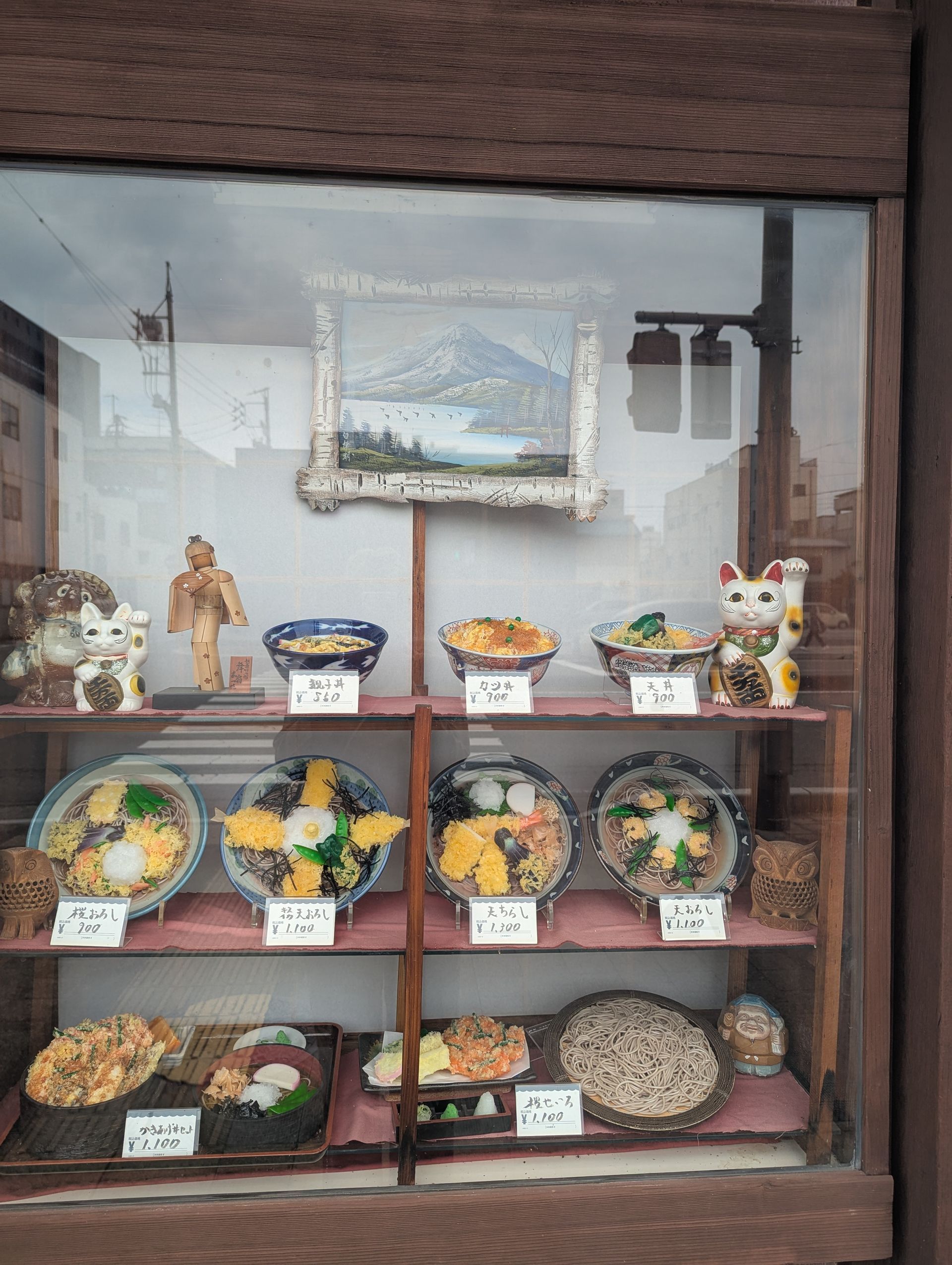
Here in Shizuoka we saw pleasure boats and lots of sailboats for the first time. There is a festival going on with many food trucks next to a carnival on the water front. The permanent carnival seems to be a feature of most large Japanese cities and always has a favorite ride, the Ferris wheel. All the festival vendors seem to be competing to construct the most beautiful confections made of shaved ice, colored syrups and cream. This is made extremely popular by the present humidity and 90 degree temperatures. Japanese cooks make food into art that can be eaten. Artisans even make beautiful fake foods and meals that are used in restaurant windows as advertising displays. Somewhere these artists are making castings of real foods in plastic, silicone and resin then painstakingly hand painting them to achieve realism. This art used to be done in wax, but proved fragile for long-term use. When plastics became available they were preferred. Always perfect, never eaten, never rot. Many tourists come here just to eat. They try the exotic foods that come from the sea, octopus, squid, pufferfish, eel, sea urchin and monkfish. Many dishes involve live or recently deceased seafood. This practice is referred to as Odorrigui or Ikizukuri.
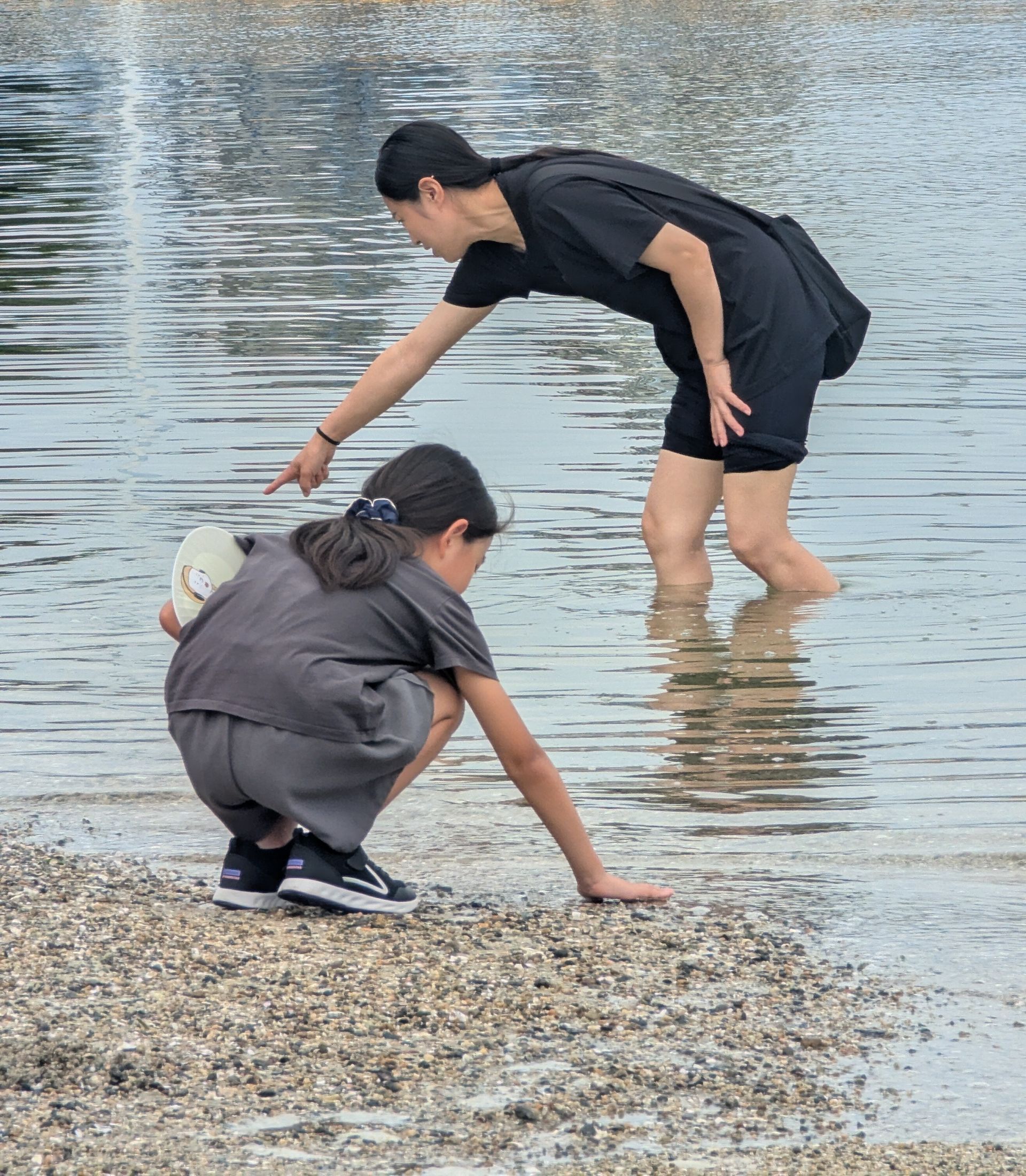
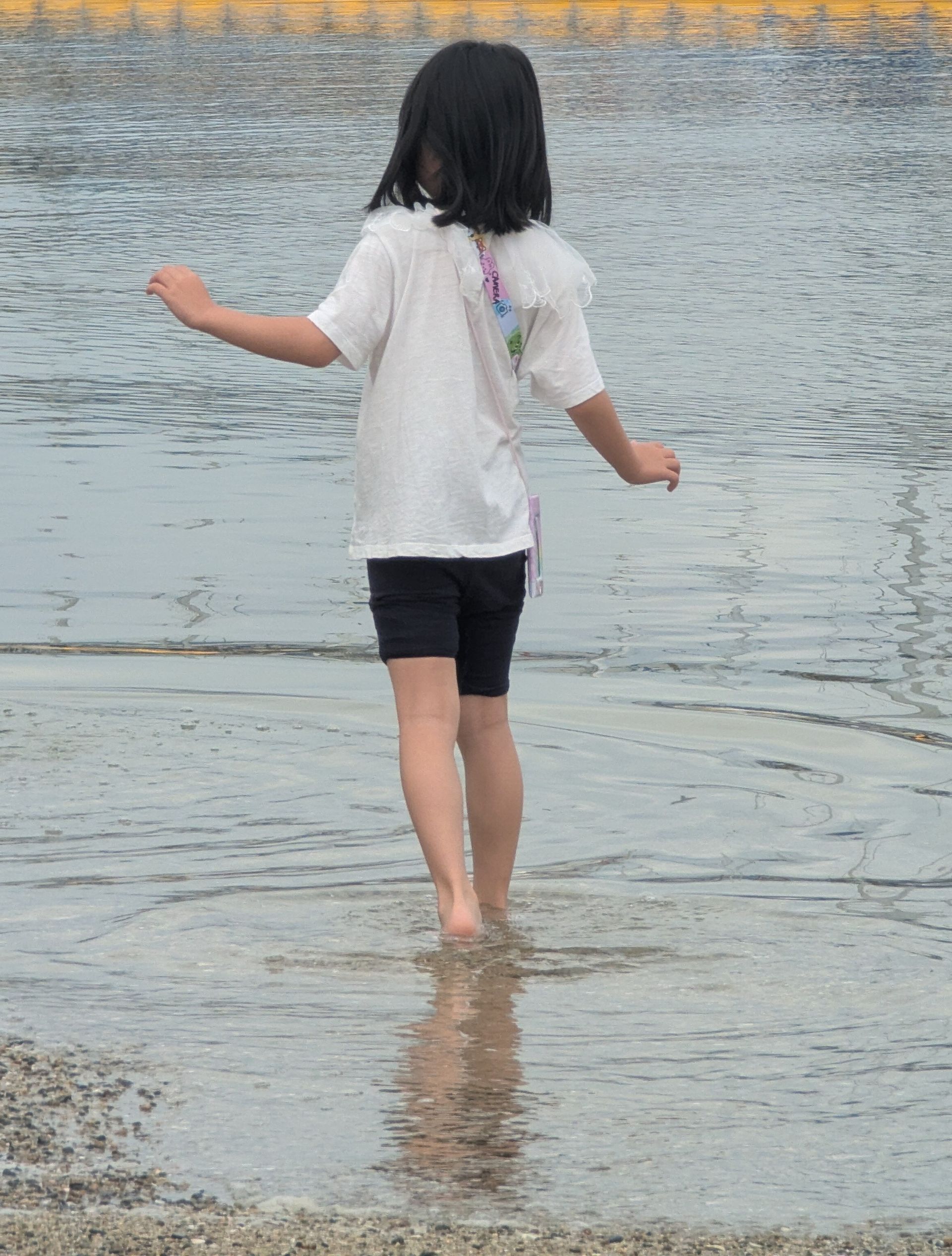
An area beside the carnival and festival where the water comes up to the sidewalk and a thin strip of gravelly beach is exposed, families with children and babies come to take off their shoes, roll-up their pants and wade into the shallow water. Some children have nets and try to catch the tiny fishes. Others peer intently into the composition of the beach, finding little shells and other things of interest to pocket. This tendency is a natural extension of the Japanese love of nature. The obvious monuments to this being their magnificent public gardens, everywhere.
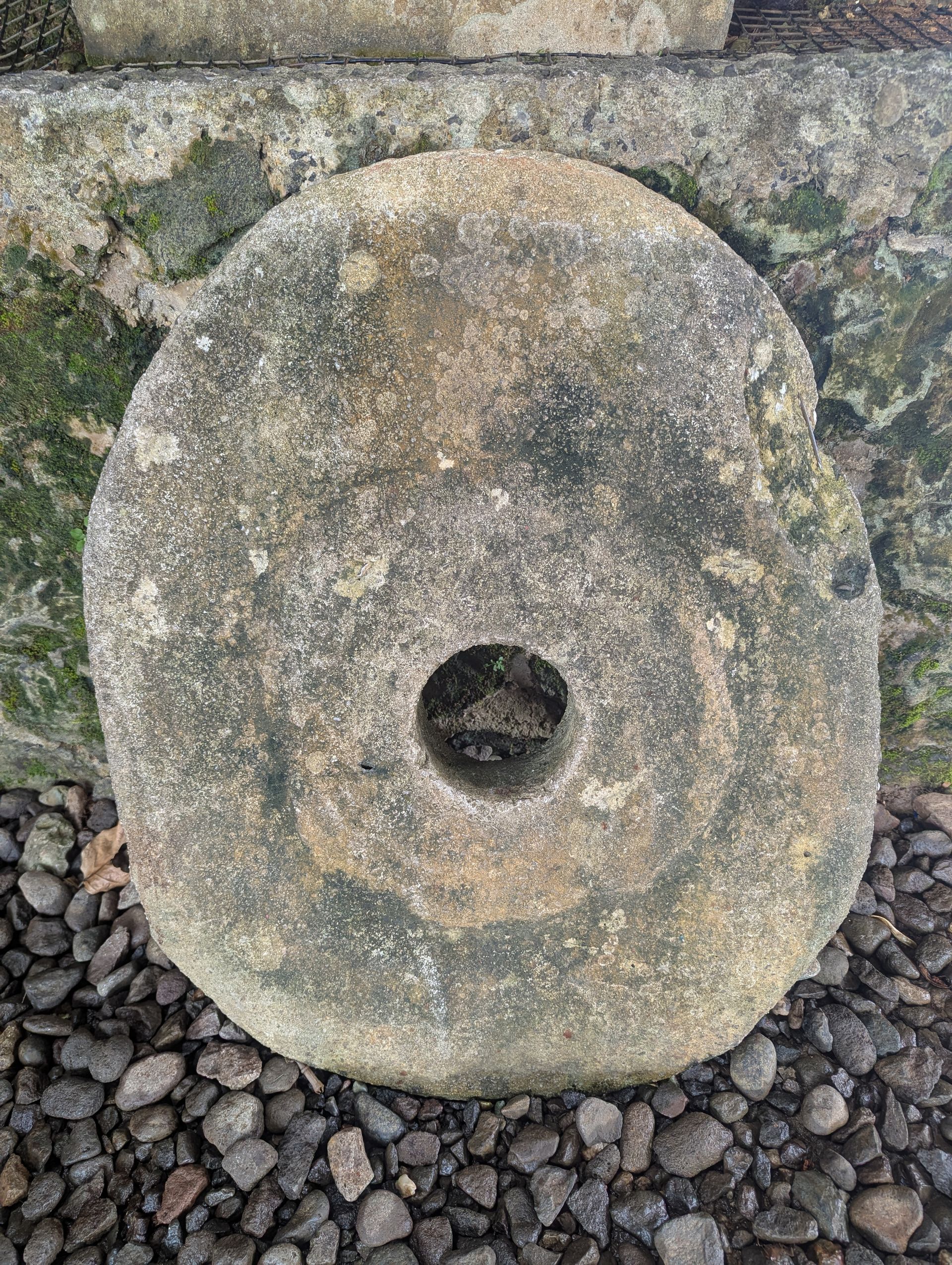
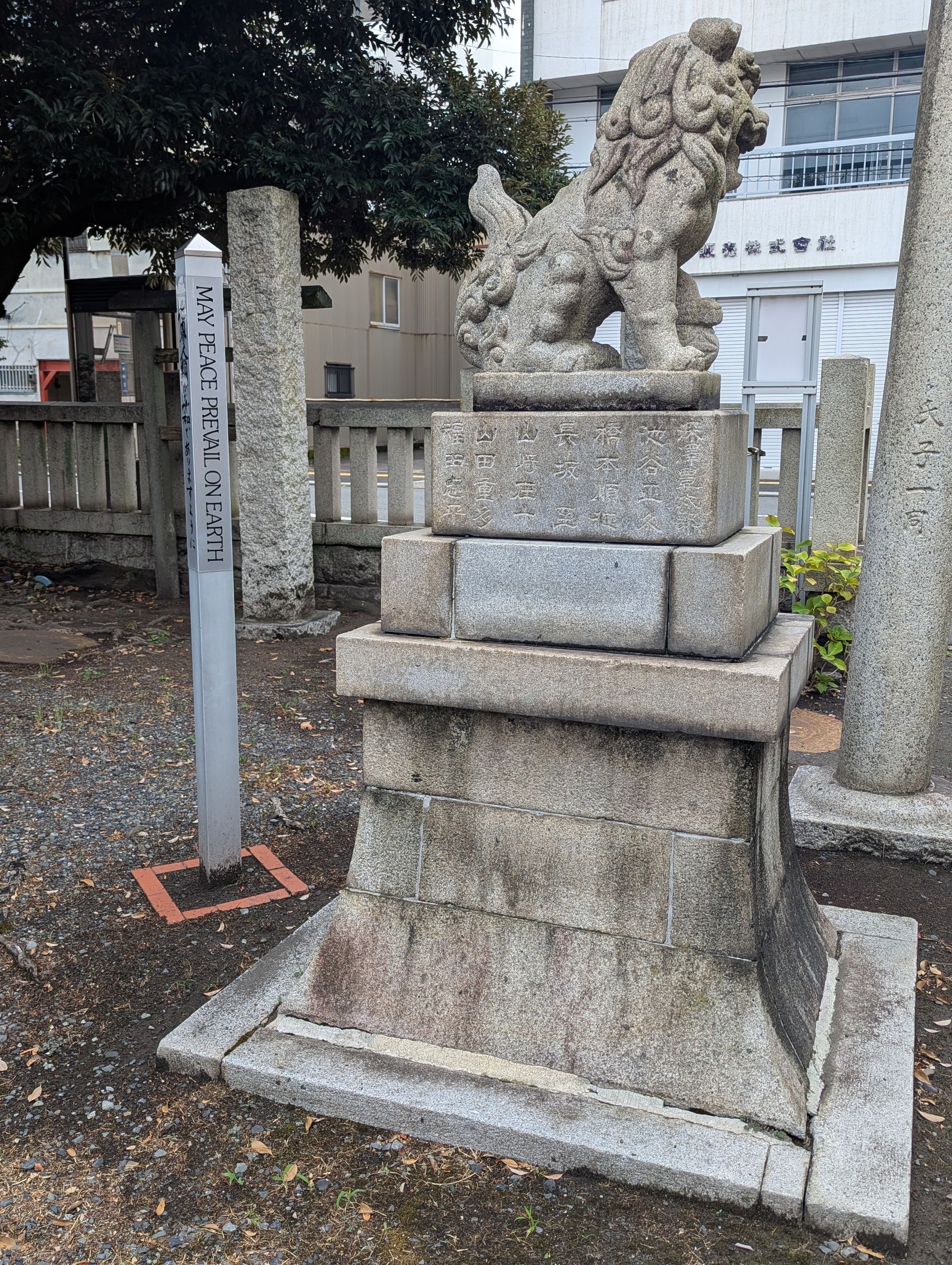
Like their spoken language, with no emphasized syllables, Japanese people don't like anything jarring, loud or unsettled. The only regular sounds that interrupted the downtown streets of Shizuoka were a quiet beeping at street intersections to alert walkers that they could cross. There is not a lot of traffic, people walk or ride bicycles. Occasionally an emergency vehicle passes. We found a temple wedged between a restaurant and a private home, closed and quiet. A large stone with a carved out depression that was filled with water rested importantly by the stairs that led to the doors of the temple. A long bell rope hung invitingly over the landing. Maybe we were meant to pull it so that someone would appear. We did not. Open, but not open, inviting, but austere, exotic and peaceful. A cat lay on the landing and watched us. At the entrance gate concrete lions were on guard, and a sign said, “May Peace Prevail on Earth.”
Kobe. This port is large and spread out. Cranes, warehouses, docks for barges awaiting cargo, tugs, ferries, small “ Maru” moving or docked, awaiting purpose. This is the norm wherever we land because we are docking most of the time at ports. Sometimes, if a city is not within walking distance, shuttle buses are provided or other options are available like taxis and rental cars to get around.
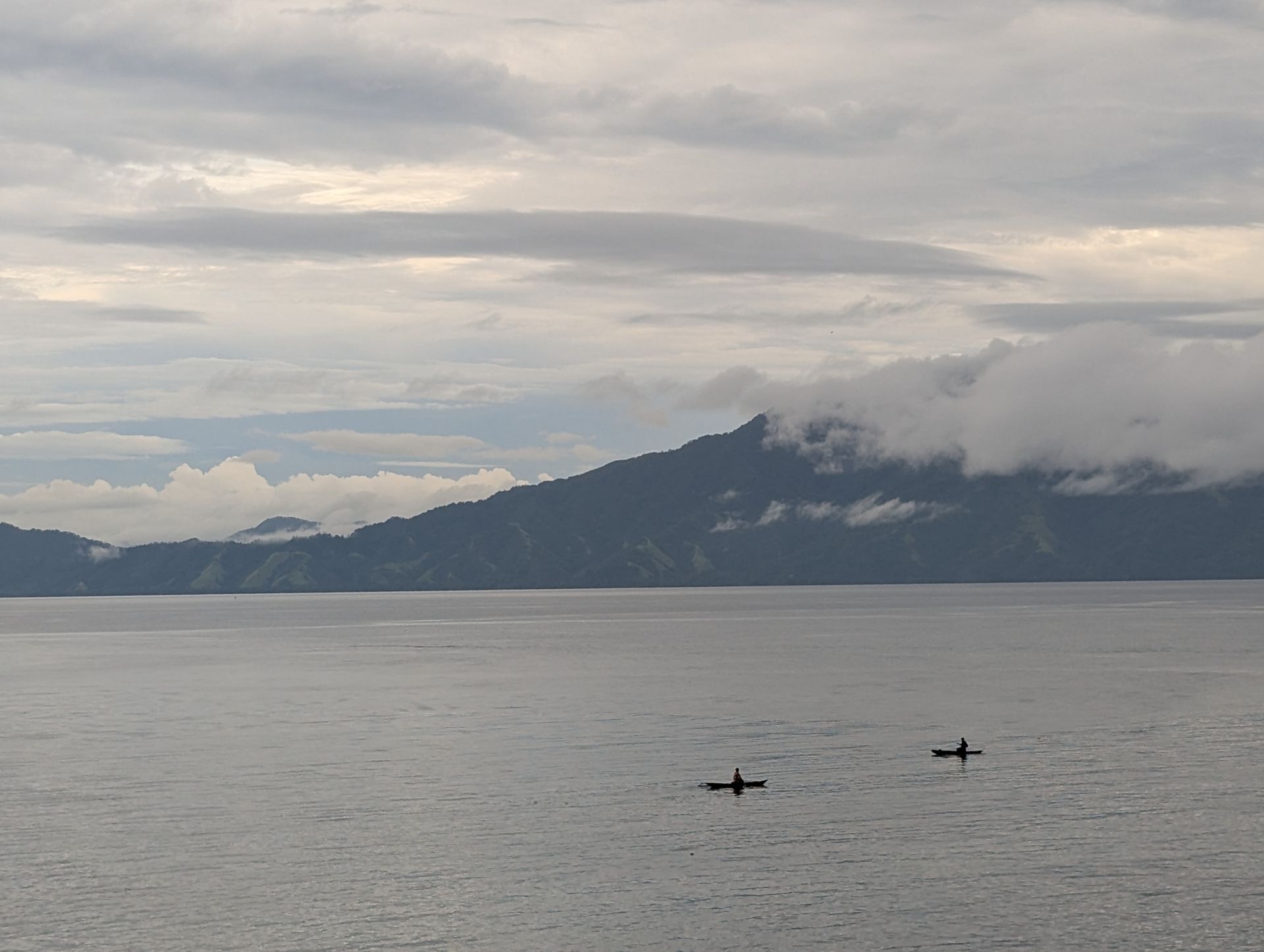
Now that we are docked, I can see the schools of little fishes rise, the water is so calm, like the surface of cooling milk tea. They would blacken an area with their thousands of tiny fin thrusts then disappear and rise in a group to agitate elsewhere. Something felt very Japanese about this. A moment complete, like haiku. Kobe is in the distance, its grey rectangular structures rise like a graph. I have time to observe the port because I have the flu and am resting. Fish jump here and there. One jumps from the water in ever shortening intervals, again and again, like a rock being skipped. Later, in the evening I looked into the dark water outside our cabin and noticed a light shining up like someone was underwater with a flashlight. It turned out to be a bioluminescent jelly fish. It uses chemicals in its body to produce light in order to lure prey.
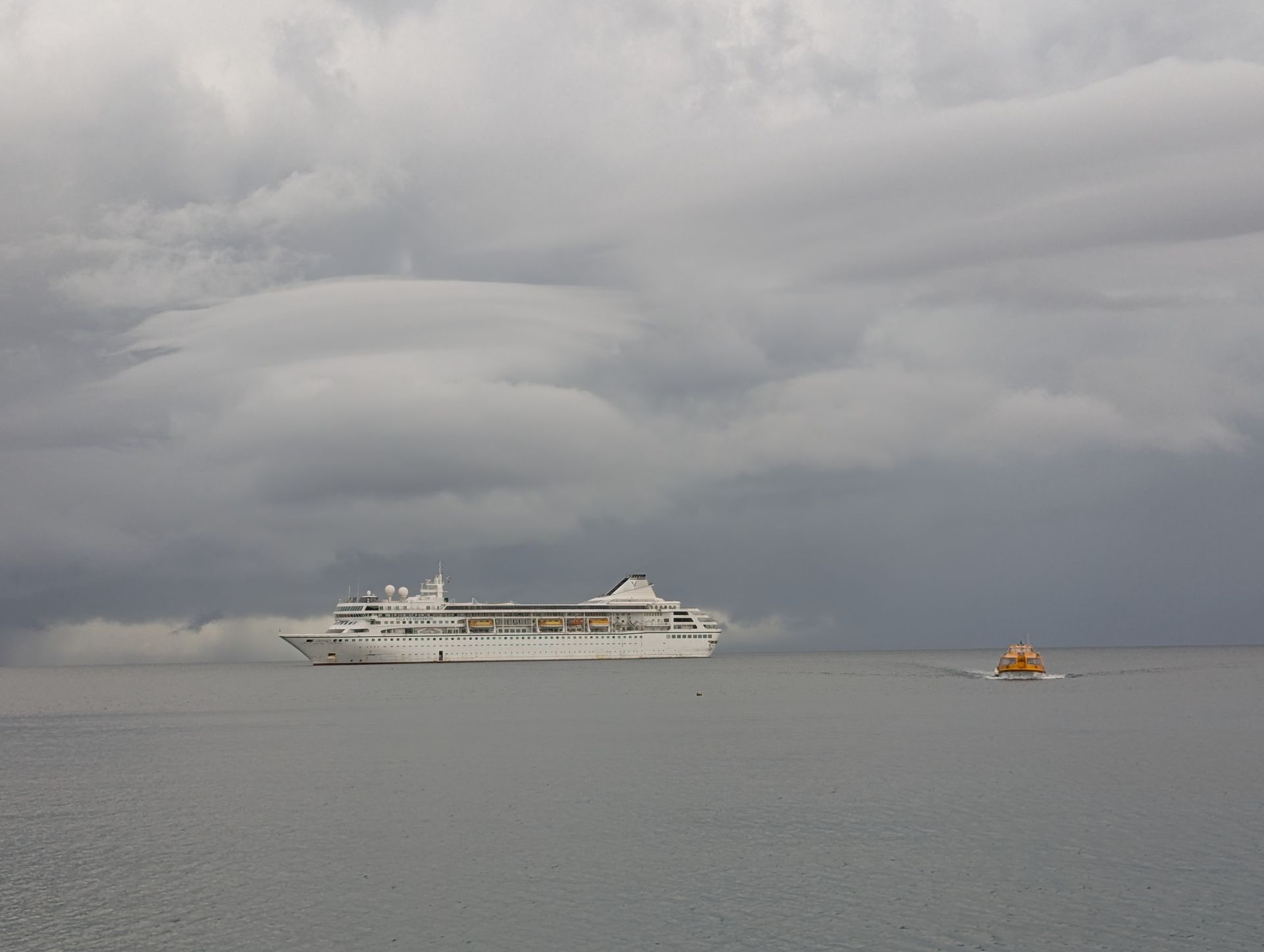
The Hiro Maru tug is our pilot into the port of Hiroshima. The suffix “ Maru” used after the name of Japanese boats means, a circle, wholeness, a microcosm. There is a sailboat passing in front of us with full sail as we approach the port. The tug must have felt the sailboat was too slow and raced to chase it off. Probably called up the skipper and yelled at him. Now the tug is back and keeping pace next to us. We won't take the shuttle bus into Hiroshima. Not just because we are recovering from colds but also because of the emotional impact. I will experience the city from a distance and try to gather the shards of emotion that began when I became aware at a young age that my country used an atomic bomb on this city, on these people.
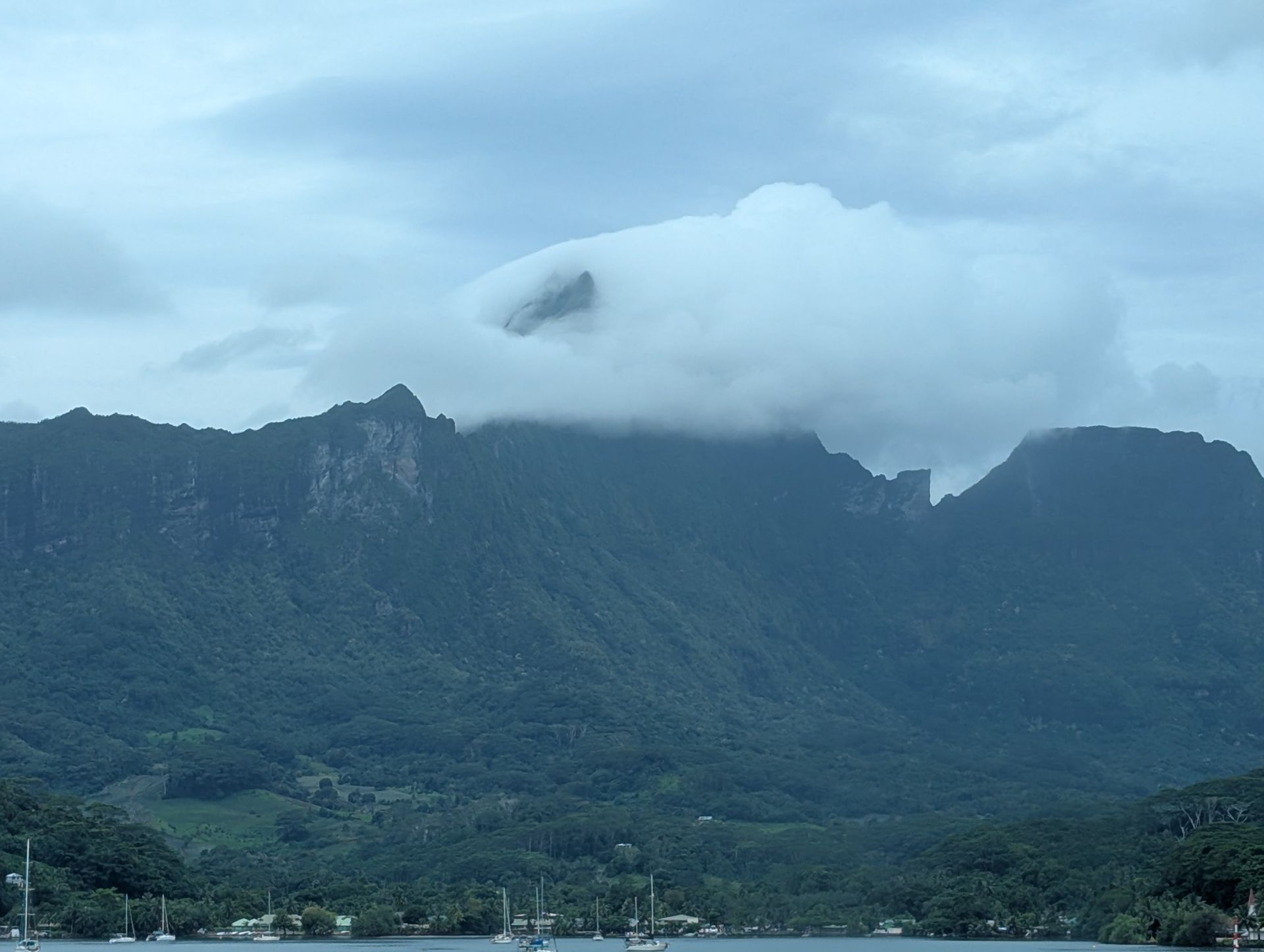
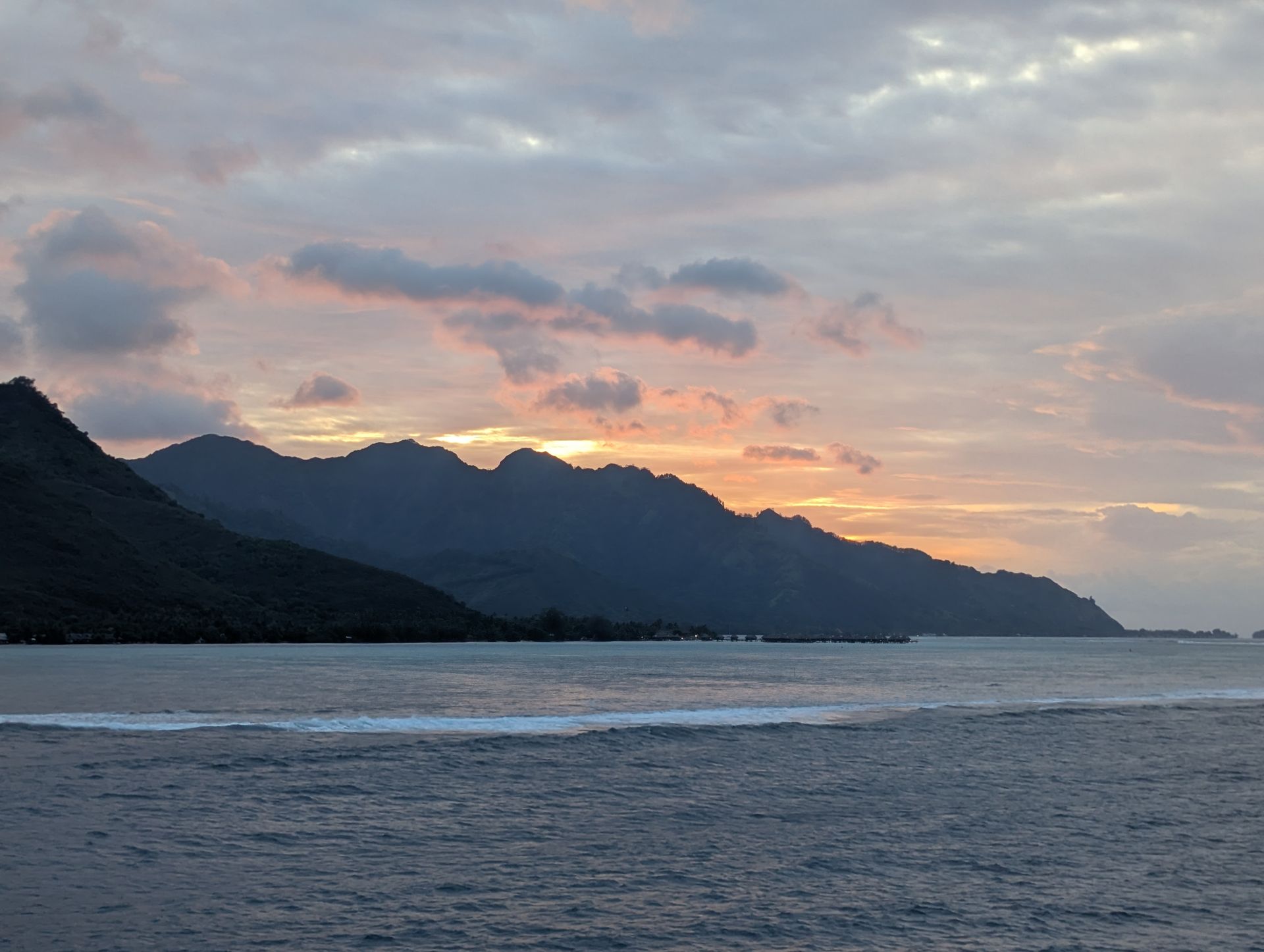
Gazing out the window of the observatory, that gives a 180 degree view of the outdoors, I am amazed that the images of my childhood vision of Japan framed by exposure to a book of woodcut prints by Katsushika Hokusai my aunt gave me, was not far off. Here are the mountains he illustrated, here are the clouds, the atmosphere of the sky, the proud crouching trees, a single stone island in the sea. I would search those wonderfully colored and designed images for as much information as I could get. I walked with the tiny people over the arched bridge, through the villages, and scaled the mountains to breathe in the cold. The artist had sent an invitation and I visited, never imagining that I would see the real thing. Later, I understood that we bombed this special place. Beautiful children died, stopped in their unique momentum, people were terribly maimed and survived, then died slowly from radiation poisoning. The total death toll including long term effects of radiation sickness exceeded 200,000 people. I came to know the name of the airplane that carried and dropped the bomb, the Enola Gay. Named after the mother of the pilot. And the irony of that insensitivity was not lost on me. I was old enough to suffer the loss of innocence that speaks softly of the ultimate goodness of things. There was no religion for me after that. These mountains, that Hokusai intently gazed at 100’s of years ago, in order to map the design of an image which he cut into a block of wood, inked and printed onto rice paper. One of many images that inspired the French Impressionists. These mountains would vibrate with the deafening impact of that atomic bomb and store it in their stone where it would stay forever as witness and warning. The explosion echoed in the breasts of those mountains. They withstood the blast. But they encased the sound forever bouncing against their smooth stone insides like electrons inside an atom. The water around them still slightly vibrates. The water, at that moment, stopped its gentle rippling, it stiffened as if electrified. Blast wind took over and peeled it back from the harbor, exposing the sea floor. Afterward quiet, then the cries, as if startled birds flew up into the sky with the souls.
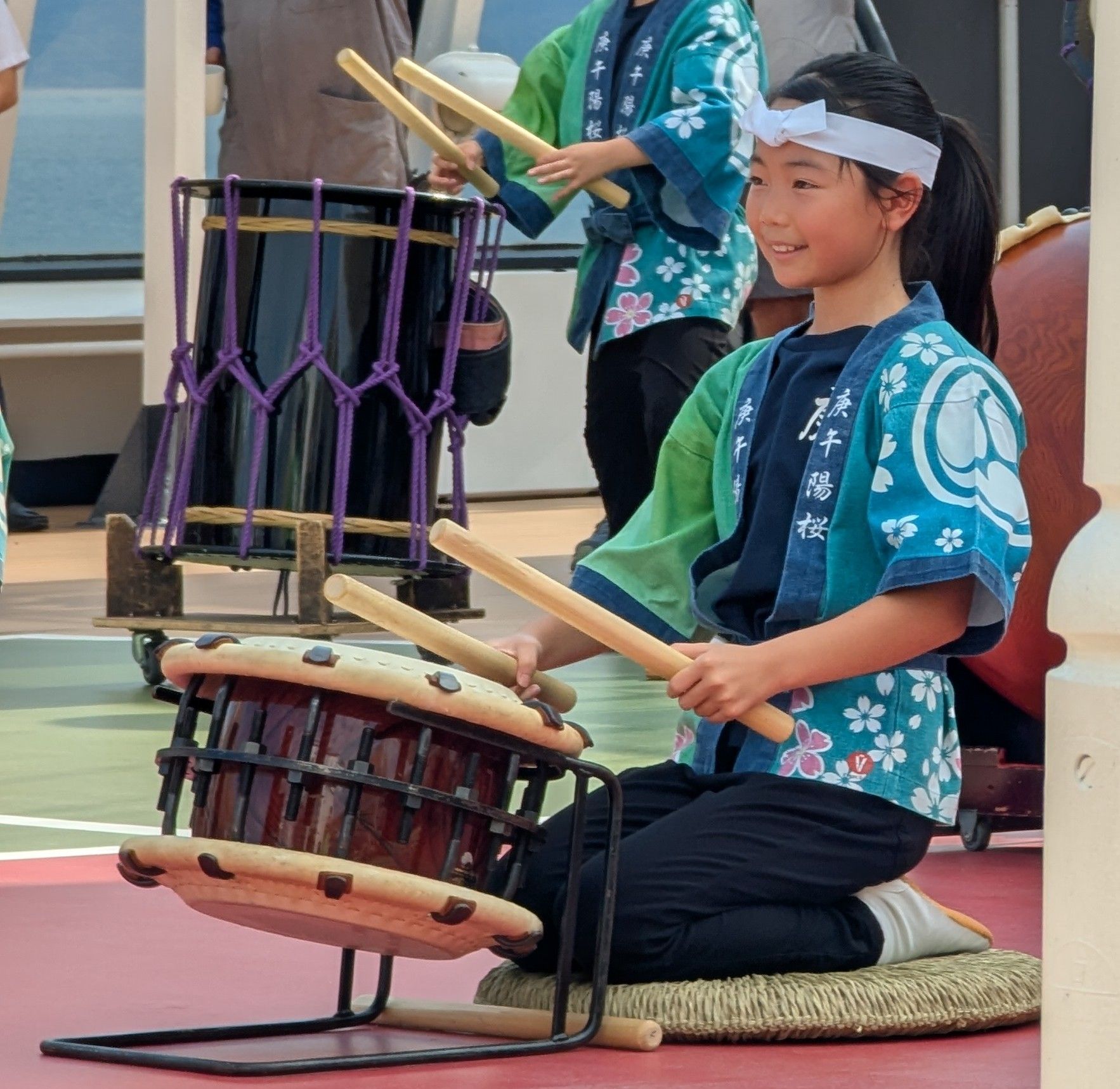
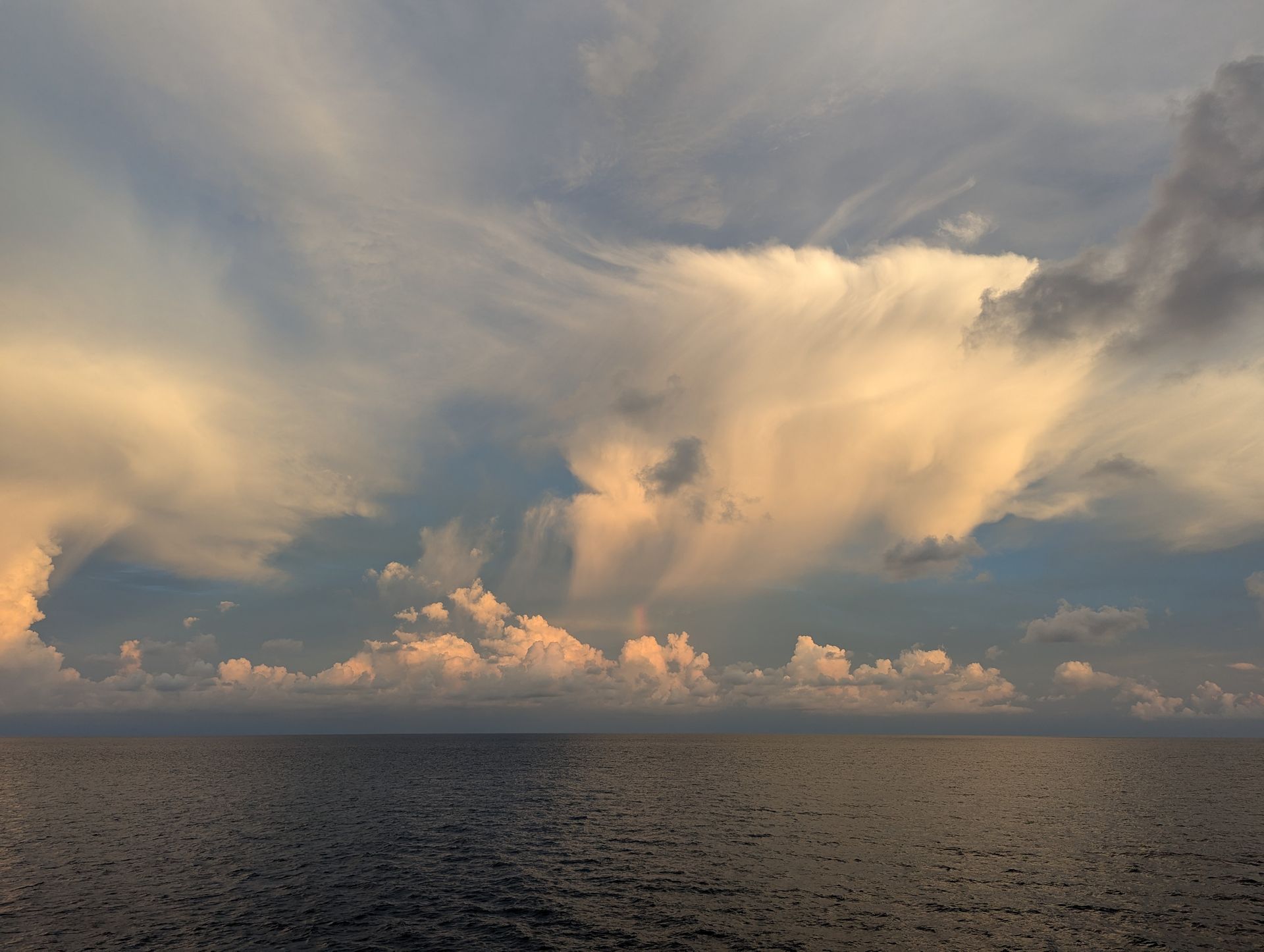
There was a drumming performance by a local Hiroshima group before we were scheduled to leave. They came onboard, all ages, men women and children drummers. “The heartbeat of the city,” our fellow traveler, Julianna called it. This evening the sun shines through a peep hole in a low grey cloud, making the windows glow below like a pocket of gold.