Chapter Eleven – Alaska Part 2 (7/25)
Alaska feels like a different country; not like one of the United States. Maybe its vastness and extreme climate have created this unique presence. People who adapt themselves to living half the year in darkness and half in light, in a lot of cold and rain with magnificent beauty all around, this has an impact. The unique environment of Alaska transforms people.
The Tlingit were one of the aboriginal Alaskan groups. They crossed the Bering Strait from Asia, approximately 9,000 years ago. There are also some theories about individuals island-hopping from Polynesia. Both scenarios may be true. Nonetheless, they formed a highly complex social, legal and political structure along with extraordinary creative arts and oral culture. Before European contact their population reached approximately 20,000. Status was based on birth and wealth, creating a hierarchical social structure. There was a noble class (determined through hereditary) followed by medicine men and women, warriors, traders, commoners and slaves. The Clan House was home to three resident classes; nobles, commoners and slaves. The construction of the Clan House was a sacred event involving rituals for the dead. The two ritual groups (moiety) were Raven or Eagle/Wolf, and they were expected to marry outside their group (exogamous). Tlingit followed a matrilineal clan system. Children inherited the clan side of the mother. All rights were through the mother; these include fishing, hunting and gathering places, the use of certain clan symbols, totem designs, house decoration and ceremonial clothing designs. The Clan had spiritual, psychological and medical protection from a medicine man or woman. They were also known to control weather, bring luck, predict the future, expose witches and speak to the dead. They did not cut their hair in order to keep their power strong. Their power would pass to a younger relative when they died.
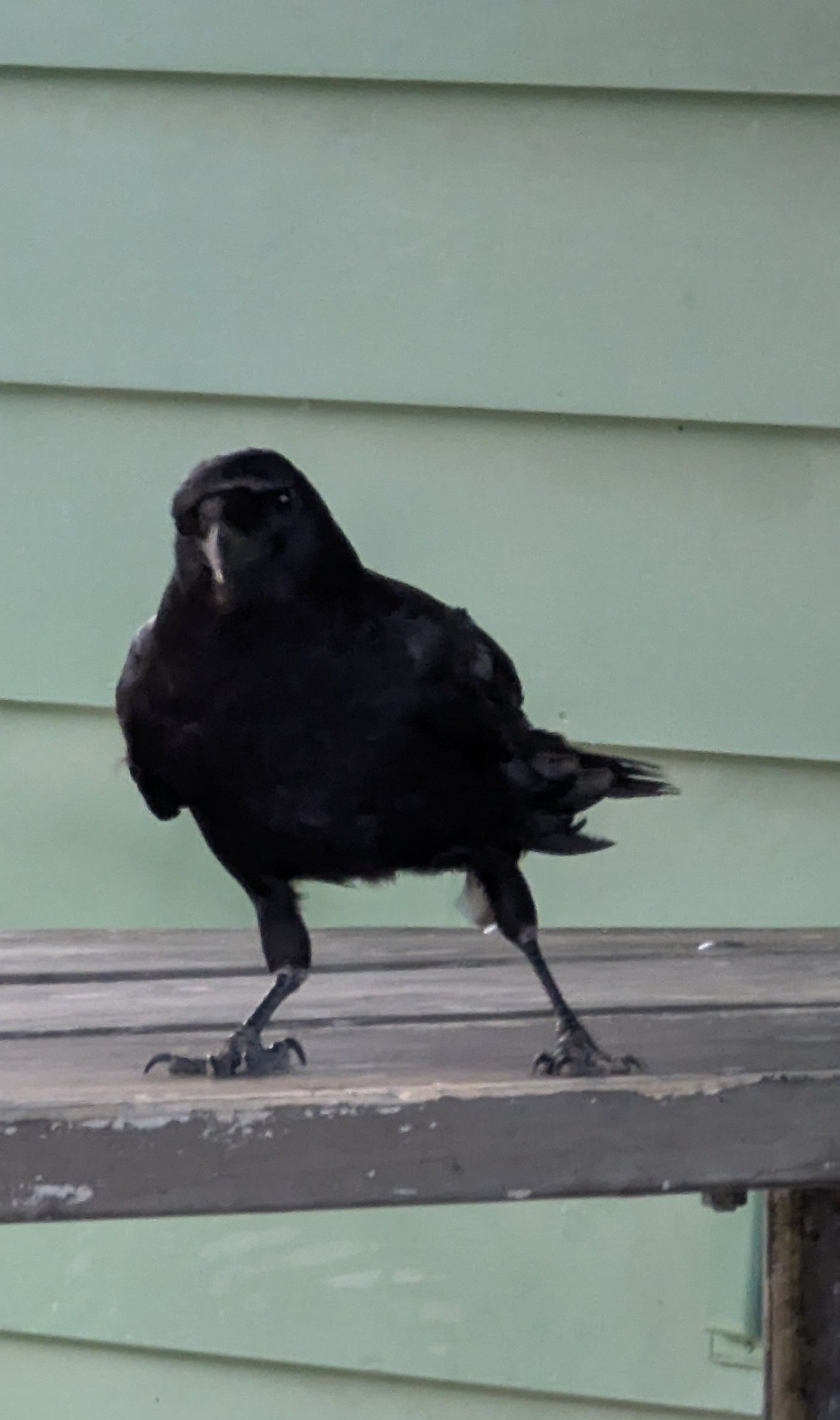
“We all have to work together, help each other.” This statement by an elder expresses the profound necessity of cooperation amongst the clan members for their survival. “Stay inside the drum.” Is another expression of the philosophy of passing values to the next generation. “Ella” means awareness. They felt that everything on Earth has awareness. Hunters learn not to lock eyes with the animal they hunt. This would give it a chance to get away. It realizes your intent. But it might speak into your mind and allow you to kill it if you don't waste it.
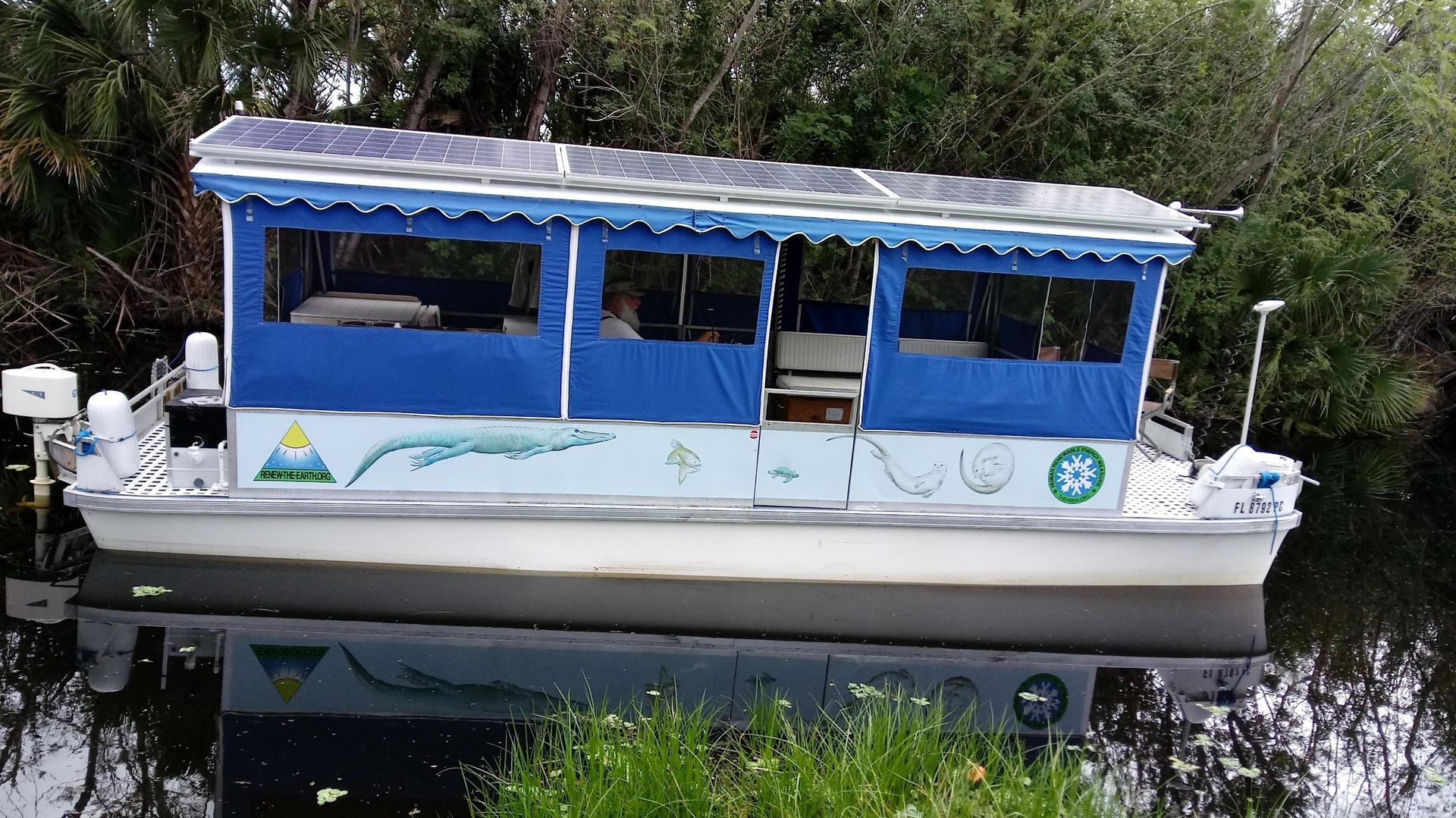
The first person we talk to in Ketchikan Alaska remembers David Borton's electric boat. “ Anything unusual that comes up here we remember.” David designed and built the boat, powered entirely by solar panels. No plug-in option. The trip with his son from Bellingham to Juno was made to demonstrate the soundness of solar propulsion. They succeeded, and are remembered.
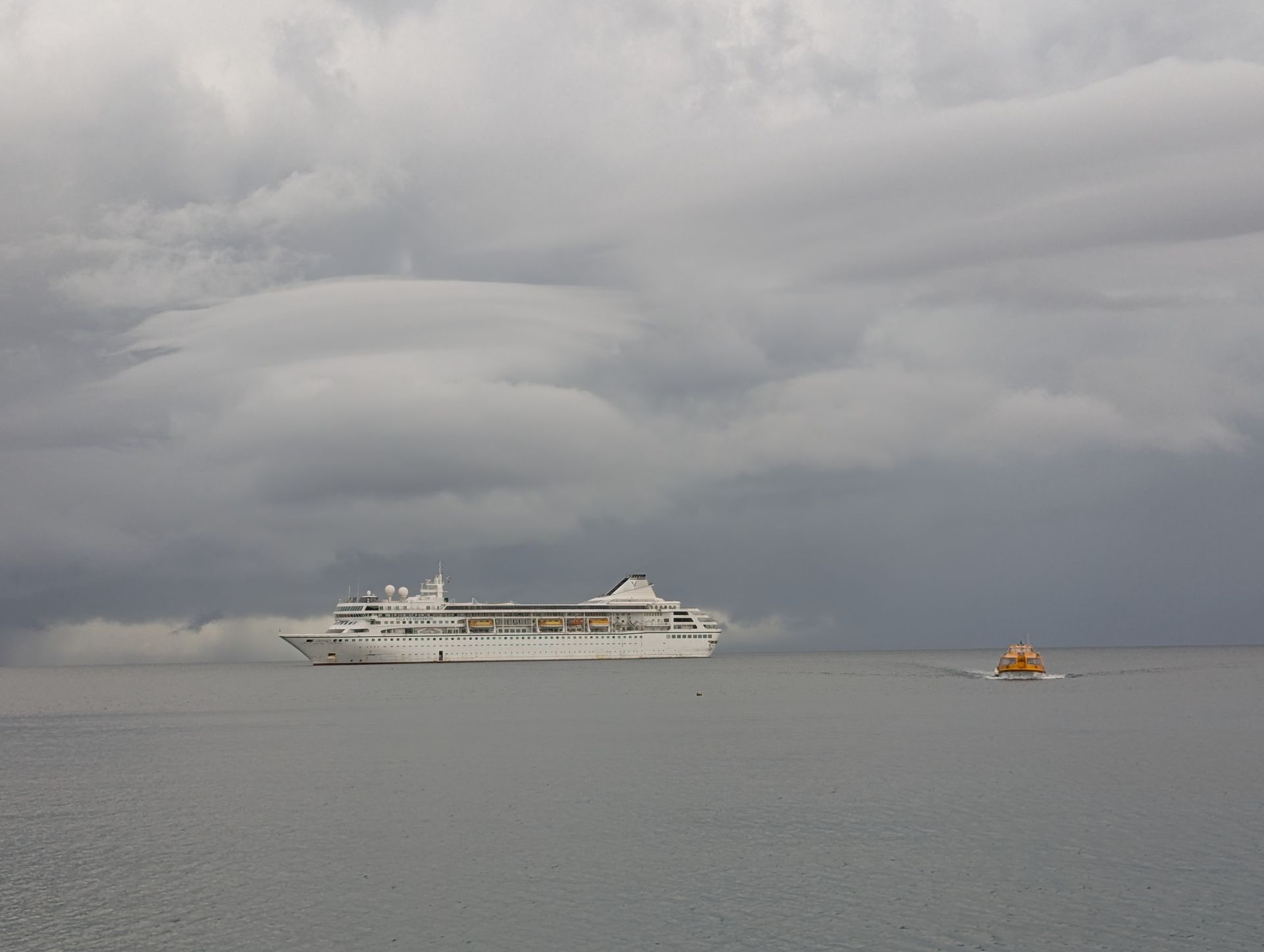
Now we are traveling overnight to Wrangell. We encountered another cruise ship. It is lit up in multi colors, a fantastical creature shimmering on its plane of dark water.
Wrangell Alaska would dispute the date 1896 as the start of the gold rush. They had been taking advantage of miners' “get rich quick” dreams for about 40 years already. Alexander Buck Choquette found gold in 1861 on Bucks Bar near Stikine, Alaska. Wrangell became the supply depo for hundreds of prospectors. Huge business opportunities opened in a lawless town. Supplying miners was a money maker. A list of essentials was presented and the items sold to each adventurer, man or woman. Imagined riches created a frenzy. A man could be tried at 9:00 in the morning, found guilty by the local miners by 11:30 and hanged by 2:00, according to local history. The naturalist and writer John Muir wrote about Wrangell, “No mining Hamlet in the placer gulch of California, not any backwoods village I ever saw, approached it in picturesque, devel may care abandon!”
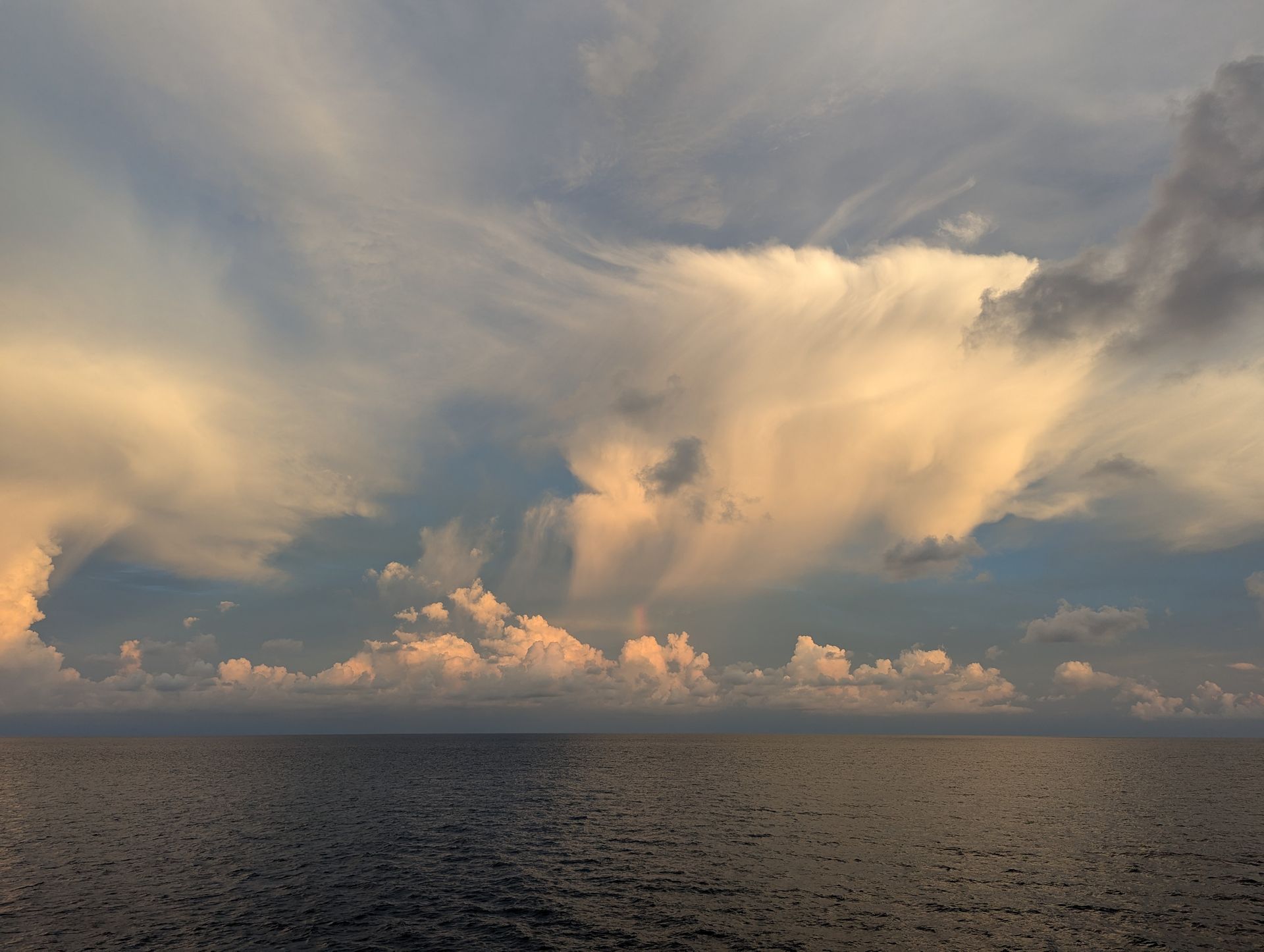
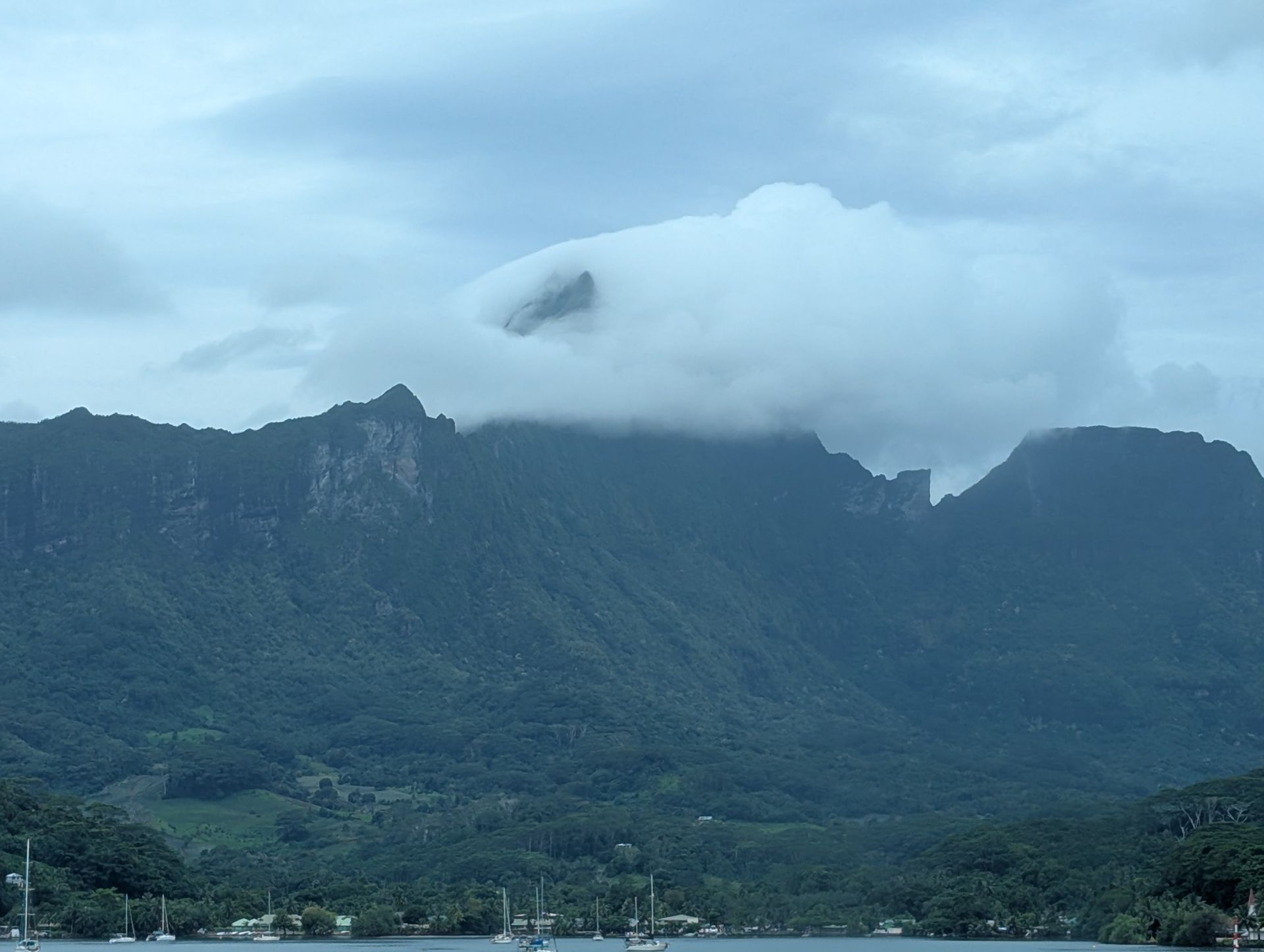
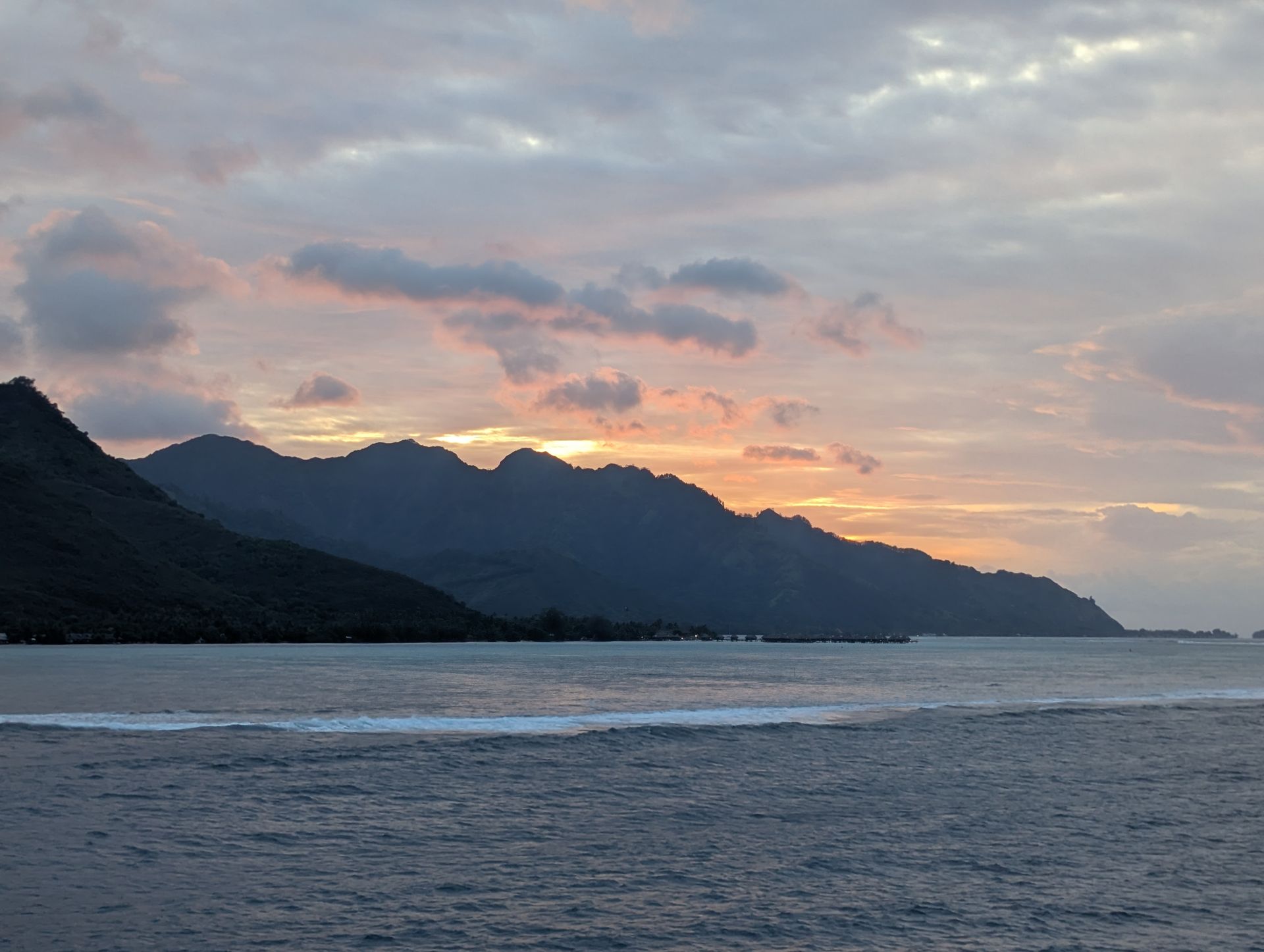
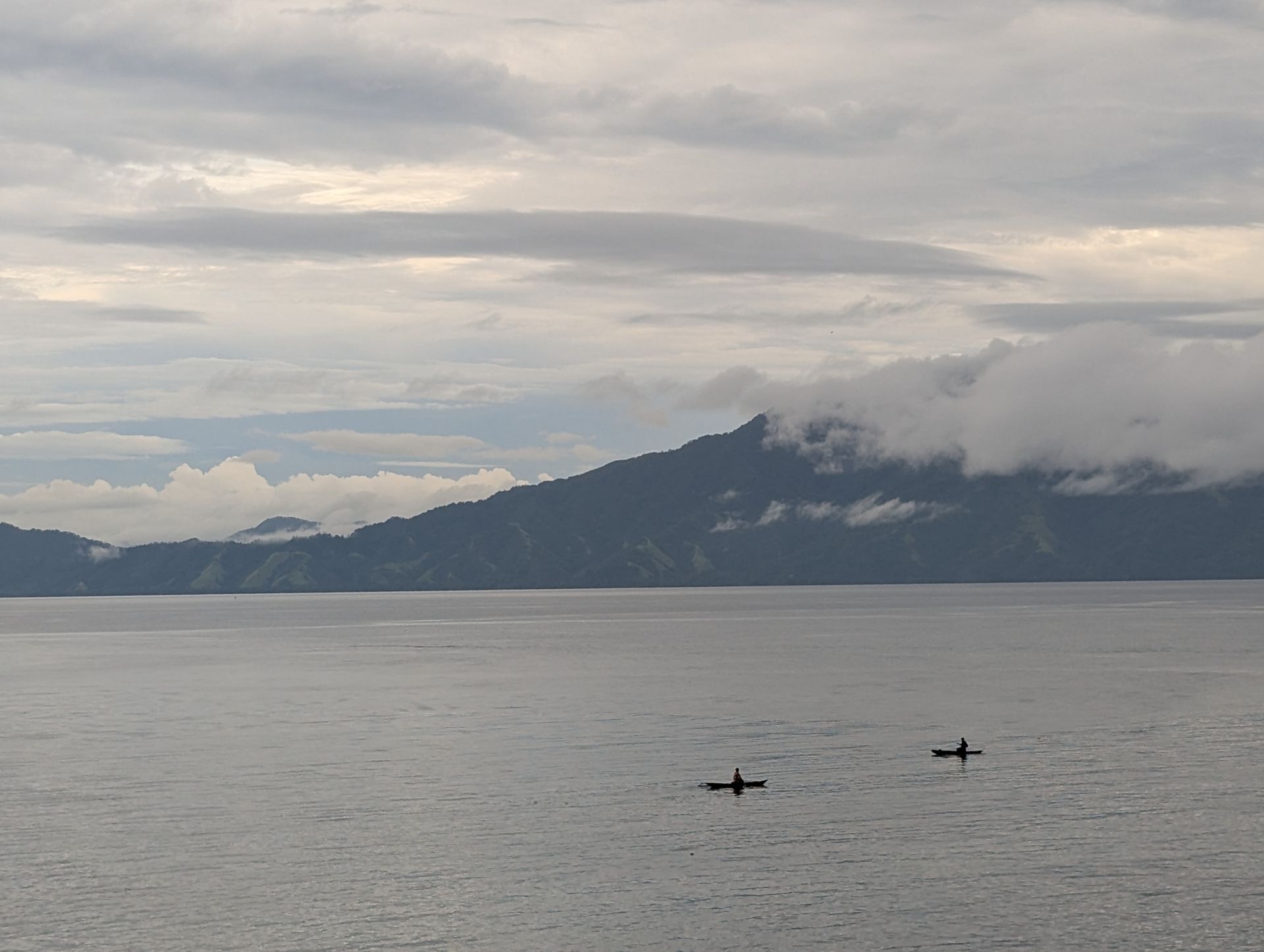
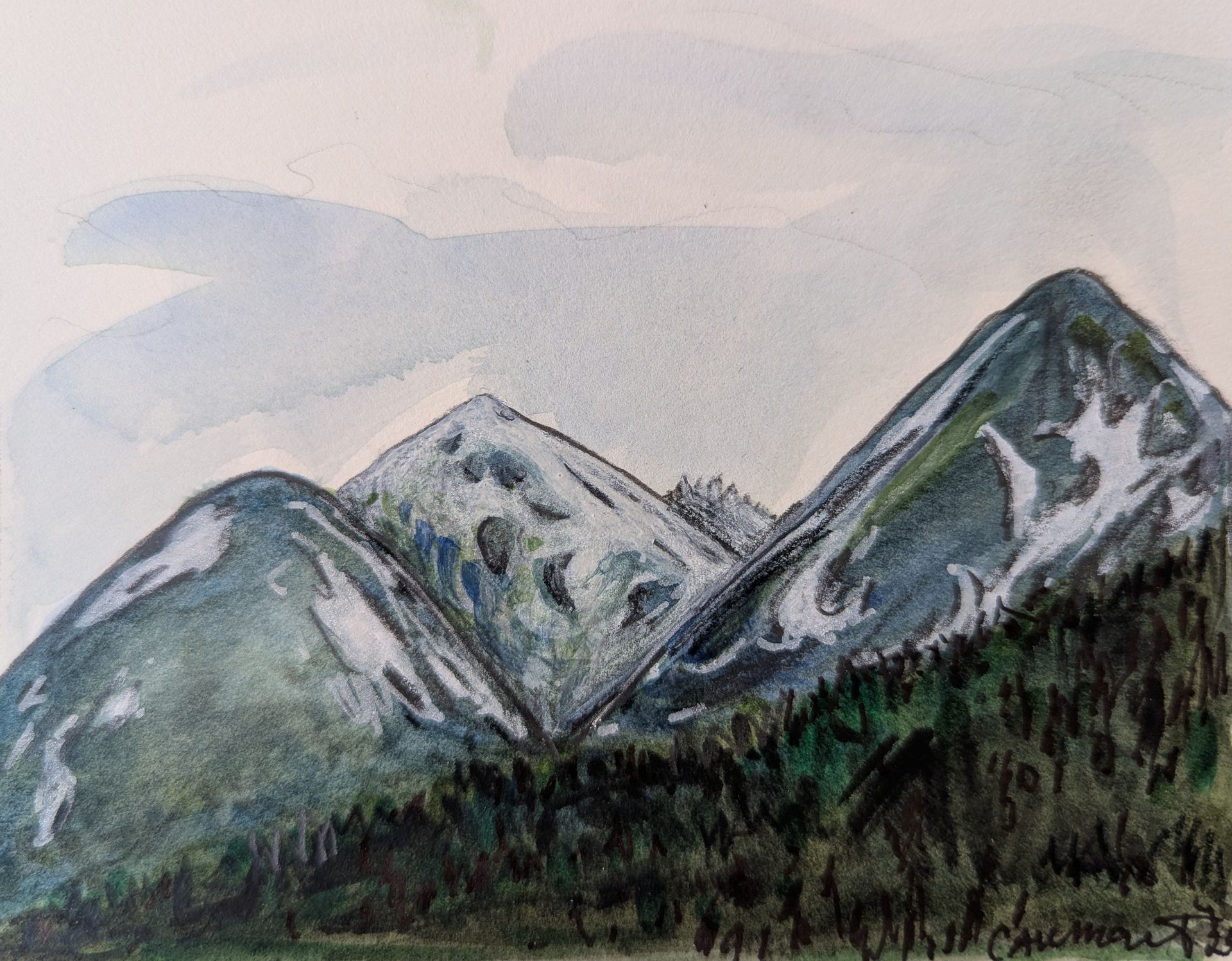
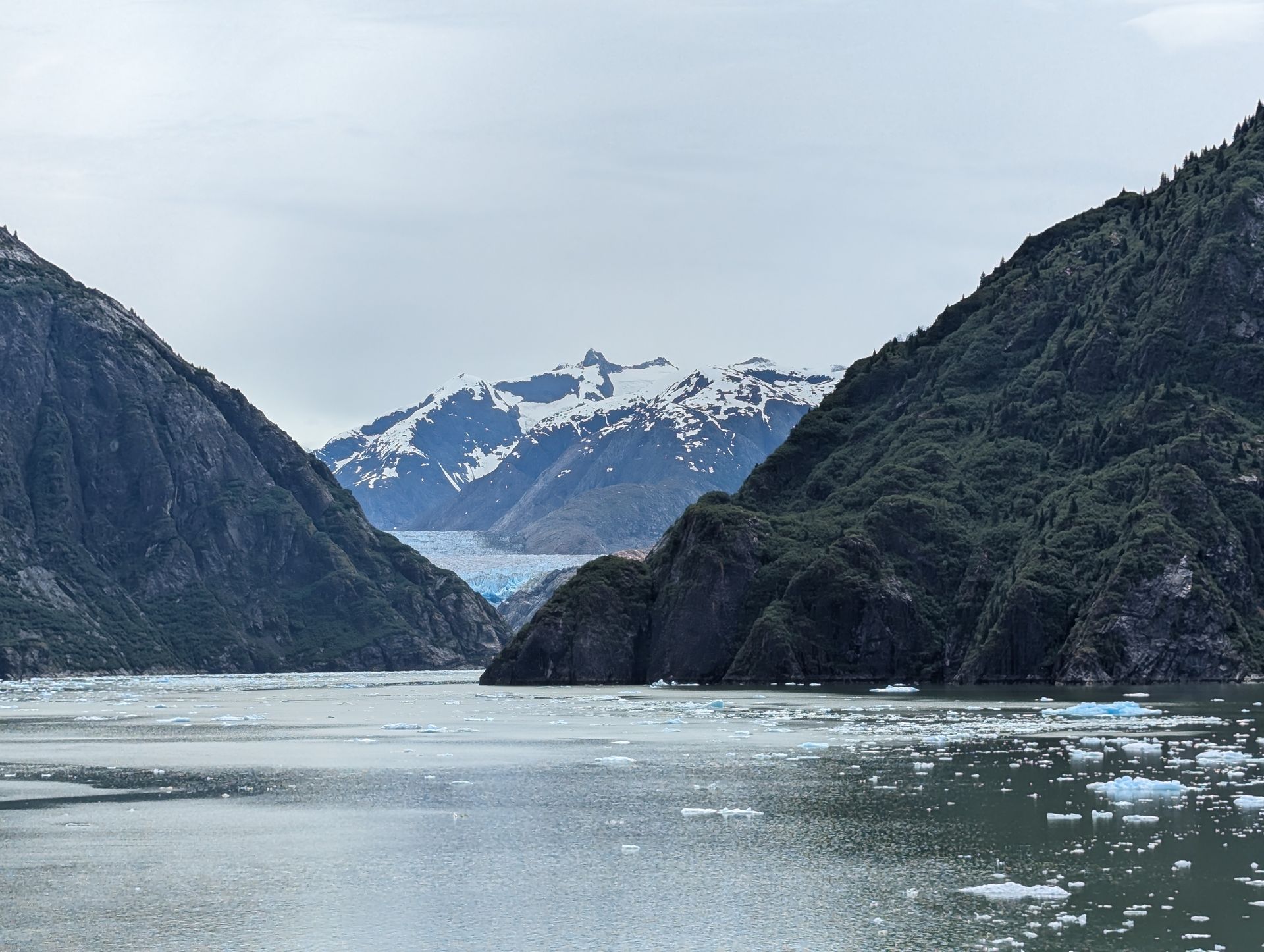
We travel towards Anchorage. The ocean is undulating and calm; a gray cloth of velvet rolled out to the horizon. The sky is slowly spilling into the ocean as night comes on and fails to darken. When the brighter grey of morning arrives we see mountains covered in a shaggy fur of evergreens. Their high peaks display a pinto pattern of snow. Further on they are completely snow-covered and higher, their sharp peaks like an encampment of white tents. The blue ice in the vase of a valley glacier liquifies and wasps down to a thin rivulet, filling the lake below with cloudy blue water.
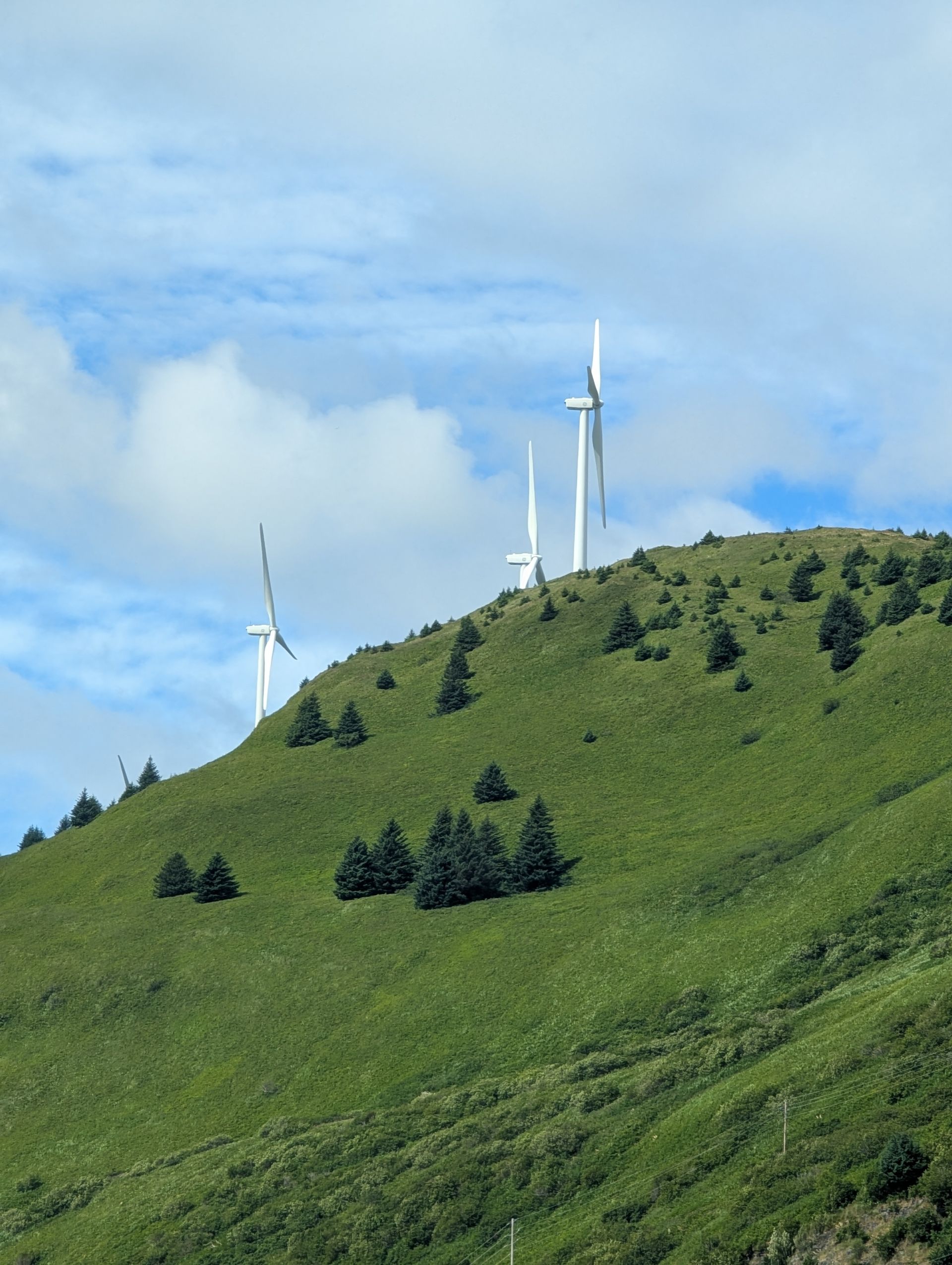
I feel regret now that we turn to cross the Pacific towards our next destination, Japan. I am not sure what it is, maybe homesickness. The jewel-like beauty of Alaska shines in my imagination, it is comforting. As we leave, the vast plane of the Pacific before us, eleven wind generators on a peninsula wave goodbye. Their presence is a wishful but doomed gesture in this land of oil exploitation. But maybe they are providing energy to a native reservation. That would not be enough but it would be something.
“What you do not see, do not hear, do not experience, you will never really know.”
Lore of St Lawrence, Island, Yupic