Tioman Island, Malaysia

July 14, 2026

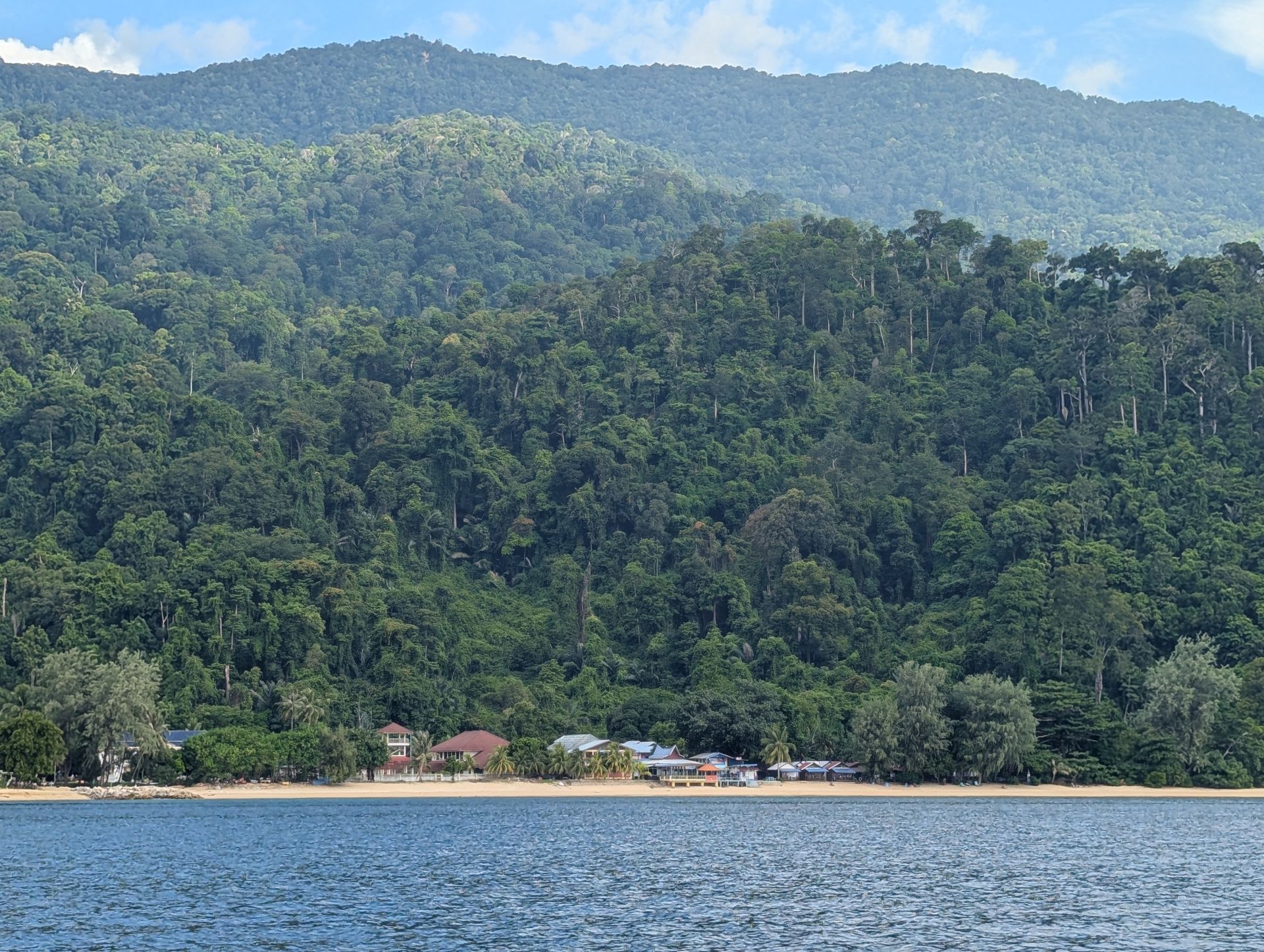
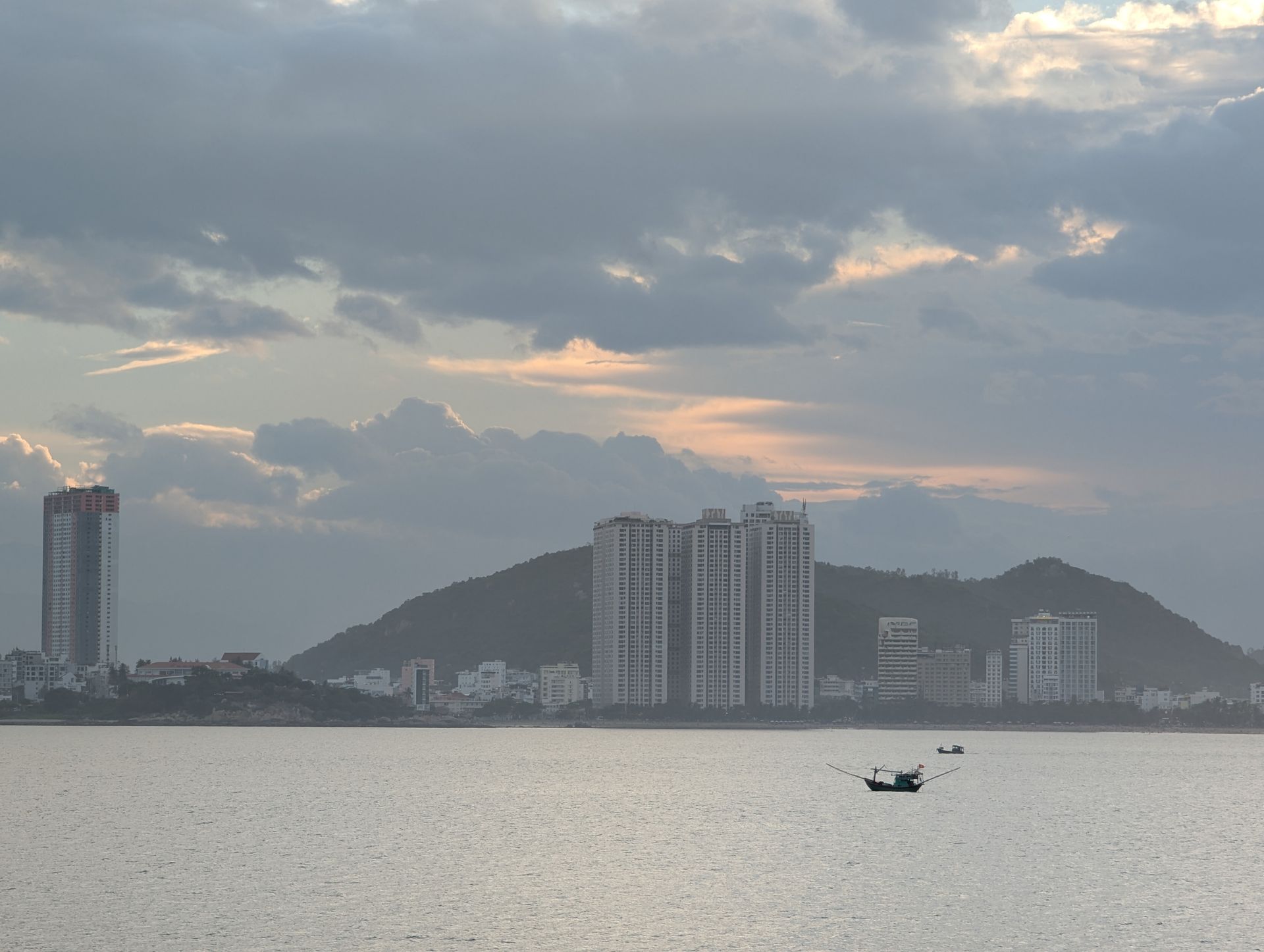
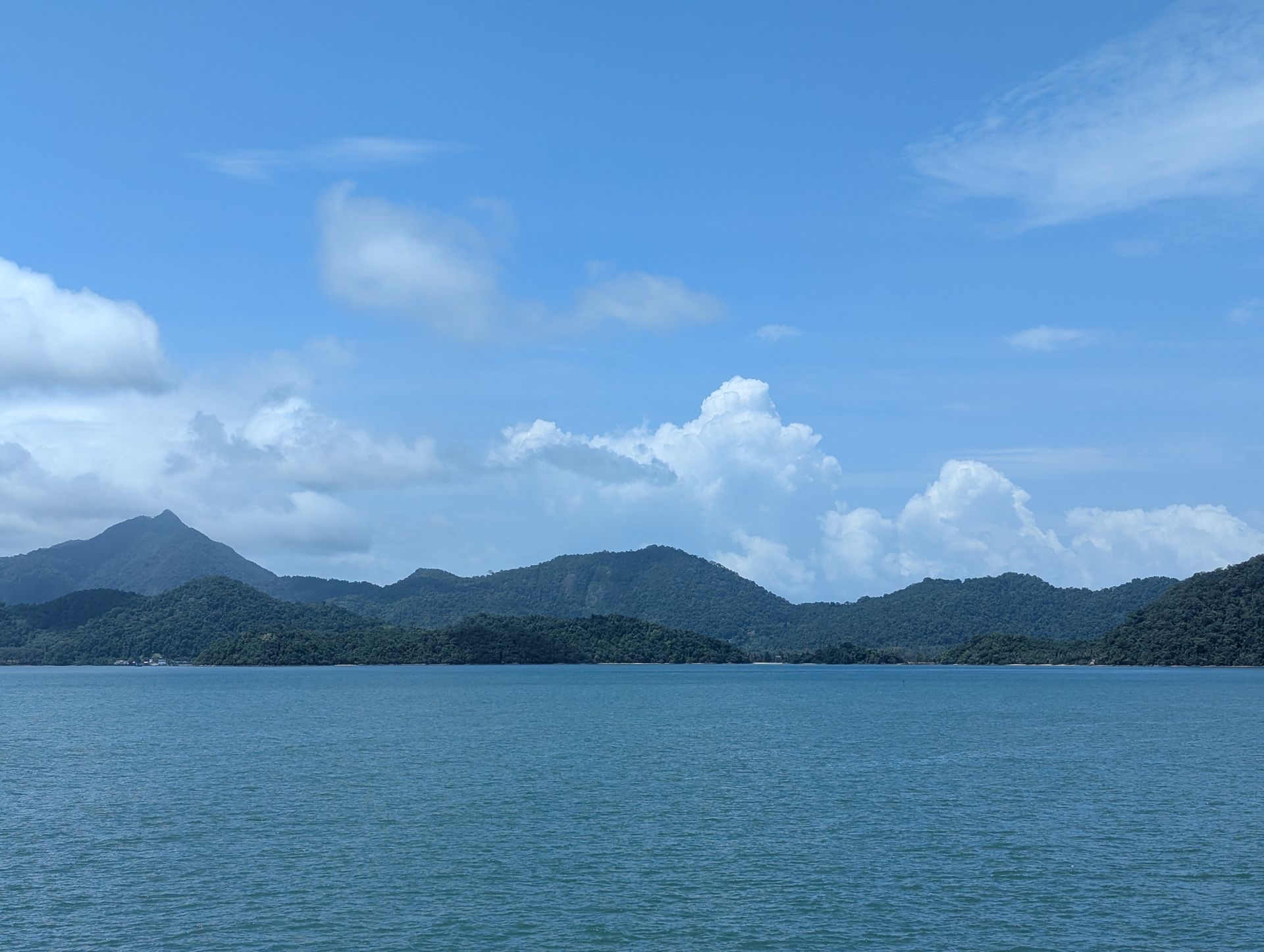
The rain falls straight down and hisses as it craters the surface of the water. From the ship this island presents as lush, dark green and mostly mountainous with a strip of village on the coast. The rest of the coast is mostly narrow beaches interrupted by other smaller settlements and resorts. It is raining heavily. The mountains turn shades of grey and blue, become distant, then disappear behind a dark scrim as the storm intensifies. We are told that flying foxes live on the island. Fairy tales and magical thinking surface at the thought of their evening flights, voracious appetites for the local fruits, their massive leather wings and communal, upside down palavering. Maybe in ancient times locals translated this into a supernatural background for their stories. 


 Tioman is one of the most uncomfortably hot places we have visited, among the mostly hot locations we have gone to so far, this is saying a lot. The average temperatures have been around 85° and up. But here 90° feels like 100° or more because of the humidity. On land the heat is most intense. Even by late afternoon it had not cooled. The locals are immobile, sleeping in hammocks slung between the trees.
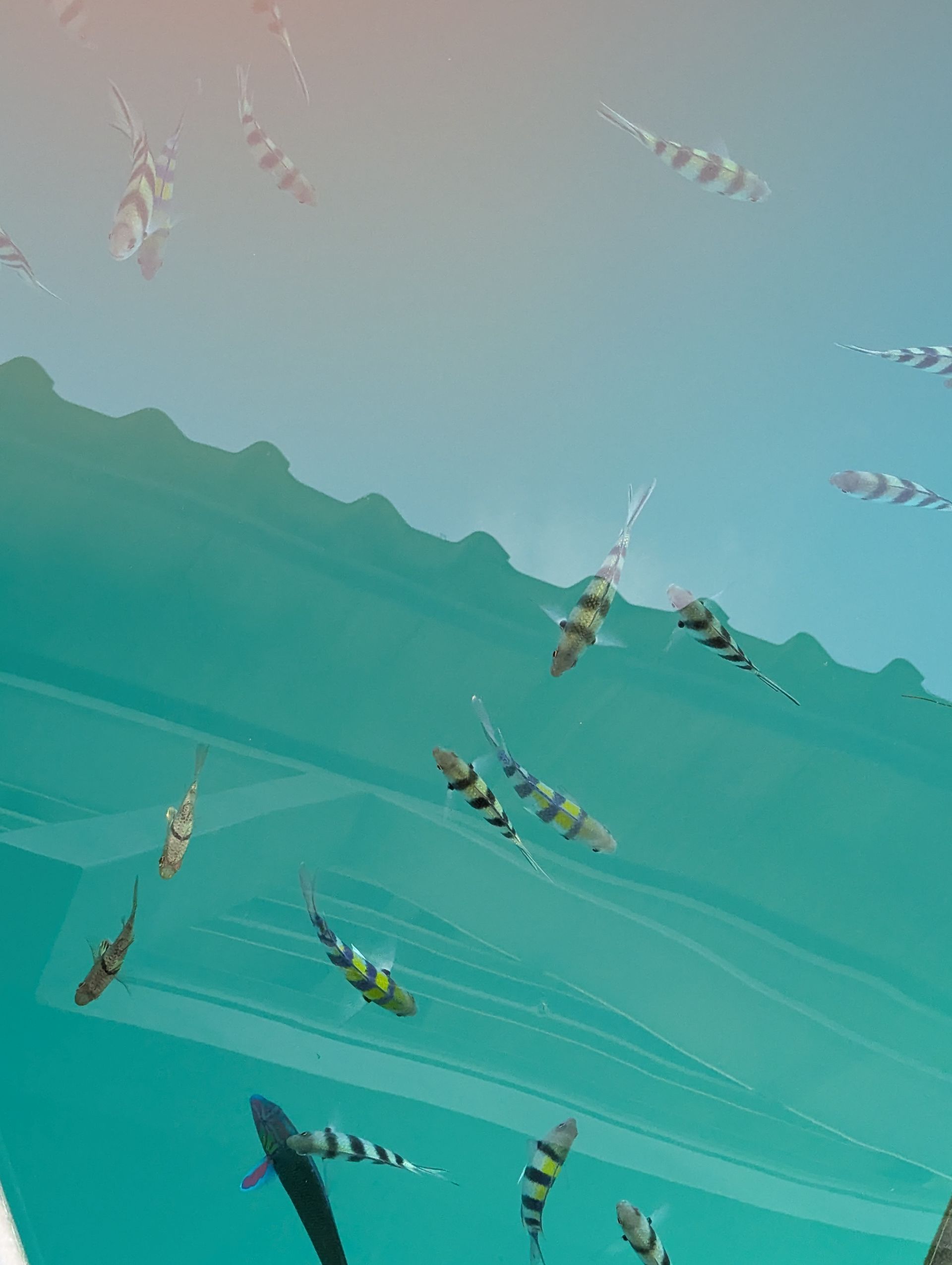
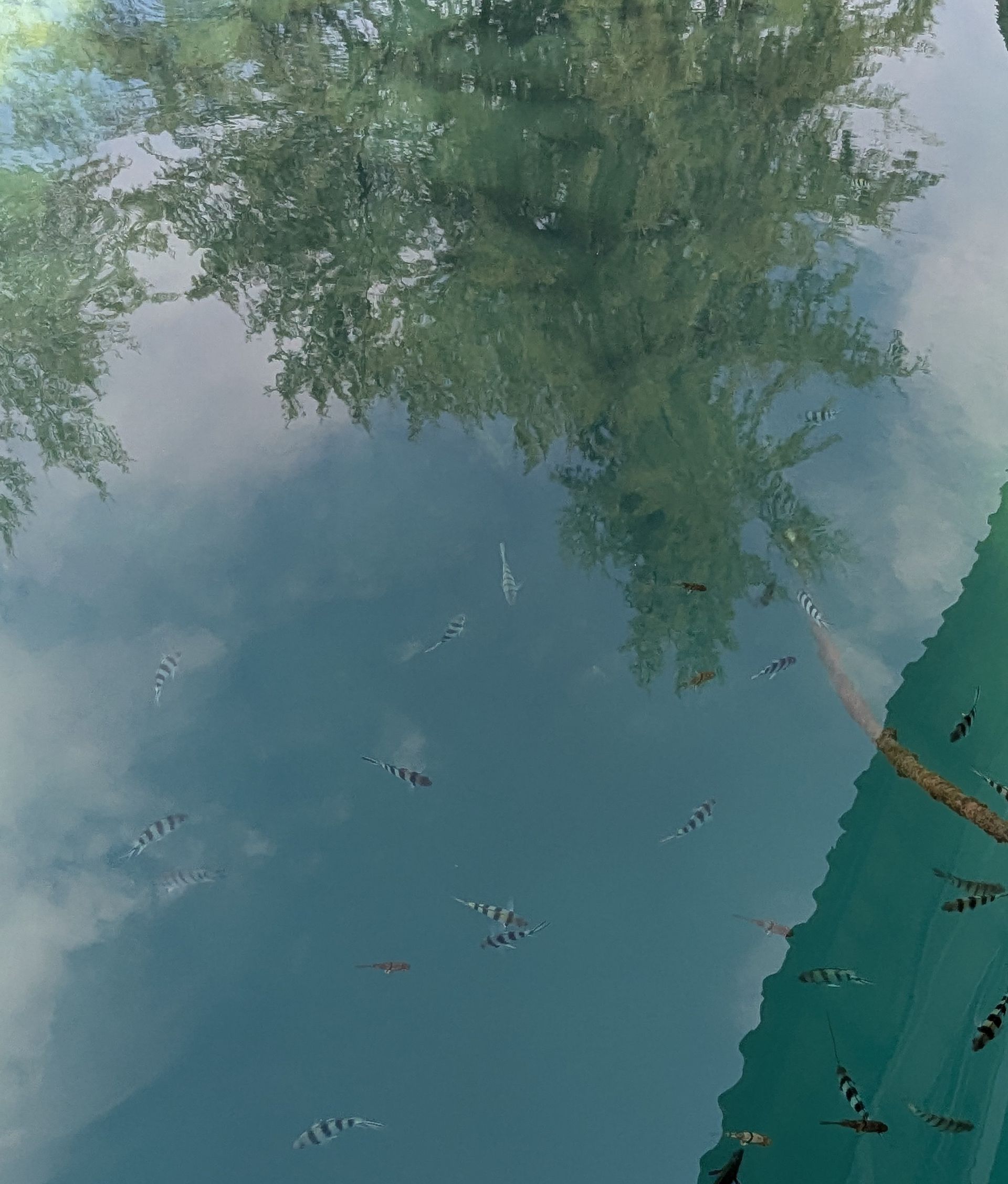
near shore is shimmering and transparent turquoise, extremely dilute as if drops of dye had just fallen with the rain. It looks substantial in its stillness. Maybe I could step onto its surface, above the many darting and black striped fishes, be supported by an atmospheric mirror and experience the vertigo of walking a glass bridge over a cavern. I linger by the water fascinated. Some fish look like larger versions of ones I have seen in pet store aquariums. They drift about the rocks halfheartedly chasing each other. Even their ambitions are slowed in this heat. Their delicate fins taper into lazy tendrils. On a rock a pale sea cucumber is barely creeping.
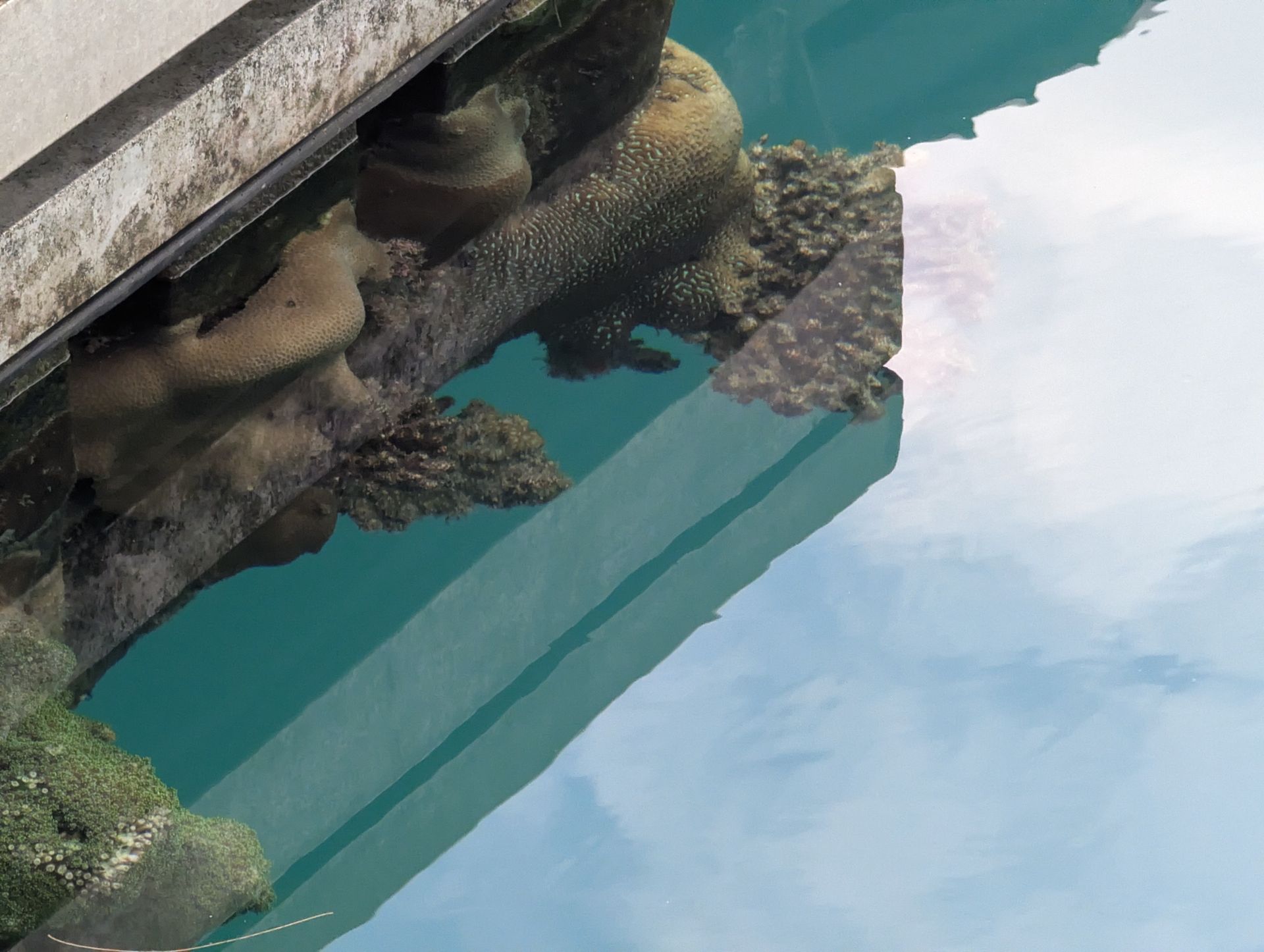
Colorful corals grow from under the dock. Mists are exhaling from the ground. The clouds reform. A large lizard whips by tasting side to side with its long forked tongue. A child hisses at it. The tender takes us back to the ship just as the sun sets and the sky glows lavender before it subsides to dark. 


  Now we are heading for an island off Thailand, Koh Samui. This will be another anchorage. Passengers are encouraged to take and pay for bus tours and experience the exotic buildings and statues on the island. Another clever money saving strategy for the owners, to anchor off and use tenders for several days. This option had been suggested several months ago, now it is happening. They are hoping to wait out the US/Israeli/Iran war (whose fragile cease fire ended on the 8th of July), and the impact on the price of marine fuels that the closing of the Strait of Hormuz has caused. Both sides are bombing, again. The understanding was incomplete. One side blames the other. Both governments are worried about “losing face” then losing control. Both governments are willing to sacrifice their citizens to an abstract notion of nationalism defined as protection. And the way to secure this safety, they say, is war. Meanwhile the larger dynamic is being ignored. Their citizens don't want war. They are the ones who suffer and die. They cannot escape. Meanwhile the elite decision makers take comfort in their financial escape routes and their fanaticism. 


 The rest of us are moving on. Our minds are formulating a different future. One that includes cooperation, understanding and compromise. And stop the killing. These are the things that have preserved humanity for thousands of years. That they have been forgotten for a while does not have to be fatal. The future is not written. We can still make choices. 
November 17, 2026
Our attempt to circumnavigate the globe in the good ship Odyssey, ended in Cambodia. Unlike Odysius we never made it home. We were awakened at 7:00 am on Tuesday the 27th of October by the Captain announcing into all the cabins that everyone must leave the ship by 2:00 in the afternoon. He explained that the ship is going into “warm layup” and it will be unsafe to live aboard. Only a small section of the forward accommodations would be kept air-conditioned to provide for a “skeleton crew” that would continue onboard to run the boat. Of course this galvanized everyone. Fear, outrage and confusion followed; hurried packing commenced. Later the hotel manager advised that passengers just take with them what they need for a few days in a motel. They should not try to take everything. This gave some passengers false hope of reboarding in the near future. Most of the crew and their baggage were offloaded in the afternoon and returned home by Columbia, their employer, with plane tickets paid for by the company. We left early in the morning, we had packed the day before, leaving two thirds of our possessions behind, we climbed down the gangway for the last time. We shared a car to the airport with a German couple, a more than three hour ride, through mostly countryside, to the capital Phnom Penh and the airport. The owners could not find an investor and were so much in debt that the passenger led attempt to buy the ship and make it passenger owned had to fold. There was not enough money to buy fuel even to get off the dock. Several of the following days were provided for people to be escorted on board to retrieve possessions in the extreme heat. Many left more than half their possessions behind. It was impractical and too expensive to take everything on airplanes to wherever they were going. Ownership had reverted to the lending bank and the company Columbia. Both are owed huge sums, in the millions. We are told the ship will be sold at auction, rumors suggest in Singapore.
November 4, 2026
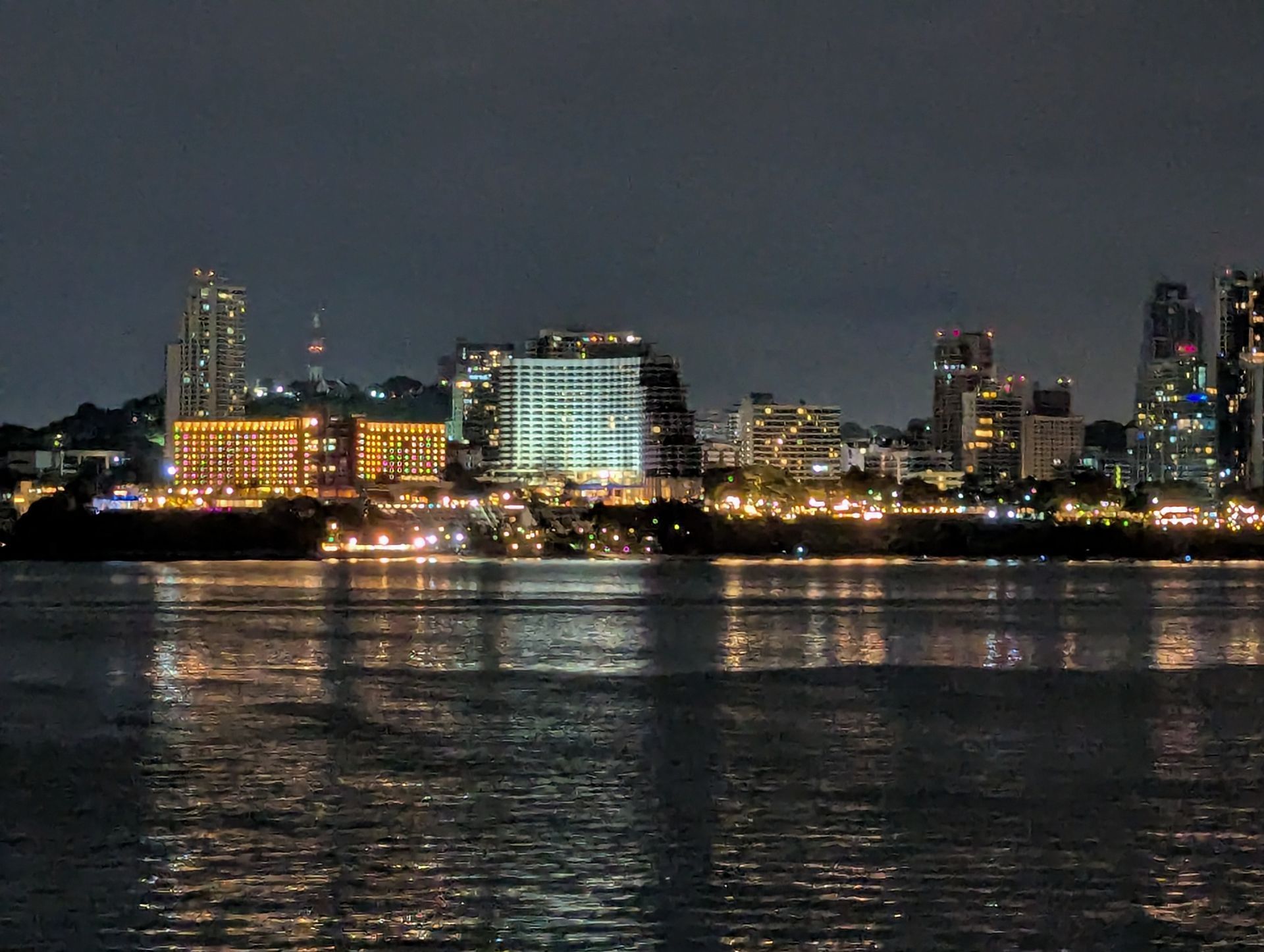
The deep grinding of the anchor being pulled vibrates under the bow as evening comes. Random throbs of electric orange light the night sky, following the departure of a late afternoon thunderstorm. The dark makes Pukette, Thailand insubstantial; losing density and becoming like glass through which points and bands of light flash, transforming the coast into a rash of gleaming color. We have been informed that our ship will move from its anchorage near Pukette and arrive at another anchorage, to bunker in the morning. There are rumors that this maneuver is because there is a chance the ship will be impounded by the primary lender (a bank) and Columbia Services, who provides the hospitality and technical crew onboard. The ship has to keep moving; they have not paid their bills so ownership may default to the people they owe money to.
October 13, 2026
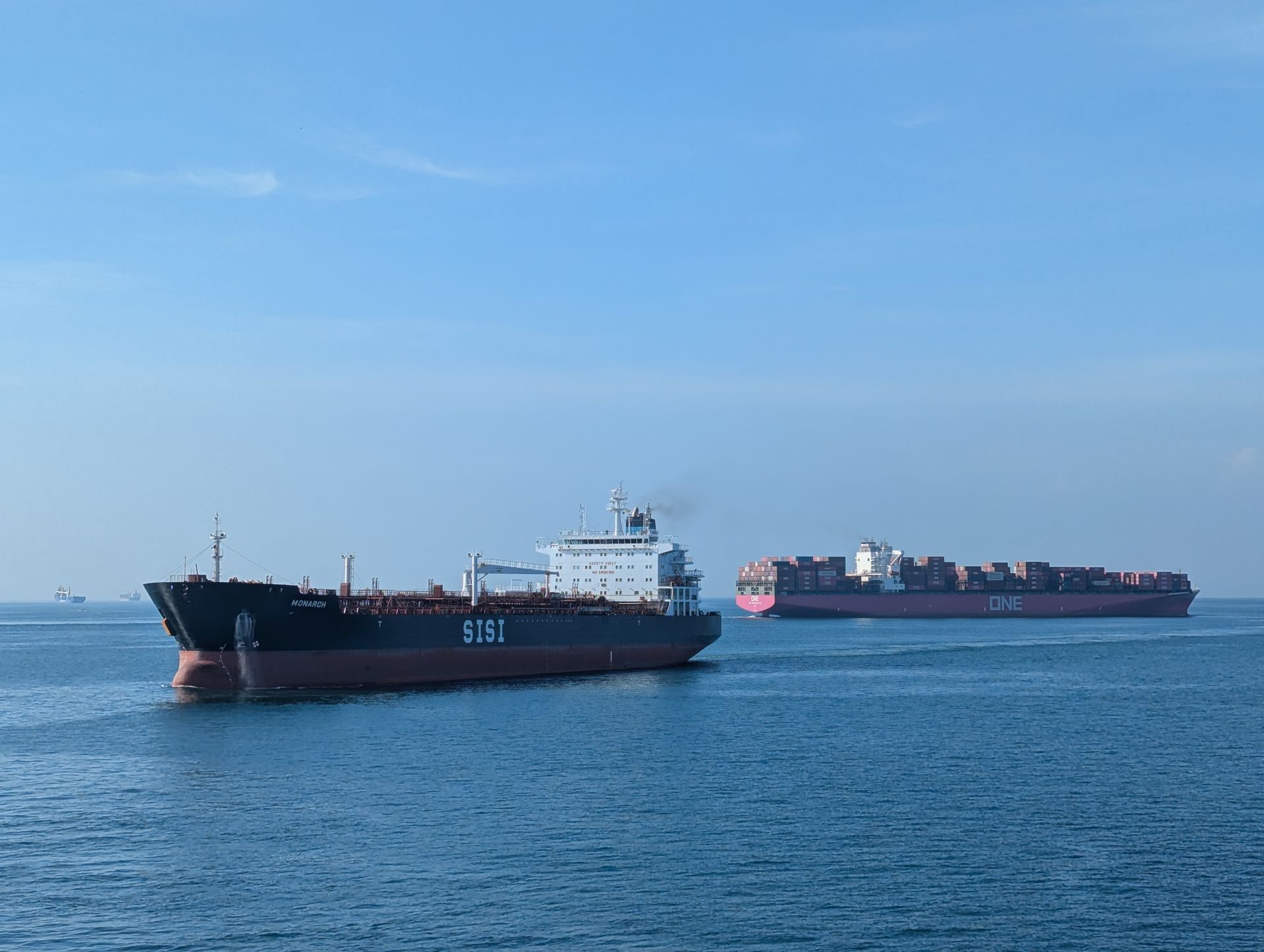
We are hanging with the ‘Big Dogs,’ oil tankers, bulk loaders and container ships, in the Anchorage outside the port of Kampong Som, Cambodia. The completion of our bunkering that was started at the dock, will now happen while we are at anchor. During this time a much anticipated visit by an investor and possible new owner will occur. The original owners are having financial problems and want to cut their losses.
October 6, 2026
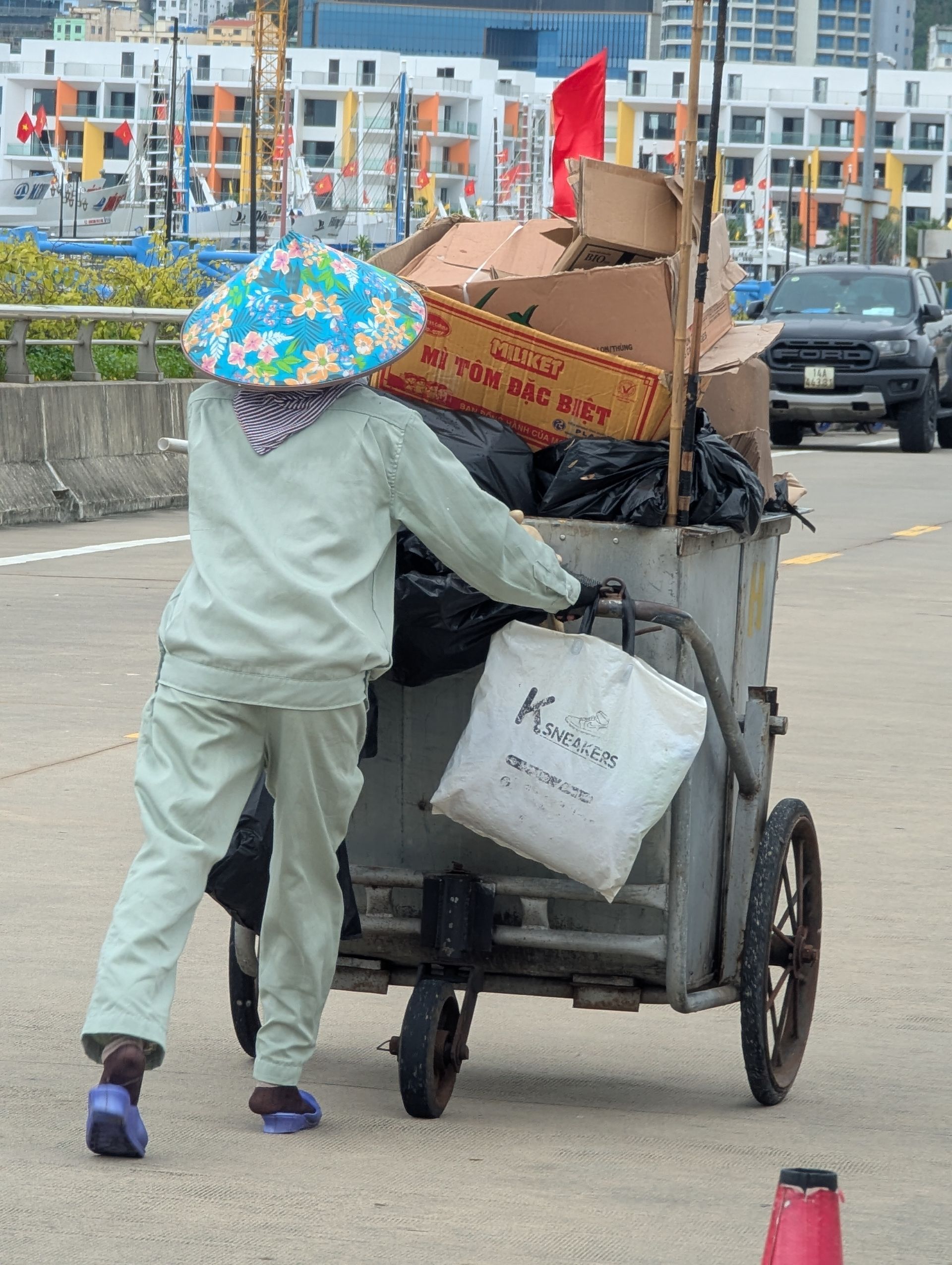
Some impressions, as our shuttle takes us from the port to the closest city, Sihanoukville. A feral dog is eating scraps from a bowl placed next to a pile of garbage. A yellow plastic gas can has been cut length wise in half to make a planter. The papaya tree is planted in it. Two men dressed in black squat on their haunches and collect rocks into their buckets. A family is living in the green space between the roads. They have strung hammocks. The young child is swinging in one as she watches the traffic. Block after block of small open shops, about ten feet deep, all their merchandise visible, fruits, vegetables, clothes, housewares, tools, fishing gear, a drink stand, a cafe, repeating, over and over. Owners lounge in chairs inside the shops, staring at their cell phones. Many gutted apartment buildings, black skeletal structures, brood between those that have been more recently built.
September 29, 2026
There are probably three Nations USA, Russia, and China that are presently referred to as Hegemons. Some include India. I suggest that there is another one, the “Human Hegemon.” The Human Hegemon has become more powerful since the Internet. People have been learning from and about each other faster than any time in history. AI has accelerated this even more. The Internet's reach into societies everywhere preceded the ability of most people to have the things they saw and heard about on their cell phones. The phones got there before socio/economic conditions improved. But people were still choosing what they wanted and also what they thought was true. Time and distance no longer formed a barrier. Like the dynamic along the Silk Road thousands of years ago, the Internet has become a ‘Virtual Strait’ of economics. Goods are sold but also life changing information is exchanged. A result is that the Human Hegemon cannot be taken for granted and depended upon to align with homeland Nationalism. We are now exposed to and are recognizing the repeating dysfunctions of governments and don't trust some of the intentions behind national decisions. Too often these decisions lead to war. Which no normal person wakes up choosing. Our human choices form a true Democracy. Individual ‘votes’ that influence each other. We don't know where we are going, but we are all participating and that is the point. Like the cellular motion of photosenthesis, the Human Hegemon is busy choosing and interacting to make something that may hold us all. We asked AI for a formula for World Peace. AI has some good advice on the subject. A big part of it is providing basic needs Worldwide. Then we asked how to set up and protect a Parallel Currency dedicated to providing basic human needs, food, shelter, education and healthcare. Its advice is worth trying.
September 22, 2026
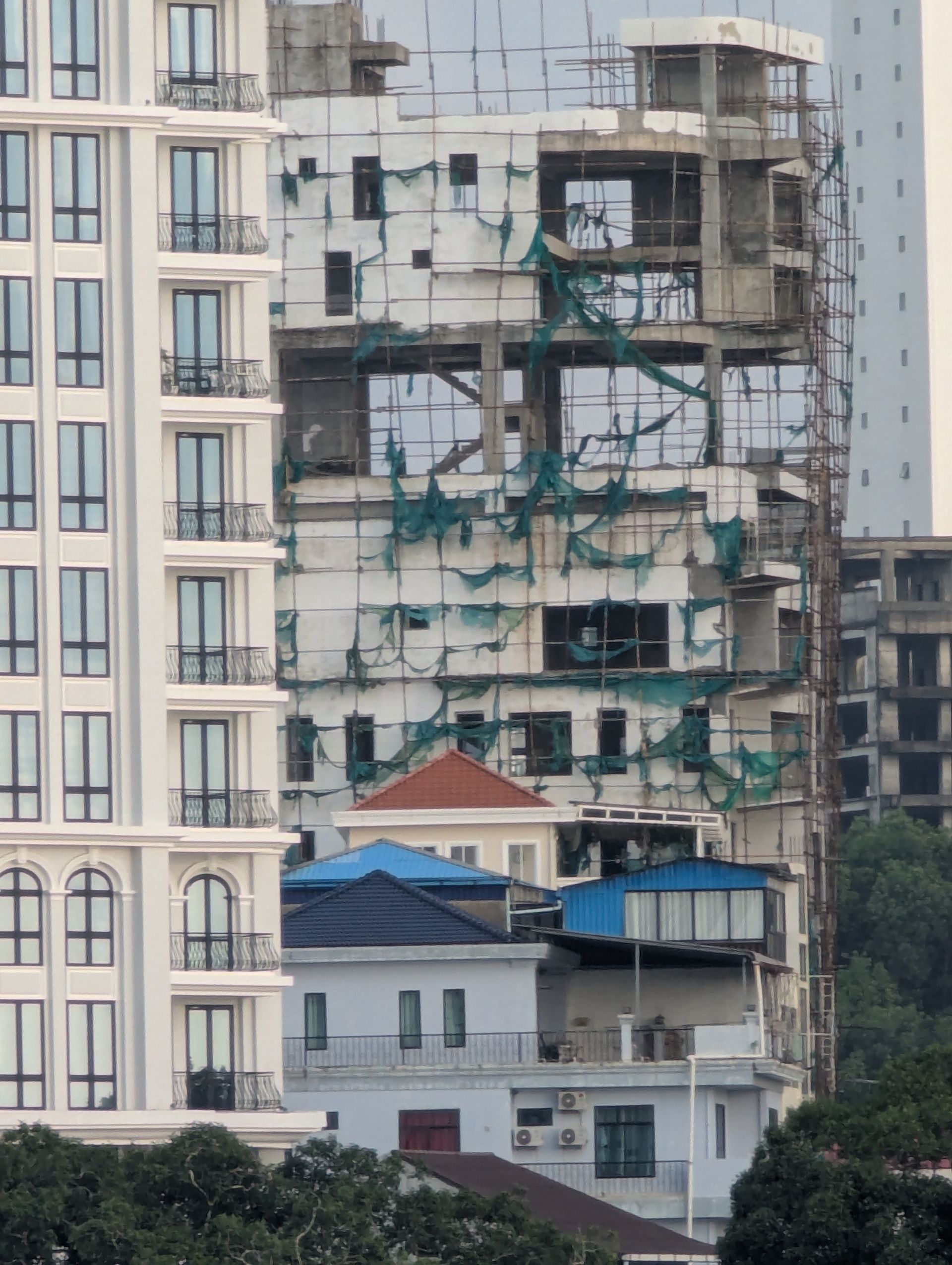
We have returned to Ha Long, Vietnam after leaving Hong Kong. Once we were out of Chinese territorial waters the internet came back. It is still spotty but doesn't completely fail. We are tied on at the dock we were at before. It leads to the terminal which opens to a Ghost Town, that is Ha Long. Apartments and high-rise business offices, an amusement park, funicular and ferris wheel are part of a speculative business opportunity that has not yet been realized.
By Adrian La Salle Pabalan • September 10, 2026
The rhythmic gestures of the wind generators on the far shore cheer us along. They may be waving us away or welcoming us, it is hard to say. We are not allowed to take pictures as our ship goes through the Qiongzhou Strait heading for Hong Kong. This will be for about an eight hour period. A line of about a dozen cargo ships is keeping pace with us. They are perfectly spaced from each other. Maybe there is a required speed for vessels transiting the strait. There is an Internet Starlink blackout here. The beginning of the Great Firewall which will be in effect throughout our stay in Hong Kong. China wants to control its message.
August 25, 2026
Our first port in Vietnam, Nha Trang, looks from a distance like the landscape of other shores we have approached but as we get closer the green and blue haze of the mountains recedes and the tall white and grey vertical rectangles of the city crowd forward, demanding attention. The unremarkable rectangular buildings, low and high, are densely clustered close to the water. Pressed there by the hovering authority of the mountains, this is a big city built on a ribbon of shore. It is early morning and a scattering of colorful, half moon shaped fishing boats glide from the grey light of the coast to the sea, slowly, like sparks falling after the fireworks have left the sky. We are anchoring here for three days.
August 11, 2026
This time our stay will be for more than a week. The cost of marine diesel is not going down. Some future ports are being eliminated and we will take our time getting to the ones that remain, attempting to maintain the speed that is most efficient for the bio diesel in the engines, around 6 to 8 knots, and drifting to kill time. These are developing into the ‘lean times’ for the ship. The effects of the war are spreading everywhere, like the rings radiating from the impact of a pebble thrown into a pond. Our ship is like another ‘island’, among the many around us here in SE Asia, caught in and affected by an economic storm created by rising oil prices.
August 4, 2026
We are anchored out. The island of Koh Chang, Thailand, viewed from a distance, appears like all the islands in the South China Sea and Pacific Ocean we have visited so far. Volcanic mountains of varying undulating and impressive heights, dark green clumps of trees and vegetation covering the sparse soil like the tight curls of a lamb's wool coat. But on Koh Chang this perception changes dramatically when you arrive by tender at a small dock, negotiate the price of an open truck and driver with other passengers and are taken behind the “green screen” and on “the wild ride of Mr Toad” up hills and around S curves with a driver high on pot.
More Posts